Choose your delivery location
Enter a 6-digit Indian PIN code to see delivery options for that area.
Currently delivering to Bengaluru 560105
Ready stock & made to order
Bulk clocks
factori.com supplies bulk clocks from ₹143/piece across 662 partner factories — ready stock and custom programmes with GST invoices.
Prices verified October 2026 · shown excluding GST
₹143Entry price
Same dayDispatch on working days








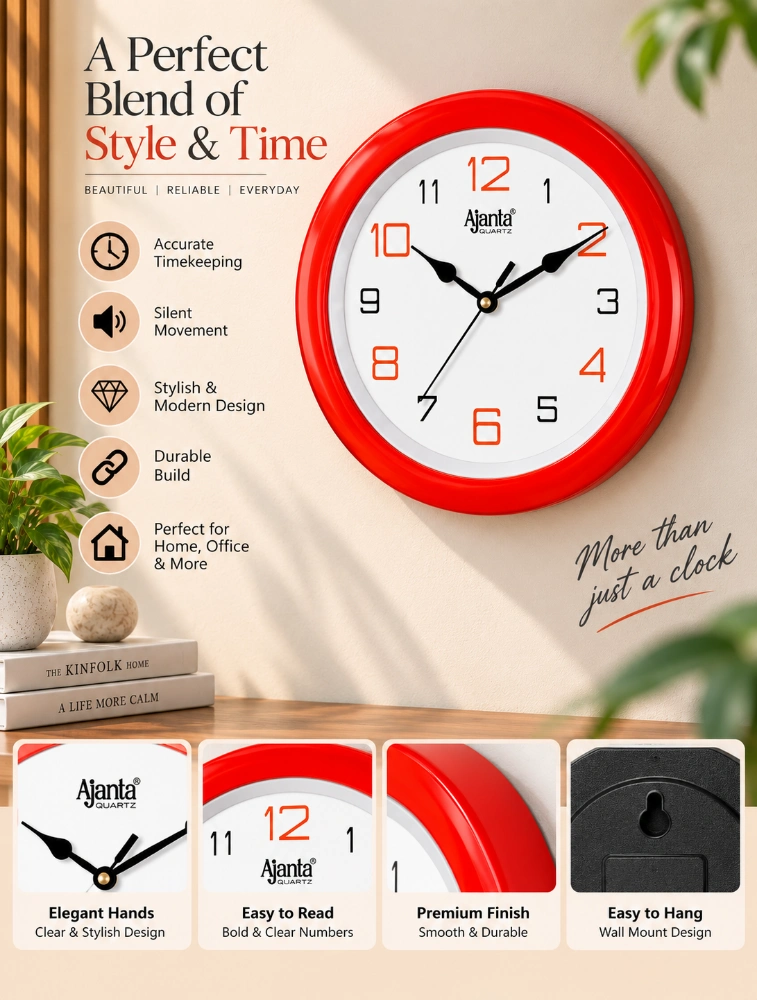
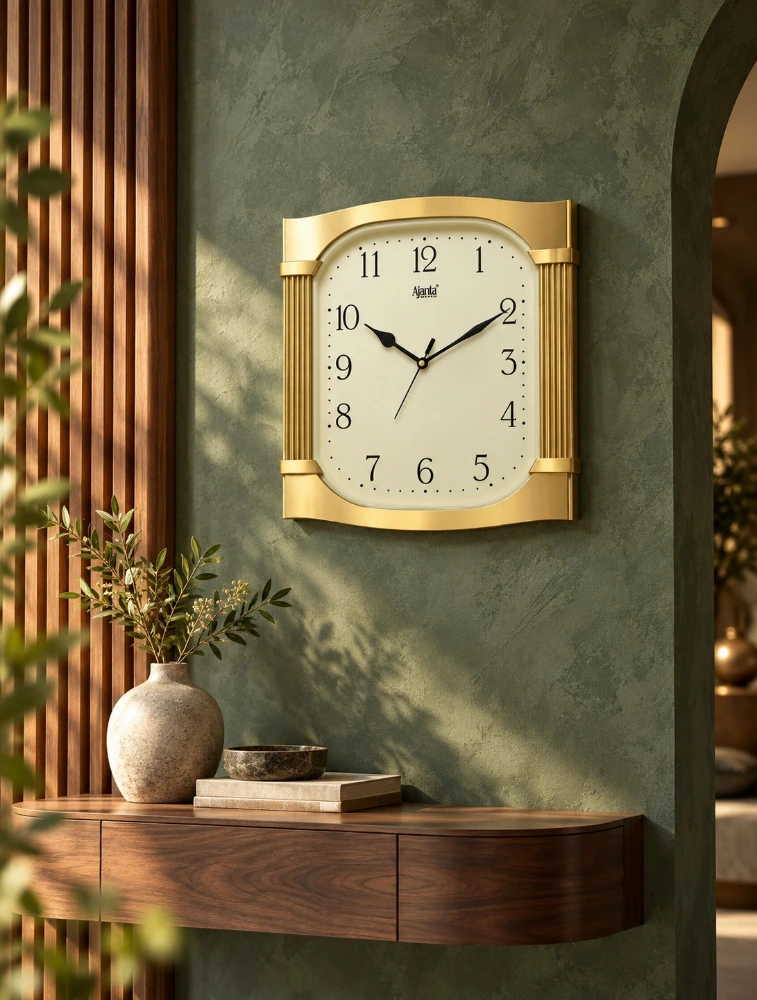

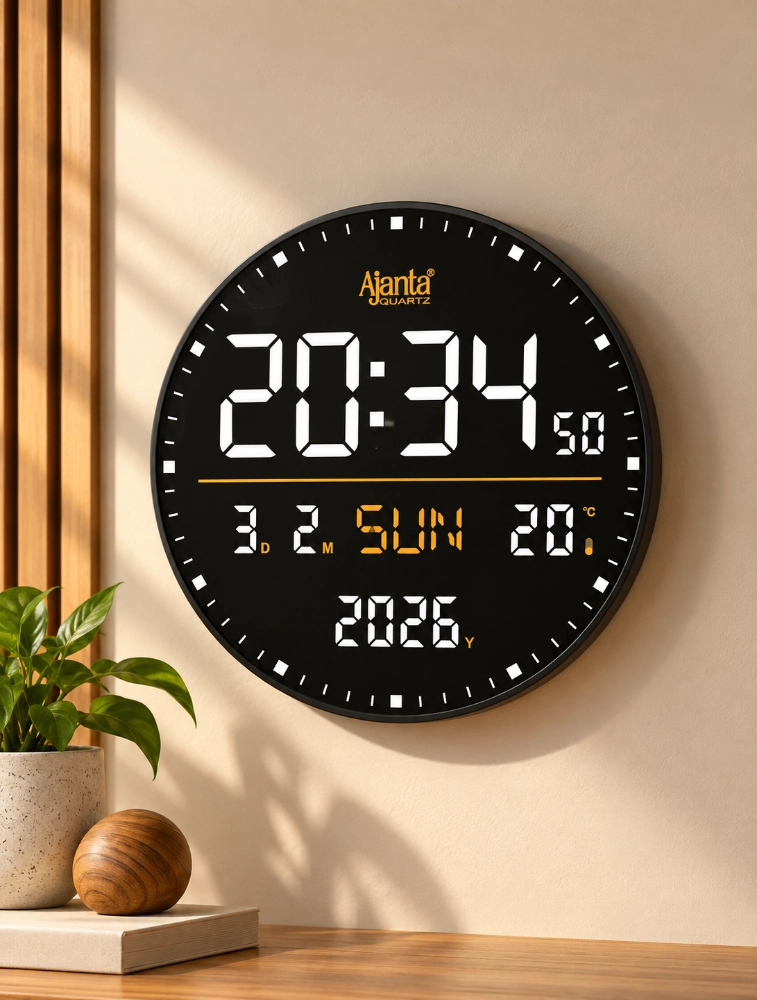
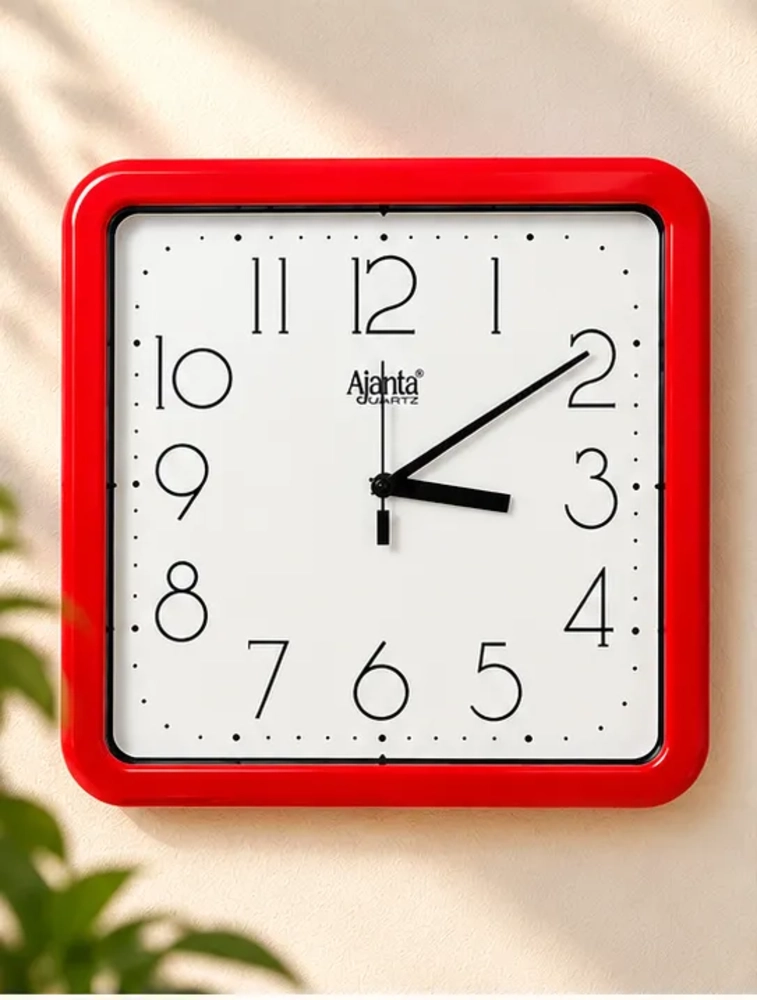

Page 1 of 6
Bulk clocks for every use case
Brand-ready clocks for corporate, retail, uniforms and large custom programmes — sourced across partner factories with published prices.
Corporate & events
Brand-ready clocks for offsites, launches and conferences.
Get quote →
Uniforms & programmes
Consistent supply for schools, factories and frontline teams.
Corporate uniforms →
Own brand / resale
Unbranded or private-label stock for retail brands.
Launch your store →
Large custom runs
Contract manufacturing for high-volume programmes.
Contract manufacturing →Bulk clocks — frequently asked questions
Does a bulk wall clock go under heading 9103 or heading 9105, and what actually decides it?
Two headings can take a wall clock and the movement decides which. Heading 9103 covers clocks with watch movements. Heading 9105 covers other clocks, and wall clocks sit inside it at 9105 21 00 and 9105 29 00. Note 3 to Chapter 91 fixes the size limits that separate the two.
This is the first question a bulk clock order runs into, and it is not answered anywhere on this category. Thirty-nine listings across two pages publish a price, a colour word, a model number and a photograph. Not one of them publishes a movement type in a field a buyer can put in a purchase order, and the movement is what the tariff turns on.
What Note 3 to Chapter 91 says
The note is short and it is dimensional. It reads: “For the purposes of this Chapter, the expression ‘watch movements’ means devices regulated by a balance-wheel and hairspring, quartz crystal or any other system capable of determining intervals of time, with a display or a system to which a mechanical display can be incorporated. Such watch movements shall not exceed 12 mm in thickness and 50 mm in width, length or diameter.” So a movement that is regulated by a quartz crystal is not automatically a watch movement. It is a watch movement only if it also stays inside those two dimensional ceilings. A movement bigger than that is not a watch movement for tariff purposes, whatever it is regulated by.
Why that matters to a wall clock
Heading 9103 is titled “CLOCKS WITH WATCH MOVEMENTS, EXCLUDING CLOCKS OF HEADING 9104” and splits into 9103 10 00, electrically operated, and 9103 90 00, other. Heading 9105 is titled “OTHER CLOCKS” and carries alarm clocks at 9105 11 00 and 9105 19 00, wall clocks at 9105 21 00 and 9105 29 00, and then 9105 91 00 for battery, accumulator or mains powered, 9105 99 10 for time pieces and 9105 99 90 for other. The word “other” in the 9105 title is doing real work. It means everything that is a clock and is not carried by 9101 to 9104. A typical bulk quartz wall clock uses a stepper movement in a housing well above the note's ceiling, which is why the wall-clock sub-headings exist at all. But the buyer cannot assert that from a photograph, and neither can we assert it for you.
The other heading that ambushes institutional orders
Heading 9106 covers “TIME OF DAY RECORDING APPARATUS AND APPARATUS FOR MEASURING, RECORDING OR OTHERWISE INDICATING INTERVALS OF TIME, WITH CLOCK OR WATCH MOVEMENT OR WITH SYNCHRONOUS MOTOR”. If what you are actually buying is a time recorder, a process timer or a shift-attendance device rather than a wall clock, it does not belong in Chapter 91's clock headings at all in the way you assumed. Buyers ordering for factories and hospitals sometimes describe all of these as “clocks” in the indent, and the description on the indent is what ends up on the invoice.
What to do about it on this catalogue
Ask for three things in writing before the order, none of which this page publishes. First, the movement family in plain words, together with its overall thickness and its largest plan dimension, because those are the two numbers Note 3 asks about. Second, whether the movement is driven by a cell, by an accumulator or from the mains, because that decides the electrically operated split at 9105 21 00 against 9105 29 00, and separately feeds 9105 91 00. Third, the country of manufacture, because origin drives the duty treatment and preferential-origin claims and it is absent from every listing on this category.
The honest position
Classification is decided by the authorities on the facts of the goods, not by a supplier's catalogue and not by an FAQ. Nothing here is customs advice and it should not be relied on as advice. What we can do is give you the movement description, the dimensions and the origin in writing, on the proforma, so that your customs broker has something to classify. On a bulk clock order that piece of paper is worth more than the photograph, because a heading argued after the container lands is argued with your money.
CLASSIFICATION, Power & Packaging LawQueries Targetedclock HS code India, wall clock customs tariff heading 9105, 9105 21
Thirty-nine listings and not one says how the clock is powered. Why does that hold up an order?
Because power is a tariff split, a packaging obligation and a site decision all at once. Heading 9105 divides wall clocks at 9105 21 00 for electrically operated and 9105 29 00 for other, and carries 9105 91 00 for battery, accumulator or mains powered. This category publishes no power information of any kind.
Across thirty-nine listings the only sentence on this whole category that admits a clock needs a cell is a care instruction. SKUFACTORI4555 ends its care line with the words “use good-quality batteries”. That is the entire published battery specification for the category. No listing states the cell size, how many cells the movement takes, whether any cell ships with the clock, or what happens to that cell at end of life.
What the tariff does with power
The split inside 9105 is not decorative. Alarm clocks divide at 9105 11 00, electrically operated, and 9105 19 00, other. Wall clocks divide the same way at 9105 21 00 and 9105 29 00. Then 9105 91 00 sits in the residual group for battery, accumulator or mains powered items. A buyer who cannot say how the goods are powered cannot fill in the eight-digit line, and an eight-digit line has to be filled in before the goods move.
The one listing that is clearly not cell-driven
SKUFACTORI5168 is described with “Built-in battery backup retains time during power failures” and with “Surge Shield and Fuse Guard technology”. Both of those sentences only make sense on an item that is normally fed from a supply, so this article is a different animal from the quartz wall clocks above it in the grid, and it is sitting in the same list at the same kind of price. Yet the listing publishes no supply voltage, no frequency, no plug or terminal arrangement, no power draw and no registration or conformity marking. An institutional buyer specifying for a hospital corridor or a factory floor cannot put that on a drawing.
Why the surge sentence needs a source, not an adjective
“Surge Shield and Fuse Guard technology” is a marketing phrase. It names no standard, no test, no clamping level and no fuse rating. Treat it as unverified until the supplier puts a named standard and a test report against it. That is not a criticism of the product, which may well be perfectly good. It is a statement about what the page currently proves, which is nothing. We do not make safety claims that are not traceable to a named standard, and neither should the listing.
The cell is the buyer's problem the moment it is in the box
If a cell ships inside the pack, the pack is no longer only a clock. Whoever puts their name on that package has taken on obligations for the cell that do not attach to an empty clock, and those obligations are the buyer's, not the photograph's. Decide deliberately whether you want cells supplied, supplied separately, or not at all. For a school or a hospital ordering in hundreds, “not at all” is very often the right answer, because the estates team standardises on one cell across the whole building anyway.
What to ask for
Put four lines in the enquiry. Movement drive: cell, accumulator or supply. Cell size and count, and whether cells are included. For any supply-fed item, the voltage, the frequency, the power draw and the connection type. And a statement of what conformity marking, if any, the item carries, naming the scheme. None of this is legal or regulatory advice; it is the minimum set of facts that lets your own compliance people give you advice. We will answer all four in writing against a specific article, which is more than the tile can do.
CLASSIFICATION, Power & Packaging LawQueries Targetedbattery operated wall clock bulk, mains powered wall clock supplier, clock power specification
If we put our own brand on the clock box, who has to register as a packer or importer?
Rule 27 of the Legal Metrology (Packaged Commodities) Rules, 2011 puts the duty on whoever pre-packs or imports the commodity for sale, distribution or delivery. Registration is with the Director or the Controller, the application fee is five hundred rupees, and the window is ninety days from the day pre-packing starts.
This matters on a clock order more than buyers expect, because a clock is almost never sold loose. Every packaging paragraph on this category describes an individual box. SKUFACTORI5090 says each unit “is securely packed in protective individual boxes to prevent scratches or damage during transit” and that bulk quantities go into “durable export-grade corrugated cartons”. Once your name and your artwork go on that individual box, somebody has become the packer, and the question is who.
What Rule 27 actually says
Sub-rule (1) is drawn very wide. It reads: “Every individual, firm, Hindu undivided family, society, company or corporation who or which pre-packs or imports any commodity for sale, distribution or delivery shall make an application, accompanied by a fee of rupees five hundred, to the Director or the Controller for the registration of his or its name and complete address”. The timing limb gives ninety days from commencement of the rules for anyone already pre-packing, and for a new entrant “within ninety days from the date on which he or it commences such pre-packing”.
Sub-rule (2) asks for only three particulars: “the name of the applicant”, “the complete address of the premises at which the pre-packing or import of one or more commodities is made by the applicant”, and “the name of the commodity or commodities pre-packed or imported by the applicant”. Sub-rule (3) sets one hundred rupees for an alteration to the certificate. Sub-rule (4) makes the Director or Controller the Registering Authority and gives seven working days to return an incomplete application.
The three ways a clock buyer lands inside this
The first is private label. You commission the clock, your brand goes on the dial and on the box, and the box is pre-packed for sale. The second is import. If the goods are brought in, the importer limb bites on its own terms, independently of who did the packing abroad. The third is the one that catches corporate gifting programmes: a clock bought in bulk, re-boxed in your own gift carton and distributed. Whether that particular act is pre-packing for sale, distribution or delivery is a question of fact and of your own circumstances.
What this is not
This is a description of what one rule says. It is not legal advice, it is not a determination that you do or do not need to register, and it must not be used as advice. Registration status, the identity of the packer, and what the declarations on your box have to carry are all matters for your own legal metrology adviser on your own facts. The reason the rule is quoted at all is that clock buyers routinely assume the obligation stops with the manufacturer, and the words of sub-rule (1) do not say that.
The practical sequence that avoids the argument
Decide the packer identity before artwork, not after. Write into the purchase order who is named as packer or importer on the individual box and on the outer carton, whose address appears, and who signs off the declaration panel. Ask for a pre-production photograph of the finished individual box and the finished carton, with the declarations legible, and approve that image in writing. Fixing a declaration panel after ten thousand boxes are printed costs more than the clocks inside them.
CLASSIFICATION, Power & Packaging LawQueries TargetedLegal Metrology Rule 27 registration packer importer, private label clock packaging India
Thirty-nine clocks and not one dial diameter. How is anyone supposed to order these?
You cannot order them on the published data alone, and that is the single biggest gap on this page. A clock is bought on how far away it has to be readable from, which is a function of dial diameter and numeral height. Neither figure appears on any of the thirty- nine listings, on either page.
What the listings do publish instead are adjectives. SKUFACTORI5090 offers “Compact Size: Space-efficient design” as its size statement. Others offer “Design”, “Finish” and “Appearance” lines in the same slot. None of it is a dimension. There is no diameter, no depth, no case width, no numeral height, no weight and no fixing detail anywhere on the category.
Why a clock is the wrong product to buy on a photograph
Every other decision downstream depends on the size. The mounting decision depends on the weight and on whether the back has a keyhole slot or a bracket. The wall finish decision depends on the fixing. Where the clock can go depends on the depth, because a deep case does not clear a corridor line. And the whole point of an institutional clock is that a person twenty paces away can read it without stopping walking, which is a numeral-height question. Photographs are shot to fill the frame, so every clock on the grid looks like the same size, and they are not.
What a clock size specification has to carry
Six lines, and they are all short. Overall dial diameter of the visible face. Overall outer diameter or the width and height of the case if it is not round. Case depth from the wall to the frontmost point, which for a dome-glass article is not the same as the case body. Numeral height or, if the dial has no numerals, the marker length. Nett weight of the assembled clock. Fixing method, with the slot or bracket dimension. Add a tolerance on each, because a clock case is a moulding and mouldings vary.
The articles where the gap bites hardest
SKUFACTORI4506 is described with a “Dome glass front for premium appearance”. A dome adds depth and it adds fragility, and the listing gives neither the depth nor the glass type. SKUFACTORI4555 is a pendulum article, described with a “Decorative pendulum for a classic and elegant appeal”, which means the mounted height is not the case height and the wall clearance below the clock matters. On both of those, an estates team ordering in hundreds is being asked to commit without the one number that decides whether the thing fits.
How to get round it today
Ask for a dimensioned drawing or a dimensioned photograph against a rule, per article, before you commit. Ask for one physical sample of each shortlisted article and put it on the actual wall at the actual distance before ordering the hundred. On a clock, a sample is not a formality. It is the only way to test readability, and readability is the entire specification. Sample cost is credited back against the bulk order, so the only thing it costs you is a week.
The catalogue fix
Publish a dimension block on every article. It is six numbers, they already exist in the factory drawing, and their absence is currently forcing every serious buyer into a phone call before they can even shortlist. A category that publishes a price to the rupee and not a single millimetre of the product is telling the buyer that price is the only thing it is confident about.
What The Page PublishesQueries Targetedwall clock size for office, wall clock diameter bulk order, clock dial size specification
Two product links on this page carry the wrong product name in the URL. Does that affect a bulk buyer?
Yes, in two concrete ways: one of the two links does not resolve on a plain request, and the other sends a buyer to a page whose address names a different and more expensive clock. Both are catalogue defects with real procurement consequences, and both are fixable in an afternoon by whoever owns the URL slugs. The first one: a tile whose address names another product
The thirteenth tile on page one is titled “White Simple Clock 331” and carries SKUFACTORI4528 at a headline of Rs 215. Its link address ends “White-Night-Glow-Wall-Clock-5087-SKUFACTORI4528”. There is a genuine “White Night Glow Wall Clock 5087” on this category, and it is a different article: SKUFACTORI4506, headline Rs 806, described with a dome glass front and a night glow function. So the address of the Rs 215 clock advertises the Rs 806 clock. A buyer who copies a link into a requisition, or who searches their own inbox for the article they were sent, will pull up the wrong one, and the price gap between them is nearly four times.
The second one: a working-file marker published in a live address
The twenty-fourth tile is titled “Ivory Round Analog Wall Clock 397”, SKUFACTORI4483, at Rs 429. Its address ends “White-Round-Analog-Wall-Clock-397-(Copy)-SKUFACTORI4483”. Two separate problems are stacked there. The colour word in the address is White while the tile says Ivory, and the address carries the literal parenthesised word Copy, which is what a content management system appends when somebody duplicates a record and never renames it. A plain request for that address as published came back as a client error rather than a page.
Why this is a procurement problem and not a cosmetic one
Bulk clock orders travel by link. A category manager sends a shortlist to a finance approver, who sends it to a buyer, who pastes it into a requisition system, and by the time the purchase order is raised nobody has looked at the photograph again. A link that names the wrong product is an error that survives every one of those handovers silently. A link that does not resolve at all is worse in a tender pack, because the evaluator marks the line unverifiable and moves on.
The knock-on effects nobody sees
Search engines index the address, so the wrong product name is what gets associated with that page externally as well as internally. Two addresses on this category are also capitalised differently from the other twenty-eight, which are all lower case, so the category does not even have one URL convention. And an address containing brackets has to be percent-encoded to travel reliably through email clients, ticketing systems and procurement portals, which is precisely the chain a bulk order passes through.
What to do about it
If you are buying: quote the SKU code, never the link. Every tile carries one, the codes are unique, and the code is the only identifier on this page that has not been observed to contradict itself. Put the SKU code and the tile title together on the purchase order and make the supplier confirm both against a photograph before production. If you are the catalogue owner: rename both slugs, redirect the old addresses, and audit the rest of the category for the same duplication marker before it appears somewhere more expensive.
A test you can run in a minute
Open every tile you intend to buy in a separate window and compare three things: the title on the tile, the last words of the address bar, and the title printed on the page you land on. If all three agree, the record is clean. If any two disagree, treat the article as unidentified until the supplier confirms which of the three is the real one, in writing, against a photograph and a SKU code. On this category that simple check fails twice out of thirty-nine, which is a rate low enough to be missed by a casual browse and high enough to reach a purchase order. Do the check on the tiles you are shortlisting rather than on the whole catalogue, and do it before the sample request rather than after, because a sample raised against a mistaken address arrives as the wrong clock and costs a fortnight.
What The Page PublishesQueries Targetedfactori clocks product URL error, duplicate product listing clocks, broken product link
Two listings quote the same accuracy figure for two different movements. Should we rely on it?
Not as a contractual term, not in the form it is published. The same accuracy figure appears on two listings that describe two different movement types, no test method is named against it, and no temperature or test duration is stated. Treat it as a marketing figure until the supplier puts a named test and a report behind it.
What the page actually publishes
SKUFACTORI5090 is described with “Step movement technology” and an accuracy of “±20 seconds per month”. SKUFACTORI4506 is described with “Real Silent Sweep movement for noiseless operation” and the same “±20 seconds per month”. Those are two mechanically different things. A stepping movement advances the second hand in discrete jumps; a sweep movement drives it continuously. It is not impossible for both to land on the same timekeeping figure, but a figure that is identical across two different mechanisms, quoted with no conditions attached, is a template value until proved otherwise.
The conditions that are missing
A timekeeping figure means nothing without three things beside it. The ambient temperature it was measured at, because crystal-regulated movements drift with temperature and a corridor in Chennai is not a laboratory. The duration and the number of samples, because a figure taken on one unit over a week is not a monthly rate. And the supply condition, because a cell approaching the end of its life does not behave like a fresh one. None of the three appears on any listing.
The same problem on the digital article
SKUFACTORI5168 publishes “Accurate temperature sensor with ±1°C accuracy”. Again there is no named method, no stated range over which the figure holds, and no indication of whether that is an instrument tolerance or a display resolution. The same listing carries “Built-in century calendar clock displaying date, day, and time”, which is a feature description rather than a measured claim, so it is on a different footing.
Where this bites institutionally
Most buyers of a hundred wall clocks do not need a laboratory-grade figure and should not pay for one. What they need is consistency: that the clocks in one building do not visibly disagree with each other after a quarter. That is a drift-spread question, not a headline-accuracy question, and it is answered by asking for the figure on a batch rather than on a datasheet. Where it does matter absolutely is examination halls, dispatch floors, transport interchanges and any site where a displayed time is used to record an event. Those sites should not be relying on an unsynchronised wall clock at all, and that is a design conversation rather than a purchasing one.
How to make it contractual
If the figure matters, do not copy it off the tile into your purchase order. Write your own requirement, state the ambient condition you want it held at, state the sample size, and require a test report from the supplier's own or a third-party laboratory against a named method. If the supplier will not put a named method against it, then it is not a specification and you should price the article as though the figure were absent. That is a commercial judgement, not technical or legal advice, and nothing here should be treated as advice about what any product will do in service.
What a usable accuracy clause looks like
A clause a supplier can actually be held to has five parts, and the published figure has one of them. It needs the tolerance itself, the period over which it is measured, the ambient temperature band it is measured in, the number of pieces drawn from the delivered lot, and the named method or instrument used to make the measurement. Written that way, the clause survives a dispute, because both sides can repeat the test. Written as a bare tolerance on a tile, it survives nothing, because neither side can say what it was ever supposed to mean. If you are buying a quantity where the figure genuinely matters, put those five parts in the order and price the difference in; if it does not matter, leave the figure out of the order entirely rather than importing a number you cannot enforce.
What The Page PublishesQueries Targetedwall clock accuracy specification, quartz clock seconds per month, sweep movement clock bulk
Why does every clock on this page describe itself differently, and one not at all?
Because this category has no specification template at all. Not one of the thirty-nine listings carries a structured specification table. What each product page carries instead is a free-text description, the number of lines differs from article to article, the field names differ too, and at least one article carries no descriptive lines whatsoever.
What five sampled articles actually publish
SKUFACTORI5090 runs a labelled narrative with seven ideas in it: movement, design, display, appearance, compact size, durability and warranty. SKUFACTORI4555 runs seven numbered lines under a different set of labels: design, finish, feature, music function, appearance, precision and “Ideal For”. SKUFACTORI4506 runs five lines. SKUFACTORI5168 runs seven, and its labels are different again: large display, calendar function, temperature sensor, surge protection, time format options, battery backup and warranty. SKUFACTORI4528 runs none. It publishes a price, a quantity ladder, a care line and a packaging line, and nothing else.
Why that makes the category uncomparable to itself
A buyer shortlisting three clocks is trying to line up the same attribute across three columns. On this category there are no columns. “Precision” on one article and “Movement” on another may be describing the same thing or may not. “Appearance” appears on two articles carrying completely different content. The buyer ends up reading prose, extracting attributes by hand into their own sheet, and guessing where a field is missing whether it is absent because the product lacks the feature or absent because nobody typed it.
The warranty line is the clearest casualty
Three of the five sampled articles state a one-year manufacturer warranty in their description text. Two state nothing about warranty at all. There is no way to tell from the page whether the silent two carry a shorter warranty, the same warranty, or none. On an institutional order that is a material term, and it is currently decided by whether somebody remembered to type a line.
The care instructions drift the same way
SKUFACTORI5090 gives three sentences of care instruction covering cleaning, what to avoid and storage conditions. SKUFACTORI4528 and SKUFACTORI4506 give one sentence each. SKUFACTORI4555 gives a single run-on line that ends with a battery instruction. Facilities teams laminate these and put them in a maintenance file, so inconsistency here has an afterlife well beyond the sale.
What the fix looks like
One template, every article, same field names, blanks allowed and visible. Movement type and drive. Dial diameter, case dimensions and depth. Case and lens material. Numeral or marker treatment. Cell size, count and whether supplied. Weight. Fixing method. Warranty period and what it covers. Country of manufacture. Master-carton quantity and carton dimensions. A blank field a buyer can see is far better than a field that does not exist, because a visible blank prompts the question and an absent field prompts an assumption.
What to do until then
Do not shortlist off the tiles. Send the SKU codes you are interested in and ask for the same template back for each, filled in against the actual article. Nothing here is advice on product suitability; it is a description of what this page currently proves, which for two of the five sampled articles is very little.
Why a template matters more than the words in it
The value of a specification template is not that it is detailed. It is that it is the same on every line, so absence becomes visible. When one article lists seven labelled attributes and another lists none, a buyer cannot tell whether the second article lacks the features or merely lacks the paragraph. A fixed set of rows, with an honest blank or a dash where a value is unknown, converts that ambiguity into information: the buyer sees immediately which articles are documented and which are not, and can shortlist accordingly. It also makes the catalogue comparable to itself over time, so a specification that changes between two production lots is caught at the listing rather than at goods-in. For a category where thirty- nine articles are sold on appearance, a uniform template is the cheapest quality improvement available and the one a bulk buyer notices first.
What The Page PublishesQueries Targetedclock product specification template, comparing wall clocks bulk supplier, clock datasheet
The page says from Rs 143 a piece. What does a hundred-clock order actually invoice at?
Rs 150 a piece, not Rs 143. On every product page sampled, the headline figure is the above-ten-thousand band and the minimum order is a hundred units. A hundred of the cheapest clock therefore invoices at Rs 15,000 rather than the Rs 14,300 the headline implies, a gap of Rs 700.
This is not a hidden charge and nothing is being concealed. The full ladder is printed on every product page, openly, in three bands. The problem is the order it is printed in and which of the three numbers is promoted to the tile, the title tag and the H1.
The five ladders, as published
SKUFACTORI5090 runs Rs 150 for one hundred to nine hundred and ninety-nine, Rs 147 for one thousand to nine thousand nine hundred and ninety-nine, and Rs 143 above ten thousand. SKUFACTORI4528 runs Rs 226, Rs 222, Rs 215. SKUFACTORI4506 runs Rs 848, Rs 831, Rs 806. SKUFACTORI4555 runs Rs 1345, Rs 1319, Rs 1278. SKUFACTORI5168 runs Rs 1766, Rs 1731, Rs 1678. In every case the advertised figure is the third band.
The entry premium is remarkably consistent
The gap between the hundred-piece band and the advertised figure is Rs 7 on the antique style article, Rs 11 on the simple clock, Rs 42 on the night glow article, Rs 67 on the musical pendulum and Rs 88 on the digital calendar clock. Expressed as a proportion those are all between roughly 4.9 and 5.3 per cent. That consistency is useful: it means you can budget an entry order at about five per cent above any headline on this category and be close, whichever article you pick. It also means the ladder is being generated by a rule rather than costed per article.
What it takes to reach the headline
Ten thousand pieces of one article. For a corporate gifting programme or a national institutional rollout that is a realistic number, and the headline is then honest. For a school ordering forty clocks, a hotel refitting three floors or a retailer testing an assortment, it is not, and the budget should be built on the first band. Three thousand pieces of the antique style article invoices at Rs 147, which is the middle band, and there is no fourth band published between one thousand and ten thousand.
The two-step that catches finance teams
Approval is usually sought on the headline and the purchase order is raised on the ladder. Build the paper the other way round. Take the article, take the actual quantity, read the band it falls into, multiply, and put that number in the approval. Then the only variables left are branding, freight and taxes, and those are quoted separately anyway. Everything above is arithmetic on published figures; it is not a quotation and it is not a commercial commitment.
What to ask when the quantity sits near a band edge
Nine hundred and eighty of an article prices at the first band and one thousand of it prices at the second, so twenty extra pieces can cost less than nine hundred and eighty. Where your quantity lands within about five per cent of a boundary, ask for both figures before you fix the number. Also ask whether the band is counted per article, per colour or across the order, because on a clock range a buyer very often wants four colours of the same model and the answer changes the price materially.
The catalogue fix
Print the ladder cheapest band last if you like, but promote the hundred-piece figure to the tile, or label the headline with the quantity that earns it. “From Rs 143 at 10,000 pieces” is four extra words and it removes the only genuinely misleading thing about the pricing on this page.
ProcurementQueries Targetedbulk wall clock price 100 pieces, wholesale clock price tier India, clock quantity discount
A hundred units on every product page, one piece in the banner. Which minimum is real?
The page states both and does not reconcile them, so no honest answer can be given from the page alone. Every product page prints a hundred-unit minimum. The statistics band at the top of the category offers ready stock from one piece. The existing on-page FAQ gives a third and different formulation. The three statements, side by side
On the product pages the line is flat and unqualified: “Minimum Order Quantity - 100 Units”. It appears identically on all five articles sampled, across a price span from Rs 143 to Rs 1678. The category statistics band says the platform supplies bulk clocks “ready stock from 1 piece”. The existing FAQ on this URL says “Ready-stock items can typically be ordered from a single piece. Custom-manufactured or branded runs usually start from 100 pieces per style per colour.” The third statement is the useful one, and it is the one buried furthest down Only the FAQ answer draws the distinction that actually governs: plain stock against branded production. That is the real rule in this trade, and it is sensible. It is also the only one of the three that qualifies the hundred by saying per style per colour, which on a clock range is the whole question, because a buyer wanting four colours of one model is either at a hundred or at four hundred depending on the answer.
Why the flat line on the product page causes the most damage
It is the page a buyer lands on from a search result and it is the page a link points at. A school buying forty clocks for classrooms reads a hundred-unit minimum, concludes the supplier is not for them and leaves, when on the FAQ's own account that buyer could very likely be served from stock. A rule that is stricter than the business intends, printed in the most prominent place, loses orders silently.
What to establish before you plan the order
Four questions, and none is answered on the page. Is the hundred counted per article, per colour, per model across colours or per order? Does it apply to plain stock at all, or only to branded and custom production? What is the smallest quantity that can be shipped from stock today on the specific SKU code you want? And if you need a below-minimum quantity of a branded article, what is the per-piece uplift, since the existing FAQ says smaller custom runs are possible at a higher per-piece cost.
The mixed order that clock buyers actually want
Real clock orders are rarely one article. A hotel wants one model in three finishes for guest rooms and a larger article for the lobby. An office wants a plain clock at scale and two digital articles for reception. Ask explicitly whether the minimum can be met in aggregate across a mixed order of the same model family, and get the answer in the quotation rather than in an email, because it is the difference between one purchase order and four.
The catalogue fix
Replace the flat line with the qualified one. Say what the minimum is for plain stock, say what it is for branded production, and say what unit it is counted in. Three clauses on the product page, using wording the business has already written for its own FAQ, would end the contradiction without any commercial change at all.
ProcurementQueries Targetedclock minimum order quantity, MOQ wall clock supplier India, ready stock clocks
What has to be written into a clock purchase order that a generic gifting order would miss?
Eight things, and a generic gifting order pins down none of them: movement drive and type, dimensions and weight, cell arrangement, dial legibility, glass or lens type, fixing method, carton quantity and drop-test condition, and warranty scope. A clock is an assembled mechanism behind glass, hung above head height, and every one of those eight follows from that. One: movement and drive
State the movement family, whether the hand motion is stepping or continuous, and how it is powered. Stepping and sweep are visibly and audibly different in a quiet room and buyers have strong preferences without knowing the words for them. Two articles on this category name the two different behaviours and both quote the same accuracy, so the movement has to be named in the order rather than inferred from the tile.
Two: dimensions, weight and fixing
Dial diameter, overall case size, depth, weight and the fixing arrangement, each with a tolerance. None of these is published on this category, so all of them have to come from the supplier in writing and be reproduced in the order. Add the wall clearance needed below the case for any pendulum article.
Three: the cell
Cell size, count, whether supplied, and if supplied, in the pack or separately. Also state whether the movement must run on a standard commodity cell, because an estates team that has to stock an unusual cell for two hundred clocks will not thank the buyer. Where cells are supplied, settle in the order who carries the obligations that attach to supplying them.
Four: legibility
Numeral or marker height, contrast and hand colour, and the viewing distance you expect. If a night-glow or luminous treatment is wanted, say what has to glow, the hands, the numerals or both, and for how long after the lights go out. Two night glow articles sit on this category and neither publishes a persistence figure.
Five: glass or lens
State the lens material and whether it is flat or domed. A dome adds depth and changes the transit risk profile. This matters most for schools, hospitals and any public corridor, where the question of what happens if the lens is struck is a design decision for your own safety adviser to take on a named standard, not something to be settled by a catalogue adjective.
Six: packing and transit
Individual box, master-carton quantity, carton dimensions and gross weight, internal cushioning, and an agreed transit-damage condition on arrival. Master-carton quantity is absent from every listing here and it drives your inward logistics, your storage and your freight quotation.
Seven: warranty
Period, what it covers, who honours it, what the process is and whether the cell is included or excluded. Three of five sampled articles state a one-year manufacturer warranty; two say nothing. Silence in the catalogue must not become silence in the contract.
Eight: identification and origin
Country of manufacture, the SKU code, the model number as it will appear on the article, and what is printed on the individual box. None of this page's thirty-nine listings publishes a country of manufacture. None of the above is legal advice on your obligations; it is a procurement checklist, and your own advisers should confirm what your particular order requires.
The commercial clauses that sit alongside the technical ones
Pin the sample down first: an approved counter-sample, signed and dated by both sides and held by both, is the reference every later dispute is settled against, and on a category that publishes no dimensions it is doing more work than usual. Then pin the lot down: whether the whole quantity comes from one production lot or several, and what happens to consistency if it does not. Then the delivery shape, because clocks are a low-density, high-volume article and the master-carton count decides your storage and your freight, not the piece price. Then the remedy: what a short delivery, a cosmetic defect rate above an agreed level, or a batch of non-running pieces entitles you to, and within what window you have to raise it. Finally, the spares position for anything with a mechanism, a pendulum or a mains lead, since the cost of an unrepairable clock is the cost of replacing it and sending someone up a ladder twice.
ProcurementQueries Targetedclock purchase order specification, bulk clock procurement checklist, wall clock contract terms
A pallet of clocks arrives. What does goods-in actually have to check before signing?
Six checks, in this order: carton and count, glass and case damage, hands and dial alignment, a powered running test on a sample, the printed declarations on the individual box, and finish consistency across cartons. A clock hides its only real defect, which is that it does not keep time, behind a face that looks perfect.
Why a clock needs a different goods-in routine
Most bulk products fail visibly. A clock fails invisibly and slowly. A movement that stops after nine days, a second hand that catches the dial once per revolution, a stepping movement that skips under load: none of these shows up in a visual inspection and all of them show up three weeks later in a corridor, at which point the pallet has been distributed across forty rooms and the cost of recovery exceeds the value of the goods.
Check one: cartons and count
Count cartons against the packing list, check the master-carton quantity against what the purchase order fixed, and record any crushed corner or water mark with a photograph before opening. The packaging text on this category promises “durable export-grade corrugated cartons” on one article and a “sturdy corrugated box” on another, so what arrives should be compared with what the order specified rather than with the description.
Check two: glass, lens and case
Open a defined proportion of cartons and inspect the lens for chips at the rim, scratches across the readable area and any rattle. Domed lenses take transit load differently from flat ones. Check the case for moulding flash, colour patches and clean seams, and check the rear for a complete and undamaged fixing feature, because a keyhole slot broken in transit renders the clock unhangable while looking perfect from the front.
Check three: hands and dial
Hands must be seated, in plane, not touching each other and not touching the dial or the lens across a full revolution. Turn them through twelve hours by hand on every unit you open and listen. Check that the hands are aligned at the twelve position when they meet, because a hand fitted a degree off reads as a wrong clock from across a room even when the movement is perfect.
Check four: the running test
This is the one that gets skipped and it is the one that matters. Fit a fresh cell to an agreed sample, run them together on a board for a defined period, and compare them against each other and against a reference at the start and the end. What you are looking for is not a headline accuracy figure. It is spread. Clocks from one batch that disagree with each other after a week will disagree with each other on the wall for years, and that is what building occupants actually notice.
Check five: the printed box
Read the individual box, not just the clock. Check that the declarations, the brand, the model and the description are the ones approved, and that the box in the carton matches the artwork signed off. This is also where a labelling error becomes cheap to fix, because it is still on a pallet in one place.
Check six: consistency across cartons
Pull units from cartons taken from different parts of the pallet and stand them side by side. Case colour, dial white and hand finish must agree across the batch. Moulded and printed parts run in lots, and a batch assembled from two lots shows it only when the units are adjacent, which is exactly how they will be seen once they are hung along one corridor. Set the sampling plan and the accept criteria in the purchase order before the goods ship, not on the loading bay, and take your own advice on what plan suits your risk.
ProcurementQueries Targetedclock quality inspection checklist, incoming inspection wall clocks, AQL clock delivery
Where does this category disagree with itself, and which of those matter to a buyer?
In nine places, and four of them can change what you order. The same model appears at two prices with no reason given, one model number is also another article's SKU number, two link addresses name the wrong clock, and the factory count in the banner disagrees with the answer in the existing FAQ a few hundred pixels below it. One: the same model at two prices
Model 6027 appears twice, as a light oak finish at Rs 1278 and as a dark oak finish at Rs 1344. Same model number, same description of a musical pendulum article, sixty-six rupees apart, and nothing on either page explains why. There may be a perfectly good reason in the wood or the finishing process. It is simply not published, so a buyer choosing between two finishes of the same clock cannot tell whether they are paying for something or for nothing.
Two: a headline that sits one rupee below a neighbouring band price
The dark oak article's headline of Rs 1344 sits one rupee below the light oak article's hundred-piece band price of Rs 1345. Two figures that close together, on two variants of one model, invite exactly the wrong comparison.
Three: a model number that is also somebody else's SKU number
“White Night Glow Wall Clock 5087” carries 5087 as its model number. There is also a SKUFACTORI5087 on this category and it is a completely different article, the red rimmed classic clock. A buyer or an internal system quoting the bare number five thousand and eighty-seven can land on either.
Four: two link addresses that name the wrong product
Covered in full elsewhere in this set. One address names a four-times-more-expensive clock; the other carries a duplication marker and did not resolve on a plain request.
Five: the factory count
The statistics band says production runs across six hundred and nine partner factories. The existing on- page FAQ says “hundreds of audited partner factories in India”. Sibling categories audited within days of this one carried a different figure again, which suggests the number is generated rather than curated. Do not quote it in a tender document.
Six: title conventions that drift
Two articles are titled “Simple Clock 331” while every comparable article on the category says “Simple Wall Clock”. Model codes are formatted three ways: bare numbers, “LCD 150”, “DC017 M” and “DC 037”. Wood names are used as colour words in some titles and finish words in others.
Seven: the review counts
Thirty-three of thirty-nine listings carry the identical rating count, with a handful of others clustered close to it across unrelated articles. That pattern is a template value rather than accumulated feedback, and no buyer should weigh it.
Eight: the filter panel
“Filter By” and “Sort By” render, but the filter values never enumerate, so a buyer cannot narrow thirty- nine clocks by size, movement, finish or power. This is now the twenty-seventh consecutive category audited with the same behaviour.
Nine: the second page
Page two carries nine listings and still renders a forward control although there is no third page behind it.
And one thing this page gets right
The published range is honest. The category says clocks are available from Rs 143 to Rs 1678 a piece, and those are exactly the lowest and highest headline figures on the two pages. Several sibling categories cannot say the same. Everything above is a description of what the page displayed on the audit date and is offered as observation rather than as advice.
Catalogue Quality & BrandingQueries Targetedfactori clocks catalogue errors, wall clock listing inconsistencies, clock model number
How do you get a corporate logo onto a clock without ruining the thing people have to read?
By deciding first what the clock is for. A clock is read at distance in under a second, so every mark added to the dial competes with the only job it has. There are five places a brand can go on a clock, and only two of them are on the dial. The other three cost nothing in legibility. The five surfaces
The dial, below the centre, in the six-o'clock position. The dial, above the centre, at twelve. The lower rim or bezel of the case. The rear cover, which is where a serial or asset mark usually goes. And the individual box, which on this category is already promised as “Custom packaging options are available for promotional gifting and corporate orders”. For a gifting programme the box does more brand work than the dial does, because the box is what the recipient sees first and photographs.
Why the six-o'clock position is the default
The eye reads a clock by hand angle, not by numerals, and the hands sweep the whole face. A mark at six is behind the hands least often in the working day, sits in the quietest part of the dial and does not fight the twelve, which is the reference point the eye anchors to. A mark at twelve looks strong in a mock-up and interferes most in use.
Sizing the mark
Take the numeral height as your ceiling. A logo that is taller than the numerals turns the clock into a sign with hands on it. On a plain dial, a single-colour mark at or below numeral height, in a tone that contrasts with the dial but less strongly than the hands do, reads as a considered product. Multi-colour logos with fine gradients do not survive the reduction and should be supplied in a simplified single-colour form for this application.
What the buyer has to supply
Vector artwork, not a picture of a logo. State the colour reference you want matched and accept that a printed dial is a different substrate from a brochure. Say whether the mark must be exactly centred on the vertical axis or optically centred, which is not always the same thing when the logotype has a descender. And approve a physical printed dial, not a rendering, before the run.
The dials on this category to be careful with
Articles described with a night glow or fluorescent numbering treatment have a dial finish that is doing optical work, and a printed mark on it behaves differently from a mark on a plain white face. An article described with a “Dome glass front” presents the dial through a curved lens, so a mark near the rim distorts in a way it does not on flat glass. The dual time dial articles have two sub-dials and correspondingly less clear space. On any of these, ask for the sample before the artwork is signed off rather than after.
The rear cover is underrated
For institutional orders, the useful mark is not the logo at all. It is an asset field on the rear: the estate name, a location code and space for a serial. Facilities teams tag every clock anyway, usually with a sticker that falls off in a year. A moulded or printed field on the rear cover, agreed at the order, costs nothing extra on a run of any size and saves the tagging.
Ownership of the artwork
Put in writing that your artwork is used only on your order, that tooling or screens made for it are not used for anybody else, and that surplus printed dials are destroyed rather than absorbed into stock. That is a contractual point and how you word it is a matter for your own legal adviser; nothing here is legal advice. It is raised because a printed dial is a durable object that outlives the campaign that paid for it.
Catalogue Quality & BrandingQueries Targetedcustom logo wall clock bulk, branded corporate clock printing, promotional clock manufacturer
Antique style, vintage series, elegant sweep, professional office. What do these words actually commit a supplier to?
Almost nothing, on their own. Every one of those phrases is a merchandising word rather than a specification, and none of them is defined anywhere on the category. Two of the words on this page do point at something real and testable, and it is worth knowing which two, because those are the ones to write into the order.The words that mean something
Sweep and step are the two. They describe genuinely different hand motions: a stepping movement advances the second hand once a second in a visible jump, a sweep movement drives it in a continuous glide. In a quiet room they behave differently, and a buyer specifying for a library, a consulting room, a boardroom or a bedroom usually cares a great deal which one arrives. This category names both behaviours, on SKUFACTORI5090 and SKUFACTORI4506 respectively, which is more than most catalogues do. Write the one you want into the purchase order in those words.
Night glow is half a specification
Two articles are described with a night glow function and one adds a “Fluorescent numbering theme”. That tells you a treatment exists. It does not tell you the two things that decide whether it is useful: what glows, meaning hands, numerals, markers or all three, and how long the glow persists after the room goes dark. A treatment that fades in ten minutes is decorative; one that is still readable at three in the morning is functional, and they are ordered with the same three words today.
The purely decorative vocabulary
Antique style, vintage series, classic, simple, rimmed classic, elegant, professional office, premium appearance and downtown are all appearance words. They commit nobody to anything and they are not criticisms; catalogues need names. The mistake is treating them as attributes in a comparison. Two articles both called simple on this category have different descriptions, different prices and different amounts of published information, and one of them has no description at all.
The words that describe a feature you can verify
Dual time dial, pendulum, musical, calendar and temperature are all checkable. A dual time dial article either has a second time display or it does not. A musical article either sounds on the hour or it does not, and SKUFACTORI4555 says it gives a “Melodious hourly indication”, which raises the questions any facilities manager will ask next: can it be switched off, does it have a night silence period, and how loud is it. None of those three is answered on the page, and an hourly chime that cannot be silenced is a returned order in an open-plan office.
Wood words are finishes, not materials
Teakwood, mahogany, light oak wood and dark oak wood appear as the leading word of product titles. On this category they sit where a colour word sits on every other article, so they should be read as finish names until the supplier confirms the actual case material in writing. Ask the question directly: what is the case made of, and is the wood tone a material or a finish.
How to convert the adjectives into an order
Take the tile title as a pointer, then ask for the underlying attribute in plain words: movement motion, glow persistence, chime and its control, case material, lens type. Nothing on this page is wrong, exactly. It is simply written for browsing and you are buying. None of this is advice on which product suits your site; it is a way of turning a catalogue into a specification you can hold somebody to.
Catalogue Quality & BrandingQueries Targetedwall clock terminology, silent sweep vs step movement, night glow clock meaning
Government offices, schools, hospitals, hotels, corporates, retailers: do they really need different clocks?
Yes, and they diverge on four attributes rather than on price: readable distance, hand motion and noise, maintenance access, and what the clock is allowed to say. Six kinds of buyer look at the same thirty-nine tiles and should walk away with different articles, and the tiles give almost none of them what they need to choose.Government and public offices
Buying against a tender, so the decisive issues are documentation and repeatability: a written specification, a country of manufacture, a warranty term that can be evaluated, a master-carton quantity for the stores ledger and the ability to supply the identical article again in two years. Appearance barely matters. What kills a bid is a line the evaluator cannot verify, which is why the two link addresses on this category that do not name their own product are a bigger problem here than anywhere else.
Schools and colleges
Readability at the back of a classroom is the whole requirement, so numeral height and contrast decide it and neither is published. Plain dials beat decorated ones. A stepping second hand is useful in an examination hall because it is visibly moving from a distance. Robustness of the lens matters more than in any other setting and should be specified against a named standard on your own safety adviser's instruction. Quantities are usually well below a hundred, which makes the minimum order question the first one to settle.
Hospitals and clinics
Two conflicting needs. Corridors and wards want large, plain, high-contrast dials with a second hand, because clinical staff time things by it. Consulting rooms and quiet areas want silence, which means a sweep movement. Cleaning regimes favour a smooth flat lens and a case with no dust ledge. Maintenance access matters because changing a cell at height in a live ward is a job with a process attached to it, so cell life and cell type belong in the order.
Hotels and hospitality
The clock is part of the interior, so finish consistency across a batch is the make-or-break issue and it is a goods-in check rather than a catalogue one. Lobbies use larger or dual-time articles; guest rooms want silence absolutely, because a stepping movement at the bedside generates complaints. The musical and pendulum articles suit a lounge or a heritage property and are wrong almost everywhere else.
Corporates and gifting programmes
The buyer is not the user, so the box carries as much weight as the clock, and the packaging paragraph on this category already offers custom packaging for exactly this. Branding restraint pays off: a recipient hangs a handsome clock with a small mark and bins a billboard. Quantities here are the ones that genuinely reach the upper price bands, so this is the segment for which the headline figures on the tiles are actually attainable.
Retailers and wholesalers
Buying to resell, so the questions are different again: what the individual box looks like on a shelf, whether there is a hanging feature, what the master-carton quantity is for shelf replenishment, and whether the assortment can be mixed across colours within one minimum. Range architecture matters more than any single article, and a category that cannot be filtered by size, movement or finish makes range building slow. Send the SKU codes, the quantity per article and the destination, and the answer comes back against a written specification rather than against a photograph.
Catalogue Quality & BrandingQueries Targetedbulk clocks for schools, hospital wall clocks supplier, hotel clocks bulk, corporate gift clock
From ₹143excl. GST
View cart & checkout ›