Choose your delivery location
Enter a 6-digit Indian PIN code to see delivery options for that area.
Currently delivering to Bengaluru 560105
Ready stock & made to order
Bulk jackets
factori.com supplies bulk jackets from ₹345/piece across 662 partner factories — ready stock and custom programmes with GST invoices.
Prices verified October 2026 · shown excluding GST
₹345Entry price
Same dayDispatch on working days
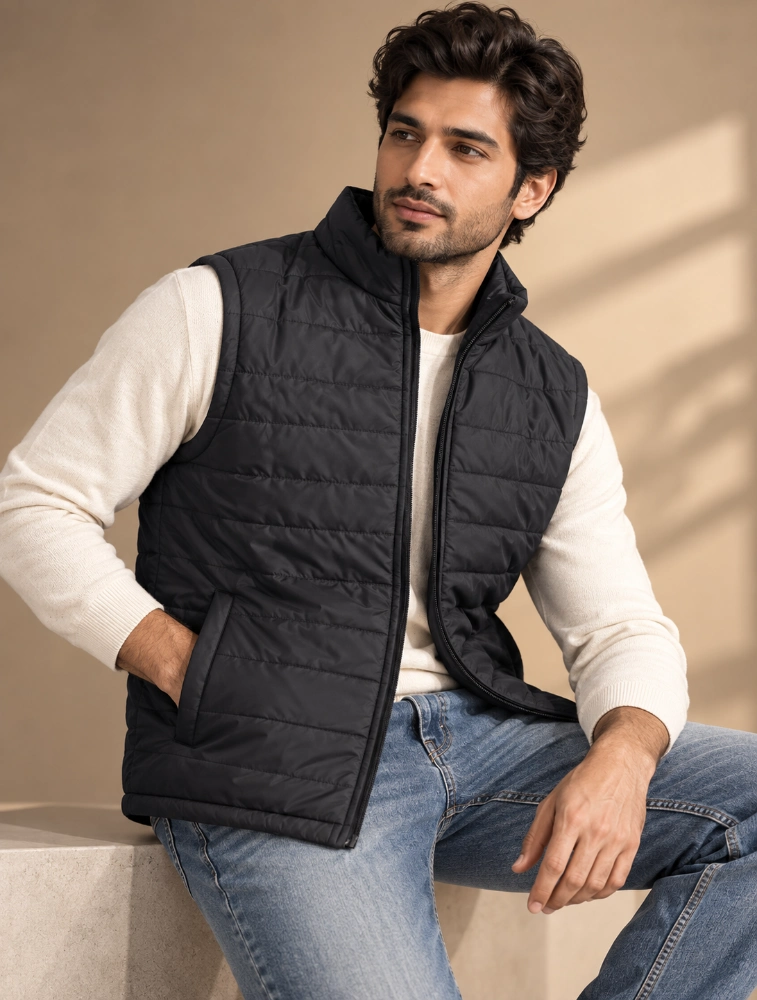
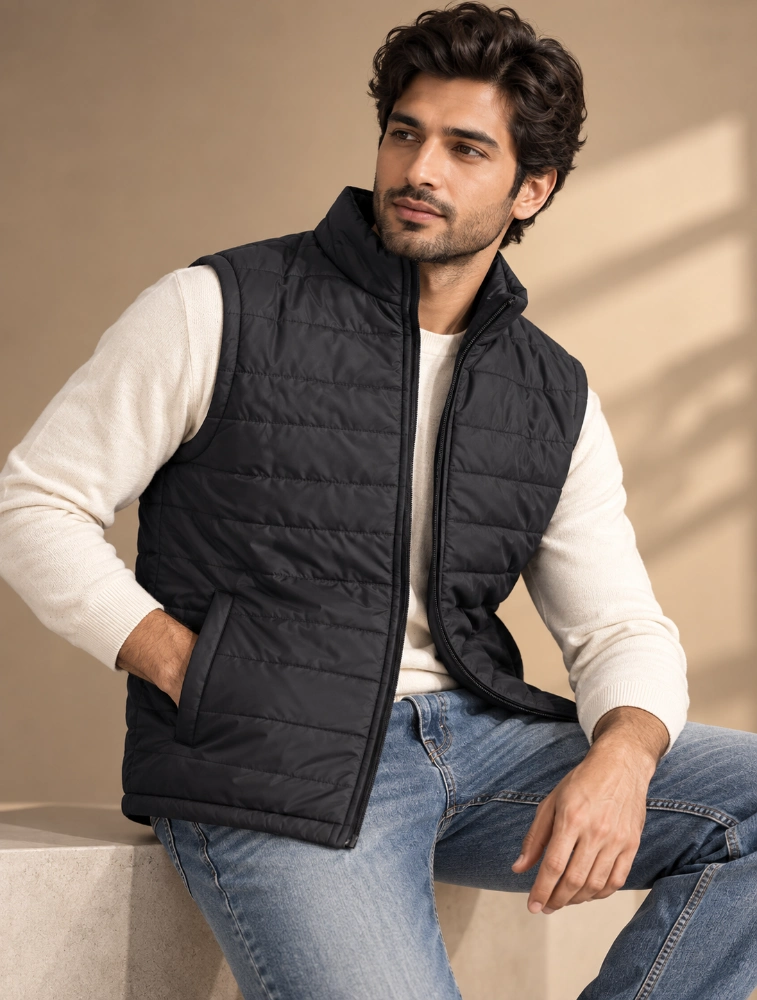
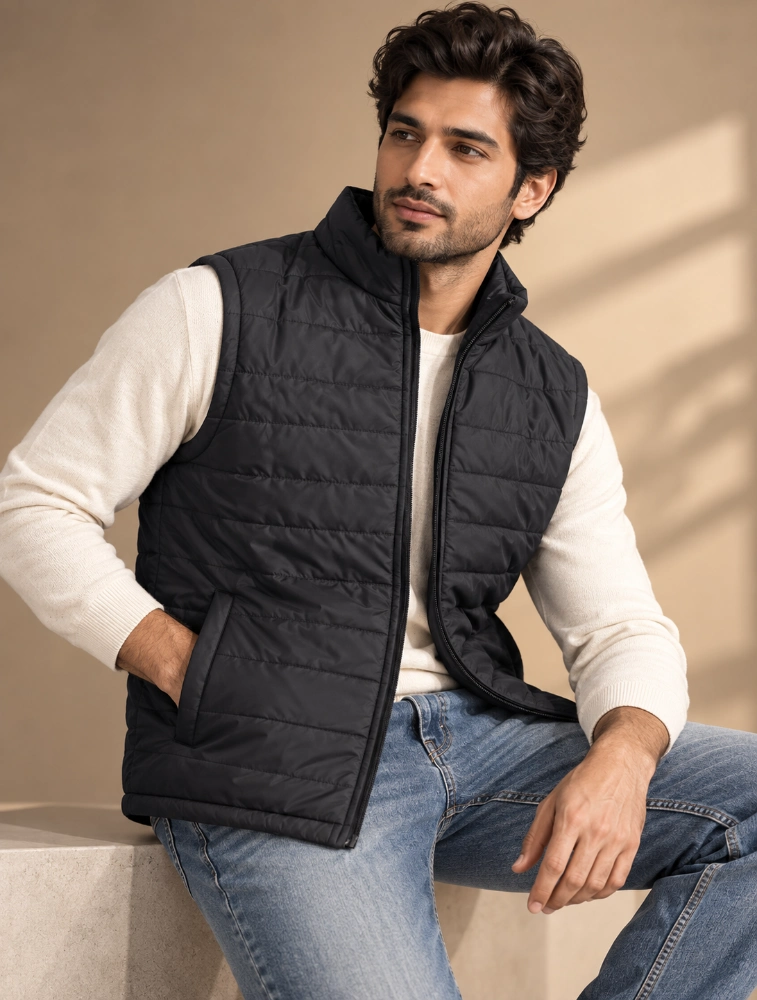
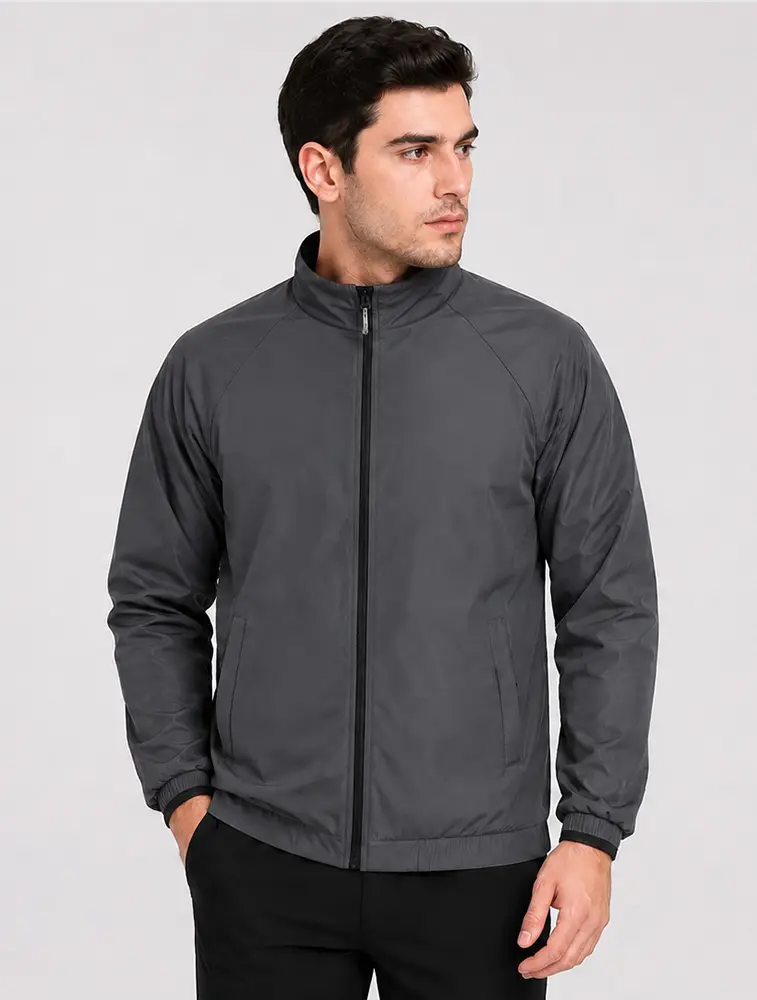
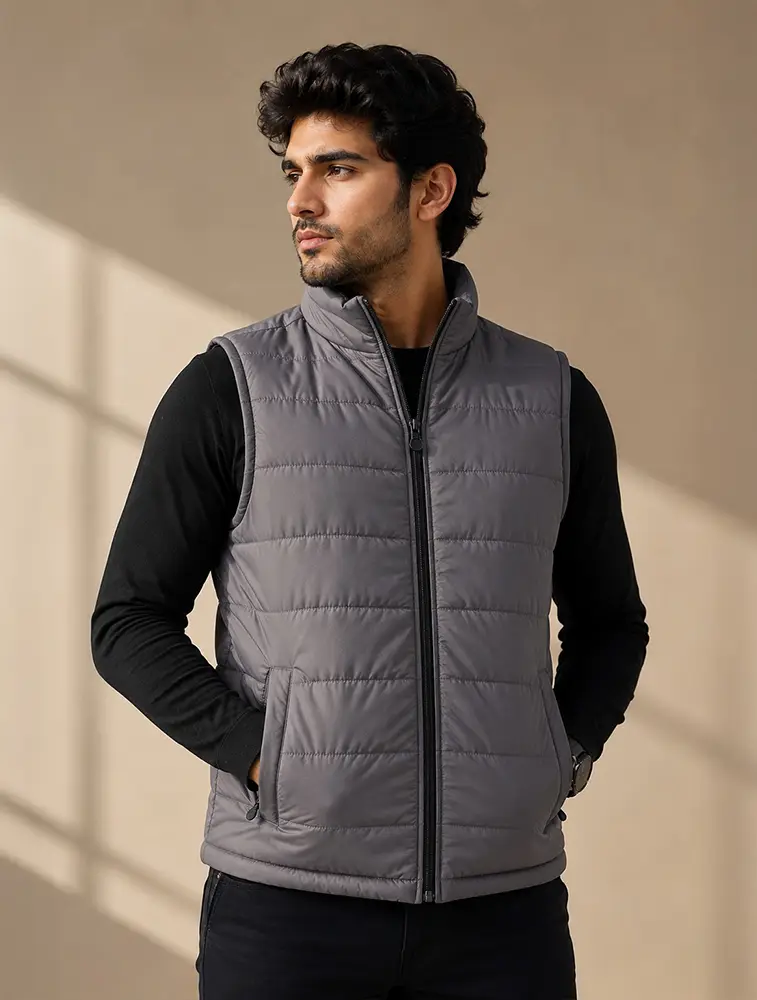
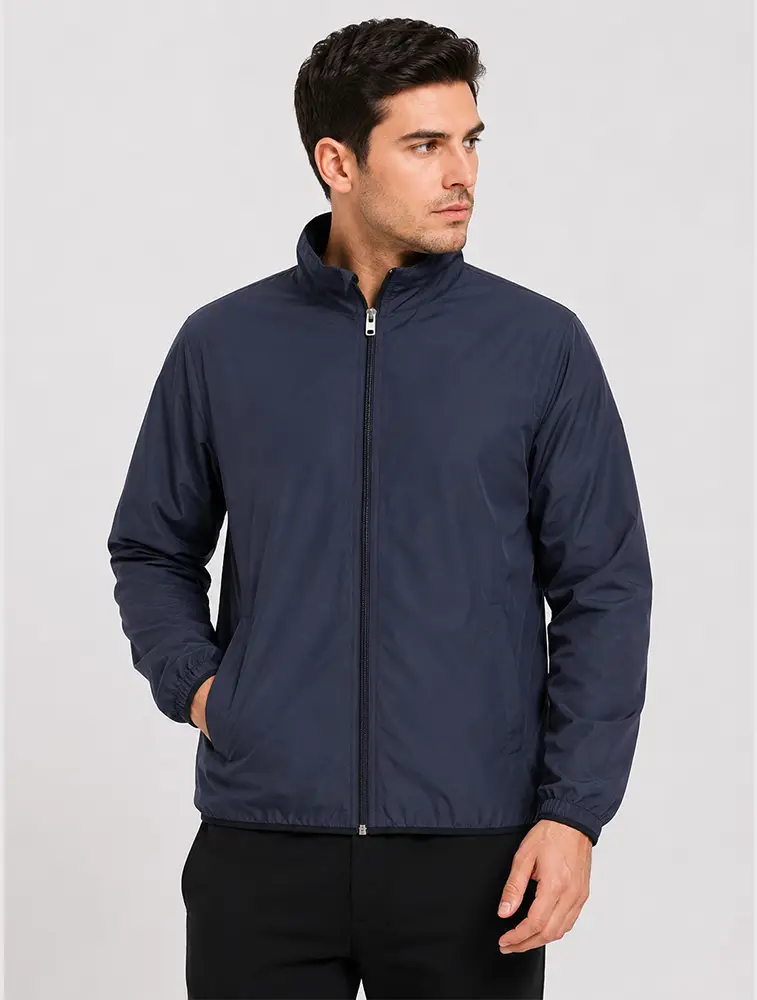
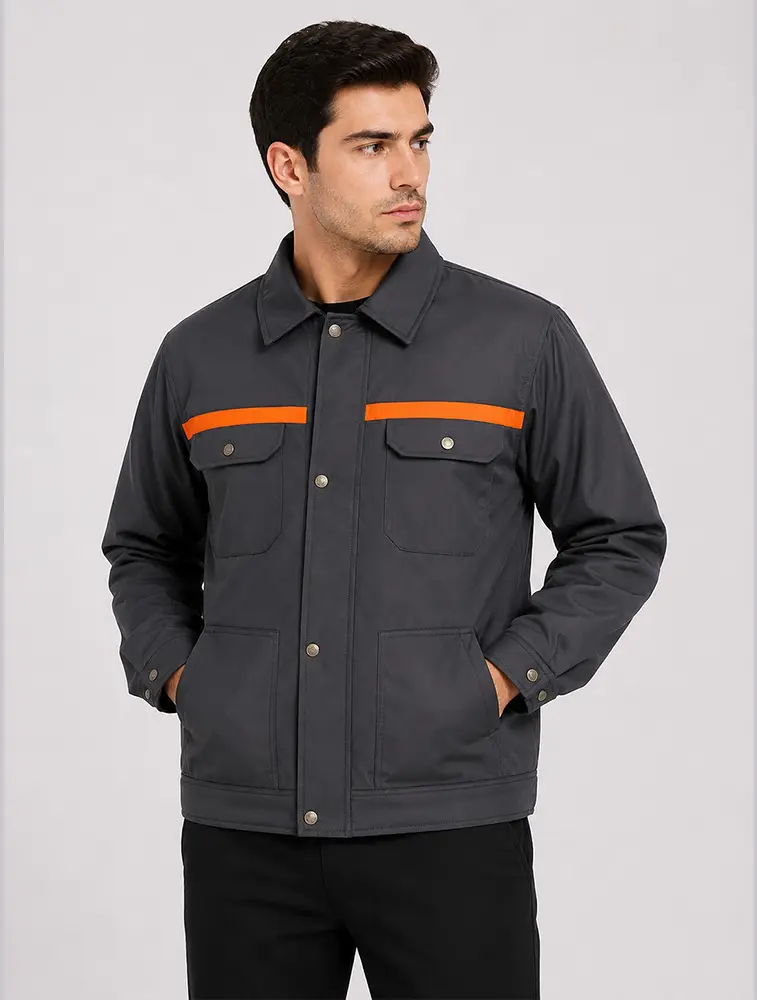
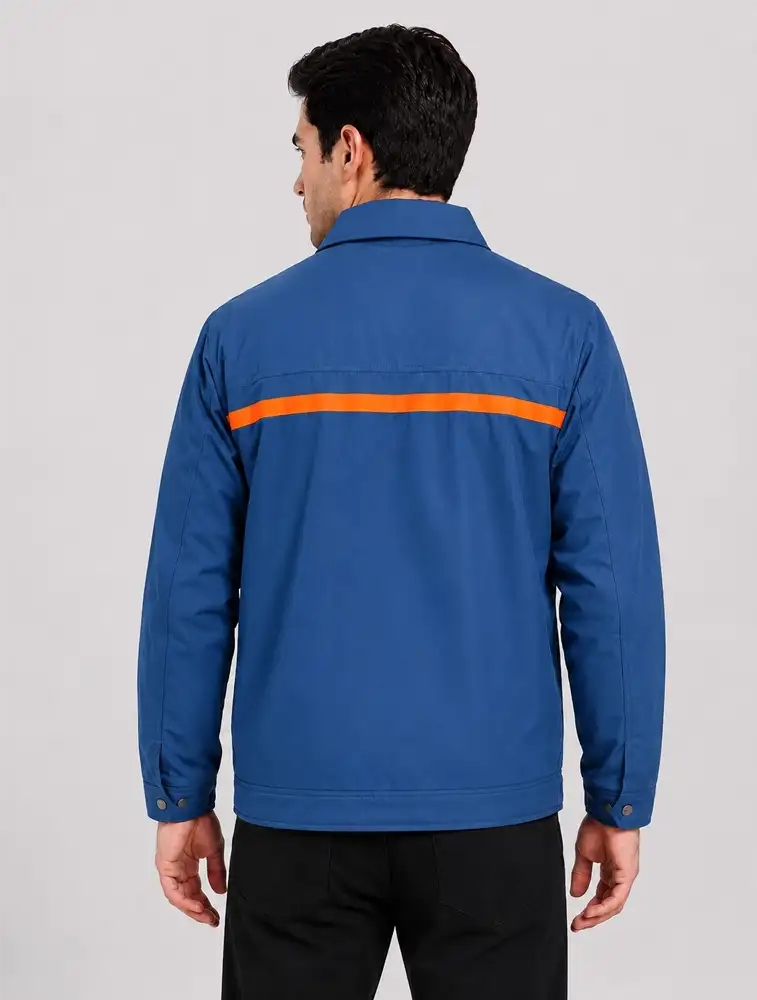
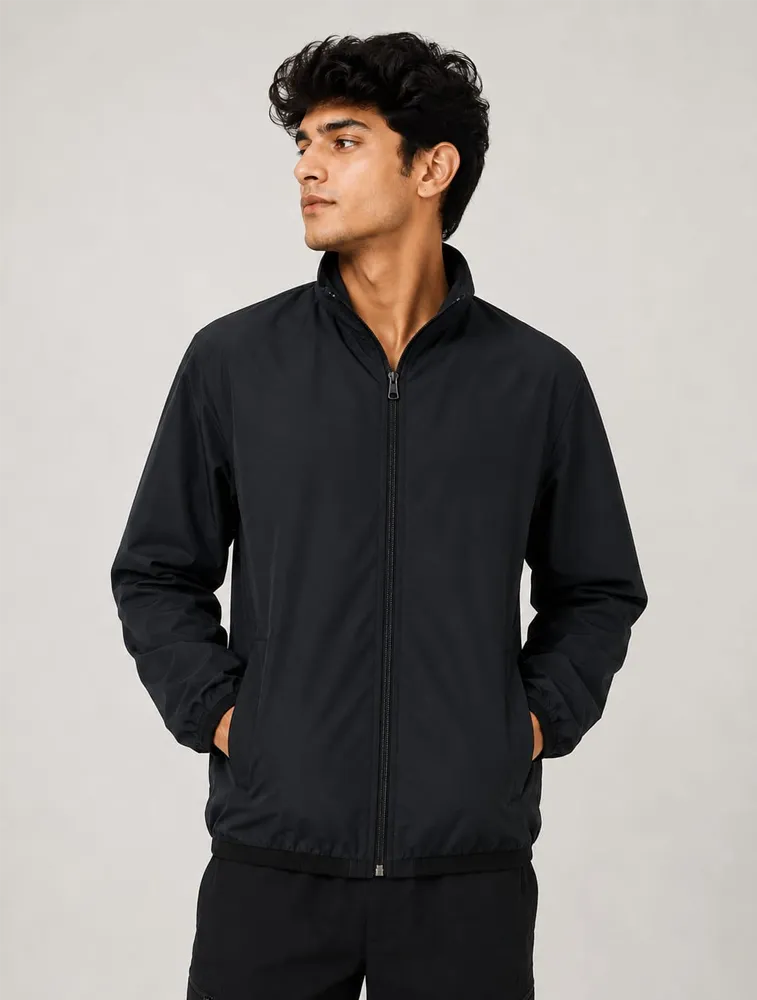
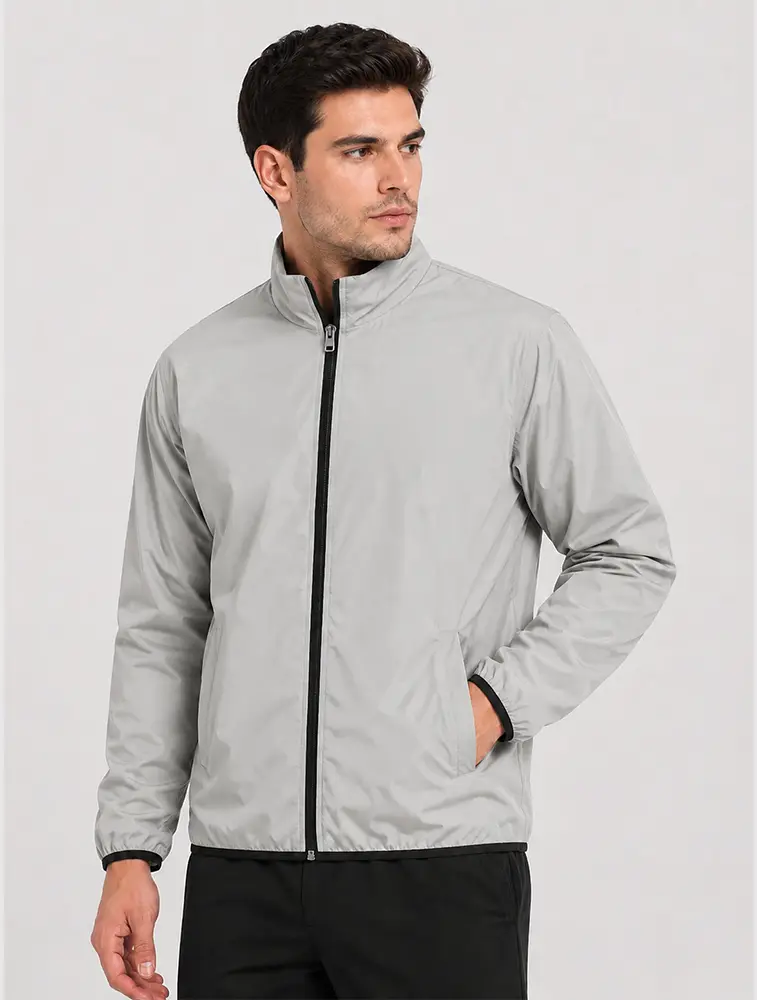
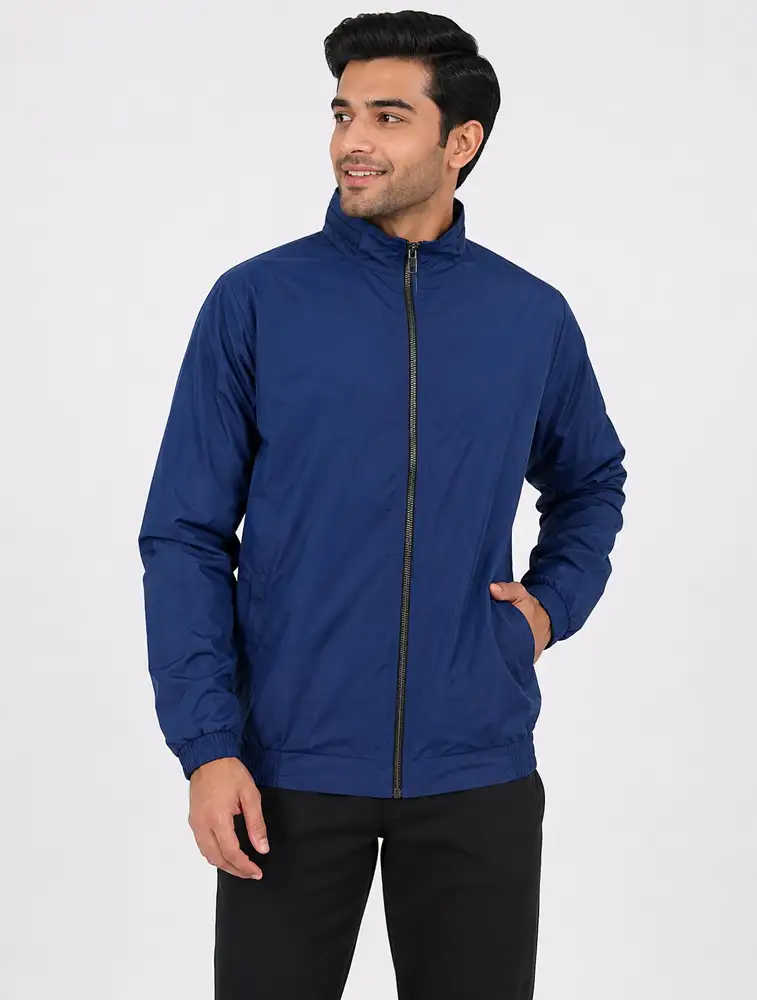
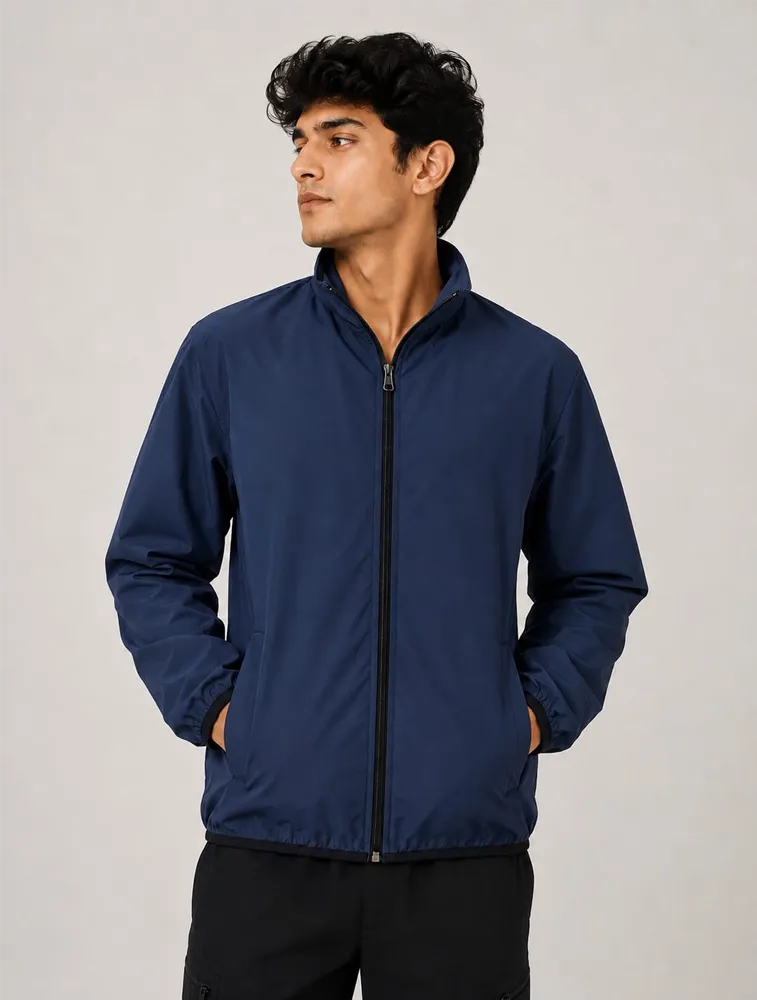
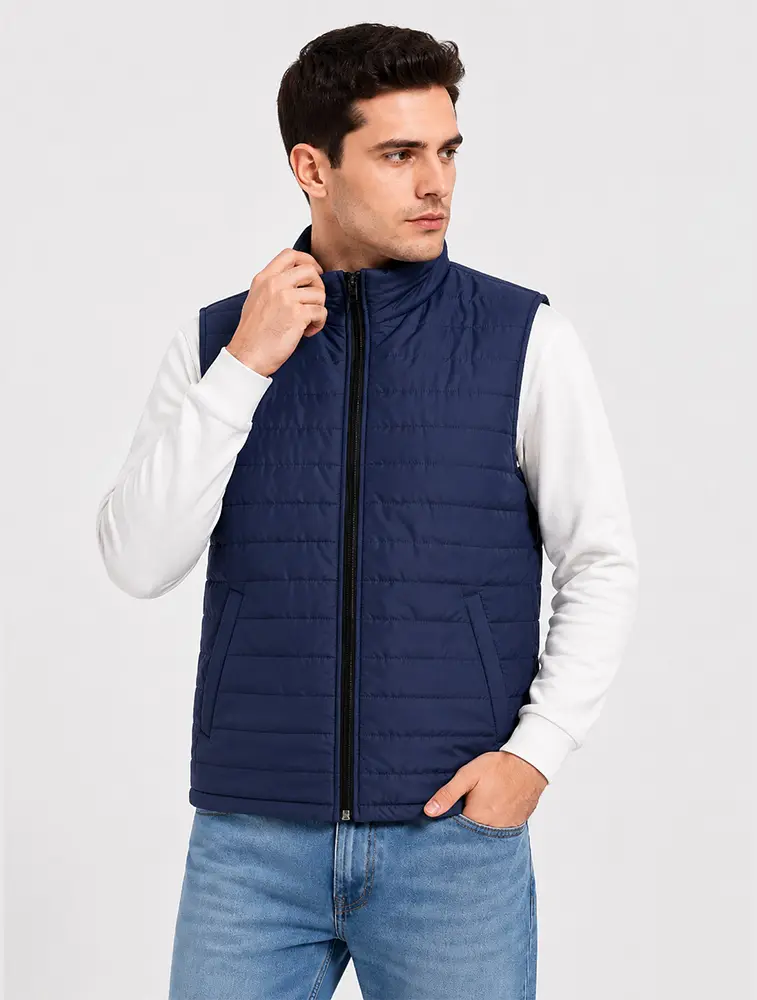
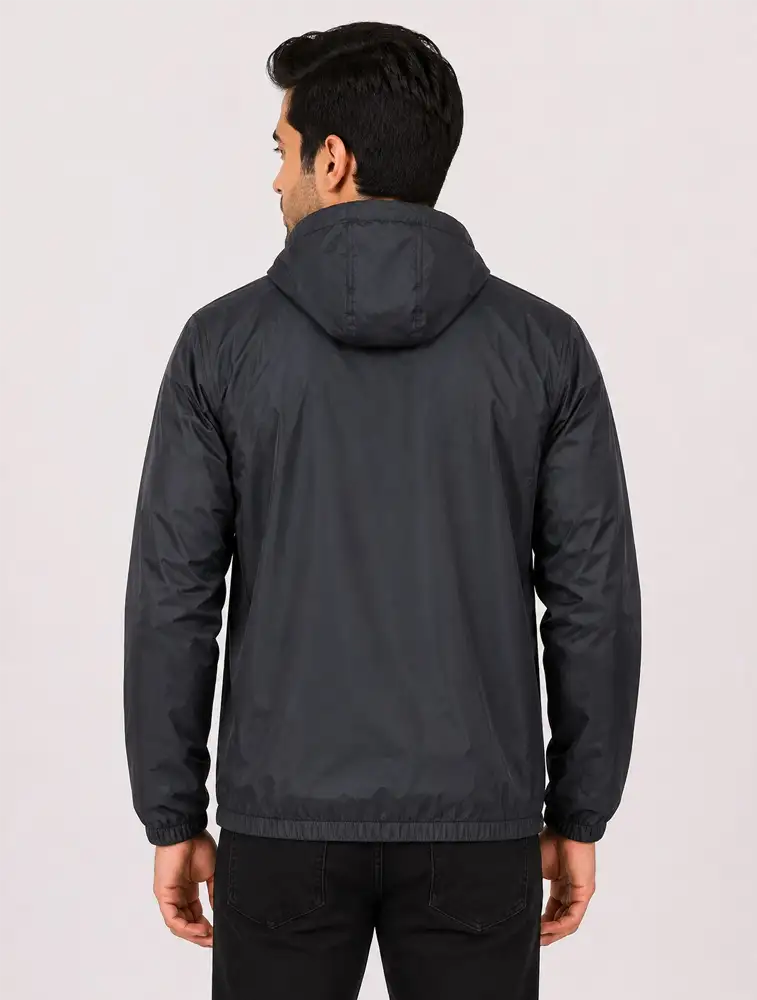
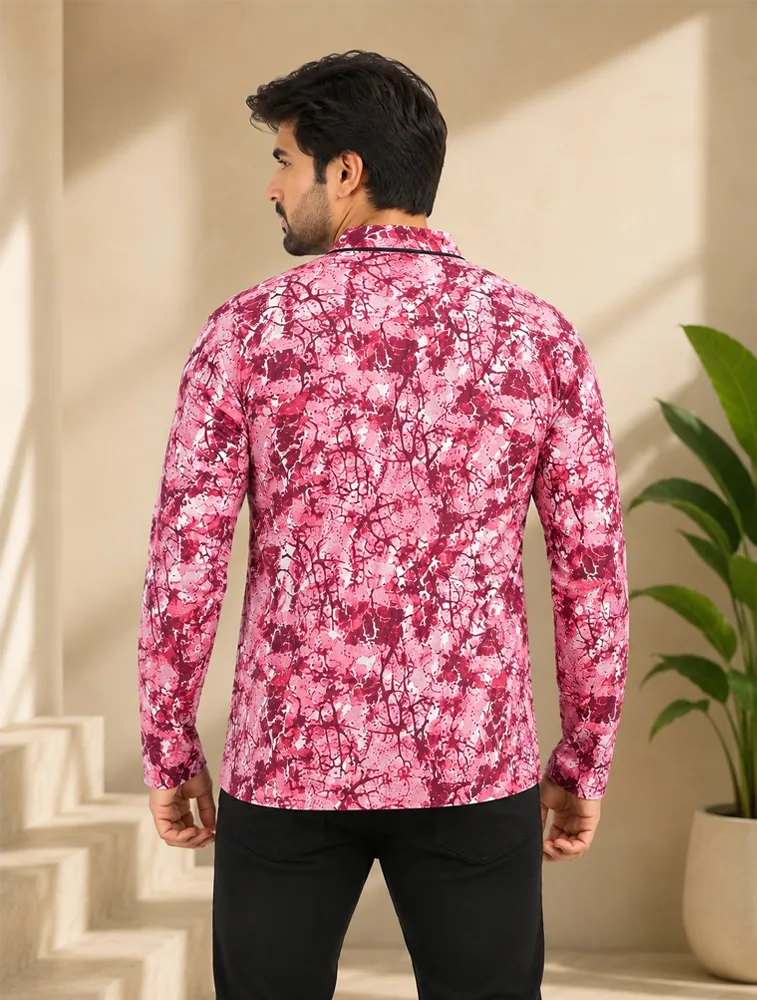
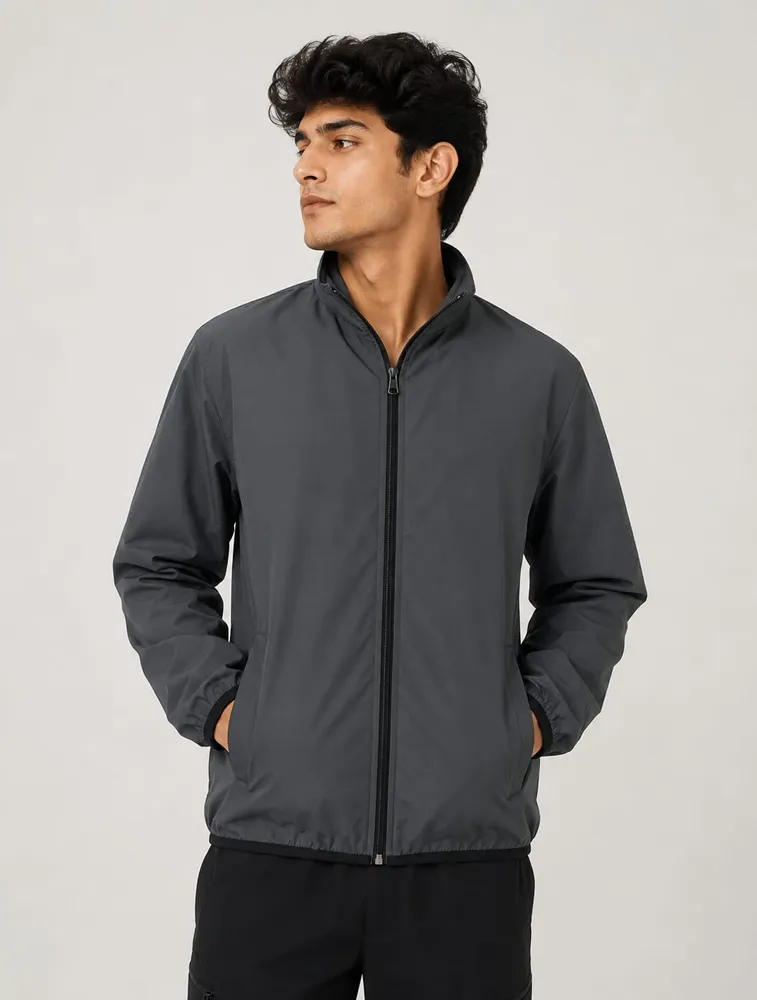
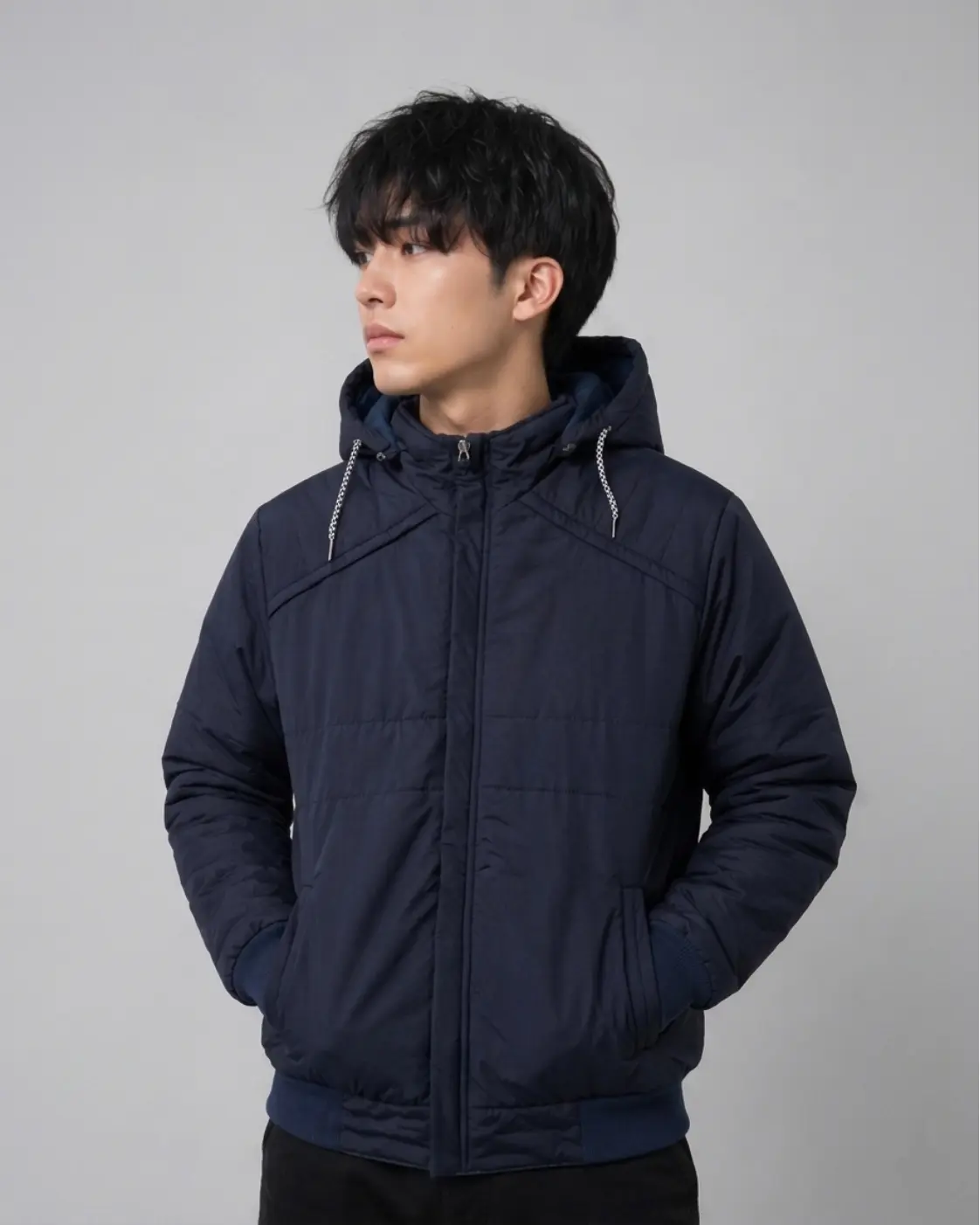
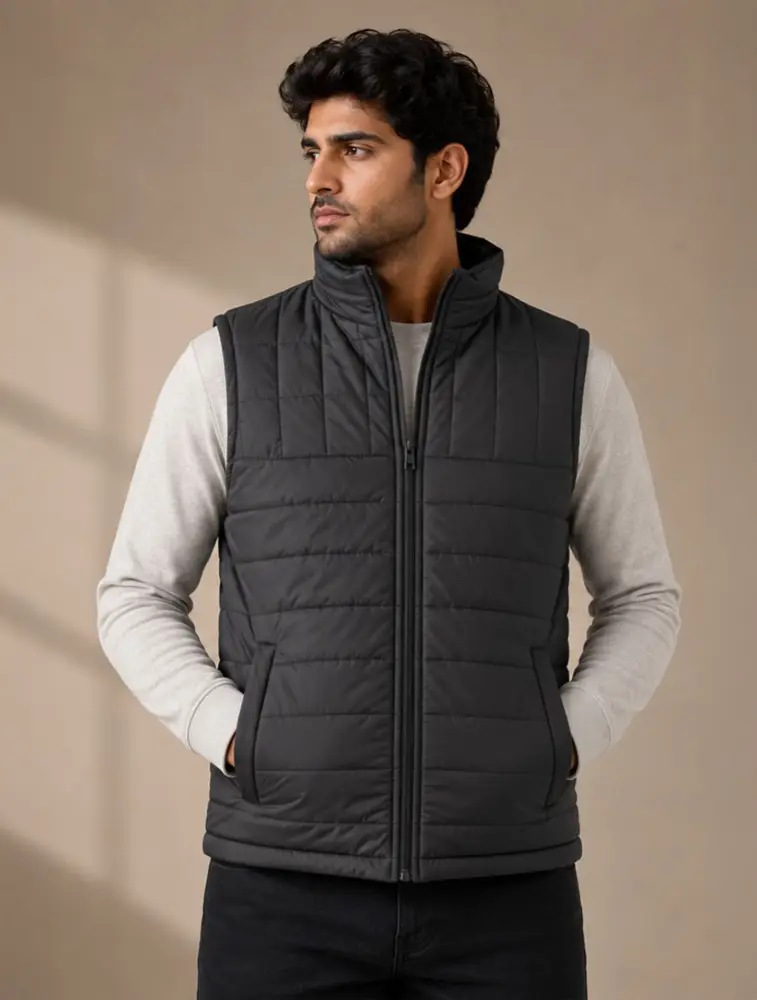
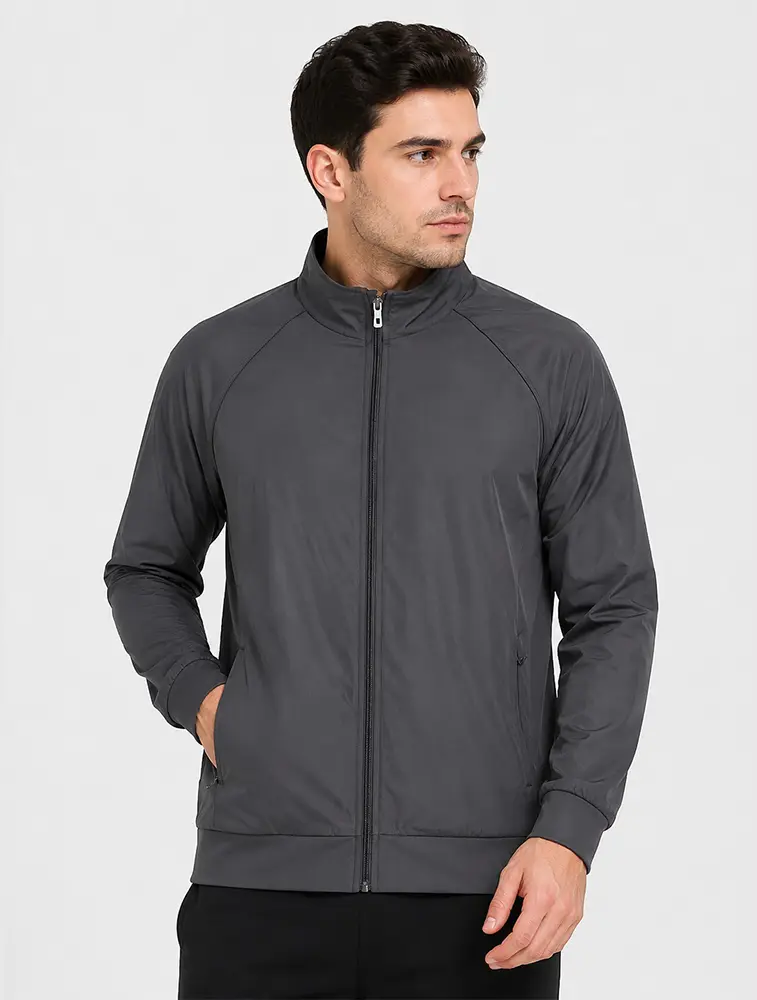
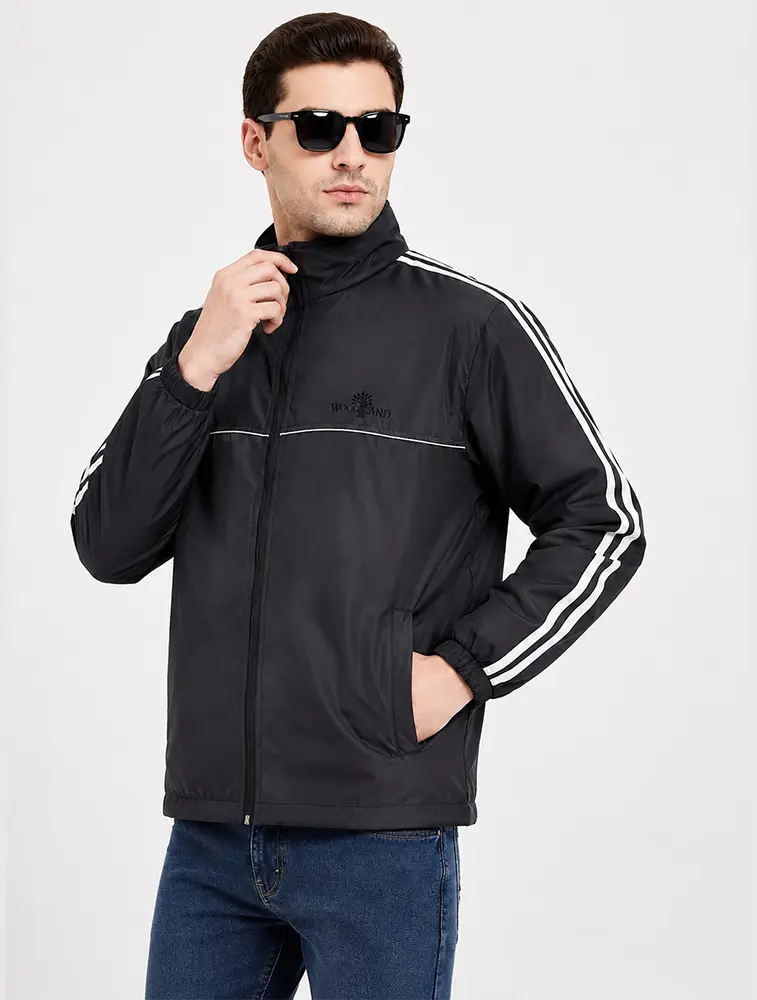
Bulk jackets for every use case
Brand-ready jackets for corporate, retail, uniforms and large custom programmes — sourced across partner factories with published prices.
Corporate & events
Brand-ready jackets for offsites, launches and conferences.
Get quote →
Uniforms & programmes
Consistent supply for schools, factories and frontline teams.
Corporate uniforms →
Own brand / resale
Unbranded or private-label stock for retail brands.
Launch your store →
Large custom runs
Contract manufacturing for high-volume programmes.
Contract manufacturing →Bulk jackets — frequently asked questions
Which standard measures rain protection on a jacket, and what changed in 2025?
EN 343 was the European standard for protective clothing against rain, and it has been replaced by EN ISO 24232:2025, adopting ISO 24232:2024. It measures two things: resistance to water penetration in Pascals, and breathability as a Ret value. No jacket on this page publishes either.
This is the first weather-protective category factori has published, and weather protection is the one apparel property that Europe treats as a measured performance rather than a description. A jacket that is sold on the promise of keeping rain out is, in the European framework, a garment with a test result behind it. Everything below is what the published standards literature says. None of it is a statement about any jacket on this page.
What EN 343 measured
EN 343:2019 carries the title Protective clothing – protection against rain. SATRA, an independent test house, describes it in published text as assessing two parameters. The first is resistance to water penetration, measured in Pascals, determined by a hydrostatic head test. The second is breathability, expressed as a Ret value — the resistance a fabric offers to water vapour escaping from the body — determined by the ISO 11092 ‘sweating guarded hotplate’ method. Each parameter is graded. SATRA records four different classifications for water penetration and four classes of breathability – ‘1’ to ‘4’ – with the higher number being the best. A third, optional test is named: EN 14360:2004, which SATRA says simulates a cloudburst.
Two numbers, each on a four-point scale, is the whole architecture. That is why a European buyer asking “is it waterproof?” is not asking a yes-or-no question. They are asking for a pair of class numbers.
What changed, and when
EN 343 has been superseded. The replacement is titled Protective clothing — Protection against rain (ISO 24232:2024, IDT) and is published in Europe as EN ISO 24232:2025. That title is confirmed independently by two standards catalogues, one Swedish and one Australian, and one European reseller titles its listing plainly as EN ISO 24232 (replaces EN 343). The identical-adoption marker “IDT” means the European text is the ISO text.
A supplier publication — a secondary source, and flagged here as one — sets out the sequence as publication of ISO 24232 as an international standard in 2024 and adoption in Europe as EN ISO 24232:2025, and states that The requirements, classification system, and icon remain the same and that For items currently in stock that still hold a valid EN 343 certificate, existing markings remain valid until a new or renewed certification is required. We could not verify either sentence against the standard itself, and we do not restate them as fact. If your tender turns on the transition date, get it from your certification body, not from a supplier page — ours included.
What we did not obtain, and therefore never state
We were not able to read the text of EN 343:2019, of EN ISO 24232:2025 or of ISO 24232:2024. That means this pack contains no Pascal figure, no Ret figure, no class boundary and no marking clause for either standard, in either direction. Where a number would be useful we have left a gap rather than filled it from a reseller's summary. A specification built on a number nobody can trace is worse than a specification with an honest blank in it.
What this means for a purchase order
If rain performance matters to the end use, the requirement belongs in the purchase order as a test result, not as an adjective. The sentence a buyer wants is of the form: fabric tested to the current rain-protection standard, report issued by a named laboratory, results stated for both parameters, report dated and referenced to the exact fabric and finish being supplied. That sentence commits a supplier. “Water- resistant” commits nobody. Nothing in this answer is advice on the regulatory status of any consignment, and factori issues no rulings on standards coverage.
WEATHER STANDARDS, Labelling & ClassificationQueries TargetedEN 343 rain protective clothing standard, EN ISO 24232 replaces EN 343, ISO 24232 2024 protection against rain, waterproof jacket standard bulk buying
Is a weather-protective jacket personal protective equipment in the European Union?
Under Regulation (EU) 2016/425, Annex I lists Category I as covering exclusively minimal risks, and item (e) of that list reads “atmospheric conditions that are not of an extreme nature”. Which category a specific jacket falls into is a determination for your own counsel, not for us.
This question decides how much paperwork travels with a container. It is also the question most often answered wrongly by both sides of a jacket contract, because the intuitive answer — a coat is just a coat — is right for most of this category and wrong for the part of it that is sold on a weather promise.
The three categories, in the Regulation's own words
Annex I of Regulation (EU) 2016/425 sorts risks into three categories. The Category I introduction reads: Category I includes exclusively the following minimal risks: and the list that follows contains, at item (e), atmospheric conditions that are not of an extreme nature. Category II is defined by exclusion: Category II includes risks other than those listed in Categories I and III. Category III is the list of risks the Regulation treats as capable of causing very serious consequences.
The commercial consequence of the split is the conformity assessment route. Category I is the lightest route in the Regulation. Category II and Category III each pull in third-party involvement, and Category III adds ongoing surveillance. A misclassification is not a paperwork error; it is a market-access error discovered at a border.
Why item (e) is the sentence to read twice
The qualifier is not of an extreme nature. An ordinary shower and an ordinary breeze are plainly inside it. The Regulation does not, in that item, define where ordinary stops. That boundary is the entire question for a buyer specifying jackets for outdoor workers, for a highway crew, for a dockyard, or for anyone whose people are outside in weather as a condition of employment rather than incidentally. The same physical garment can sit on either side of the line depending on the risk assessment of the workplace it is issued into — which is the employer's assessment, not the seller's.
What this page publishes about it
Nothing. Fifteen listings, and not one of them states a PPE category, refers to Regulation (EU) 2016/425, mentions a conformity assessment route, or references a declaration of conformity. Four of the fifteen are named or described in weather-protective terms. One of them — Black Unisex Reversible Jackets Can Be Worn Both For Rain And Winter, SKUFACTORI9920 — carries a rain claim inside the product name itself, which means the claim is in the indexed name field of the page's structured data.
What a European buyer should do with this
Treat the classification as your obligation to establish and ours to support. Tell us the end use and the workplace risk assessment; ask for the fabric test evidence in writing before the order rather than after; and route the categorisation question through your own compliance counsel or your notified body. Nothing in this answer is legal advice, factori does not classify any consignment under Regulation (EU) 2016/425, and no statement here should be read as a claim that any article on this page is, or is not, personal protective equipment.
WEATHER STANDARDS, Labelling & ClassificationQueries Targetedis a rain jacket PPE EU, Regulation 2016 425 Annex I category I, atmospheric conditions not of an extreme nature, PPE category weather clothing import
The listing says water-resistant. What is the difference between that and waterproof?
“Water-resistant” has no legal definition and no test behind it. In the European framework a rain claim is backed by a hydrostatic pressure result under ISO 811 and a vapour- resistance result under ISO 11092. One listing here uses the first word. None publishes either test.
The gap between those two words is where most bulk outerwear disputes begin. A buyer reads a marketing adjective, an end user stands in real rain, and the two meanings turn out never to have matched. The fix is not a better adjective. It is a number and a method.
The two published test methods, by their official titles
- ISO 811:2018 — Textiles — Determination of resistance to water penetration — Hydrostatic pressure test. Water is pressed against one face of the fabric and the pressure at which it comes through is recorded. This is the method behind the water-penetration parameter of the rain standard.
- ISO 11092:2014 — Textiles — Physiological effects — Measurement of thermal and water-vapour resistance under steady-state conditions (sweating guarded-hotplate test). This is the method behind the Ret value, which is a measure of how much the fabric resists sweat escaping.
Both are measurement methods, not pass marks. Neither says what a good result is; the product standard does that. We have not read the internal requirement values of either method and we state none here.
Why both numbers, and not just the first
A fabric can be pushed towards a very high hydrostatic result by coating it until it stops breathing. The wearer then gets wet from the inside instead of the outside, and reports the jacket as leaking. That is why the rain standard grades both parameters and why a purchase order that specifies only water penetration has specified half of a garment. If your people will be moving in these jackets — a delivery fleet, a site crew, a stadium team — the vapour-resistance number is the one that decides whether they keep wearing them after week three.
What this page actually says
The specification block for SKUFACTORI9920, the reversible article, lists its fabric as Premium Water- Resistant Polyester, and its description says the garment protects you from light rain. Its features list adds wind-resistant performance. Those are the listing's own words, reproduced here so a buyer can see exactly what has and has not been committed to. Attached to them is no pressure figure, no vapour-resistance figure, no class, no standard number, no laboratory name and no report date. The three sports wind cheaters carry the phrases Moisture-wicking technology helps keep the body cool, dry, and comfortable, Quick-dry fabric allows sweat to evaporate rapidly and Wind-resistant construction provides protection against light wind, again with no method behind any of them.
The three lines to put in the specification instead
Name the test method. Name the required result and state whether it is before or after washing and after how many cycles. Name who issues the report and require it to reference the exact fabric, coating and finish that will be supplied, not a similar quality. Add a fourth line if the garment is seamed through the weather layer, because an untaped seam will fail a garment whose fabric passes. A supplier who can meet those lines will say so; one who cannot will offer you an adjective. This is guidance on how to write a specification and is not legal, regulatory or certification advice; where a jacket has to meet a regulated protection requirement in the destination market, take the advice of an accredited laboratory or a notified body before the order is placed.
WEATHER STANDARDS, Labelling & ClassificationQueries Targetedwater resistant vs waterproof jacket difference, ISO 811 hydrostatic pressure test, ISO 11092 breathability Ret, what does water resistant actually mean
Can a commercial document replace the fibre content label when we ship jackets into Europe?
Yes, in defined circumstances. Article 14(2) of Regulation (EU) No 1007/2011 allows labels or markings to be replaced or supplemented by accompanying commercial documents when products are supplied to economic operators within the supply chain, or delivered against an order from a contracting authority.
This is the single most commercially useful provision in European textile law for the buyer types this page serves, and it is routinely missed. A distributor importing jackets for onward sale to shops, or a public body buying them under a procurement contract, is not necessarily in the same labelling position as a shop selling to a consumer.
The Regulation, and the general rule first
The instrument is Regulation (EU) No 1007/2011 of the European Parliament and of the Council of 27 September 2011 on textile fibre names and related labelling and marking of the fibre composition of textile products. Article 14 is headed Labels and markings, and paragraph 1 sets the baseline: Textile products shall be labelled or marked to give an indication of their fibre composition whenever they are made available on the market. The labelling and marking of textile products shall be durable, easily legible, visible and accessible and, in the case of a label, securely attached.
The provision that changes the answer for B2B
Paragraph 2 reads: Without prejudice to paragraph 1, labels or markings may be replaced or supplemented by accompanying commercial documents when the products are being supplied to economic operators within the supply chain, or when they are delivered in performance of an order placed by any contracting authority as defined in Article 2 of Directive 2014/24/EU of the European Parliament and of the Council of 26 February 2014 on public procurement and repealing Directive 2004/18/EC.
Paragraph 3 then attaches a condition that buyers forget: The textile fibre names and descriptions of fibre compositions referred to in Articles 5, 7, 8 and 9 shall be clearly indicated in the accompanying commercial documents referred to in paragraph 2 of this Article. Abbreviations shall not be used with the exception of a mechanised processing code, or where the abbreviations are defined in international standards, provided that they are explained in the same commercial document. The relief is not a relief from declaring composition. It is a relief from where the declaration is printed.
What has to be declared, whichever route you take
Article 9(1) states: A textile product shall be labelled or marked with the name and percentage by weight of all constituent fibres in descending order. Paragraph 2 permits fibres present at up to 5 per cent individually, or 15 per cent collectively, to be designated as “other fibres”. Paragraph 4 permits “mixed fibres” or “unspecified textile composition” where the composition is hard to state at the time of manufacture. Article 20 is headed Tolerances.
Where this page falls short of the requirement
Nine of the fifteen listings state a fabric only as a descriptive phrase — Lightweight Polyester, Premium Polyester, Polyester Outer with Soft Inner Lining — with no percentage. One, SKUFACTORI7280, publishes 100% Polyester, which is a composition. One, SKUFACTORI7271, publishes Polyester / Poly-Cotton Blend, which names two constructions and declares neither ratio, and which is the single row on this page a European buyer should query first. A descending-order percentage statement is not decoration; it is the operative content of the declaration, and it has to exist before either the label route or the commercial- document route can be used. Ask for it in writing at quotation stage. Nothing in this answer is legal advice on your obligations under the Regulation, and factori does not determine which route applies to your consignment.
WEATHER STANDARDS, Labelling & ClassificationQueries TargetedRegulation 1007 2011 textile fibre labelling, Article 14 commercial documents supply chain, fibre composition label B2B exemption, textile labelling EU bulk import
Do bulk jackets sold in India need retail MRP labelling, and does that change for an institution?
Rule 3 of the Legal Metrology (Packaged Commodities) Rules, 2011 states that the chapter does not apply to packaged commodities meant for industrial consumers or institutional consumers. Whether your consignment falls inside that exclusion is a question for your own counsel, not for a supplier.
This single rule is the sharpest commercial dividing line across the six kinds of buyer this page serves, and it is the reason two of them can be quoted the same jacket on very different packing terms. A hospital buying jackets for its own porters and a retailer buying the identical jackets to hang on a rail are not in the same regulatory position, and the packing line has to know which one it is producing for before the first carton is sealed.
Rule 3, in the Rules' own words
The exclusion reads: The provisions of this Chapter shall not apply to,- (a) packages of commodities containing quantity of more than 25 kg or 25 litre excluding cement and fertilizer sold in bags up to 50 kg; and (b) packaged commodities meant for industrial consumers or institutional consumers.
Who counts, in the Rules' own words
The Rules define both terms. An institutional consumer is the institutional consumer like transportation, Airways, Railways, Hotels, Hospitals or any other service institutions who buy packaged commodities directly from the manufacturer for use by that institution. An industrial consumer is the industrial consumer who buy packaged commodities directly from the manufacturer for use by that industry.
Read the two definitions slowly, because both carry the same two conditions and buyers routinely satisfy only one. The purchase has to be directly from the manufacturer, and the goods have to be for use by that institution or industry. A body that buys through an intermediary, or that buys to distribute onward rather than to use, is looking at a different analysis. That analysis is your counsel's to perform.
What has to be declared when the exclusion does not apply
Rule 6(1) sets out the declarations to be made on every package: the name and address of the manufacturer, or where the manufacturer is not the packer, of both; the common or generic names of the commodity; the net quantity in standard units of weight or measure; the month and year of manufacture, pre-packing or import; the retail sale price of the package; where sizes are relevant, the dimensions of the commodity; and such other matter as are specified in the Rules. Seven items, and the fifth of them — the retail sale price — is the one that forces a decision before the goods are packed rather than after.
Why this belongs in the purchase order, not the delivery note
Retail-ready packing and institutional packing are different production operations with different consumables, different artwork approvals and different lead times. Deciding at the dock that a consignment needed printed MRP declarations means unpacking and repacking every carton. The practical instruction is simple: tell your supplier at quotation stage which of the two you are, in writing, and let the packing specification follow from it.
This page publishes nothing about any of the above. Fifteen listings, and no reference to the Rules, to the exclusion, or to which packing route a given order will receive. Nothing in this answer is legal advice, and factori makes no determination that any consignment is, or is not, within Rule 3.
WEATHER STANDARDS, Labelling & ClassificationQueries TargetedLegal Metrology Packaged Commodities Rules 2011 jackets, institutional consumer exemption MRP, industrial consumer packaged commodities rule 3, retail sale price declaration apparel India
Three listings publish a care row and twelve publish nothing. What care information should a bulk order fix?
Three of the fifteen listings publish a care row, and on one of those three the entire specification belongs to a different garment. ISO 3758:2023 is the international care labelling code using symbols. What a bulk order must fix is the wash procedure, in words, in the purchase order.
Care information is the cheapest clause in an outerwear contract and the one most likely to be left out. It costs nothing to specify and it is the first thing anyone reaches for when a consignment comes back faded, shrunk or delaminated after its first institutional wash.
What the standard is, and what it is not
ISO 3758:2023 carries the title Textiles — Care labelling code using symbols. It is the code — the vocabulary of washtub, triangle, square and iron symbols and what each one means. It is a symbol system, not a legal instrument, and whether any particular market requires symbols, words, or both is a question of that market's own law and of your own counsel's advice. We make no statement about which markets require what.
What this page actually publishes
Two care rows are genuine. SKUFACTORI9914 publishes Machine Wash or Gentle Hand Wash.
SKUFACTORI9920 publishes Machine Wash or Hand Wash in Cold Water. Do Not Bleach. Dry in Shade. The third care row sits on SKUFACTORI9916, and the entire specification block on that listing — care row included — belongs to a different garment, so it tells a buyer nothing about the jacket they would receive.
There is a second template defect worth naming. On three listings the heading Product Care Guidelines introduces a list that contains no care content at all. On SKUFACTORI9920 the block under that heading is a features list; on SKUFACTORI9916 it is a ten-item selling-points list. A buyer scanning for wash instructions finds a heading that promises them and copy that does not deliver them.
Why outerwear is harder than a T-shirt here
A jacket is an assembly. Shell, lining, fill, zip tape, zip slider, ribbing, interlining and any coating each respond differently to heat, to agitation, to chlorine and to tumble drying. A procedure that is safe for the shell can collapse the fill, and a temperature that is safe for the fill can distort the zip tape. That is why a care instruction for outerwear has to be written for the finished garment as assembled, and why copying a care line across from a knitwear listing — which is visibly what has happened on at least one of these — is not a small error.
The care clause to put in the purchase order
Specify the wash method and the maximum temperature; whether bleach and optical brighteners are permitted; the drying method, including whether tumble drying is allowed and at what setting; the ironing constraint, and whether any part of the garment must not be ironed; whether professional or industrial laundering is contemplated, because that is a different process from domestic washing and must be stated if it will happen; and the language or languages the information must appear in for the destination market. Then require the approved pre-production sample to have been through the stated procedure before you sign it off. A care instruction nobody has tested is a hope, not a specification.
WEATHER STANDARDS, Labelling & ClassificationQueries Targetedjacket care label bulk order, ISO 3758 care labelling code symbols, washing instructions outerwear specification, care instructions purchase order textiles
Which customs heading covers a bomber jacket, and why is unisex not a customs concept?
Chapter 61 covers apparel that is knitted or crocheted and Chapter 62 covers apparel that is not. Within each, headings split by gender: 6101 and 6201 for men's or boys', 6102 and 6202 for women's or girls'. Unisex is not a customs concept, yet nine listings publish it.
Classification is the buyer's or the importer's responsibility and their broker's determination. What follows is what the published chapter texts say, so that you can see which facts your broker will need from the supplier and can ask for them before the goods are made rather than while they sit at a port.
The first fork: knitted or not
Chapter 61 is headed ARTICLES OF APPAREL AND CLOTHING ACCESSORIES, KNITTED OR CROCHETED, and its first chapter note reads This Chapter applies only to made up knitted or crocheted articles. Chapter 62 is headed ARTICLES OF APPAREL AND CLOTHING ACCESSORIES, NOT KNITTED OR CROCHETED, with the note This Chapter applies only to made up articles of any textile fabric other than wadding, excluding knitted or crocheted (other than those of heading 6212). The construction of the shell fabric, not the look of the garment, decides which chapter you are in.
The second fork: whose garment it is
The outerwear headings are drafted in matched pairs. Heading 6101 covers MEN'S OR BOYS' OVERCOATS, CARCOATS, CAPES, CLOAKS, ANORAKS (INCLUDING SKIJACKETS), WIND-CHEATERS, WINDJACKETS AND SIMILAR ARTICLES, KNITTED OR CROCHETED, OTHER THAN THOSE OF HEADING 6103, and 6102 is the identical text for WOMEN'S OR GIRLS' articles. On the woven side, 6201 covers MEN'S OR BOYS' OVERCOATS, CARCOATS, CLOAKS, ANORAKS (INCLUDING SKI-JACKETS), WINDCHEATERS, WIND JACKETS AND SIMILAR ARTICLES OTHER THAN THOSE OF HEADING 6203, and 6202 is its women's and girls' counterpart. Heading 6110 covers JERSEYS, PULLOVERS, CARDIGANS, WAISTCOATS AND SIMILAR ARTICLES, KNITTED OR CROCHETED, which matters because some articles sold commercially as jackets are drafted into it.
Note what the tariff does not contain. There is no unisex heading. Nine of the fifteen listings on this page publish Unisex as the gender, and that word will have to be resolved into one of the two tariff pairs before a declaration can be filed. Resolution is normally done from the cut and the closure direction, which means the answer is decided in the pattern room, not in the marketing copy. Ask for it in writing.
The third fork, and the one that catches weather jackets
Heading 6210 covers GARMENTS, MADE UP OF FABRICS OF HEADING 5602, 5603, 5903, 5906 OR 5907. Those are felt, nonwovens, and textile fabrics that are impregnated, coated, covered or laminated with plastics or rubber. A shell described commercially as water-resistant may or may not be built on such a fabric, and if it is, the classification analysis changes shape entirely. That is the single technical question your broker will ask about the reversible article and the soft shell on this page, and the page does not answer it.
What we will not tell you
We name no tariff line for any particular shipment, and we quote no rate of basic customs duty, IGST or GST. Those are decisions for your customs broker and your own professional advice, taken on the finished specification, the destination and the trade agreement in play. What we will do is supply, in writing and before production, the four facts the determination turns on: knit or woven, the gender the pattern is cut to, the exact fibre composition, and whether the shell fabric is coated, laminated or impregnated.
WEATHER STANDARDS, Labelling & ClassificationQueries Targetedjacket HS code chapter 61 62, heading 6101 6102 6201 6202 windcheater anorak, unisex jacket customs classification, coated fabric garment heading 6210
Fifteen jackets are listed here. What are they, and why does one of them show no price?
Fifteen jackets on one page, in four constructions: bomber, wind cheater, puffer and soft shell. Published prices run from Rs 470 to Rs 1215 per piece. One listing, SKUFACTORI9918, carries no price at all — its headline renders as a currency symbol with nothing behind it.
This is the smallest category on the site, and it is small enough to set out in full. Doing so is more useful than a summary, because the shape of the ladder is itself the buying decision.
The range, by construction and price
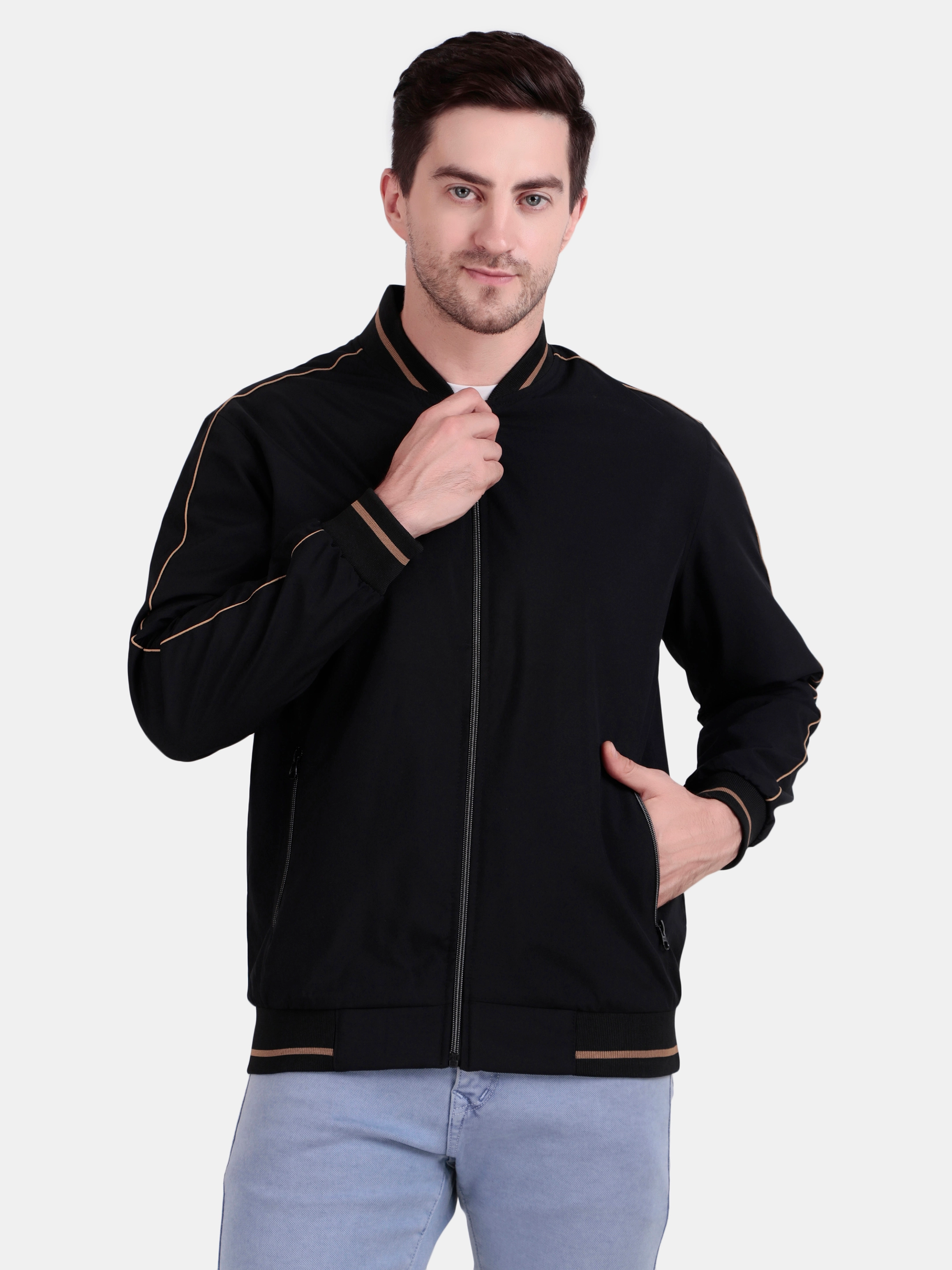
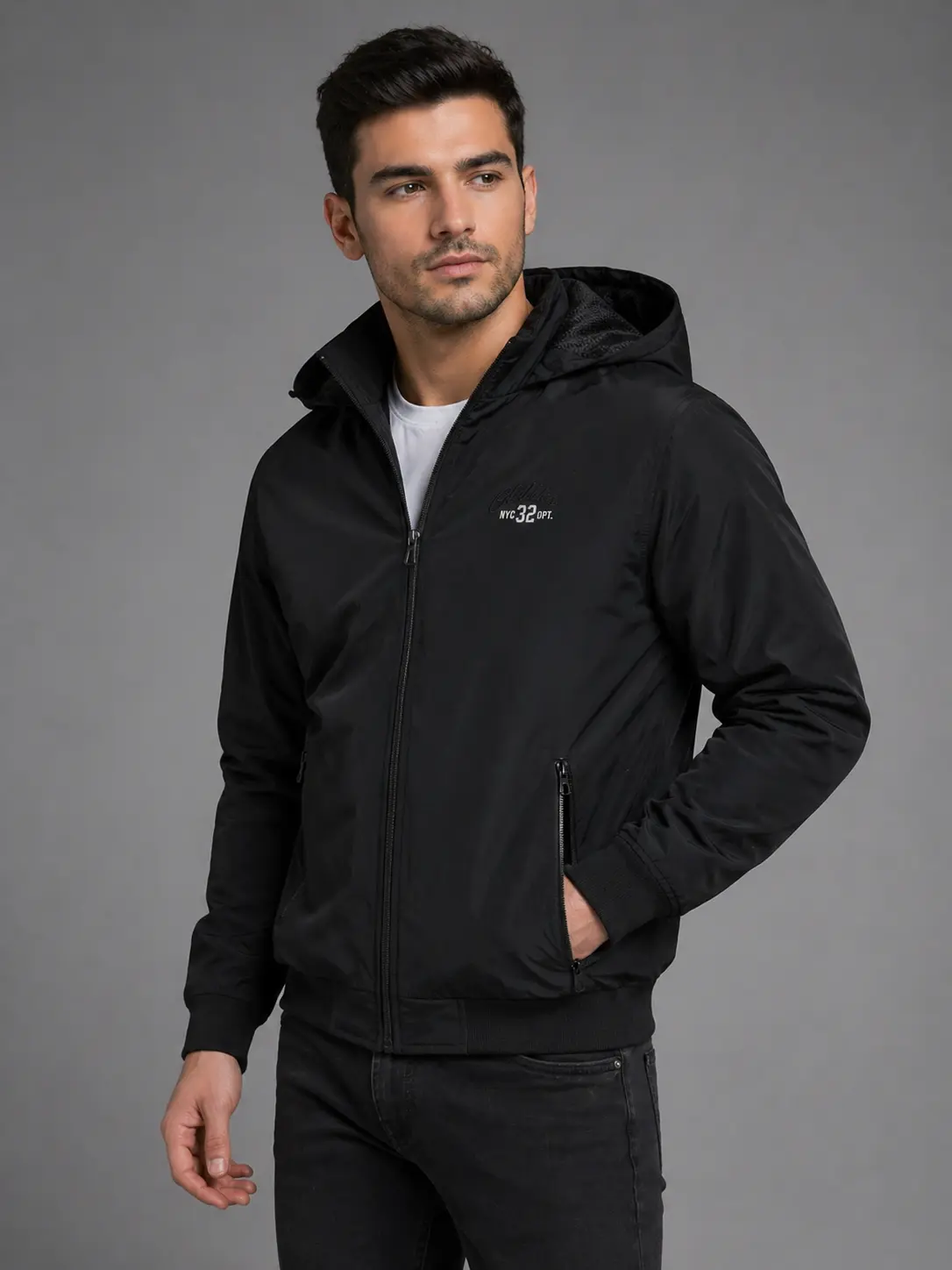
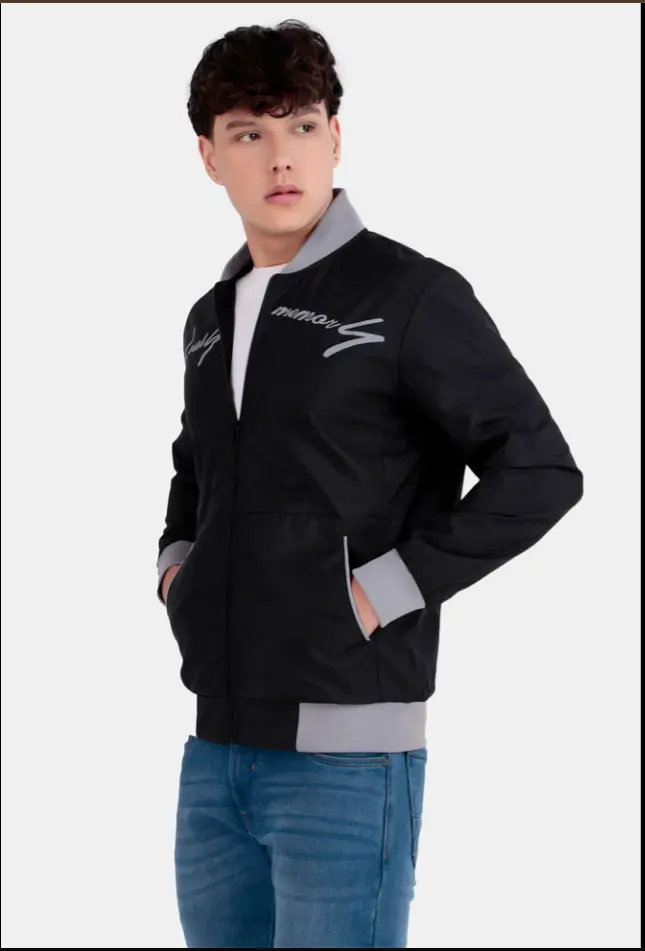
- Bombers, Rs 470 to Rs 533. Four articles. Olive Green Mens Solid at Rs 470, Black Tan Mens Contrast Piping at Rs 502, Black Mens Hooded at Rs 533 and Black Mens Printed at Rs 533. All four are published as men's.
- Wind cheaters, Rs 549 to Rs 658. Five articles. A lightweight unisex wind cheater in bottle green with no price, its light grey twin at Rs 549, and three unisex sports wind cheaters at Rs 658 each.
- Puffers, Rs 627. Four articles. A men's detachable-hooded puffer, and three unisex half-sleeve puffers in grey, navy blue and black, all four at Rs 627.
- Weather and shell, Rs 863 to Rs 1215. Two articles. The black unisex reversible jacket at Rs 863, and the black unisex soft shell at Rs 1215, which is the ceiling of the published range.
The listing with no price
SKUFACTORI9918, the bottle green lightweight wind cheater, publishes a headline reading Rs .00 Onwards. Its quantity table publishes three rows — 100 - 999 Products, 1000 - 9999 Products and Above 10000 Products — and every one of the three shows Rs .00 / Piece. The same missing value renders in the category grid as the words From Price on request. One null, two renderings, neither of them a price. If this article is on your shortlist, the price has to be requested; it is not on the page in any form.
One listing describes the wrong garment
SKUFACTORI9916 is sold as Black Unisex Soft Shell Jackets at Rs 1215, the most expensive article here. Its specification table publishes Color: Dark Grey, Product Type: Unisex Half Sleeve Puffer Jacket, Sleeve Type: Half Sleeve and Filling: Lightweight Polyfill Insulation, and its description sells a quilted half-sleeve puffer. Those rows belong to SKUFACTORI9914, a different article. Colour, garment type, sleeve length, construction and fill are all wrong. Until it is corrected, treat the specification for that article as unpublished and ask for a written one.
What the ladder tells a buyer
The whole category spans a factor of about two and a half from floor to ceiling, and it moves in construction steps rather than in a smooth curve: bomber, then wind cheater, then puffer, then shell. If your budget is set per head, that ladder tells you which construction you are shopping in before you look at a single colourway. And if you are comparing across it, compare finished configurations rather than headline prices — because on the bombers the sizes carry a published surcharge, which the next answer sets out.
RANGE, Sizes & SpecificationQueries Targetedfactori jackets range bulk, bomber windcheater puffer soft shell wholesale, jacket price list per piece India, bulk jacket catalogue B2B
Three bomber jackets add three hundred rupees or more for every size offered. What is going on?
Three bomber jackets publish a per-size surcharge: Rs 300 on SKUFACTORI7280, Rs 320 on SKUFACTORI7271 and Rs 400 on SKUFACTORI7264. On the article that sets the Rs 470 floor of the published range, not one size is offered at the headline price.
Size-based pricing is legitimate. Larger sizes consume more fabric, more fill and more thread, and in a thin-margin category that difference is real. A published surcharge is more honest than a hidden one. What is not workable is a surcharge structure in which the advertised price corresponds to no size a buyer can actually order.
What each of the three publishes
- SKUFACTORI7280, Olive Green Mens Solid Bomber Jacket, headline Rs 470. Available sizes are published as L + Rs 300/Unit, XL + Rs 300/Unit and 2XL + Rs 300/Unit.
- SKUFACTORI7271, Black Tan Mens Contrast Piping Bomber Jacket, headline Rs 502. Sizes are M + Rs 320/Unit, L + Rs 320/Unit and XL + Rs 320/Unit.
- SKUFACTORI7264, Navy Blue Mens Detachable Hooded Puffer Jacket, headline Rs 627. Sizes are L + Rs 400/Unit, XL + Rs 400/Unit and 2XL + Rs 400/Unit.
The arithmetic a buyer should do before comparing anything
On SKUFACTORI7280 the smallest size offered is L, and it is published at plus Rs 300. Rs 470 plus Rs 300 is Rs 770, which is sixty-four per cent above the figure in the page title and in the statistics band. The same page advertises the category as starting at Rs 470. Both statements are on the site at the same time and only one of them can be acted on. Treat the surcharge as part of the price, not as an extra, and build your comparison from configured totals.
Why the surcharge is uniform, and what that suggests
Each of the three applies one flat figure to every size it offers, including the smallest. A surcharge that reflects fabric consumption would normally step up with the size, not sit flat across all of them, and would normally have a base size at plus zero. A flat charge on every available size behaves less like a size premium and more like a component of the price that has been separated out from the headline. We are not asserting which of those it is. We are saying it is the first question to put to us in writing, and that you should ask for the configured per-size price list rather than the headline.
The rest of the category behaves differently
Every listing in the 99xx family — the wind cheaters, the half-sleeve puffers, the reversible and the soft shell — publishes a plain size run of S, M, L, XL, 2XL and 3XL with no surcharge on any of them. So the category contains two different pricing conventions side by side, with nothing on the page to tell a buyer which one they are looking at. If you are pricing a mixed order across both families, that difference has to be resolved line by line.
Building the size curve
We publish no body measurements and no size chart, and you should not build a curve from letters alone. Ask for the finished-garment measurement sheet for the specific article, in the units your organisation works in, and have it approved before the run is cut — outerwear is worn over other clothing, so a jacket size and a shirt size of the same letter are not the same garment. Then set the quantity split from a fitting exercise on your own population, not from a national average. Three bombers offering only three sizes each will not clothe a workforce with a normal size distribution, and that constraint is better discovered now than at issue.
RANGE, Sizes & SpecificationQueries Targetedjacket size surcharge bulk price, size upcharge larger sizes wholesale, bomber jacket L XL 2XL price difference, jacket size run bulk order India
Nine of these fifteen say only polyester. What has to be pinned down before a jacket order is signed?
Nine listings state their fabric as a descriptive phrase with no percentage, no weight and no construction. A jacket specification needs eleven things settled before signature: shell, lining, fill, weight, coating, closure, trims, sizing, labelling, packing and the approved sample against which all of it is judged.
A jacket is the most component-heavy garment in ordinary bulk apparel. A T-shirt has a fabric and a thread. A jacket has a shell, a lining, sometimes a fill, a zip, sometimes a second zip, ribbing, pocket bags, drawcords, cord stops, interlining and labels — and every one of them is a separate sourcing decision that someone will make, with or without your input.
What the page publishes as a fabric
The fabric rows across this category read Lightweight Polyester, Premium Polyester, Premium Water- Resistant Polyester, Polyester Outer with Soft Inner Lining and Polyester / Poly-Cotton Blend, and on the three sports wind cheaters a fabric row that appends a proprietary-sounding trade name to the word polyester. Only one row in the whole category, the 100% Polyester on SKUFACTORI7280, is a composition statement in the sense a specification needs. The rest are descriptions. In particular, Polyester / Poly- Cotton Blend names two different constructions in one cell and gives no ratio for either.
The eleven lines
- Shell. Fibre composition by percentage in descending order, knit or woven, yarn count or denier, and fabric weight with the unit and the test method stated.
- Lining. Same again. A lining is not a detail; it is usually the part that fails first.
- Fill, where there is one. What the fill material is, its weight per square metre, and how that weight will be verified on receipt.
- Coating or lamination. Whether the shell carries any coating, lamination or finish, what it is, and whether it changes the customs analysis.
- Weather performance, where claimed. Test method, result, laboratory and report date, referenced to the exact fabric supplied.
- Closure. Zip brand or specification, tooth material, gauge, slider type, whether it locks, and whether it is one-way or two-way.
- Trims. Ribbing composition and recovery, drawcords, cord stops, snaps, and thread type and colour matching.
- Sizing. The finished-garment measurement sheet for each size, and the agreed tolerance on each measurement.
- Labelling. Composition, care, size, origin and any brand labelling, with position and attachment method for each.
- Packing. Polybag specification, folding, hanger or flat, units per inner and per master carton, and carton marking.
- The sample. One sealed, dated, signed pre-production sample that embodies every line above, held by both sides.
The two lines nobody remembers until it is too late
Colour continuity across the run, stated as a tolerance against an approved standard rather than as a promise, and lot-to-lot fabric consistency where the order will be produced in more than one batch. Outerwear is bought in large single-colour blocks and worn in ranks; a shade shift between batches is visible from across a car park in a way it never is on a shelf.
Why this is worth an afternoon
Every line above is cheap to agree before production and expensive to argue after it. Eleven lines and two extras is one page of A4. Send it with the enquiry rather than with the complaint, and ask that the quotation respond to it line by line rather than with a single price. A supplier who answers all thirteen is a supplier who has thought about your order.
RANGE, Sizes & SpecificationQueries Targetedjacket specification sheet bulk order, what to specify outerwear manufacturing, jacket tech pack B2B procurement, bulk jacket purchase order checklist
Bomber, wind cheater, puffer, soft shell — what is the difference and which suits which use?
Four constructions, four different jobs. A bomber is a lined casual jacket with ribbed collar, cuffs and hem. A wind cheater is a light shell. A puffer carries a fill between shell and lining. A soft shell is a bonded fabric construction with no separate fill layer.
Buyers usually arrive at this category with a budget and a colour and leave the construction to chance. That is the wrong way round. The construction decides whether the garment gets worn, and a jacket that is not worn is a hundred per cent waste however cheap it was.
Bomber
Short body, ribbed collar, ribbed cuffs, ribbed hem, front zip. The ribbing is the defining feature and it does two things: it closes the openings without hardware and it produces the blouson silhouette. The page's four bombers publish Ribbed collar, cuffs, and hem for a structured fit, Two side pockets for convenience and Smooth inner lining for added comfort. Commercially this is the corporate-gifting and team-jacket workhorse: it takes embroidery well on the left chest, it reads as smart rather than technical, and it is the cheapest construction here.
Wind cheater
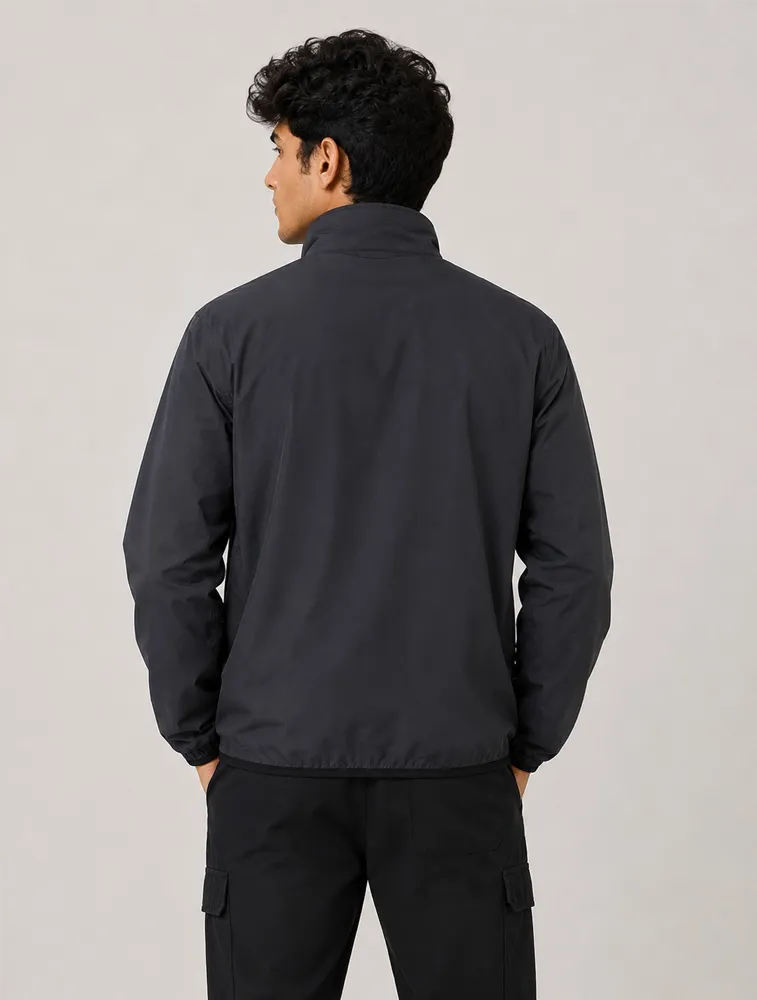
A light shell, generally without a substantial lining, built to be packed away when not in use. The bottle green listing publishes Its compact and foldable design makes it easy to carry, making it a practical choice for changing weather conditions and specifies a High Neck and a Full Front Zipper. Three further wind cheaters on this page are positioned as sportswear, with hooded high necks and two side zipper pockets. This is the construction for events, for marshals, for travel kits and for anything that has to live in a bag until it is needed.
Puffer
Two fabric layers with a fill between them, held in place by quilting. Quilting is not decoration — without it the fill migrates to the bottom of the panel. The page's puffers publish Insulated padding for warmth and comfort and Filling: Lightweight Polyfill Insulation, and one of them publishes Detachable Hood (Zipper Attached). Three of the four are half-sleeve, which is a specific styling choice rather than a compromise: half-sleeve puffers are worn as a mid layer over a full-sleeve garment.
Soft shell
A bonded construction, typically a face fabric bonded to a backing, worn as a single garment rather than as a layer over another jacket. It is the most expensive article on this page at Rs 1215. It is also the article whose entire published specification belongs to a different garment, so anything you read in that specification block should be disregarded and requested afresh.
Choosing between them
Work backwards from where the garment will be worn and for how long at a time. Indoor-to-car-to-indoor use with a smart dress code points at a bomber. Outdoor, intermittent, needs to pack down points at a wind cheater. Sustained cold, static work points at a puffer. Sustained outdoor activity where the jacket is the only outer layer points at a shell — and at that point the performance questions in the earlier answers stop being optional, because a shell that is bought on a weather claim needs the test evidence behind it.
Construction & InsulationQueries Targetedbomber vs windcheater vs puffer jacket, soft shell jacket difference, types of jackets for corporate bulk order, which jacket construction to choose
What is polyfill, and how should insulation be specified when the page shows no fill weight?
Polyfill is a trade term, not a specification. The page publishes “Lightweight Polyfill Insulation” and stops. What specifies an insulated jacket is the fill material stated by name, its weight per square metre, the way it is contained, and a test result. None of those appears on this page.
Four of the fifteen listings here are insulated. All four say the same three words about the fill, and those three words are the entire published specification of the component that accounts for most of the garment's cost above the shell.
What the word does and does not carry
In the trade, “polyfill” is used loosely for a batting or wadding of synthetic staple fibre. We could locate no standard that defines the term, no test method that measures it and no grading system that ranks it. It carries no fibre denier, no bonding method, no loft, no thermal figure and no weight. Two garments could both be accurately described as polyfilled and differ by a factor of three in the amount of material between the layers. That is why the word cannot function as a specification, and why we do not restate it as one.
The four things that do specify it
- Material, named. What the fill is, stated as a fibre and a form rather than as a marketing word. If your specification or your destination market distinguishes between synthetic and animal-origin fills, that distinction has to be stated explicitly and confirmed in writing — we make no statement about what the fill on any listing here is.
- Weight per square metre. The single most decisive number in an insulated garment, and the one that a buyer can actually verify on receipt. State it, state the tolerance, and state how it will be checked.
- Containment. Quilt pattern and channel width, or the baffle construction, and whether the fill is bonded, needled or free. This is what determines whether the fill is still evenly distributed after twenty washes.
- Evidence. Whatever thermal or construction testing your end use requires, named by method, with the report referencing the exact build.
What we will not tell you
We publish no thermal rating, no warmth claim, no CLO value and no fill power for any article on this page, because no such figure has been established for any of them. A warmth number that has not been measured is not a conservative estimate; it is a fiction with a decimal point. The page's own words — Insulated padding for warmth and comfort, The quilted construction helps distribute insulation evenly for consistent warmth — are reproduced here as the listing's copy and are not restated by us as performance.
The practical route for a bulk buyer
Ask for the fill weight in writing at enquiry stage. If it is supplied, put it in the purchase order with a tolerance and a verification method. If it is not supplied, treat the article as a styling purchase rather than a performance purchase and price it accordingly — and if the end use genuinely turns on keeping people warm through a shift outdoors, commission the specification rather than accepting the description. It is a short conversation and it is cheaper than a rejected consignment.
Construction & InsulationQueries Targetedpolyfill insulation jacket meaning, fill weight GSM puffer jacket specification, how to specify jacket insulation bulk, padded jacket wadding specification
Why is the first hundred pieces dearer than the headline price, and why is the category tile blank?
Every quantity table on this page is presented in ascending bands but descending prices, so the first hundred pieces cost more than the headline. On SKUFACTORI7280 the bands read Rs 495, Rs 485 and Rs 470. The home-page tile for this category shows no price at all.
Both of those are presentation problems rather than pricing problems, and both are worth understanding before you build a budget from anything on this page.
How the ladder actually works
Each listing publishes three quantity bands. Taking the olive green bomber: 100 - 999 Products at Rs 495 per piece, 1000 - 9999 Products at Rs 485, and Above 10000 Products at Rs 470. The headline Rs 470.00 Onwards is the third band, not the first. The same shape repeats across the category — Rs 528, Rs 518, Rs 502 on the contrast piping bomber; Rs 660, Rs 647, Rs 627 on the puffers; Rs 908, Rs 890, Rs 863 on the reversible; Rs 1279, Rs 1254, Rs 1215 on the soft shell; Rs 693, Rs 679, Rs 658 on the sports wind cheaters.
The entry premium is remarkably consistent. Across every listing with published tiers, band one sits about five per cent above the headline. So a first order of a few hundred jackets should be budgeted at roughly the headline plus five per cent, before any size surcharge and before branding. That is a useful planning rule and it is nowhere on the page.
Why the word “Onwards” is doing too much work
A price presented as Rs 470.00 Onwards reads, to anyone who has not scrolled to the tier table, as a floor that rises with options. It is in fact a ceiling of the discount curve that falls with volume. The two readings point in opposite directions and only one is right. Until the presentation is fixed, read every headline on this category as the ten-thousand-piece price.
The blank tile
The category grid on the home page carries a starting price under every tile. Footwear shows a figure, cups and mugs show a figure, water bottles and diaries show figures. Jackets shows the words Jackets in bulk and no price segment at all. This is the only category on the grid in that state, and it is also the only category containing a listing with no price. We think the two facts are connected — that the tile is reading a value from the null-priced listing and rendering the resulting blank — but that is an inference from the coincidence, not something we have confirmed, and it is flagged to the site team as an open question rather than a diagnosis.
What to ask for instead of reading the page
Ask for a configured quotation: the specific article, the size split you actually need, the surcharge if the article carries one, the branding method and position, the packing specification, and the payment and delivery terms, all against the quantity you intend to place rather than against a band. One sheet of paper with a total on it is worth more than any headline, and it is the only figure a finance function can approve.
ProcurementQueries Targetedbulk jacket quantity pricing tiers, why first order costs more than listed price, jackets wholesale price per piece India, jacket price break 1000 pieces
One listing asks for 1001 units while the band above promises a single piece. What is the real floor?
One listing asks for 1001 units, every other listing we opened asks for 100, and the statistics band above them promises ready stock from a single piece. The 1001 figure looks like an off-by-one from the 1000 to 9999 tier band. Ask for the minimum in writing on the specific article.
Four different minimum order quantities are visible on this one page at the same time, and they cannot all be operative. Setting them out plainly is more useful than picking one.
The four statements, and where each appears
- One piece. The statistics band at the top of the category says ready stock from 1 piece.
- A single piece. The existing on-page FAQ says Ready-stock items can typically be ordered from a single piece, and adds that Custom-manufactured or branded runs usually start from 100 pieces per style per colour.
- 100 units. The specification block on every listing we opened except one publishes Minimum Order Quantity: 100 Units.
- 1001 units. SKUFACTORI7264, the navy detachable-hooded puffer, publishes Minimum Order Quantity: 1001 Units.
The 1001 is almost certainly not a commercial decision. It is one above the lower bound of that listing's middle tier band, and it is the only listing in the category carrying it. We are flagging it as a suspected data error rather than quoting it as a term, and we would not hold a buyer to it.
How to read the difference honestly
The one-piece and the hundred-piece statements are not necessarily in conflict; they describe different transactions. Taking finished stock off a shelf and shipping it is one thing. Cutting a production run in your colour, with your branding, is another, and a run has a setup cost that has to be spread across units. Which of the two you are buying determines the floor. The page does not tell you which of the fifteen are held as stock and which are made to order, and that is the question to ask first.
Sampling
Ask for a sample before any bulk commitment, and be specific about which kind you want. A stock sample shows the current production of an existing article and answers questions about fabric hand, colour and make. A pre-production sample is made in your specification, in your colour, with your branding, and is the thing you actually sign against. On outerwear the pre-production sample is worth the delay it costs, because it is the only point at which the zip, the ribbing recovery, the lining, the fill distribution and the finished measurements can all be checked on one garment before several thousand of them exist.
Branding
Jackets take branding well and they carry it for years, which is exactly why the decision deserves care. Embroidery on the left chest is the default for corporate and institutional work and survives the wash cycle better than anything printed. Larger back marks, sleeve marks, woven labels, printed linings, custom zip pulls and custom drawcord tips are all available and all have different minimums and different lead-time consequences. Tell us the method, the position, the size and the colour reference at enquiry stage, and ask for the branding to appear on the pre-production sample rather than being approved from a mock-up.
ProcurementQueries Targetedjacket MOQ bulk order minimum, minimum order quantity jackets India, sample before bulk jacket order, custom jacket minimum 100 pieces
Six kinds of buyer, one product page: where do their requirements actually diverge?
Six kinds of buyer, one product page. A government body needs tender-grade specification. An institution needs a size curve and reorder continuity. A corporate needs branding. A brand needs labelling. A retailer needs retail-ready packing. A wholesaler needs a landed cost. The divergence is real and it starts early.
Every answer above applies to everybody. This one is about where the six paths separate, because the separation happens at the enquiry, not at the delivery, and the cost of discovering it late is a repacked container.
Governments and public bodies
The binding constraint is that a tender must be answerable on its face. That means composition by percentage, fabric weight with a method, finished-garment measurements per size, and — where any weather or protective performance is called for — a named test method and a laboratory report rather than an adjective. It also means a documented size curve and a delivery schedule that survives audit. Nothing on this page is written to that standard today, so the request has to go in as a specification enquiry rather than as an order against a listing.
Institutions
Hostels, campuses, hospitals, transport operators and welfare departments buy for a known population and buy again. The two things that matter are the size curve, built from your own fitting exercise rather than from an average, and continuity — the ability to order the same jacket, in the same shade, in eight months. Ask at the outset whether the article will still be available and whether the shade can be matched to a retained standard. Note also the Legal Metrology position covered earlier: an institution buying directly from the manufacturer for its own use is in a different labelling analysis from a reseller, and your counsel should confirm which side you are on before the packing specification is fixed.
Corporates
Branding quality, delivery date and consistency across the group. A bomber with left-chest embroidery is the default and the cheapest construction here. The two failure modes are shade drift between batches, which is visible when people stand together, and a size range too narrow for the workforce — which on three of the articles here means three sizes only. Both are solved at specification stage and neither is solvable afterwards.
Brands and private label
Labelling and composition are the whole job. You need the descending-order fibre percentages for shell, lining and fill; you need the care information written for the assembled garment; you need your own labels, in your own positions, with your own attachment methods; and if you are selling into Europe, the Article 14 route you intend to rely on needs to be decided before the labels are ordered. A brand also usually needs exclusivity on a colourway or a trim, which is a commercial conversation and belongs in the first email.
Retailers
Retail-ready packing, price ticketing where required, and the declarations your market demands on the pack itself. In India, that means the Rule 6(1) declaration list applies unless your counsel advises you are within an exclusion — and that decision changes the packing line, not just the paperwork. Decide it at quotation stage.
Wholesalers and distributors
Landed cost, carton efficiency and reorder speed. The four facts your broker will want are the ones set out in the customs answer above: knit or woven, the gender the pattern is cut to, the fibre composition, and whether the shell is coated or laminated. Get all four in writing with the quotation. We do not classify consignments and we quote no duty or tax rates; that is your broker's determination and your own professional advice.
The one line that serves all six
Send the specification with the enquiry and ask for the quotation to answer it line by line. Every divergence above is cheap to handle at that moment and expensive to handle at any later one.
ProcurementQueries Targetedgovernment tender jackets bulk, corporate jacket order branding, jacket wholesale distributor import, institutional jacket procurement India, private label jackets manufacturer
From ₹345excl. GST
View cart & checkout ›