Choose your delivery location
Enter a 6-digit Indian PIN code to see delivery options for that area.
Currently delivering to Bengaluru 560105
Ready stock & made to order
Bulk school & college bags
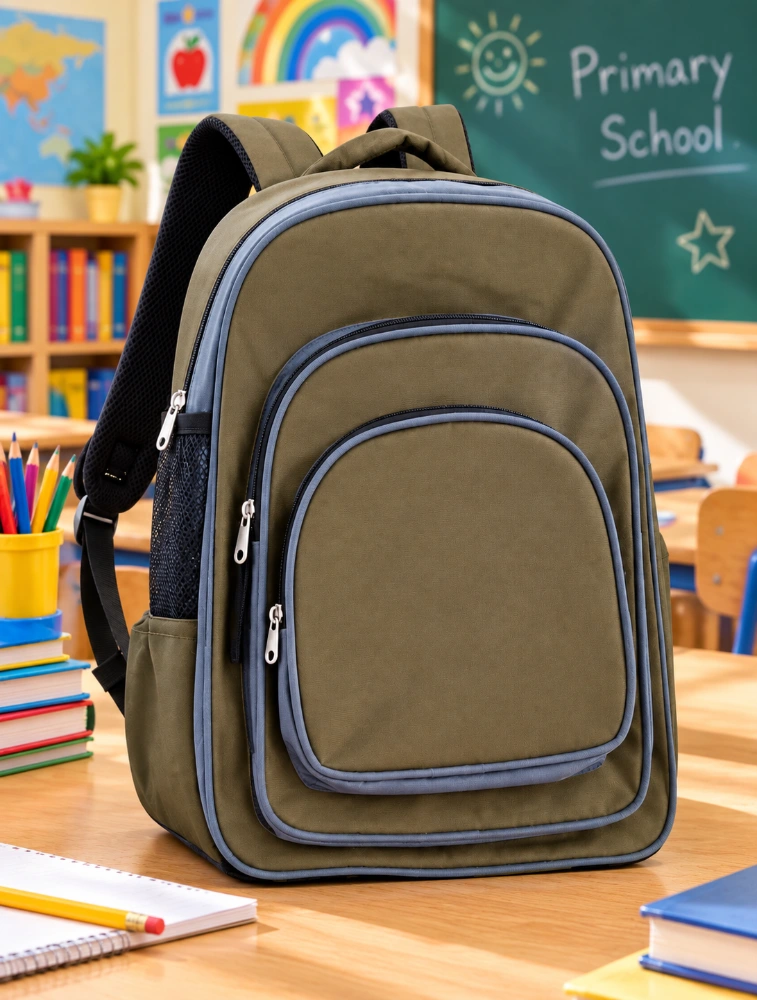
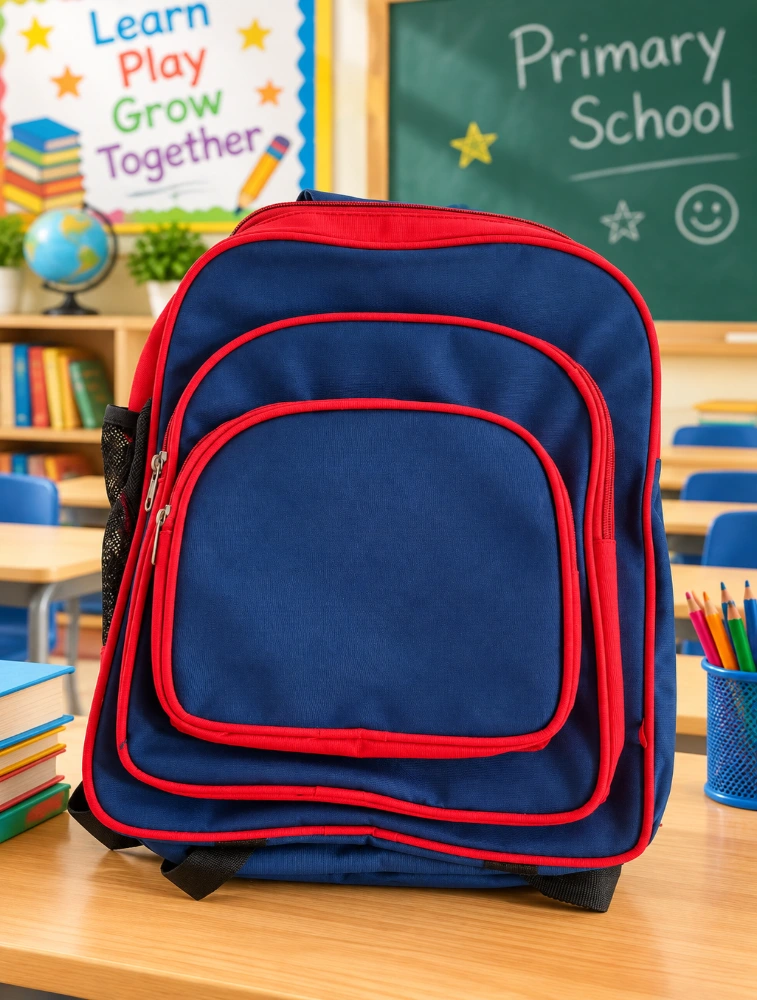
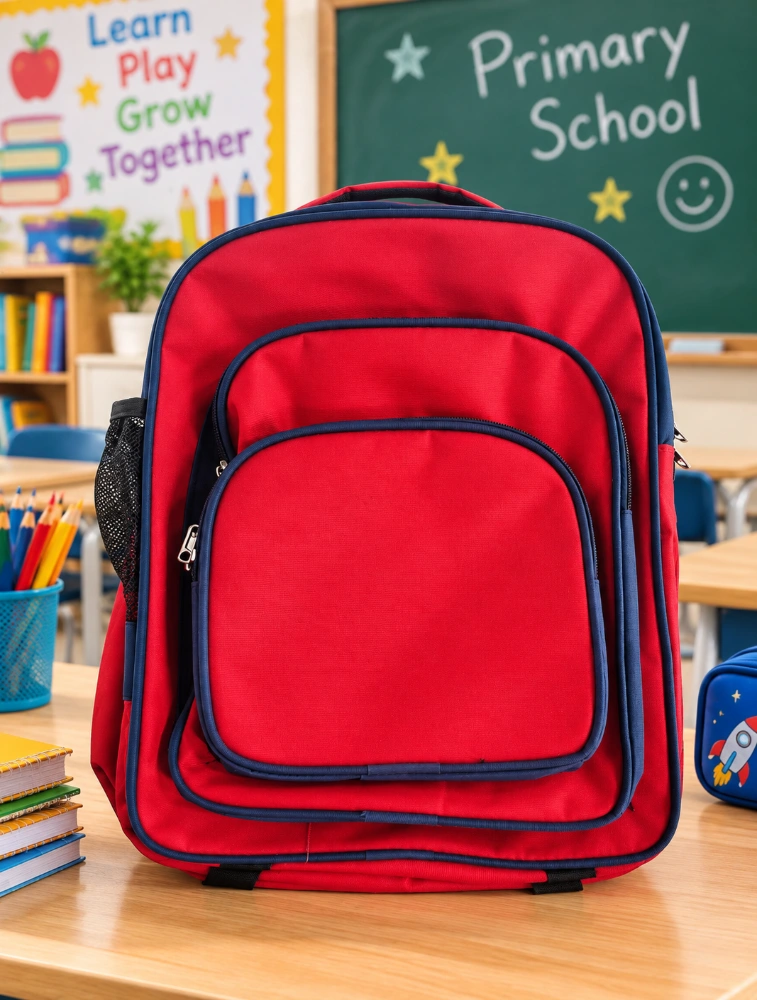
factori.com supplies bulk school & college bags from ₹94/piece across 662 partner factories — ready stock and custom programmes with GST invoices.
Prices verified October 2026 · shown excluding GST
₹94Entry price
Same dayDispatch on working days

Page 1 of 9
Bulk school & college bags for every use case
Brand-ready school & college bags for corporate, retail, uniforms and large custom programmes — sourced across partner factories with published prices.
Corporate & events
Brand-ready school & college bags for offsites, launches and conferences.
Get quote →
Uniforms & programmes
Consistent supply for schools, factories and frontline teams.
Corporate uniforms →
Own brand / resale
Unbranded or private-label stock for retail brands.
Launch your store →
Large custom runs
Contract manufacturing for high-volume programmes.
Contract manufacturing →Bulk school & college bags — frequently asked questions
How heavy should a school bag be, and why does the empty weight matter?
India's School Bag Policy 2020 caps a packed school bag at 10 per cent of the child's body weight across Classes I to X, and recommends no bag at all before Class I. That puts a Class I bag at 1.6–2.2 kg fully loaded. The empty bag is part of that budget, so its own weight is a specification, not a detail. Ask for it in grams.
The arithmetic that decides the specification. A Class I child weighing 16–22 kg is allowed a packed bag of 1.6–2.2 kg. Two textbooks, two notebooks, a water bottle and a lunch box already come to well over a kilogram. If the empty bag weighs 700 grams, it has consumed a third or more of the entire allowance before a single book goes in. A 350-gram bag leaves twice the headroom for the same rule. This is why heavy multi-panel bags with thick foam, rigid frames and oversized hardware fail a policy audit even when they are well made — they are simply too heavy to be legal for the class they were bought for.
The class-wise ceilings in the policy. Classes I and II, 1.6–2.2 kg. Classes III to V, 1.7–2.5 kg. Classes VI and VII, 2 to 3 kg. Class VIII, 2.5–4 kg. Classes IX and X, 2.5–4.5 kg. These are the numbers a school inspection or a departmental audit will use, and they are the numbers to write into a tender specification rather than leaving the weight unstated.
What actually reduces the empty weight, in order of effect: fewer structural panels; a lighter outer fabric where the load allows it; foam padding only at the shoulder straps and back panel rather than through the whole body; moulded plastic hardware instead of metal on smaller sizes; and dropping features that add grams without adding use — a second full-depth compartment, a rigid base board, decorative trims. None of these is a quality compromise on a child's bag. They are the difference between a bag that complies and one that does not.
Trolley and wheeled bags. The policy is explicit that wheeled carriers should not be permitted, because children are hurt by them on staircases. If a trolley school bag is in a draft specification, raise it before the tender is floated rather than after award. It is the single most common specification in Indian school-bag documents that conflicts with the policy the same department is bound by.
SpecificationQueries Targetedschool bag weight limit India, 10 percent body weight school bag, school bag policy 2020 weight, lightweight school bag bulk
How much does a school bag cost per student in bulk, and what moves the per-piece rate?
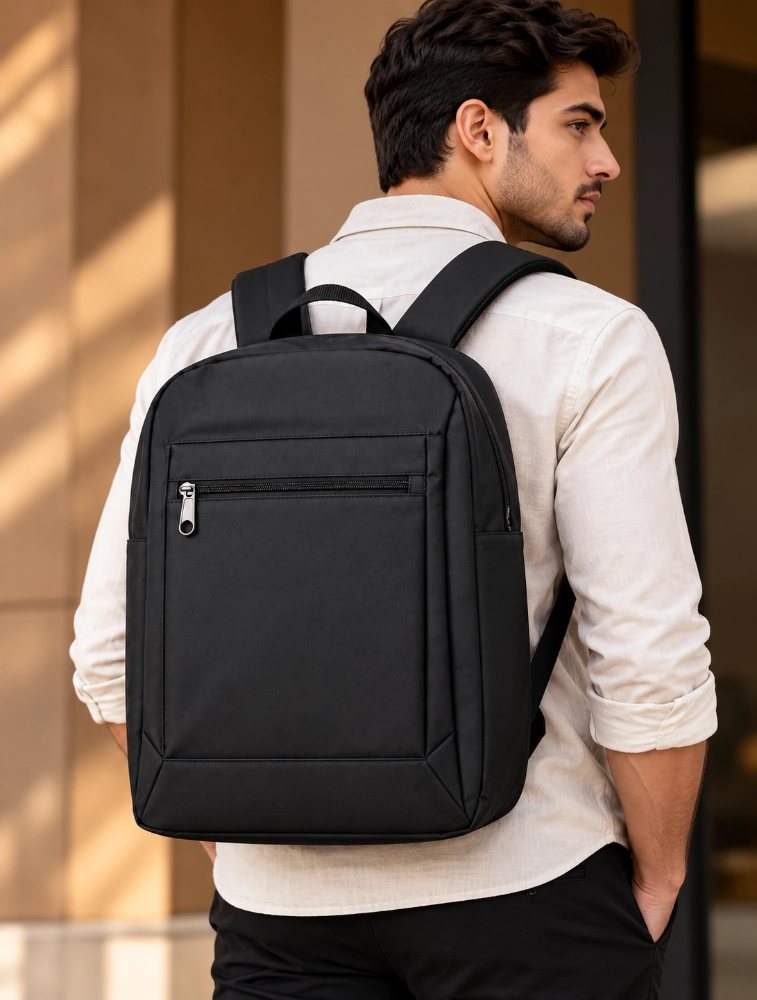
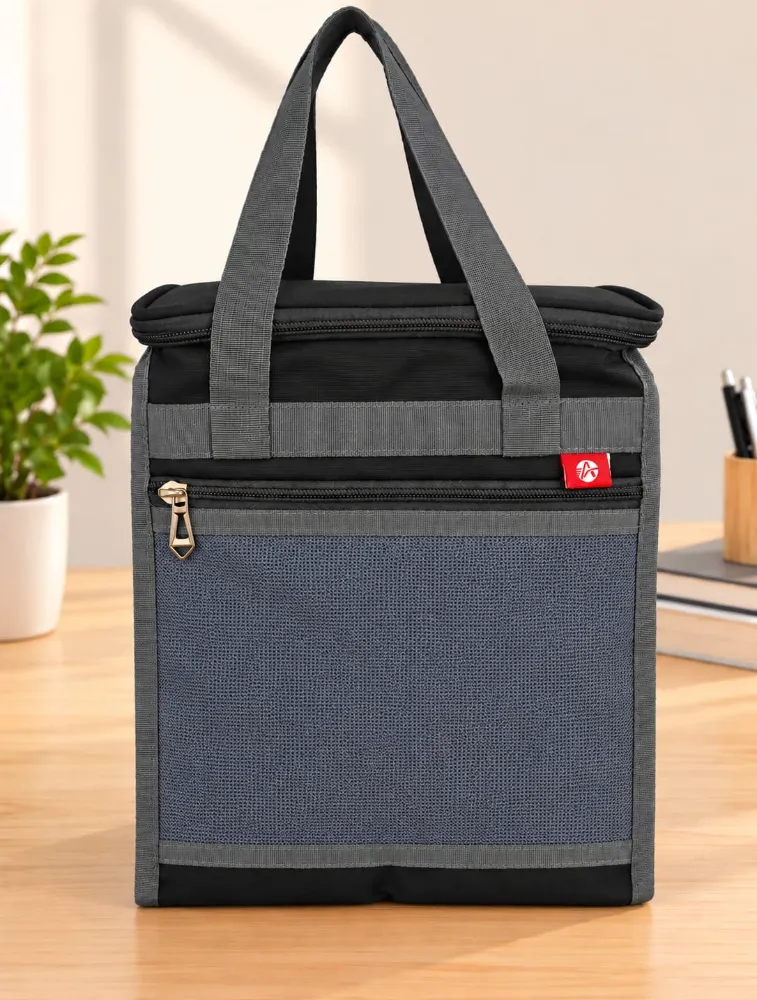
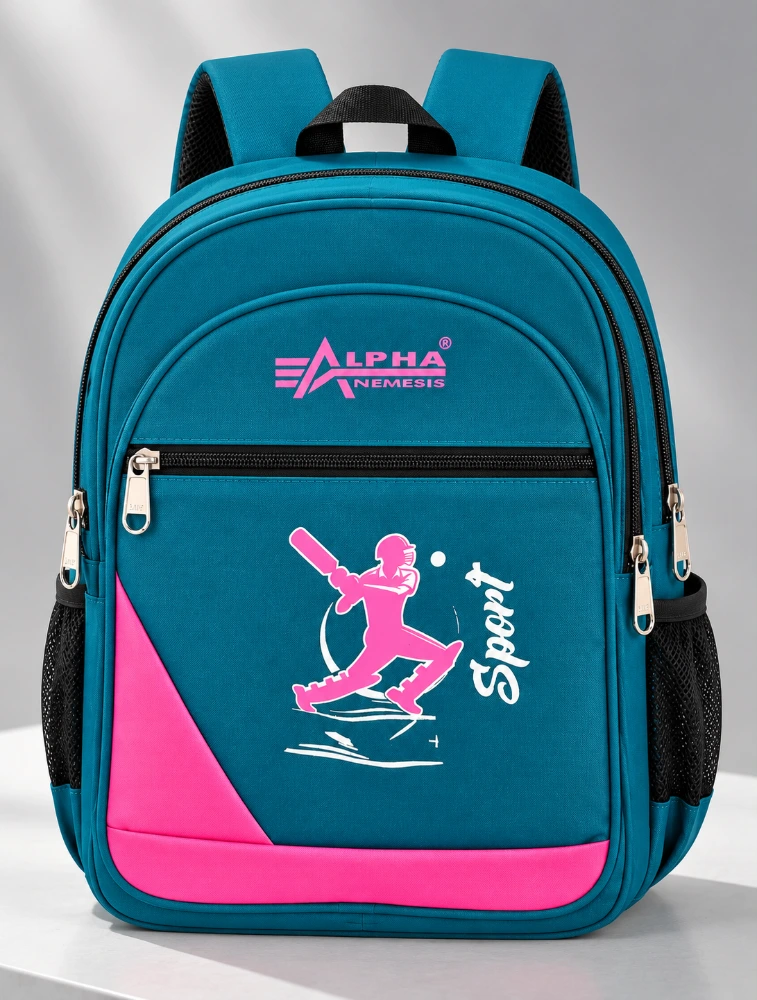
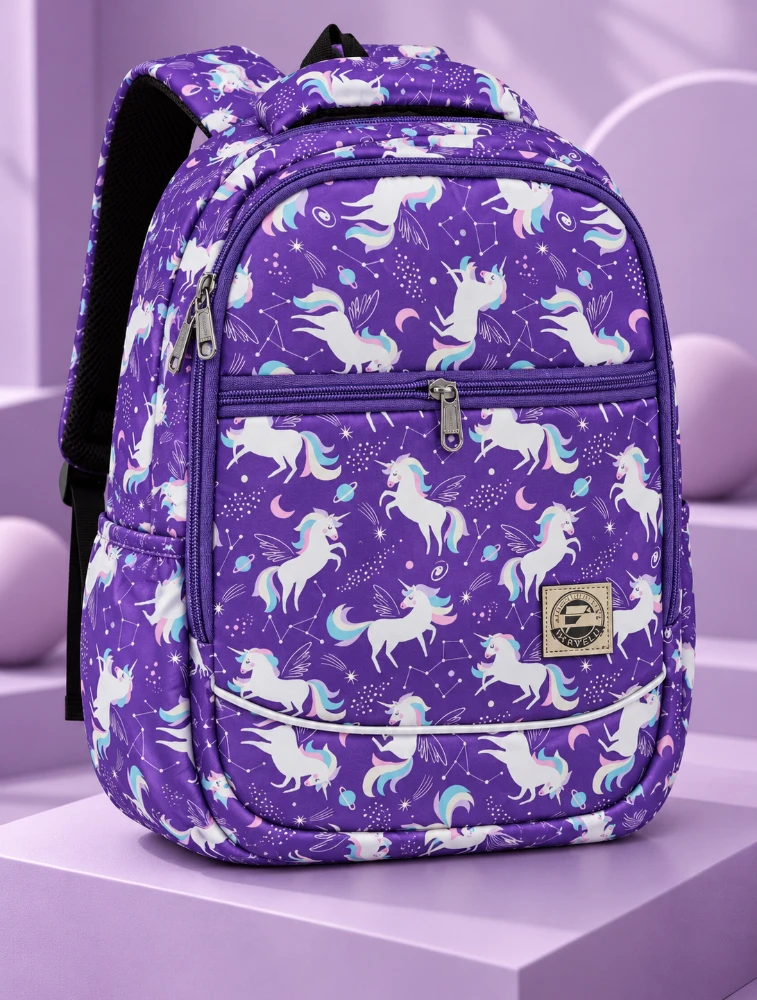
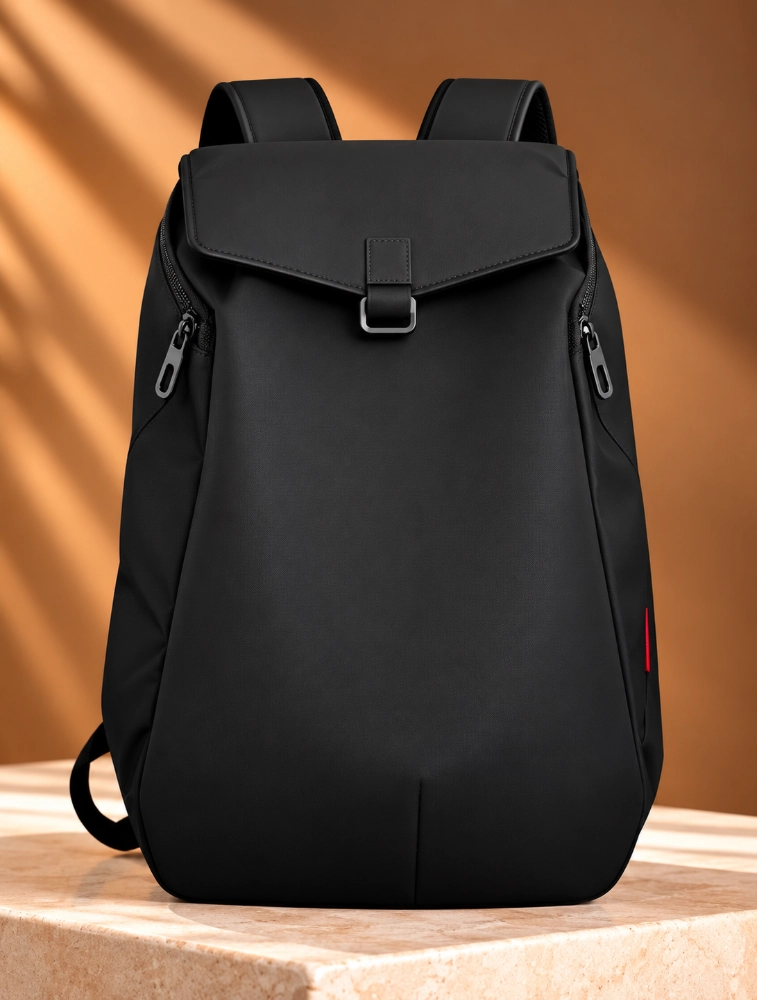
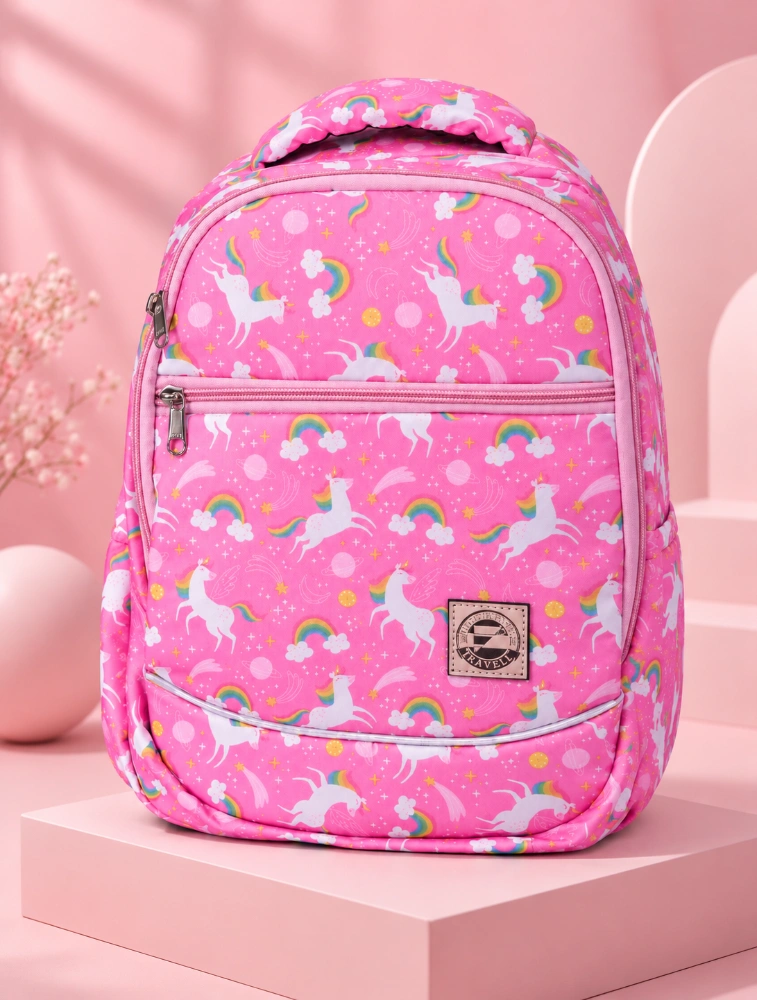
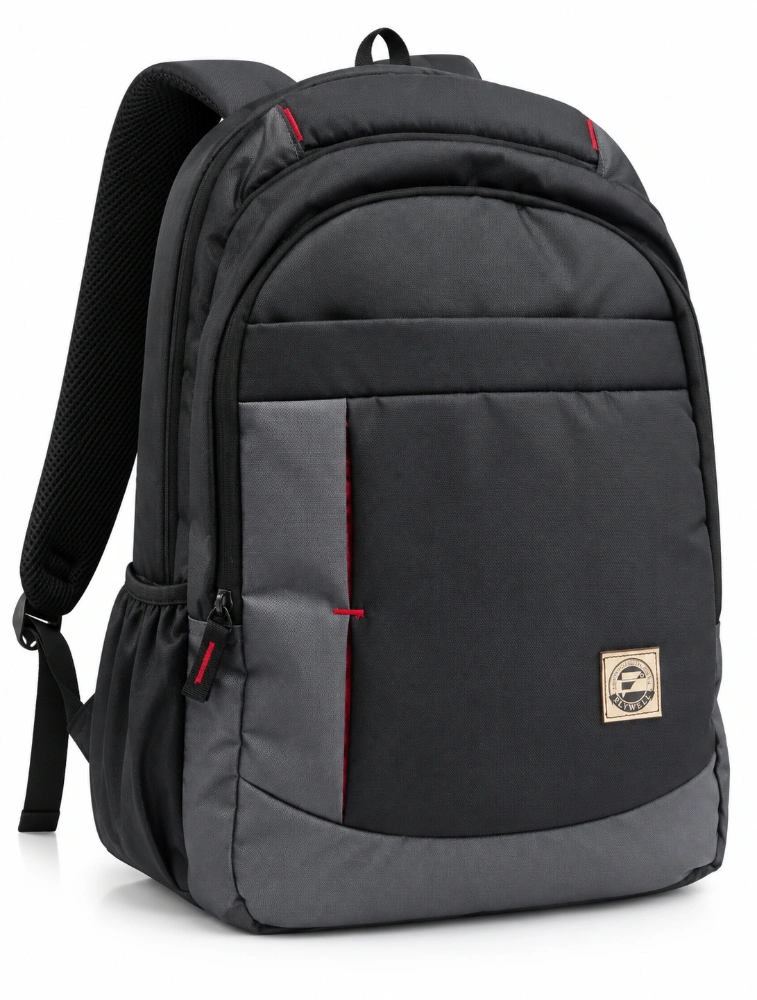
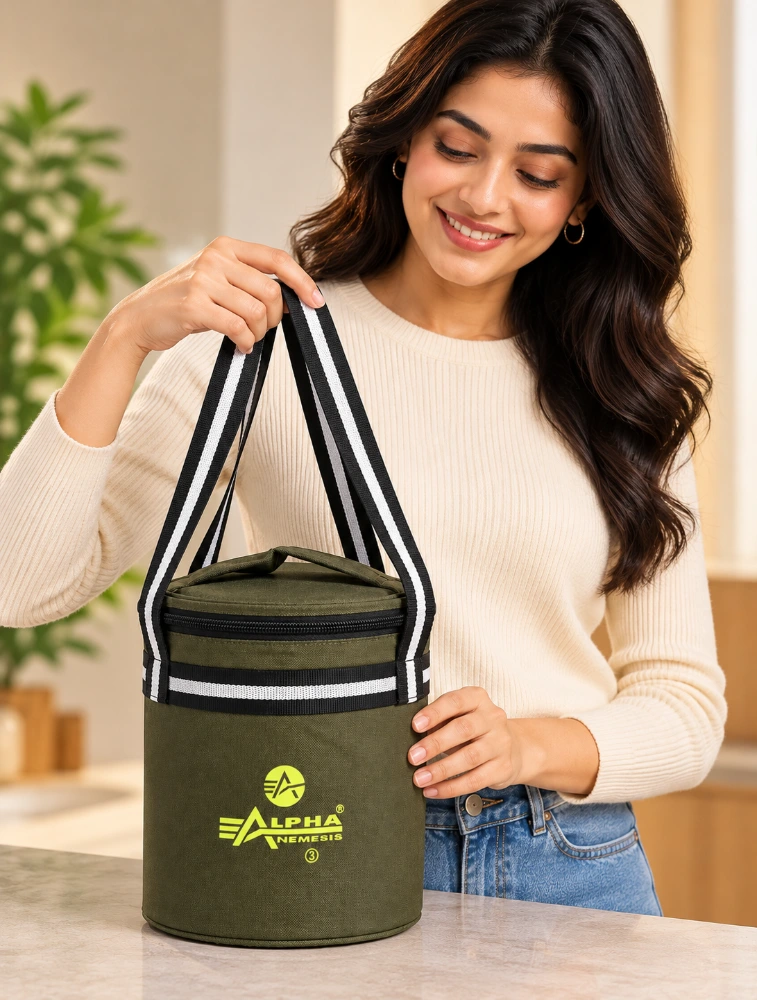
The published grid on this page runs from ₹110 to ₹282 per piece. Insulated lunch bags start at ₹110; promotional primary school bags are ₹219 for the 14-inch and ₹251 for the 16-inch; 30-litre college backpacks are ₹282. Larger sizes, heavier fabrics and tender specifications are quoted above that range on request. Branding and freight are itemised separately.
Read the range carefully before you budget against it. The lowest price on this page is a lunch bag, not a school bag. The cheapest bag a child could carry books in is ₹219. If you are costing a per-student distribution, start from the school-bag line rather than the page's entry price, because the two are different products.
Five things move the per-piece price on a school or college bag:
- Size and panel count. The single biggest driver, and it is structural. A 14-inch primary bag is a smaller pattern with fewer operations than a 16-inch, and a 30-litre college backpack is a different product again — a padded back panel, a harness, multiple compartments and twenty or more separate operations. That is most of the gap between ₹219 and ₹282.
- Fabric mass and coating. Outer fabric is specified in GSM on bags of this type, and moving up the GSM band, or adding a PU coating for water resistance, is the second-largest step. On a bag that has to survive a monsoon and a full academic year, it is the step most worth paying for.
- Stitching specification at load points. Bar-tacking and triangle stitching at the strap anchors, double-folded belt ends, and a minimum stitch density are named operations, and they are cheap per piece. They are also the difference between a bag that lasts the year and a bag the school replaces in October.
- Quantity. Setup costs — screens, embroidery digitising, pattern and marker making — are fixed per style and colour and spread across the run. The drop between 100 and 1,000 pieces is significant; between 1,000 and 100,000 it flattens, because at that volume you are paying for materials and labour rather than setup. Education distributions sit in the flat part of the curve, which is why a large scheme should not be priced from a small-order quotation.
- Branding and personalisation. A school logo printed in one position is inexpensive. An individual student name or roll number on every bag is a different operation with a different cost and lead time, because each piece becomes unique.
What a formal quotation contains: the per-piece manufactured price at your quantity, the full fabric and hardware specification, branding itemised by method and placement, packing, applicable taxes, freight where relevant, lead time and payment terms. Nothing appears later that was not on the quote. If you are still sizing the programme, ask for pricing at two or three volume tiers — on education schemes the enrolment number usually moves before the order is placed.
SpecificationQueries Targetedschool bag bulk price India, wholesale school bag price per piece, college backpack bulk price, school bag manufacturer rate
What fabric and fabric weight should we specify for school bags?
Specify the outer fabric, its mass in GSM, the lining and whether there is a coating — four separate items, not one. School-bag tenders in India state fabric mass in grams per square metre rather than in denier, and a typical specification band is 80–500 GSM for the outer fabric and 50–500 GSM for the lining. Naming only “polyester” leaves every decision to the factory.
Why GSM and not denier here. Denier describes the yarn; GSM describes the finished cloth, including how densely it is woven. On a commuting laptop bag the trade talks in denier. On a school bag, the departmental specification, the test report and the dispute all talk in GSM, because it is the number a laboratory can verify from a swatch. If your draft specification uses denier, add the GSM band as well — two fabrics at the same denier can differ substantially in finished weight and strength.
The four fabrics that appear in practice:
- Polyester. The workhorse and the right default for almost every school programme. Cheapest at a given strength, holds dyed colour well, takes print cleanly, dries fast after rain.
- Nylon. Tougher than polyester for the same weight and more expensive. Worth specifying where a bag has to last two or three academic years rather than one.
- PU-coated polyester or nylon. A coating applied to the inside of the fabric. This is the only construction that genuinely stops water passing through the panel, and it is what “water resistant” should mean in a specification.
- Cotton or canvas. Chosen for appearance, and heavier for the same strength. On a child's bag the extra weight works against the 10 per cent rule, so it is usually the wrong call for primary sizes.
Water resistance is three different claims, and they are not interchangeable. A repellent finish makes droplets bead off the surface and washes out over a few months. A PU or PVC coating on the inside of the fabric stops water passing through the panel and lasts the life of the bag. Taped or sealed seams stop water entering at the stitch line, and almost no school bag has them. A specification that says only “water resistant” will be met with the cheapest of the three. Say which one you mean.
The lining and the base are where corners get cut invisibly. A bag can meet its outer-fabric specification exactly and still fail in the third month because the lining is a fraction of the weight it should be, or because the base panel is a single layer of the body fabric. Both are inside the bag and neither shows in a photograph. State the lining GSM and ask whether the base is reinforced with a separate heavier panel.
SpecificationQueries Targetedschool bag fabric specification GSM, polyester school bag material, PU coated school bag fabric, school bag lining specification
What size school bag should each class get, and how is bag size specified?
School bags are sold by height in inches in the Indian trade — a “14-inch” bag is roughly 36 cm tall — but a tender specification states height, width and depth in centimetres and capacity in litres. Typical tender bands are 28–48 cm height, 20–38 cm width and 10–20 cm depth. Give us the classes and the book load and we will map the sizes.
| Stage | Bag height | Capacity | Packed weight ceiling |
|---|---|---|---|
| Pre-primary | 28–30 cm (11–12 in) | 5–8 litres | Policy recommends no bag at this stage; where one is issued, keep the empty bag under about 300 g. |
| Classes I–II | 33–36 cm (13–14 in) | 12–16 litres | 1.6–2.2 kg packed. The 14-inch bag on this page sits here. |
| Classes III–V | 36–41 cm (14–16 in) | 16–22 litres | 1.7–2.5 kg packed. The 16-inch bag on this page sits here. |
| Classes VI–VIII | 41–46 cm (16–18 in) | 22–28 litres | 2 to 4 kg packed. Quoted to order; not held as published stock on this page. |
| Classes IX–X and college | 43–48 cm (17–19 in) | 28–35 litres | 2.5–4.5 kg packed to Class X; no policy ceiling beyond. The 30-litre backpacks on this page sit here. |
One size for a whole school is the most expensive mistake available. It is also the most common, because a single size is simpler to tender and simpler to distribute. The cost lands twice: a Class I child carries a bag built for a Class VIII load, which breaches the weight rule on the empty bag alone, and a Class VIII child gets a bag that will not hold the books, so the school ends up buying twice. Two sizes across a primary school, three across a full school, is almost always the cheaper answer over an academic year.
Specify capacity in litres, and dimensions in centimetres, and give both. Litres tell the factory what has to fit. Centimetres tell it the shape. A 20-litre bag can be tall and narrow or short and wide, and only one of those fits a Class III child's back. Where the bag has to carry a specific book set, send the largest textbook's dimensions — a bag that is two centimetres short in one direction is useless for the whole year.
Size against the year the bag is issued, not the year it is designed for. Where a bag is meant to last two academic years, size it for the second year and accept that it is slightly large in the first. Where the distribution is annual, size it exactly. Deciding this before the specification is written prevents the argument that follows delivery.
SpecificationQueries Targetedschool bag size by class India, 14 inch vs 16 inch school bag, school bag capacity litres by age, school bag dimensions specification cm
How should shoulder straps, the back panel and load-bearing stitching be built on a child's bag?
Specify two padded adjustable shoulder straps of a stated webbing width, double-folded and stitched belt ends, triangle or bar-tack stitching at every load-bearing anchor, and a minimum stitch density — school-bag tenders commonly ask for at least 24 stitches per decimetre. Webbing width is typically specified between 25 and 50 mm. These are the operations that decide whether the bag survives the year.
Straps are where a child's bag fails, and where the policy has a view. The School Bag Policy 2020 asks for two padded and adjustable straps that sit squarely on both shoulders, specifically to prevent the strap digging into the shoulder. That rules out thin unpadded webbing and single-strap sling designs for issued school bags. It also means the strap must adjust across a real range, because a Class III cohort is not one body size. Specify the padding, the webbing width and the adjuster type — a cheap adjuster that slips under load produces the complaint that reads as “the strap keeps loosening” and cannot be fixed after delivery.
Stitching at load points is the cheapest durability you can buy. A bag tears where the strap meets the body, at the top handle and at the base seam — almost never in the middle of a panel. The named operations that prevent it are bar-tacking or triangle stitching at the strap anchors, double-needle stitching on the main body seams, a reinforcement patch behind the anchor, and belt ends that are folded twice before stitching rather than cut and sewn once. Each costs a fraction of a rupee per bag. Leave them unstated and they are the first things a low bid removes, because they are invisible in a photograph and invisible in a sample that has never been loaded.
The back panel does two jobs. It spreads the load away from the spine and it keeps the bag's shape so the contents do not press into the child's back. Specify padding density and whether there are ventilation channels. A flat unpadded back panel on a 20-litre bag full of textbooks is the specification most likely to generate a parent complaint, and it is invisible on the price line.
What to do with the sample before you approve it. Load it to the weight the child will actually carry — textbooks, notebooks, a full water bottle. Hang it by one strap, then by the handle, and look at the anchor stitching. Open and close the main zip twenty times under load. Adjust the straps to both extremes. Ten minutes of that is worth more than any written specification, and it is the step almost every buyer skips.
SpecificationQueries Targetedschool bag strap specification padded adjustable, school bag stitching load bearing, bar tack school bag strap, ergonomic school bag specification
How is a school bag tested before bulk production, and what does IS 10228 cover?
Indian school-bag specifications commonly reference IS 10228 for drop and snatch testing — the two tests that reproduce how a loaded bag is actually treated. Alongside those, ask for water-resistance, colour-fastness and seam-strength reports, and require a physical pre-production sample that is tested loaded, not empty. Name the standard in the specification rather than asking for “good quality”.
Drop and snatch, and why they are the right tests for this product. A drop test loads the bag and drops it, which is what happens every time it comes off a shoulder onto a floor or a desk. A snatch test applies a sudden load through the straps, which is what happens when a child swings the bag up onto one shoulder or another child pulls it. Between them they attack the strap anchors, the handle and the base seam — the three places bags fail. A bag that passes a static load test can still fail both, because sudden load and steady load are different problems.
What to ask for, and in what form:
- Drop and snatch testing to the referenced standard, with the test load stated. Where your specification names IS 10228, quote the clause you are testing against so there is no ambiguity about which parameters apply.
- Water resistance, stated as the construction rather than the outcome — coated fabric, repellent finish, or taped seams. See the fabric answer above for why those three are not the same claim.
- Colour fastness to rubbing and to light. This is the test that predicts whether a navy bag issued in June is still navy in December. On dark and saturated colours it matters more than any other laboratory result, because fading is the failure every parent sees and no inspection catches at dispatch.
- Seam and webbing strength, tested at the strap anchor rather than on a plain seam.
- Zip cycling under load. Cheap and revealing. A zip that catches or separates with the bag loaded will do it on every bag in the consignment.
The pre-production sample is the real test. Laboratory reports confirm that a fabric meets a number. A loaded sample confirms that the bag works. Approve a physical sample made to your exact specification, in the final colour, with the final hardware, and keep a sealed counter-sample — we keep the matching one. Bulk is then inspected against that physical bag rather than against a written description, and a written description is arguable in a way a sealed sample is not.
Where certification is required, tell us at specification stage which standards and which laboratory the department will accept. We arrange test reports and compliance documents where a specification requires them, and we will say so plainly if a particular certification cannot be furnished for a given construction rather than discovering it during technical evaluation.
SpecificationQueries TargetedIS 10228 school bag testing, school bag drop test snatch test, school bag quality test report tender, colour fastness school bag
What pockets, bottle holders and ID pouches should a school bag have?
Specify the count and position of every pocket rather than accepting a catalogue layout. Indian school-bag tenders routinely ask for one to four internal pockets, one to four external pockets, one or two water-bottle pockets, and a see-through HDPE pouch for an identity card — commonly around 11 cm by 7.5 cm. Each of those is a costed operation, so an unstated one will not appear.
The bottle pocket is the feature that most affects the bag's life. A water bottle carried inside the main compartment leaks onto books; carried in a shallow external pocket it falls out. Specify the pocket depth and whether it is elasticated or has a drawcord, and specify it against the bottle the school actually issues. Where a school hands out a one-litre bottle and the bag has a 500 ml pocket, every child will carry the bottle inside the bag and the lining will be the first thing to fail.
The ID pouch is small, cheap and disproportionately useful. A see-through pouch on the front or the flap holds an identity card, a bus pass or a name slip. On a distribution scheme it is also how a bag gets traced back to a school and a student without printing a name on every bag — the card changes, the bag does not. If the specification does not mention it, it will not be there.
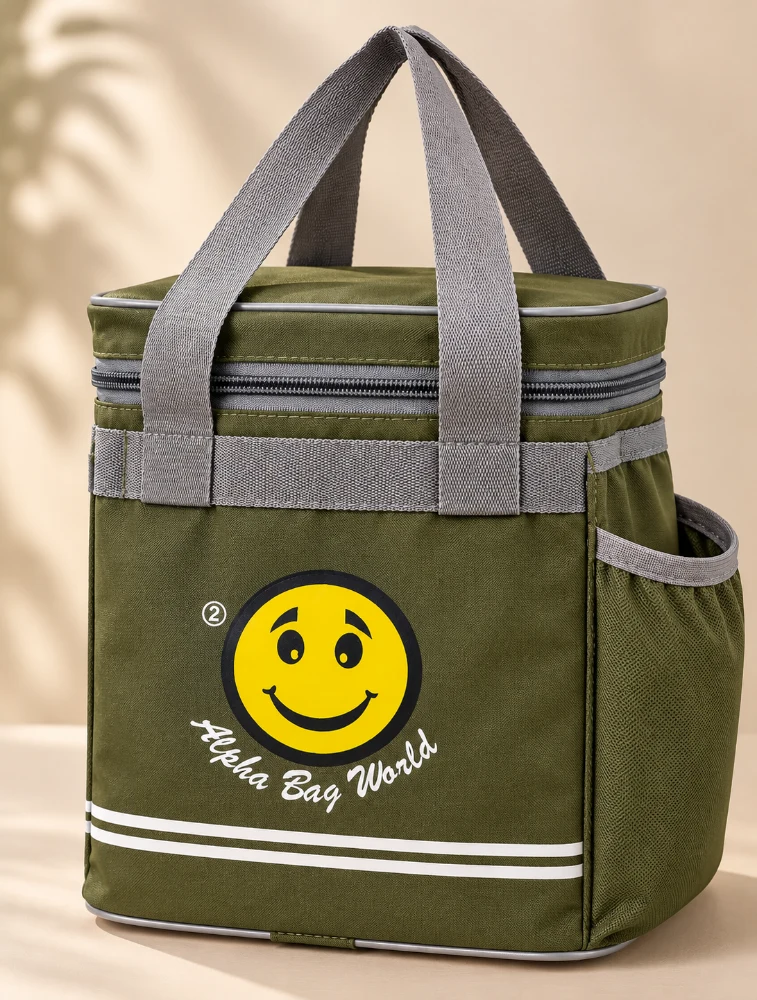
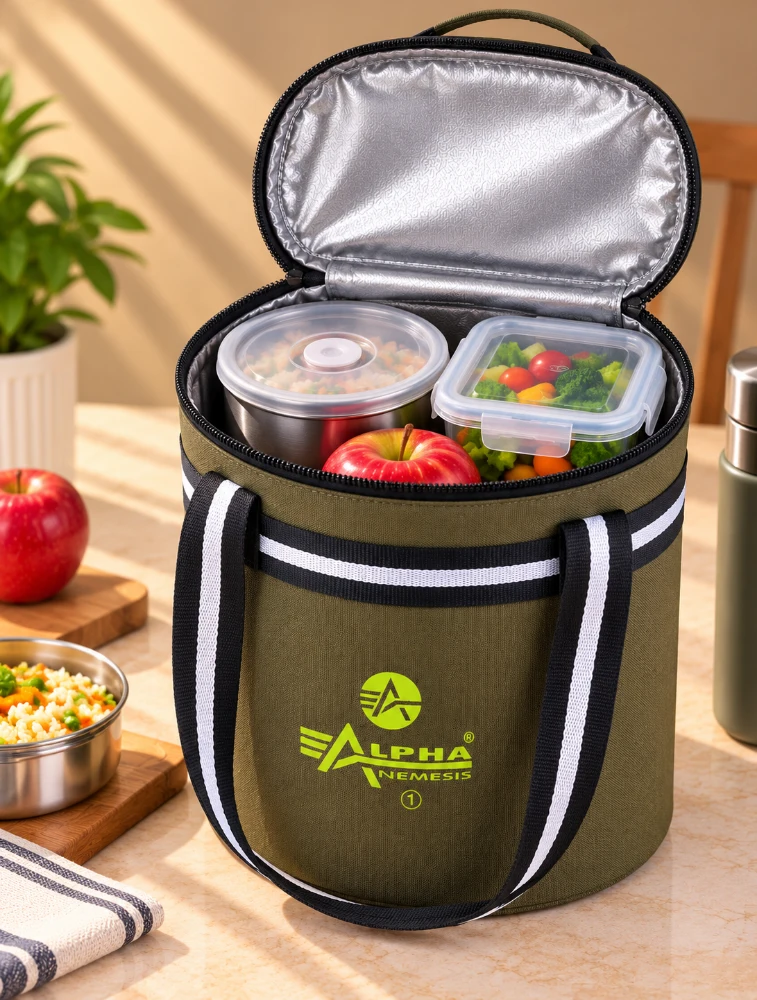
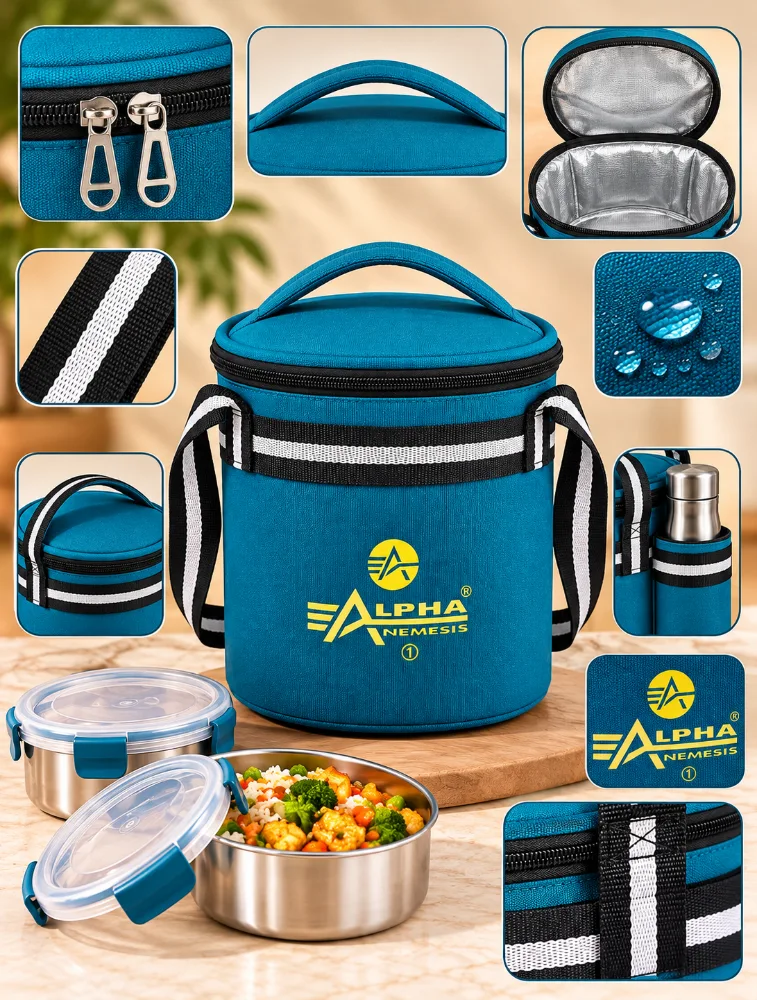
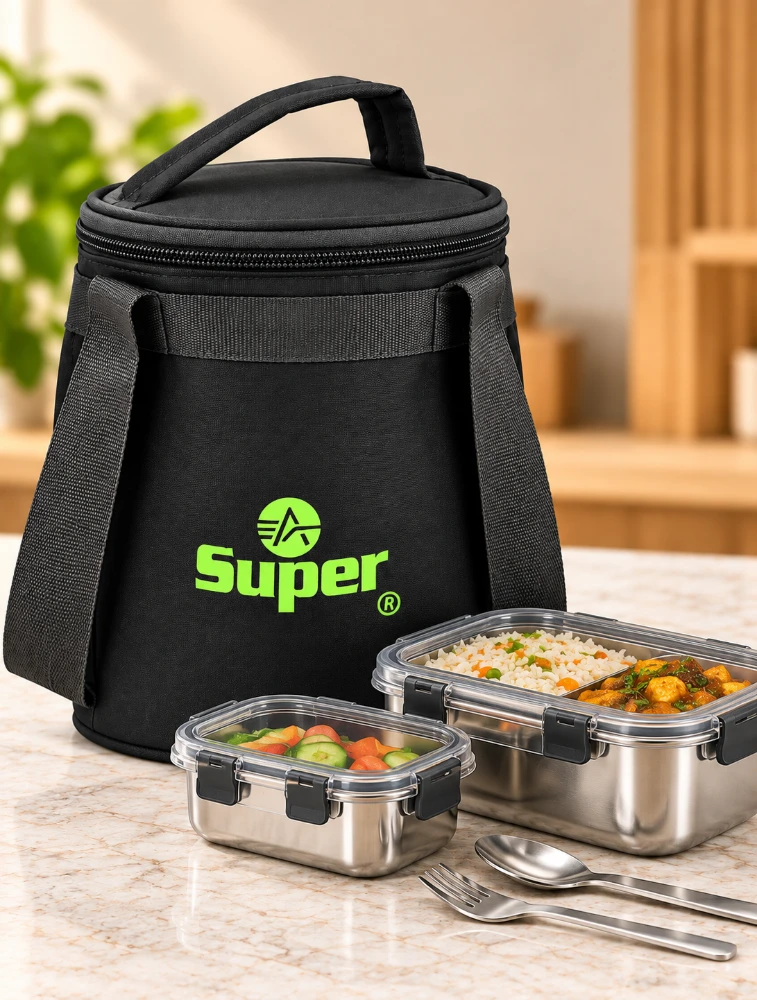
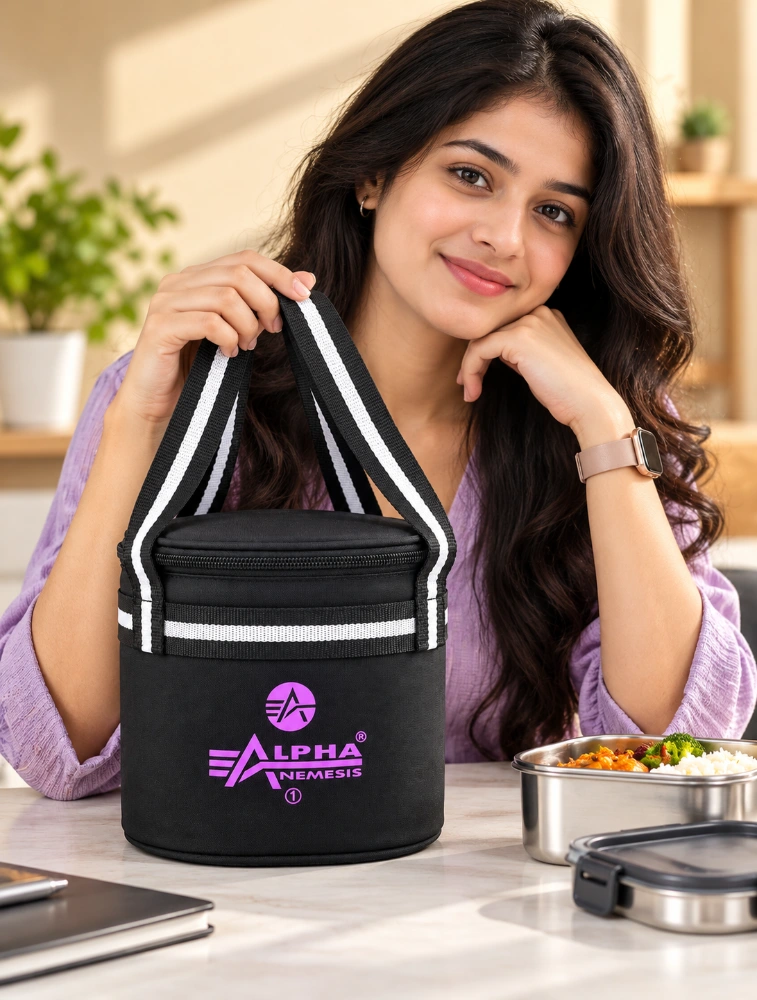
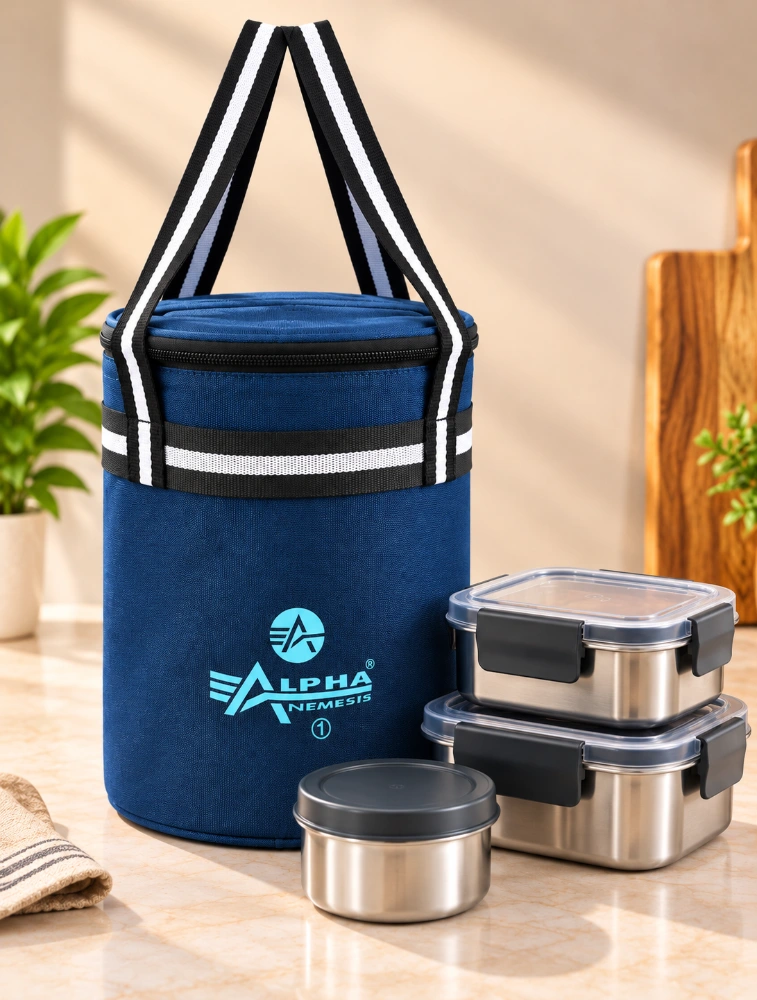
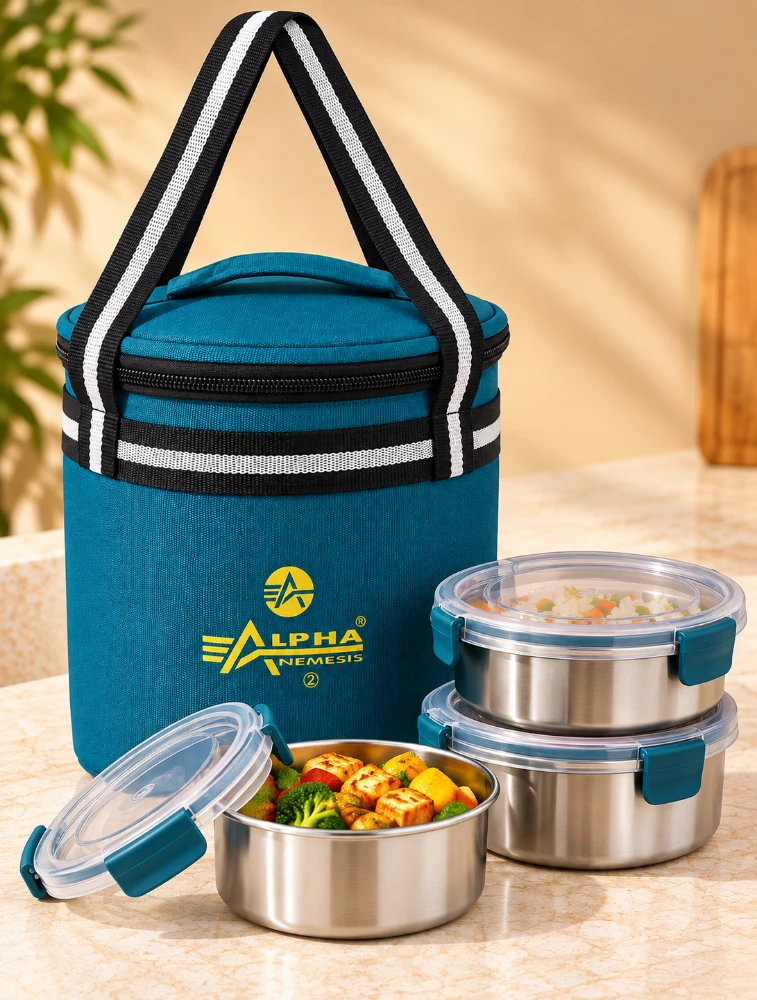
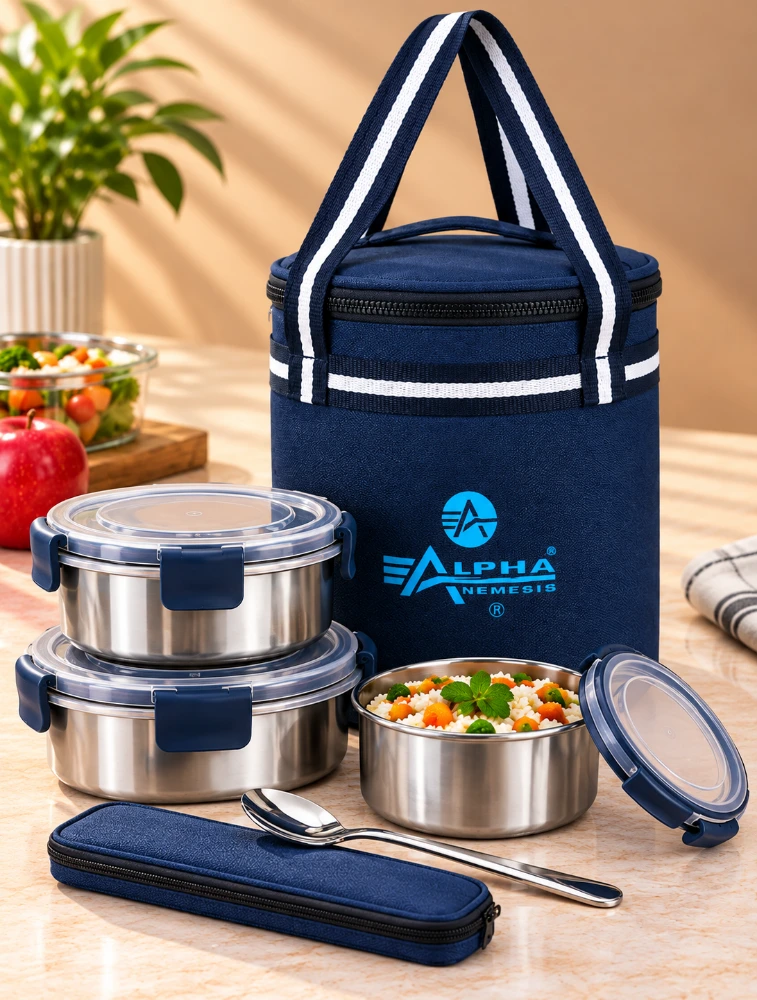
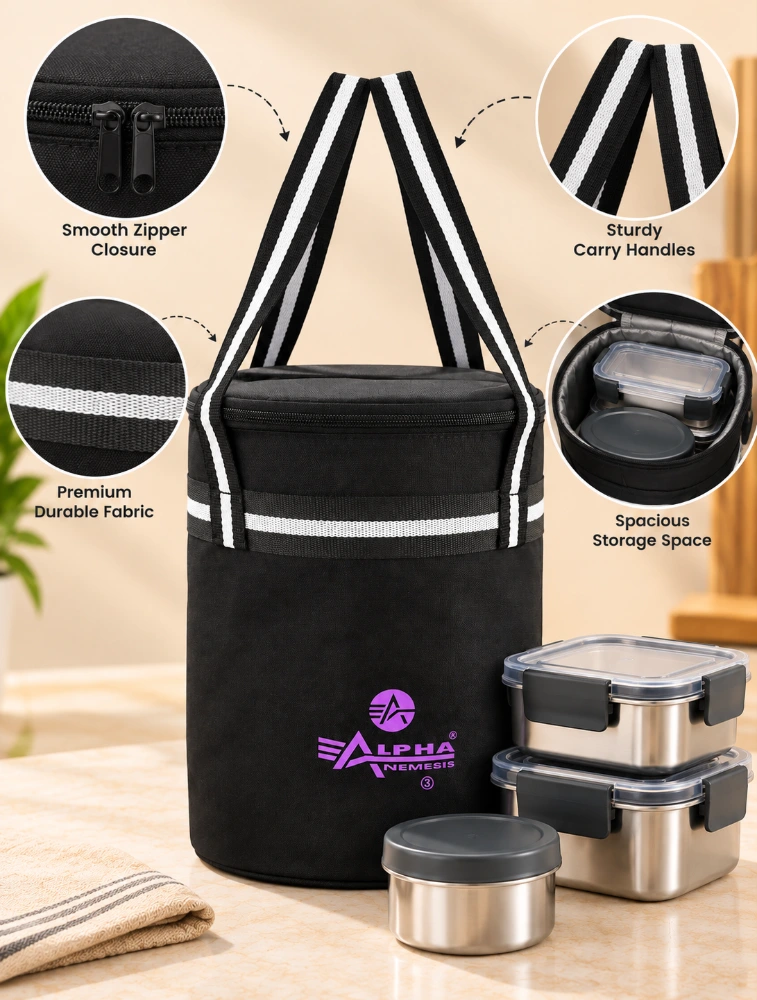
Lunch and the insulated bag question. Insulated lunch bags on this page are a separate product from 5 to 12 litres, not a compartment inside a school bag. Where a programme issues a lunch box, decide early which way it travels: a dedicated insulated bag alongside the school bag, or a padded pocket inside it. Both work; they cost differently and they are specified differently. A lunch box carried loose in the main compartment against textbooks is the arrangement that generates the most complaints and the shortest bag life.
Compartment layout, by stage. Primary sizes are better with one main compartment and few pockets — fewer panels means less weight, and a small child does not use six pockets. From Classes VI upward a second compartment and an organiser panel start to earn their weight. College backpacks at 30 litres need a padded laptop or tablet sleeve, a quick-access top pocket and a bottle pocket, because the bag is carried all day and used between classes rather than emptied at a desk.
What to leave out. Rigid base boards, decorative trims, extra zips that open onto the same compartment and full-length side pockets all add grams and cost without adding use. On a bag governed by a weight ceiling, every feature has to justify its own mass.
SpecificationQueries Targetedschool bag pocket specification, school bag water bottle holder, school bag ID card pouch, school bag compartment layout tender
Can each bag carry a student name, roll number or individual school marking?
Yes. A school name and logo in one or two positions is a standard low-cost branding operation. An individual student name or roll number on every bag is a different process — each piece becomes unique, so it is priced per piece rather than per style and it adds to the lead time. Both are worth doing; they are worth budgeting differently.
Three levels of marking, and what each costs you in time:
- School logo, one position. Screen print or embroidery in a fixed position on every bag. Setup once per design and colour, then no per-piece variation. This is the default for a uniform bag programme and it barely moves the lead time.
- School plus class or section. A small number of variants — one per class, or one per school in a district scheme. Still a fixed setup per variant, but the consignment now has to be sorted and labelled by variant, which is a packing decision rather than a printing one. Say it at order stage, not at dispatch.
- Individual student name or roll number. Every bag different. Handled by heat transfer or digital printing, or by a woven or printed name tape stitched or fitted into a holder. Priced per piece, and it needs a clean data file from you.
The data file is where individual naming actually fails. Names arrive with inconsistent capitalisation, duplicate entries, missing roll numbers, mixed scripts and characters that do not exist in the chosen font. Every one of those becomes a wrong bag that a specific child will notice. Send the list in a single spreadsheet with one row per student, the exact spelling you want printed, and the class and section as separate columns. Ask for a proof sheet of the first few pieces before the run continues. Where names are in a regional script, confirm the font at proof stage rather than assuming it.
The alternative that avoids the problem entirely. A see-through ID pouch or a blank name panel lets the school write or insert the name after distribution. It costs a fraction of individual printing, it cannot be misspelt by us, and it survives a student transferring or a bag being reissued. On large distributions where enrolment is still moving, this is almost always the better engineering decision, and it is the one experienced departments choose.
Where the branding goes. On a bag you are printing a specific panel, which may be curved, seamed or padded. A logo on the flat front panel reproduces cleanly; the same logo across a padded compartment or over a seam will not. Send vector artwork with fonts outlined, plus a Pantone reference, and we will tell you which panel it belongs on before production rather than after.
SpecificationQueries Targetedschool bag name printing bulk, personalised school bag roll number, school logo printing bags bulk, variable data printing bags
How does a school bag tender work, and what does an education department typically demand?
An education or welfare department tender for school bags is won on the technical specification, not the price alone. A live specification will state outer and lining fabric in GSM, height, width and depth in centimetres, webbing width, stitch density, pocket and bottle-holder counts, an ID-pouch size, drop and snatch testing to a named standard, a warranty period and a quantity-variation clause. factori.com quotes against that document as written.
The scale is not unusual, and it shapes everything. Single state distributions run into hundreds of thousands of bags — a recent tribal-welfare department tender in Maharashtra was for 204,402 bags — delivered district by district against an academic calendar. At that volume the specification is enforced by laboratory testing and physical inspection, not by goodwill, and the delivery schedule matters as much as the unit price.
What a department typically requires, and how it is handled:
- Quotation in the tender's own format, against the department's specification table rather than against our catalogue, with the technical compliance statement completed line by line.
- Earnest money and financial documents. Bag tenders of this size carry substantial earnest-money deposits — the Maharashtra tender above set it at over ₹9 lakh — along with turnover and experience criteria. Tell us the qualifying criteria early, because they decide whether a bid is worth preparing.
- Test reports and samples for technical evaluation, produced to the tender specification ahead of submission. On bags this is usually where bids are eliminated.
- GST-compliant invoicing and statutory documents — incorporation papers, GST registration, importer-exporter code where relevant.
- Phased district-wise delivery, each consignment labelled to its destination, which matters on schemes covering a wide geography and a fixed session start.
- A stated warranty period. Departments commonly ask for one, two or three years and price the options separately. See the replacement answer below for what that means in practice.
Scale is generally not the constraint; the calendar is. Large quantities are allocated across multiple audited partner factories running in parallel rather than queued through a single unit, and goods are consolidated and inspected at our Bengaluru fulfilment centre before dispatch so the whole quantity is checked against one approved standard. What decides feasibility is how much time sits between award and the session start.
If you are at pre-tender stage, send the draft specification for technical review before it is published. School-bag drafts frequently name a fabric mass, a capacity, a weight ceiling and a trolley base that cannot all coexist, or a compartment layout no pattern can deliver at the stated price. Both are far cheaper to identify before the tender is floated. For tender enquiries call +91 874 707 1444 with the reference and closing date.
ProcurementQueries Targetedschool bag tender specification India, education department bag tender requirements, school bag rate contract government, bag tender technical specification
What happens if the ordered quantity changes after the contract is awarded?
Plan for it, because on education programmes it is normal rather than exceptional. Indian supply contracts commonly carry a quantity-variation clause of around 25 per cent either way, exercisable at award or during the contract. Handled properly it costs nothing; handled late it costs the delivery date. Tell us the clause exists when you ask for the quote.
Why the number moves on this product specifically. A school-bag order is sized on an enrolment figure, and enrolment is not final until the session has started. Admissions continue, districts reconcile their counts, a scheme is extended to another class or another category of student. By the time the bags are needed, the quantity that was tendered is rarely the quantity that is required. This is a structural feature of education procurement, not a planning failure.
What a variation clause actually does to production. An increase of 25 per cent on a fabric already cut is a new fabric lot, and a new lot means a shade risk against the bags already made. That is the real exposure, and it is the one buyers do not anticipate. A decrease leaves committed fabric and trims. Neither is a problem if it is known before cutting; both are expensive after.
The four things that make a variation painless:
- Quote the upper bound, order the lower. Ask for pricing at the base quantity and at the maximum the clause permits, so an increase does not need a re-negotiation at the moment you have the least time.
- Reserve the fabric for the full permitted quantity at the start. One dye lot covering base plus variation removes the shade risk entirely. This is the single highest-value decision available on a school-bag contract and it costs nothing to make early.
- Agree the delivery consequence in writing. Standard contracts extend the delivery period proportionally for an increase, often with a stated minimum increment of around 30 days. Know that number before you exercise the clause, because a session start does not move.
- Phase the districts, not the quantity. Where an increase is likely, sequence delivery so the districts with confirmed counts ship first and the uncertain ones ship last. The programme starts on time and the variation lands where there is still time to absorb it.
Where the increase cannot be absorbed, we will say so at enquiry rather than accept and miss the date. A quantity we cannot deliver inside the session window is worth more to you as an honest answer in writing than as an accepted order.
ProcurementQueries Targetedquantity variation clause school bag tender, 25 percent quantity variation supply contract, enrolment change bulk order quantity, delivery extension quantity increase
When should a school bag order be placed for the new academic session?
Work backwards from the first day of the session, not forwards from today. For a June session start, a custom or tender programme should be contracted by February or March: 15–30 days manufacturing, plus sample approval, plus district-wise distribution time. Ready-stock bags dispatch in 7–10 days and can fill a gap; they cannot rescue a specification. The date the child needs the bag is the only fixed point.
The timeline that actually works, in reverse:
- Session start. Bags in the child's hands. Everything else is derived from this.
- Minus 2 to 4 weeks — distribution. Onward movement from the district or school store to individual schools and students. On a scheme covering a wide geography this is the step most often left out of the plan, and it is the step that cannot be compressed.
- Minus 15 to 30 days — manufacturing. Custom or tender-specification production, depending on complexity, quantity and the number of sizes.
- Minus 1 to 2 weeks — sample approval. A physical pre-production sample, made in the final fabric and colour, loaded and checked. Skipping this to save a week is how a whole distribution ends up wrong.
- Minus 2 to 4 weeks — specification and award. Finalising fabric, sizes, branding and data files. On a tender, technical evaluation sits here and it is rarely quick.
That puts a June session on a February or March contract, and an April session on a January one. Programmes contracted in May for a June start are the ones that end up compromising on the specification, the sizes or the sample — and the compromise is always visible by October.
Why this window is tighter than it looks. Every school in a state needs bags in the same eight weeks, so the whole supply chain — fabric mills, trims, printing, transport — is at its busiest precisely when you need it. A February order buys capacity at a normal price and a normal lead time. A May order competes for what is left. The per-piece difference is real, and it is entirely avoidable.
Two ways to buy yourself room. Reserve fabric before the final quantity is confirmed, so cutting can start the day the count lands — on a distribution where enrolment is still moving, this is the difference between shipping on time and shipping late. And split the order: ready stock for the districts or classes that must be covered on day one, custom production for the balance. That is a legitimate procurement structure, not a fallback, and it removes the single point of failure from a fixed-date programme.
ProcurementQueries Targetedwhen to order school bags academic year, school bag procurement timeline India, back to school bulk order lead time, school bag delivery before session
How do colleges and universities run a campus store or merchandise programme for backpacks?
A campus programme is retail, not distribution. The student chooses and usually pays, so the bag is judged as a product — style, colour, capacity and finish — and it is priced with a margin over our per-piece cost. The 30-litre backpacks on this page are the working range at ₹282, available in four colours and branded to the institution. Plan depth by colour, not by size.
The difference from an issued school bag changes every decision. An issued bag is specified against a load and a policy ceiling, and nobody chooses it. A campus bag is chosen, so it competes with whatever the student would otherwise buy in a shop. Weight ceilings do not apply. What applies instead is whether the bag looks like something a twenty-year-old would carry, whether it holds a laptop, and whether the colour range includes the two colours that will actually sell.
Depth planning for a campus store. Backpacks have no size dimension, which removes the hardest part of stocking apparel — but it concentrates the risk in colour. On a four-colour range, two colours will typically carry most of the sell-through and the other two will sit. Order the first run shallow and wide to find out which two, then reorder deep on the winners. Bags are slow-turning and space-hungry, so a store carrying too much of the wrong colour has locked up both cash and shelf for a year.
Retail presentation matters here and not on an issued programme. Bags can be supplied individually polybagged, hang-tagged, with MRP and barcode labels applied, and carton-labelled to your packing format, so stock goes to the shelf without repacking. If the campus store scans stock, tell us the barcode format at order stage.
The three campus programmes that recur, and they behave differently. A general campus backpack in institution colours, stocked year-round, reordered against sell-through. Department or programme bags — smaller runs, often one colourway per department, ordered once a year against a known intake, and the case where the 100-piece-per-style-per-colour minimum matters most. Fest, convocation and alumni bags — a fixed quantity against a fixed date, where the date is immovable and the specification is usually simple. Sequence them separately; a fest deadline should never sit behind a store replenishment in the same production slot.
What to settle before the first order. Who owns the stock and the price to the student; whether branding is the institution mark alone or year-specific; and whether next year's run has to match this year's. If it does, say so now — we hold the approved specification on record so a reorder is produced against the standard rather than against a fresh interpretation of it.
ProcurementQueries Targetedcollege backpack bulk order campus store, university merchandise backpack supplier, college fest bags bulk, department backpack college branding
How do corporates and NGOs run a CSR school-bag distribution programme?
A CSR bag programme is bought on cost per child and reported on afterwards, which makes two things matter more than on any other order: the bag has to survive the year it was donated for, and the distribution has to be documented. Tell us the per-child budget and the number of children, and we will specify to that number rather than quoting a bag and letting the count fall out.
Budget per child is the honest starting point. Most CSR programmes begin with a total sanction and a target number of students, which fixes the per-piece budget before any specification exists. That is the right way round, but it has a floor: below a certain figure the only bags available are ones that will not last the academic year, and a bag that fails in month three is worse for the programme than a smaller distribution of bags that last. Where the arithmetic does not work, we will say so and show you what the budget does support — a smaller cohort properly equipped, or a simpler bag at a durable specification, rather than a large number of bags that will embarrass the programme by October.
Specify against the child, not against the donor. The bag is being carried by a student in a specific class, so the weight rule and the size ladder in the answers above apply in full. A single adult-sized bag distributed across Classes I to VIII is the most common CSR specification and it is wrong for most of the children who receive it. Two sizes across a primary cohort costs very little more and changes the outcome.
Co-branding, and how much of it is appropriate. Programmes usually want the company mark, sometimes alongside the school or an implementing NGO. A logo in one position on the front panel is standard and inexpensive. Consider carefully how prominent it should be: a bag a child carries every day in public is a highly visible object, and restraint generally reads better than scale. We will print what you specify; it is worth deciding deliberately rather than defaulting to the largest available placement.
Distribution and documentation. Consignments can be pre-sorted and labelled by school, by district or by class so local teams distribute from sorted cartons rather than unpacking and re-counting. Where the programme needs photographic and count-level evidence for its own reporting, plan the packing format around that requirement at order stage — sorted, labelled cartons make the reporting straightforward, and a single bulk consignment makes it painful.
Repeat programmes. Where a company runs the same distribution annually, the approved specification is held on record and the next run is produced and inspected against it, so year two matches year one. Ask for a current production sample against the held standard at the start of each cycle and check it yourself. It costs a week and it protects a programme that runs for years.
ProcurementQueries TargetedCSR school bag distribution programme, corporate school bag donation bulk supplier, NGO school bag procurement India, co-branded CSR bags schools
How do retailers and wholesalers buy school bags for the back-to-school season?
School bags are the most seasonal category in the range: most of the year's sell-through happens in an eight-to-ten-week window around the session start, and unsold stock sits for a full year. Buy shallow across sizes and colours first, then reorder deep on what moves. Ready-stock bags dispatch in 7–10 days, which makes an in-season reorder practical.
The season, and what it does to the economics. A garment sells across months. A school bag sells in weeks, and a bag that misses the window does not get discounted into a sale — it gets warehoused until next year, occupying several times the space of the same value in apparel. That is the whole commercial problem of this category. Everything below follows from it.
Buy the first run wide and shallow. Across two or three sizes and the colours you think will move, take the minimum depth that gets you on the shelf for the opening of the season. Two weeks of actual sell-through tells you more than any forecast: which size band the local schools are asking for, which colour parents choose, whether your area buys on price or on appearance. Then reorder deep on those, in-season, on the 7–10 day ready-stock window. The retailer who commits their whole budget in March is buying a guess; the one who commits half is buying information.
What to hold, by line. Primary sizes turn on price and colour and are bought by a parent. College backpacks turn on appearance and are bought by the student, which means they sell across a longer window and carry over better into next year — the same colour is still current. Insulated lunch bags at ₹110 are an add-on sale at the counter rather than a destination purchase, and they take almost no shelf space for the margin they carry.
For wholesalers and distributors, the economics sit in the tiers and in the freight. Per-piece price steps down meaningfully at 100, 1,000 and 10,000 pieces, because setup cost is fixed per style and colour and spreads across the run. Consolidating a season's requirement into fewer, larger orders improves both. Bags are bulky and light, so freight is charged on the space they occupy rather than their weight — full cartons and full loads are where that stops hurting, and it is one of the few levers that reduces landed cost without touching the specification.
Mixed lots. Styles, sizes and colours are pooled within the order minimum, so one consignment can combine primary bags, college backpacks and lunch bags in whatever ratio sells for you, at no extra cost and with no per-style minimum beyond the 100-piece-per-style-per-colour rule on custom work. Ready stock is available from a single piece for topping up mid-season. Goods can be supplied individually polybagged, hang-tagged, with MRP and barcode labels applied, so stock goes to the shelf without repacking.
ProcurementQueries Targetedschool bags wholesale season India, back to school bag supplier bulk, school bag wholesaler assorted lots, school bag stock for retail shops
If bags fail during the school year, how are replacements handled across a large distribution?
Agree the warranty period, the failure threshold and the replacement route in the purchase order — before the bags ship, not after one fails. Education tenders commonly specify a one, two or three year warranty. What makes a warranty usable is not its length but whether a village school knows how to invoke it. That is a design decision you make at contract stage.
Why this answer is different on a distribution. When a corporate buyer receives a bad bag, a procurement officer photographs it and emails us. When 200,000 bags go to children across a state, the person holding the failed bag is a nine-year-old, and the failure surfaces as a complaint to a class teacher four months after dispatch. A warranty that depends on the end user raising a documented claim will not be used, which means the department has bought a clause rather than a remedy.
What works instead, and it costs nothing to set up:
- Route claims through the school, not the child. One named contact per school or per cluster collects failed bags and reports a count. A single monthly consolidated claim per district is administrable; individual claims are not.
- Agree a failure threshold and a batch remedy. Define what rate of failure on a named component triggers replacement of the affected batch rather than piece-by-piece assessment. Strap-anchor and zip failures are batch problems when they occur, because they trace to a production lot — treating them one bag at a time hides the pattern and delays the fix.
- Hold a replacement buffer. A small percentage of the order, held at the district or with the department, replaces failures immediately and gets reconciled with us afterwards. This is the single most effective mechanism available: the child gets a working bag the same week, and the commercial conversation happens on its own timeline.
- Keep the sealed counter-sample. Every claim is judged against the approved physical sample rather than against a written description. We hold the matching sample; a claim assessed against a sealed bag is settled quickly, and one assessed against an adjective is argued.
What we do before the bags ever ship. Bulk is inspected against your approved pre-production sample at our own Bengaluru fulfilment centre before dispatch, so bags that do not match the standard are corrected or replaced before they ship rather than discovered by you on delivery. Partner factories are paid only after inspection clears — the mechanism that makes the standard enforceable rather than aspirational. Where a consignment is dispatched district-wise, each is checked against the same one approved standard regardless of which factory produced it.
If the delivered goods do not conform, raise it with your point of contact with photographs, the affected quantity and the carton or district reference. Goods that do not conform to the approved sample are our responsibility to put right; the remedy depends on the deviation and how it affects use, and it is agreed with you rather than imposed. Specification, warranty and delivery commitment all sit in the purchase order, so this rests on a written agreement rather than on goodwill.
For ordering, payment terms, export and company-level questions, see the FAQ on our home page. For laptop bags and commuter backpacks see our bulk laptop bags page, and for uniform programmes our uniforms page.
ProcurementQueries Targetedschool bag warranty replacement bulk, school bag failure replacement tender, bag guarantee one year distribution, defective school bags recourse
From ₹94excl. GST
View cart & checkout ›