Help

Filter By

Loading filters…

Sort By

Bulk Security & housekeeping uniforms — Wholesale Prices from ₹361/Piece

factori.com supplies bulk security & housekeeping uniforms from ₹361/piece across 619 partner factories in India — ready stock from 1 piece, custom printing with your logo, and contract manufacturing at any scale. Delivered pan-India and to 133 countries.

Prices last updated August 2026

Filter By

Loading filters…

Help Sort By:

Browse security & housekeeping uniforms by price

Bulk security & housekeeping uniforms for every use case

Brand-ready security & housekeeping uniforms for corporate, retail, uniforms and large custom programmes — sourced across partner factories with published prices.

Corporate & events

Brand-ready security & housekeeping uniforms for offsites, launches and conferences — plain or customised, with free mock-ups before production.

Get Quote

Uniforms & programmes

Consistent supply for schools, factories and frontline teams. Pair with our corporate and industrial uniform programmes when you need a complete kit.

Corporate Uniforms

Your own brand / resale

Unbranded or private-label stock for retail brands, or launch a ready storefront with stock from the same factory network.

Launch Your Store

Large custom runs

Contract manufacturing for high-volume programmes across hundreds of partner factories, with payment-secure POs.

Contract Manufacturing

Bulk security & housekeeping uniforms — frequently asked questions

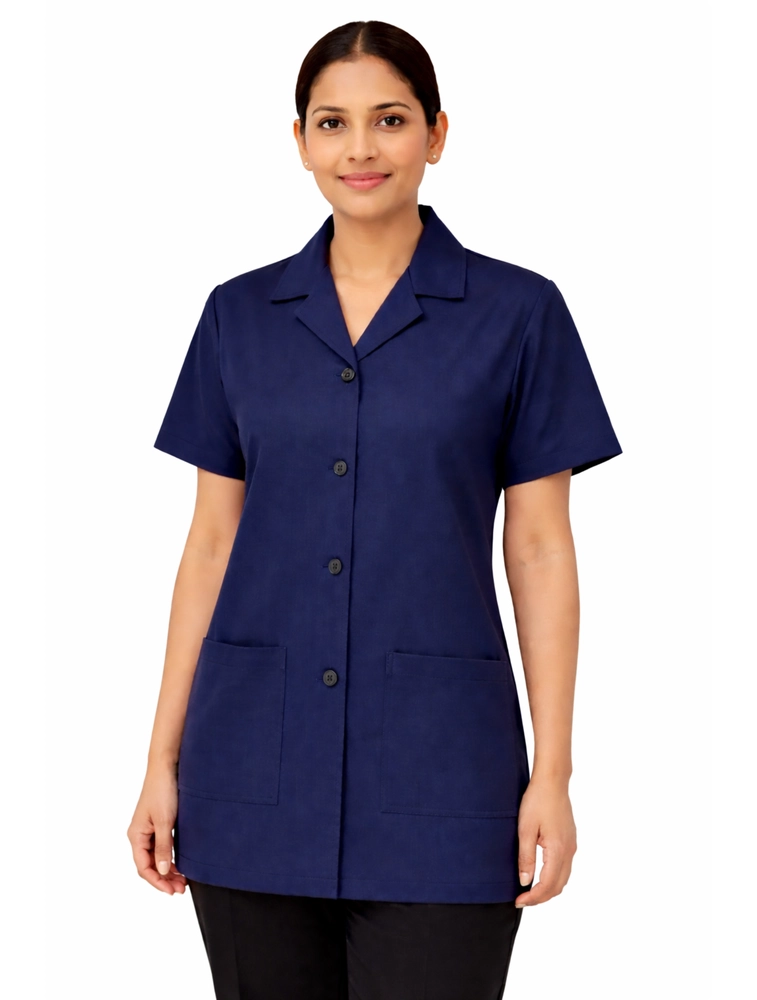
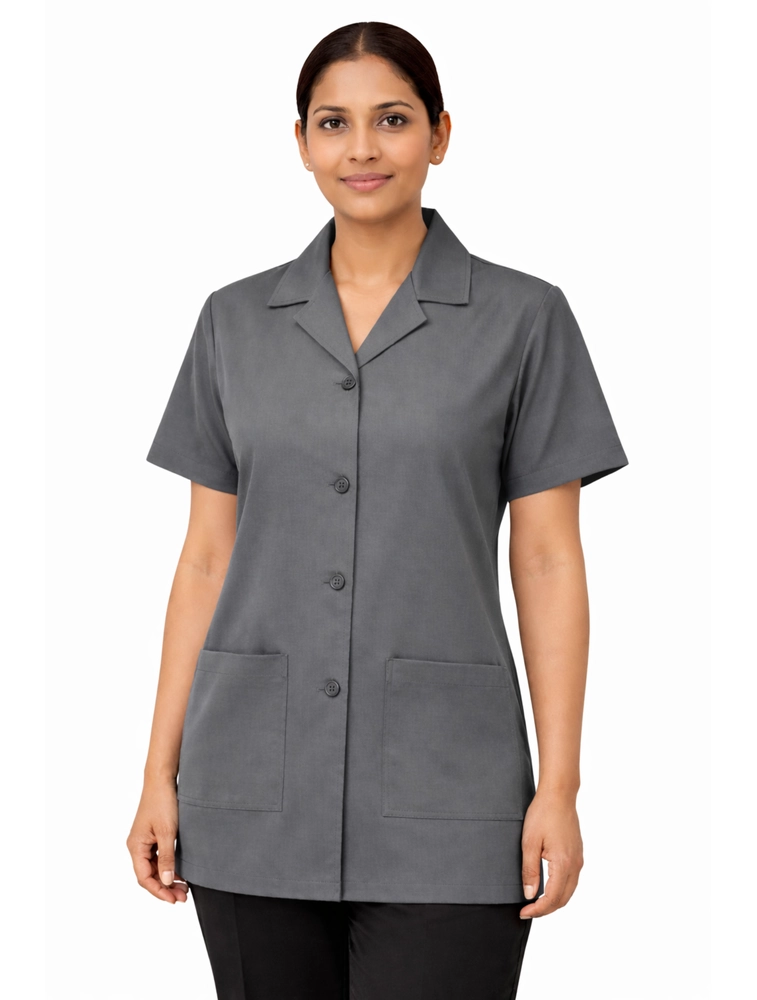
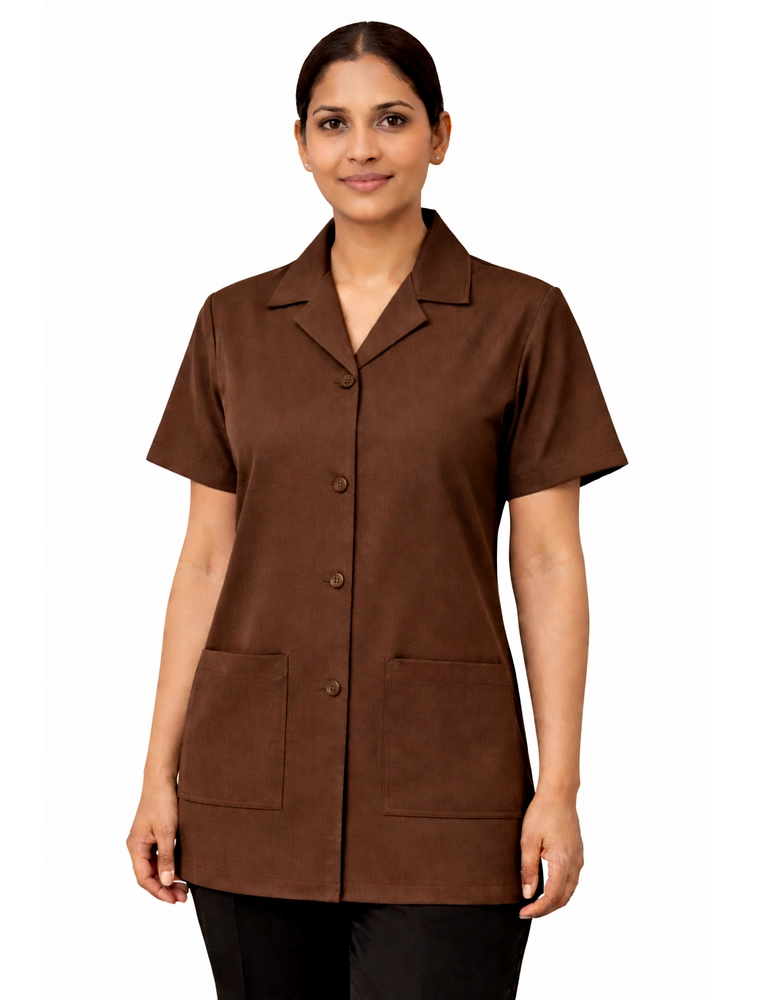
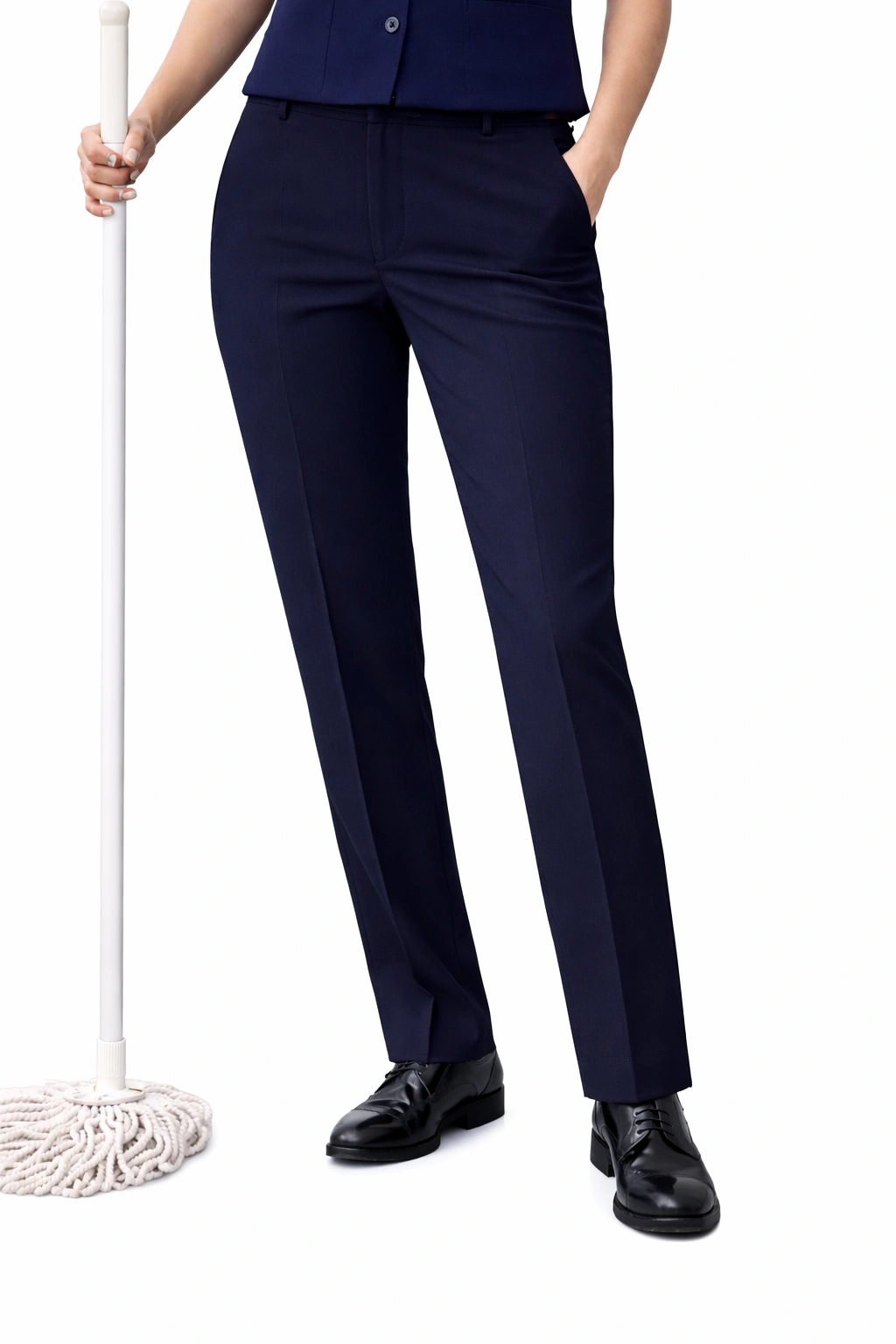
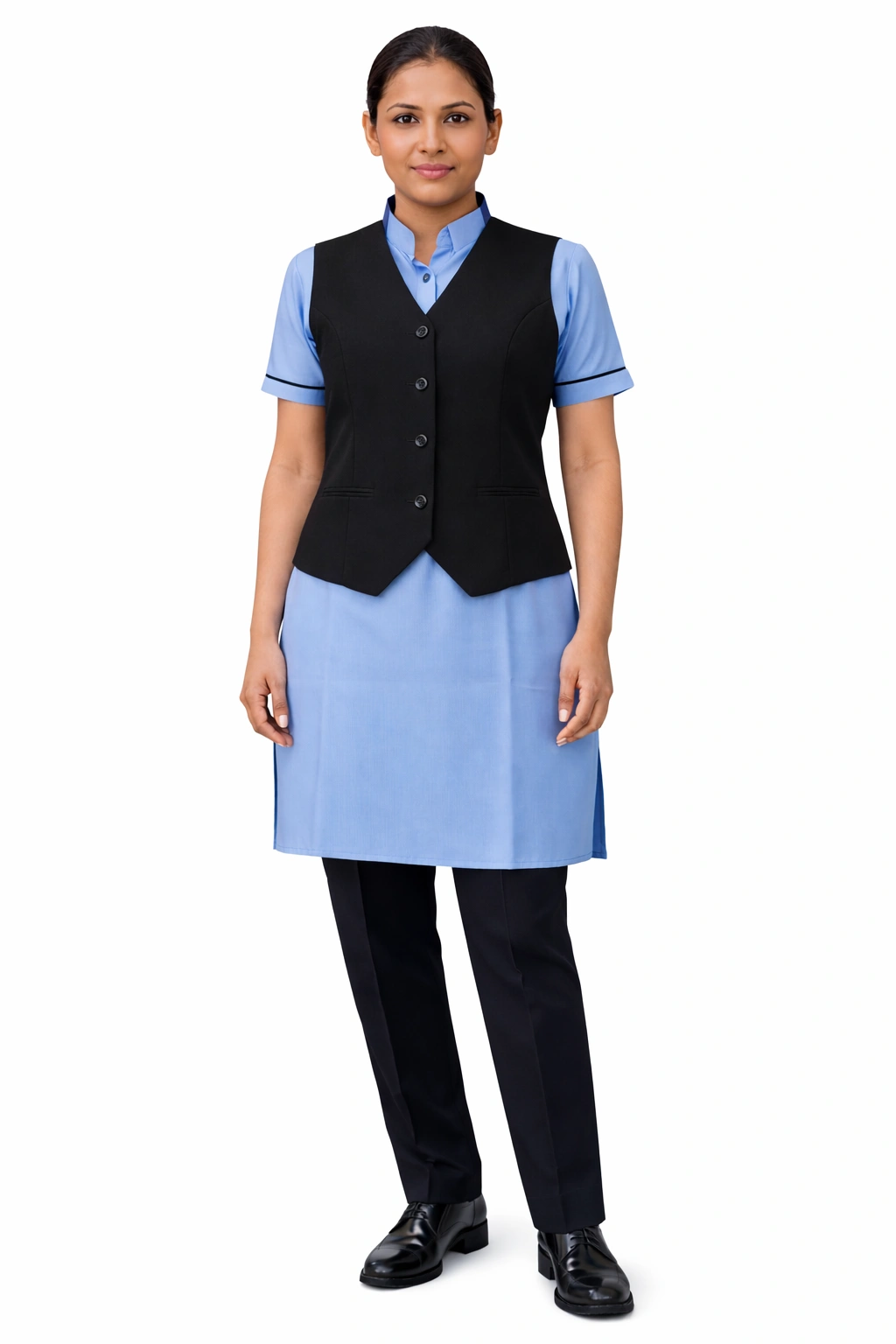
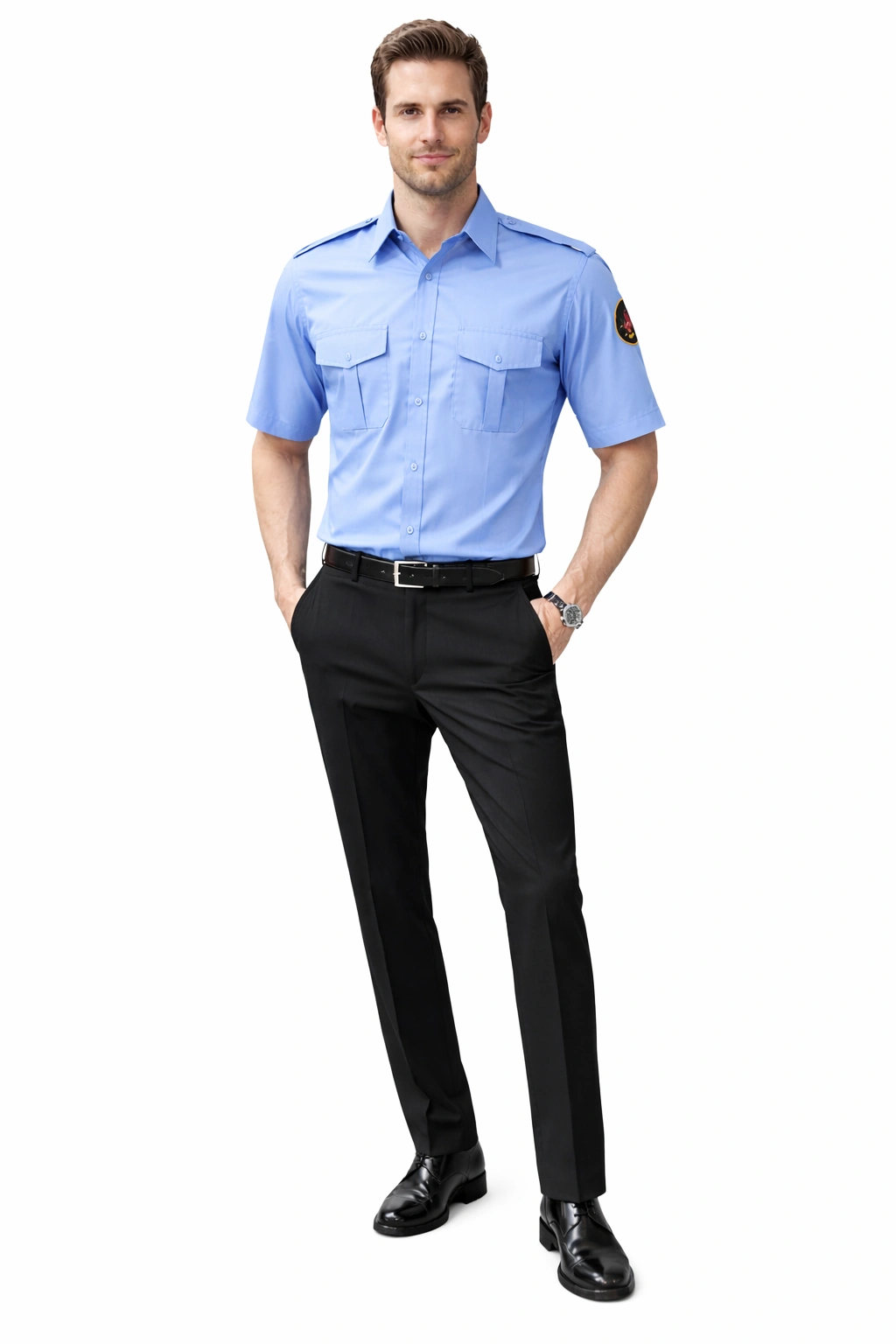
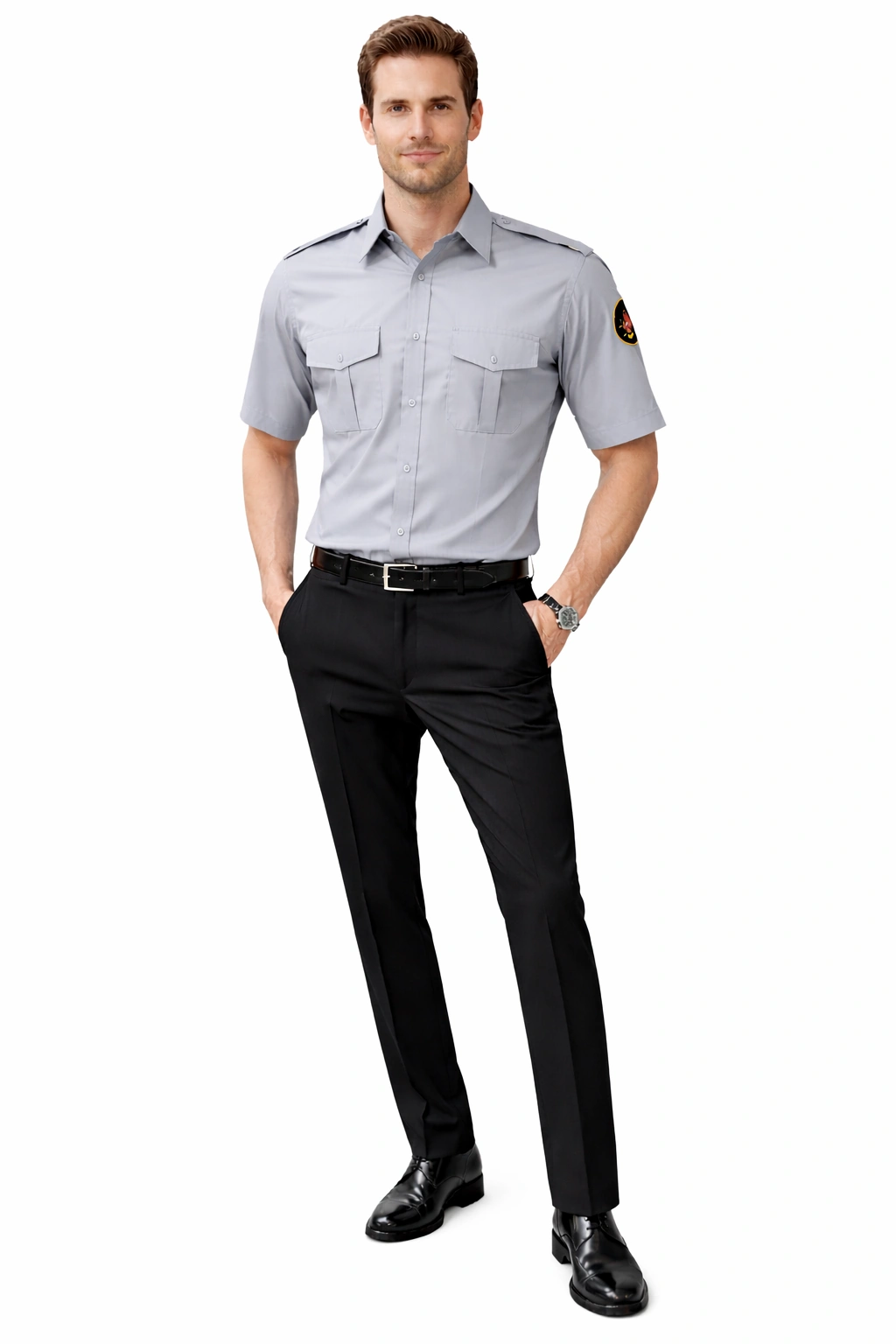
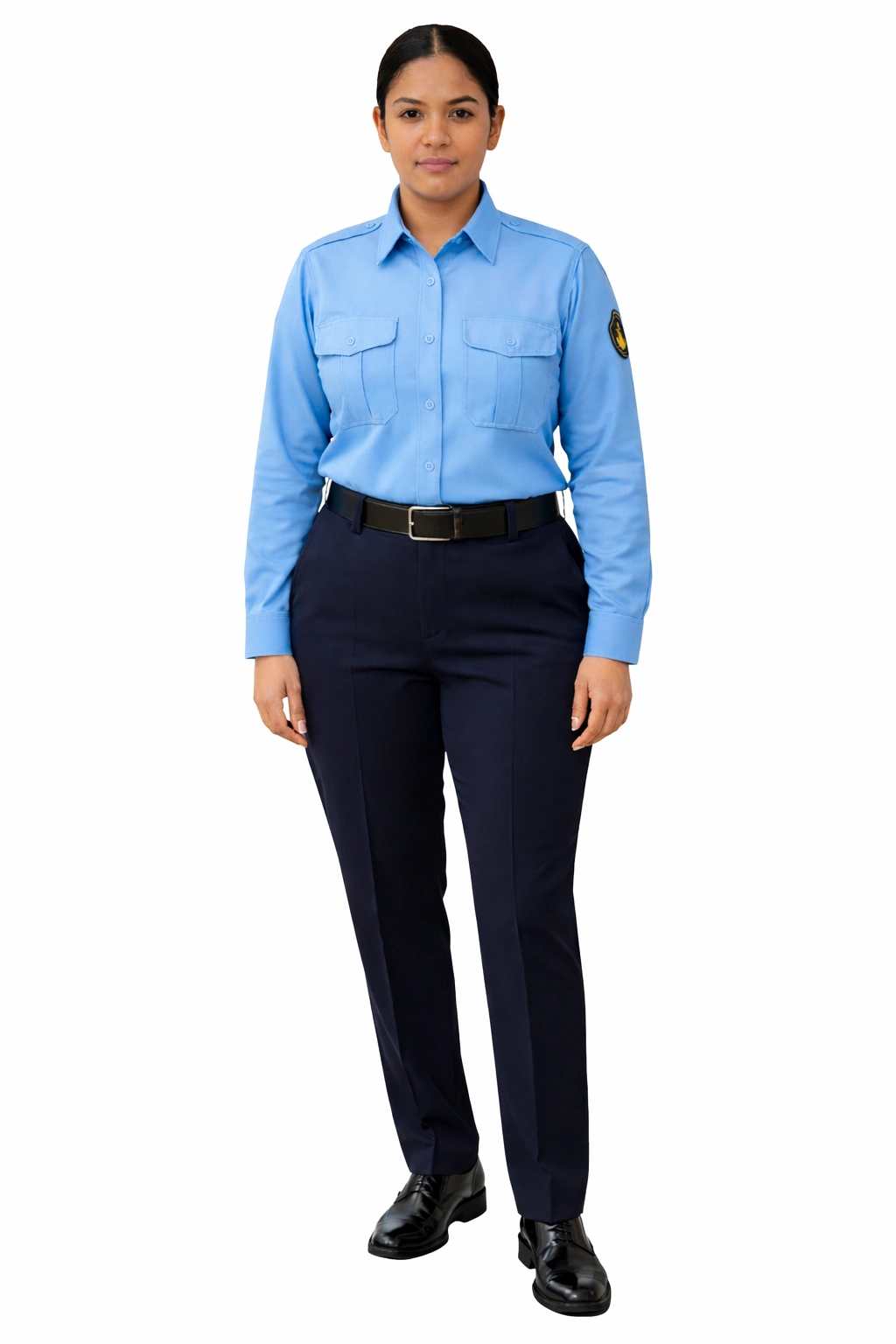
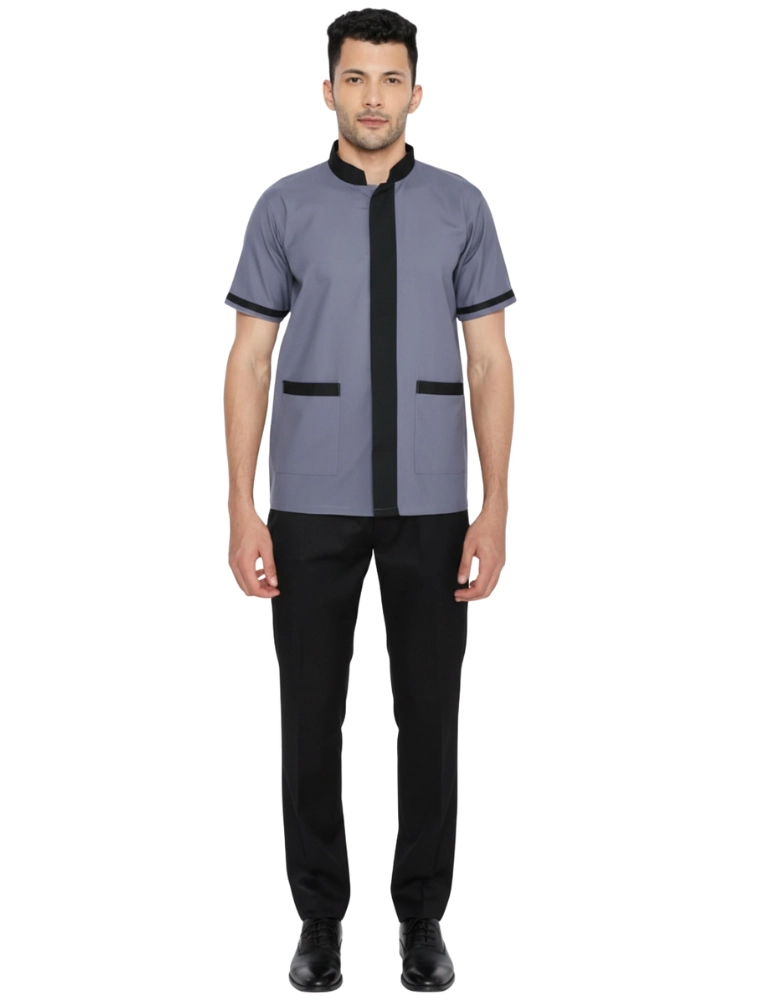
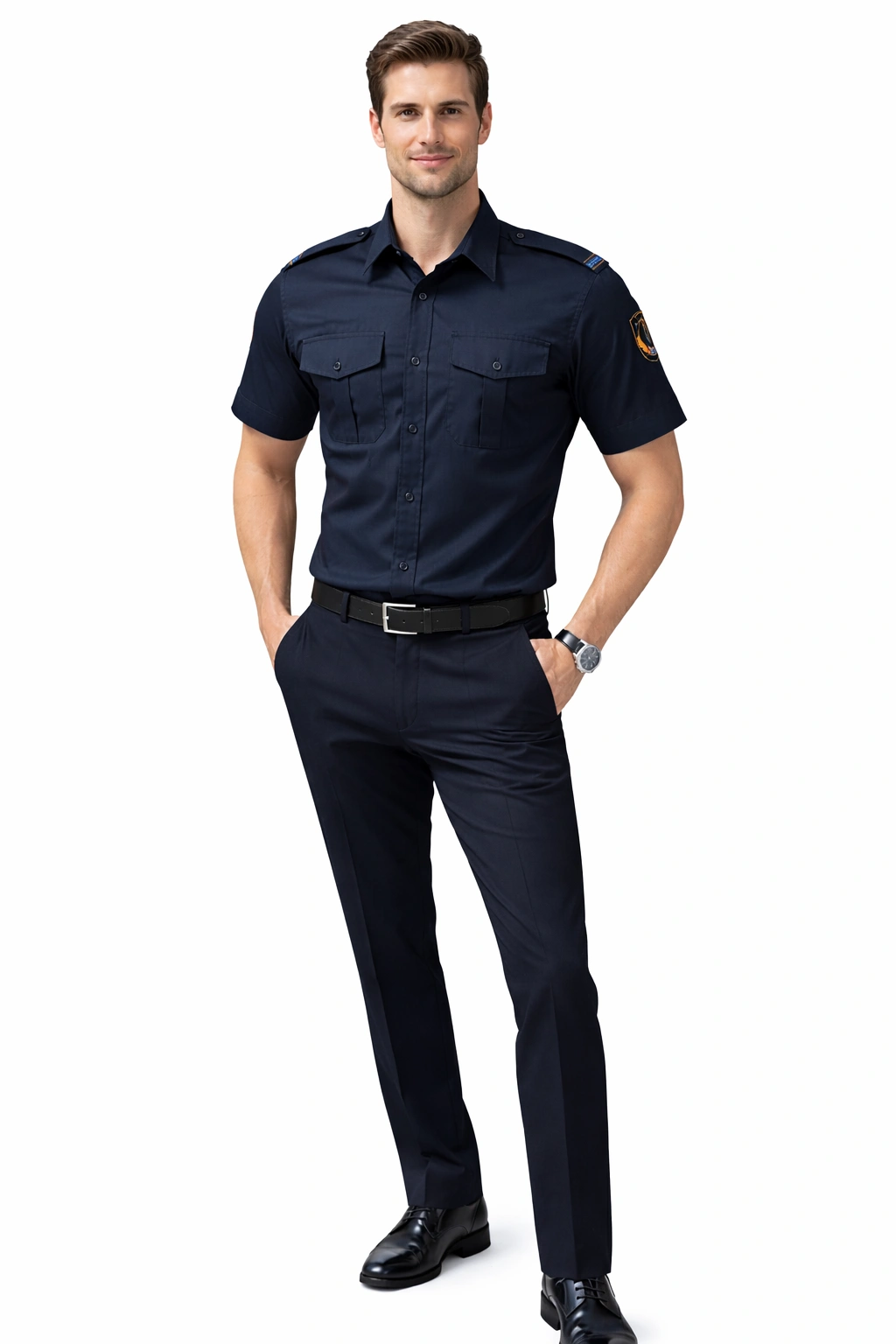
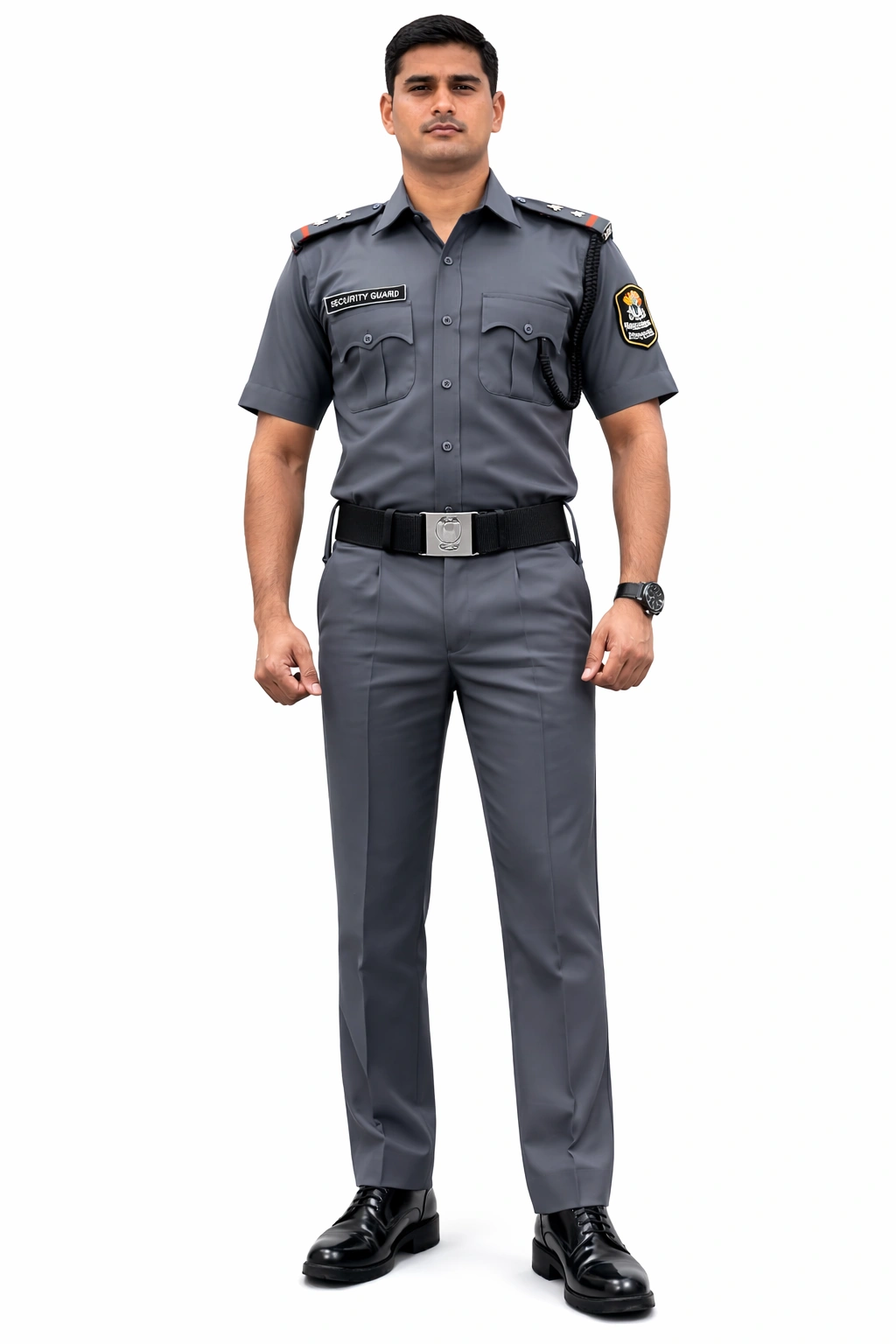
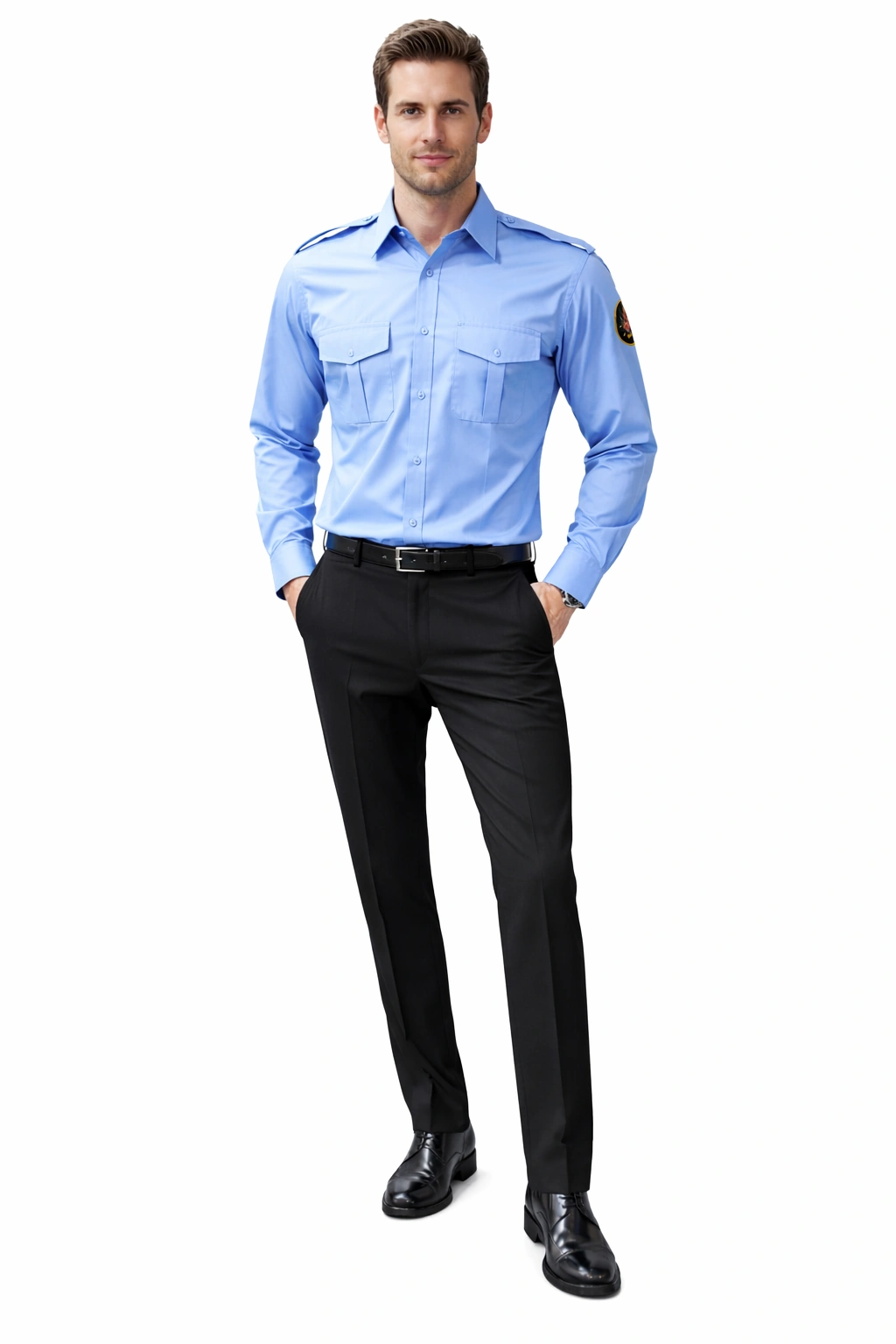
Twelve garments, from Rs 361 to Rs 941, split seven housekeeping and five security. On 30 July 2026 the grid holds three colourways of a PV matty half-sleeve unisex overcoat at Rs 361, two housekeeping pants at Rs 476 and Rs 477, a poplin kurti and salwar set with overcoat at Rs 784, a housekeeping shirt-and-pant set at Rs 902, four security shirt-and- pant sets at Rs 831 and Rs 863, and one navy PV matty security safari suit at Rs 941.
  • What is not on this page, said plainly, because it is most of a real guard kit. There is no cap, no beret, no turban or patka, no belt, no shoes, no socks, no raincoat, no umbrella, no winter jersey or jacket, no gloves, no whistle, no lanyard, no epaulette, no name badge, no rank slide, no reflective outer layer and no bag. A guard on a gate in Bengaluru in July needs a raincoat; a guard on a gate in Delhi in January needs a jersey.
  • Neither is published here. If you are pricing a full deployment kit from this grid you will under-cost it, and it is better to hear that at enquiry than at mobilisation.
  • What that means depending on who you are. If you are a private security agency buying repeat sets of a standard rig, the four shirt-and-pant sets and the safari suit are genuinely orderable today and the sizes and colours are real. If you are a facility management company buying housekeeping, the overcoat at Rs 361 is the cheapest way to put a whole floor into one identifiable garment over their own clothes, and the pants and sets sit above it. If you are a government department, an institution or a corporate buying a complete kit against a specification, treat this page as a starting point and a contact, not a catalogue — the accessories, headwear, footwear and seasonal layers all have to be quoted.
  • What is quotable beyond the grid. Caps and berets, belts with or without a brass buckle, epaulettes and rank slides, name badges and badge panels, woven and embroidered patches, whistle cords and lanyards, jerseys and winter jackets, raincoats and ponchos, housekeeping aprons and tabards, kitchen and pantry wear, and any of the published garments in your own shade, weight or cut. Adjacent categories sit on their own pages: hospital and clinical wear at factori.com/healthcare-uniforms, hotel and front-of- house at factori.com/hotel-hospitality-uniforms, corporate and industrial programmes at factori.com/corporate-industrial-uniforms, and trousers on their own at factori.com/trousers. A disclosure about the prices you are reading. Every price on this page is the highest-quantity price. The safari suit is published at Rs 941 and its own quantity table reads Rs 990 for 100 to 999 pieces, Rs 971 for 1,000 to 9,999, and Rs 941 above 10,000. The overcoat is published at Rs 361 against Rs 380, Rs 373 and Rs 361 on the same bands. Minimum order quantity is 100 pieces per style per colour, so a buyer ordering at MOQ pays roughly 5% more than the headline, not less. We would rather tell you that here than have you find it in a quotation. Lead times, so you can plan backwards from a mobilisation date. Published items in ready stock dispatch in 7 to 10 days. Custom production in your shade, weight, cut or badging runs 15 to 30 days from sample approval, and the step that slips is approval, because that depends on a decision at your end rather than on a machine at ours. Send a physical garment from whatever your people wear now, even a worn one, with your headcount split by role and site. A sealed reference sample settles cloth, colour, cut and finish in one object. Send us the requirement or call +91 87470 71444.
ProcurementQueries Targetedsecurity guard uniform manufacturer bulk India, housekeeping uniform supplier wholesale, security uniform set bulk price, housekeeping overcoat manufacturer, security and housekeeping uniform range
No, and it is a criminal provision rather than a matter of taste. Section 21 of the Private Security Agencies (Regulation) Act, 2005 makes it an offence for a guard or supervisor to wear the uniform of the armed forces or police, or any dress having the appearance or bearing any of the distinctive marks of that uniform.
  • Both the wearer and the proprietor of the agency are liable — imprisonment up to one year, or a fine up to five thousand rupees, or both. The provision in its own words. Section 21 of the Act, headed Penalty for unauthorised use of certain uniforms, reads: “If any private security guard or supervisor wears the uniform of the Army, Air Force, Navy or any other armed forces of the Union or Police or any dress having the appearance or bearing any of the distinctive marks of that uniform, he and the proprietor of the private security agency shall be punishable with imprisonment for a term which may extend to one year or with fine which may extend to five thousand rupees, or with both.” Read the words “appearance” and “distinctive marks” carefully, because that is where the risk sits. The provision does not stop at an actual police uniform. It reaches any dress that has the appearance of one or that carries any of its distinctive marks. In practice the features that draw attention are the ones that read as insignia at a distance: rank stars or chevrons on the shoulder, a national emblem, a peaked cap with a badge that resembles a police cap badge, a shoulder title that mimics a force name, a belt or lanyard combination associated with a uniformed service, and shade choices deliberately close to a state police khaki. Nothing on this page carries insignia of any kind, which is the correct default; the moment you add badging, that is the moment the question becomes live.
  • Why the colours on this page are what they are. The security sets published here are navy, blue and grey with black trousers. Those are conventional private-security shades precisely because they are not the khakis and olives most closely associated with police and military dress in India. If you brief us on a custom shade, tell us the state or states of deployment, because a shade that reads as neutral in one place can sit uncomfortably close to a uniformed service in another.
  • What we cannot tell you, and will not pretend to. Sections 24 and 25 of the Act give the Central and State Governments rule-making powers, and the prescribed uniform is left to those rules, which differ from state to state. There is no single national colour chart, badge specification or insignia rule that we can hand you, and any supplier who offers one for every state is overstating what exists. The authoritative source for your deployment is your State Controlling Authority under the Act and the rules notified in that state. This paragraph is not legal advice and is not offered as any. The above is a description of what a published statute says, provided so that a procurement team knows the question exists before a garment is manufactured. Whether a particular uniform, badge, shade or insignia complies in a particular state is a matter for your own legal and compliance advisers and for the Controlling Authority, not for a manufacturer's FAQ. We manufacture to your written specification and we will raise a concern if a design brief looks likely to attract Section 21 — but the compliance decision is yours.
  • What to put in the specification to keep this clean. State the shade by reference to a physical swatch rather than a colour name. State the badging in words, position by position, with the artwork attached. State explicitly that no rank insignia, service emblem or force title is to be applied. And keep the approved sample sealed and dated, because a sealed sample is the record of what you actually authorised if anyone ever asks. Send us the brief and we will quote against it line by line. REGULATION
SpecificationQueries TargetedPSARA uniform rules security guard, can security guard uniform look like police, PSARA Section 21 penalty uniform, private security agency uniform regulation India, security guard uniform colour rules
It means the garment has to be designed to carry identification, not merely to look smart. Section 17 of PSARA requires every private security agency to issue a photo identity card to every guard and supervisor it employs, in the prescribed form, to be carried on the person while on duty and produced on demand. A card that has to be produced on demand needs somewhere to live, and a name badge needs a flat, reinforced, correctly placed panel to sit on.

Neither is an afterthought once cloth is cut.

  • What the statute requires. Section 17, headed Issue of photo identity card, requires the agency to issue every security guard and supervisor in its employment a photo identity card in such form as may be prescribed, and requires the guard or supervisor on duty to carry that card on his person and to produce it on demand. The form of the card is prescribed by rules, and those rules are made at state level, so the card's exact layout and content is set where you operate, not nationally. Note also that the obligation sits on the agency as employer, which is why an identity card almost always carries the agency's identity even when the guard stands at a client's gate. The five garment features that make identification work, and what to specify for each. First, a badge panel: a flat area over the left chest, clear of a pocket seam and clear of a pocket flap, sized to the badge you actually intend to use, and interlined so the badge does not pucker the cloth. Second, a fixing method: a magnetic backing is kind to cloth and to the wearer but is lost easily; a pin is cheap and reliable and leaves permanent holes; a sewn woven patch cannot be transferred between wearers.
  • Decide before you order, because the panel construction differs. Third, an identity-card provision: either a clip-friendly edge, a buttoned tab, or a lanyard that will not become a snag hazard — and if you use a lanyard near any moving equipment, specify a breakaway type. Fourth, epaulettes or shoulder tabs if you use grade markings, with the reminder from the previous answer that grade markings must not read as service rank insignia. Fifth, a placement drawing, in millimetres from the shoulder seam and the placket, approved before bulk cutting.
  • Where this bites in housekeeping, which people forget. Housekeeping tenders very often require name badges as explicitly as security tenders do — one real services tender in front of us requires that housekeeping staff be in a smart uniform “supported by identity cards and name badges during duty hours”. But a housekeeping overcoat is the garment most likely to be washed hot and most likely to be shared across a shift. A pinned badge on a shared garment is a badge on the wrong person by week three. For shared garments, badge the person and not the garment: lanyard or clip, with the garment carrying only the organisation's mark.
  • The three failures we see most often. A badge panel placed where the pocket flap covers it when the wearer sits. A badge specified after the garment was approved, so the panel has no interlining and the badge sags the cloth within a month. And a name badge ordered per person for a workforce with 30% annual turnover, with no reorder route for a joiner, which leaves new staff unbadged for weeks — order a documented spare fraction and a stated reorder lead time along with the first batch. Not legal advice. The description of Section 17 above is a description of a published statute, included because it drives garment design. The prescribed form of the identity card, and everything else about your licensing obligations under the Act, is a matter for your own advisers and your State Controlling Authority.
  • We will build the panel, the tab and the badge to your approved drawing; we do not certify your compliance. REGULATION
SpecificationQueries TargetedPSARA photo identity card Section 17, security guard name badge uniform, guard uniform badge panel epaulette, ID card holder uniform requirement, name badge for housekeeping staff
Usually the agency's, and there is a commercial reason rather than a vanity reason.

Real tender language routinely requires the contractor to provide uniforms carrying its own organisation's name or logo, at the contractor's cost. That single choice is what lets a garment survive a contract transfer: an agency-badged uniform can be redeployed to another client the day a contract ends, while a client-badged uniform is stock written off.

  • What a real tender actually says. A security services RFP in front of us requires, at clause level, that “the Contractor shall provide proper uniform with his organization's name/logo, shoe, raincoat, umbrella and I-card etc. to the manpower deployed at the cost of contractor”, and separately that the agency “should ensure providing proper neat and clean uniforms to all its staff deployed”. Note three things in that first clause. The logo is the contractor's. The kit includes shoes, a raincoat, an umbrella and an identity card — none of which is published on this page. And the cost sits with the contractor, which means the specification is also effectively the contractor's to write.
  • The three models, and the trade-off in each. Agency-branded is the default: the garment carries the agency mark, it transfers between client sites, and the client's own identity appears only on the identity card and any site-specific badge. Client-branded suits a long single-site contract where the client wants visitors to read the guard as part of their own organisation; it costs the agency stock at every contract end, so an agency pricing this properly will build that write-off into the rate. Dual-marked is the most common compromise on multi-year contracts: agency mark on the garment, client mark on a detachable element — a velcro patch, a badge, a scarf, a shoulder title, a lanyard. Dual-marked is nearly always the right answer for a contract of uncertain length. Design for re-badging from the first order, not the second. If any part of the marking is likely to change, make that part removable and make the base garment neutral. A velcro-backed woven patch changes in seconds and costs a fraction of a garment. Embroidery does not come off cloth without leaving a shadow of needle holes, and a heat-transfer print on polyester leaves a visible plate mark. If a client mark must be embroidered, put it on a component that can be replaced — a pocket flap, a chest panel, a scarf — rather than into the body panel. And if you take over an incumbent's contract with a workforce already in place, budget for the re-badging of every garment you inherit, because the outgoing agency's mark walking your new client's floor is the first thing the client will notice.
  • What to tell us so the quote is right. Give us the marking as a list: which mark, which position, which method, on which garments, in which quantity, and whether it must be removable. Give us the artwork as vector where you have it, and a physical sample of an existing badge where you do not. Then tell us the split between garments that will carry a permanent agency mark and garments that need to accept a rotating client mark, because the two are different orders even when the cloth is identical. One procurement detail worth putting in your own contracts. Say who owns the uniform at contract end and who is responsible for withdrawing it. An agency-badged uniform on the back of a former employee is a live impersonation risk, and a return-and-account process at exit is cheaper than the incident. This is a contract clause and a process, not a garment feature, but it is the reason the badging decision matters beyond appearance. If you want the garments built so that marks come off cleanly, tell us at enquiry.
ProcurementQueries Targetedwhose logo on security guard uniform, agency logo vs client logo uniform, re badging uniforms contract transfer, security contractor uniform branding, uniform logo when contract changes
Two of those three words describe a weave and one describes a cloth style, and the difference decides how the garment behaves. Twill is a diagonal-rib weave, typically 2/1 or 3/1, published in a roughly 120 to 300 GSM range, structured, wrinkle-resistant and very durable. Poplin is a fine plain weave over-one-under-one, roughly 80 to 150 GSM, smooth and crisp but poor at wrinkle recovery and needing an iron after every wash. Matty is a basket-style construction sold as a workwear cloth — and, importantly, it is not a fibre content. Twill Weave: diagonal rib, 2/1 standard or 3/1 denim-style Published range: about 120–300 GSM Handle: structured, with body Wrinkles: good resistance Durability: very high Care: easy machine wash Recommended for: workwear and trousers Poplin Weave: plain, over one under one Published range: about 80–150 GSM Handle: smooth, crisp, fine Wrinkles: poor — creases easily Durability: moderate Care: needs ironing after washing Recommended for: business and formal shirting Matty Weave: basket-style, yarns grouped rather than single A cloth style, NOT a fibre content Handle: dry, slightly textured, holds shape Hides light soiling better than a flat weave Always ask for composition and GSM separately Used here for: overcoats, housekeeping pants, the safari suit How that maps onto what is published on this page. The security shirts are PV twill, which is the right family for a garment that has to look structured on a gate all day and survive frequent washing. The trousers and the overcoats are PV matty, which is a sensible workwear choice for a garment that is going to be leaned against walls and railings. The kurti in the ladies' housekeeping set is PC poplin, which will look crisper than anything else on the page and will also need pressing more often than anything else on the page — worth knowing before you promise a client a crisp housekeeping floor without providing an iron.

The two-letter prefixes, since they are used inconsistently across the industry. PV is poly- viscose. PC is poly-cotton.

Both are blends and neither tells you the ratio, and the ratio is where the behaviour lives.

  • Ask for the composition as percentages, in writing, on the quotation. If a supplier — anyone, ourselves included — gives you a fabric name without a percentage and a GSM, you have a description rather than a specification, and two suppliers will read it two different ways.
  • What our own listings do and do not publish, stated honestly. The Rs 941 security safari suit is the best-specified garment in this category: its own page states poly-viscose matty at 280 GSM, half sleeve, collared neck, double functional chest pockets, double-needle stitching at stress points, regular fit, and sizes 36 to 44. The Rs 361 overcoat publishes no composition percentages, no GSM, no closure or pocket detail and no size chart. That gap is real, we are not going to paper over it, and it has been raised internally as a fix. Until it closes, ask us for composition, GSM, closure, pocket construction and stitch type in writing on any garment where the product page is silent — and hold the quotation to the answer.
  • The three numbers that actually decide a uniform cloth. Fibre composition as percentages, because that governs strength when wet, dye behaviour and how it responds to heat. GSM, because that governs opacity, drape and heat. And construction, meaning the weave and the yarn, because a 220 GSM twill and a 220 GSM plain weave are not the same garment. Everything else — the trade name, the marketing adjective, the fabric's nickname on a quotation — is commentary.

Ask us for those three numbers on every line you are comparing, from every supplier you are comparing, and the comparison becomes possible.

SpecificationQueries TargetedPV twill vs poplin vs matty fabric, twill GSM range workwear, poplin GSM shirt fabric, what is matty fabric uniform, security uniform fabric weave choice
Three separate attacks, and they are tested by three different methods. Washing is covered by ISO 105-C06, which runs domestic and commercial laundering from 40 up to 95 degrees Celsius. Bleaching is covered separately — ISO 105-N01 for hypochlorite and ISO 105-N02 for peroxide. Rubbing, which is what a wet cloth against a garment actually is, is ISO 105-X12. All three are graded on a grey scale from 1 to 5, where 5 means no perceptible change and 1 means severe change, with half grades in use. We have to point out a contradiction in our own listings, because you would find it anyway. The care instructions on the housekeeping garments published here include “avoid bleach”. These are garments sold for housekeeping, and housekeeping staff handle sodium hypochlorite and chlorine-based disinfectants as a routine part of the job. A care label that assumes bleach will never touch the cloth is a care label written for a different working life. That is a specification-versus-use contradiction and it has been escalated internally rather than explained away.
  • What it means for you today is simple: if your staff work with chlorine, do not assume any garment on this page has been tested against hypochlorite, and ask for the position in writing before you order at volume. The methods in the ISO 105 family that a housekeeping buyer should be naming. C06:2010, colour fastness to domestic and commercial laundering, which is the workhorse wash test and lets you specify the temperature you actually launder at. C10:2006, colour fastness to washing with soap or with soap and soda. N01:1993, colour fastness to bleaching with hypochlorite, which is the specific test for the chemistry in question. N02:1993, the same for peroxide. X12:2016, colour fastness to rubbing, run on a crockmeter at 9 newtons of pressure over a 104 millimetre stroke, both dry and wet — and it is the wet result that matters here, because wet rubbing is what happens when a damp cloth is dragged across a sleeve. E04:2013, colour fastness to perspiration, which is under-specified in this category and shows up as collar and underarm marking on dark shirts by month four. And D01:2010, colour fastness to dry cleaning in perchloroethylene, if any part of the kit is dry-cleaned.
  • How to read the grades you get back. The grey scale for change in colour is defined in ISO 105-A02 and runs 1 to 5, with grade 5 the best result — no change — and grade 1 the worst. A separate grey scale is used for staining of adjacent white fabric, which is the number that tells you whether a navy pant will bleed onto a white shirt in a mixed wash. For dark reactive-dyed cotton, published guidance treats a wet rubbing result of grade 2 to 3 as typically acceptable and grade 3 or better as excellent, which is a useful reality check: on a deep shade, expecting grade 5 wet rubbing is expecting something the chemistry does not readily give.
  • How to write this into a purchase specification, in one paragraph. Name the method, the condition and the minimum grade for each. For example: change in colour to ISO 105-C06 at the temperature you actually wash at, minimum grade 4; staining of adjacent white to the same test, minimum grade 4; colour fastness to hypochlorite bleaching to ISO 105-N01, minimum grade you are prepared to accept, stated; and wet rubbing to ISO 105-X12, minimum grade 3. Then require the test report to name the method, the condition and the date, and to relate to the actual shade being supplied rather than to a similar shade.

What we will and will not tell you about our own cloth.

Where a mill test report exists for a fabric we are quoting, we will give it to you with the method and the condition on it.

Where it does not exist, we will say it does not exist rather than repeat a general claim about the fibre. None of the figures above is a claim about a factori garment — they are what the published standards specify, given so that you can specify against them. If a fastness grade is a condition of your order, say so at enquiry and we will tell you before you commit whether the report exists or whether it has to be tested for.

Ask at enquiry, not at delivery.

SpecificationQueries Targetedhousekeeping uniform bleach resistance, ISO 105 N01 hypochlorite colour fastness, disinfectant fades uniform, colour fastness to washing ISO 105 C06, housekeeping uniform fades after washing
Usually it is an under-specified fabric rather than a faulty one, and the specification you were missing has a name.

Colour fastness to artificial light is tested to ISO 105-B02 using a xenon arc lamp and graded on the blue wool scale from 1 to 8, where 8 is the best result. Grades 1 to 3 are poor and suit indoor use only. Grades 4 to 5 are the typical international baseline for apparel. Grades 6 to 8 are what outdoor and long-term sun exposure actually needs.

Which is why a gate guard and a housekeeper should not necessarily be buying the same cloth. A housekeeper works indoors under artificial light and their garment is attacked mainly by washing, rubbing and chemicals. A gate guard stands in direct Indian sun for eight to twelve hours a day, three hundred days a year, and their garment is attacked mainly by ultraviolet light. A cloth specified at the apparel baseline of 4 to 5 will do fine on the housekeeper and will visibly shift on the guard within a season — and it will shift unevenly, because the shoulders, the upper back and the outer sleeve take far more radiation than the front of a torso in shade. The patchiness people report is not random; it is a map of where the sun falls.

How to tell sun fade from wash fade, which changes who you talk to. Sun fade is positional: shoulders, upper sleeves, upper back, cap crown, and the side of the body that faced the road. Wash fade is uniform across the garment and usually arrives with pilling and a general dulling. Chemical damage is patchy but random, often with a hard edge and sometimes with a colour shift rather than a lightening — a navy going reddish or a black going brown is chemistry, not sunlight. Bleach spots have a distinct pale halo. If the fade follows the sun map, specify lightfastness on the next order; if it is even, look at wash temperature and cycle; if it is spotty with hard edges, look at what the staff are handling.

What to specify, and where to put your money.

Split the specification by exposure rather than buying the higher grade for everybody. Outdoor posts — gates, yards, car parks, perimeter patrol, traffic marshalling — get the higher lightfastness cloth. Indoor posts and housekeeping get the apparel baseline and you spend the difference on wash performance instead. Say it in one line on the enquiry: colour fastness to light to ISO 105-B02, minimum blue wool grade stated, tested on the supplied shade. And note that the shade matters enormously — a mid-blue and a deep navy in the same fibre and the same dye class can return different grades, so a report on one shade is not a report on the other. Two practical things that reduce visible fade without changing cloth. First, rotate garments so that no single set carries all the outdoor duty; a three-set rotation ages evenly and looks better at month eighteen than a two-set rotation does at month twelve. Second, order in one production lot per shade where you can, and reorder against a sealed swatch, because a re-dyed lot that starts a half-shade away will diverge visibly once one lot has taken a season of sun and the other has not. That is a stock- management decision more than a fabric one, but it is the reason a floor of guards ends up looking like three floors of guards.

What our listings currently declare on this point. Nothing.

No product page on this category publishes a lightfastness grade, a test method or a test report, and the marketing phrase “long-lasting colour retention” that appears on some product pages is not a substitute for a grade — it is not measurable and we would not defend it in a specification meeting. If lightfastness is a requirement for your outdoor posts, raise it at enquiry and we will tell you what report exists for the cloth being quoted and what would have to be tested. Put it on the enquiry and it becomes a condition of the order rather than a disappointment in month eight.

SpecificationQueries Targeteduniform fades in sunlight, colour fastness to light blue wool scale, ISO 105 B02 xenon arc test, outdoor uniform fading security guard, lightfastness rating for apparel
By naming a method and a pass mark, because the standard gives you the first and not the second. Abrasion resistance is tested to ISO 12947-2 on a Martindale machine, and for apparel the specified load is 9 kilopascals, which is a nominal 595 grams. For woven fabric the test ends when two separate yarns are completely broken; for knits, at the first hole; for pile fabrics, when the pile is worn to the base.
  • What the standard does not do is tell you how many cycles a guard's shirt should survive. That number is yours to set. The parts of the abrasion standard, so you cite the right one.
  • ISO 12947 Part 1 covers the equipment and the general method. Part 2 covers determination of specimen breakdown, which is the part that produces the cycle count people quote. Part 3 covers determination of mass loss. Part 4 covers assessment of appearance change, which is often the more useful test for a uniform, because a garment is retired when it looks retired rather than when a yarn finally parts. The load distinction matters too: apparel is tested at 9 kilopascals or 595 grams, upholstery at 12 kilopascals or 795 grams, so an impressive cycle count quoted at upholstery load is not comparable to an apparel figure. The commercial grades everyone quotes, and the honest caveat. Published abrasion grading describes roughly 30,000 to 40,000 cycles as “Contract” and 50,000 cycles or more as “Severe Contract”. Those bands come from the furnishing and contract-interiors world. The source that publishes them does not specify a minimum for workwear or uniforms, and neither does the standard. So a supplier quoting you “40,000 Martindale, contract grade” for a security shirt is borrowing a benchmark from another industry. It is not a lie, but it is not a uniform pass mark either, and you should know which you are being given. Pilling, which is what people actually complain about. Pilling on the Martindale is assessed to ISO 12945-2:2020, with results expressed in whole or half grades — 3.5 is a normal result to receive — and the visual assessment itself is defined in ISO 12945-4. One detail from the method is worth knowing when you agree a test plan: the published correlation between the laboratory result and actual wear performance is best at around 7,000 rubs, which is a much lower count than the abrasion numbers being thrown around. The test loads are also specified, with the sample fixture at 155 grams plus or minus 1 and 415 grams plus or minus 2 with the loading block. We are not going to tell you what each pilling grade looks like in practice or how a poly-viscose behaves against a poly-cotton in this test, because we could not source that from a primary standard and we are not prepared to invent it.
  • How to set a pass mark you can actually defend, in four steps. First, take your own retirement data — how many months your current garment lasts before someone pulls it out of rotation, and why. Second, decide what failure means for you: a hole, a thin patch, visible pilling, or a shine on the seat and elbows. Third, ask two or three suppliers for the Martindale specimen-breakdown figure and the pilling grade on the exact cloth they are quoting, at the apparel load, with the method and date on the report. Fourth, set your minimum a little below the best figure you were shown rather than at an aspirational round number, and write it into the specification with the method named. That process gives you a threshold based on your own wear reality instead of on a number borrowed from a sofa.

And what we publish today, plainly.

No product page in this category publishes a Martindale figure or a pilling grade. Phrases that do appear on some product pages — “superior strength”, “excellent wrinkle resistance”, “long service life” — are not test results and we will not offer them as any.

Where a mill report exists for a cloth we are quoting, you can have it with the method on it.

Where it does not, we will say so and quote the cost of testing if you want the number. That is a less flattering answer than a big round cycle count, and it is the only one worth acting on.

Ask us for the report before you compare prices, because a cheaper cloth with no report is not a cheaper cloth.

SpecificationQueries TargetedMartindale abrasion test ISO 12947-2, martindale rub count workwear, ISO 12945 pilling test grades, uniform durability specification, how many martindale cycles for uniform fabric
You cannot, from what is published today, and that is a gap in our listings rather than something to work around cleverly. This page runs two incompatible size systems — the Rs 941 security safari suit in 36, 38, 40, 42 and 44, and the Rs 361 overcoat in XS to XXL — and neither publishes a measurement chart. Until that is fixed, order sizes against measurements in millimetres or inches that we confirm in writing, not against a letter or a number.
  • Why two systems on one page is a real problem and not a cosmetic one. A number in menswear usually refers to a body chest measurement in inches, and a letter refers to a manufacturer's own grading with no fixed body measurement behind it. XL means one thing from one maker and another thing from the next. So a workforce ordered half in numbers and half in letters cannot be reconciled: you cannot tell whether the man who takes a 40 shirt takes an L or an XL overcoat without measuring him or fitting him. On a 500-person deployment that difference is dozens of garments in the wrong size, and the ones that end up wrong are almost always at the two ends of the range. The seven fields a size chart has to state before it is usable. Whether each figure is a body measurement or a finished-garment measurement, which is the single most common source of confusion. Chest, measured at the fullest point. Waist. Shoulder, seam to seam. Sleeve length, and from where it is measured. Garment length, and from where. And the tolerance in each direction, because a chart without a tolerance is a chart nobody can be held to. A chart that states those seven things can be checked against a garment with a tape; a chart that states “L” cannot.
  • How to run a size collection for a workforce that will not stand still. Measure a sample of the actual population rather than asking people to self-declare, because self-declared sizes in a workforce skew small and consistently produce a shortfall in the top two sizes. Record chest and waist as numbers rather than letters.
  • Where measurement is impractical across a distributed workforce, ask for a size set — one garment in every size — try it on a representative group at one site, and let people pick from what they have physically worn; then order to that distribution. Build in a stated exchange window on first supply, because first-time exchange runs into double digits as a percentage on any adult workforce however carefully you measure, and an exchange route agreed at the order is a fraction of the cost of a reorder. Sizing for a uniform that has to work over other clothes. The overcoat on this page is the housekeeping garment most often worn over a worker's own kurta, shirt or salwar, and a garment that fits over clothing has to be graded with ease built in. If you are buying overcoats or tabards to go over personal clothing, say so at enquiry, because the same nominal size needs different ease depending on whether it sits next to skin or over a layer. The same applies to a security shirt that has to sit under a jersey in a north Indian winter.
  • What we will do about it on your order. Give you, in writing, the finished-garment measurements for every size of every line you are considering, with the tolerance, whatever the product page happens to display. Send you a size set at a stated cost before a large first order. And record the approved size chart against your account so that a reorder in eighteen months is graded to the same chart rather than to whatever the mill is grading to that season, which is the thing that quietly ruins the second year of a uniform programme.

Ask for the measurement chart as a condition of the enquiry and hold every supplier to giving you the same seven fields.

SpecificationQueries Targetedsecurity uniform size chart, numeric vs alpha sizing uniform, how to order uniform sizes bulk, uniform size chart chest waist measurements, security guard uniform sizes 36 to 44
The cloth can be the same; the construction, the trim and the hardware should not be. An armed post carries a duty belt, and a duty belt changes what the waistband, the belt loops, the seat seam and the shoulder have to take. It also changes the wage: under the Central minimum wages for Watch and Ward effective 1 April 2026, an unarmed guard in Area A draws Rs 1,008 a day against Rs 1,094 with arms — so the armed post is the more expensive post to under-equip.

What actually changes in the garment, item by item.

  • Belt loops: wider, taller and reinforced, sized to the belt actually in use rather than to a standard 40 millimetre loop, and bar-tacked rather than plain- stitched. Waistband: heavier interlining and a closure that will not distort under a loaded belt.
  • Seat and crotch seams: double-needle or a reinforced seam type, because an armed guard sits, stands and turns against a rigid belt all shift. Shoulder: if a sling, radio strap or lanyard crosses the shoulder, a reinforced yoke and a strap keeper stop the seam and the shirt shoulder wearing through first. Pockets: an armed post usually needs fewer, flatter pockets in the belt line, not more. Sleeve and hem: nothing loose or dangling anywhere near equipment. Fit: a shirt cut for a static post and a shirt cut for a mobile post are different garments, and it is worth telling us which you are ordering.
  • What we are not going to tell you. Anything about firearms licensing, about who may be deployed armed, about holster type, about weapon retention, or about whether a particular post should be armed at all. None of that is a manufacturer's call, all of it sits under the Arms Act and the rules and licence conditions applicable to your agency and your state, and it belongs with your own legal and compliance advisers and your Controlling Authority.
  • We will build a waistband and a belt loop to your specification; we will not advise on the belt's contents. Nothing on this page is protective clothing of any kind, and nothing here is offered as ballistic, stab-resistant, cut-resistant or flame-resistant.
  • Where the wage numbers help you make the case internally. The Central order dated 30 March 2026 from the office of the Chief Labour Commissioner (Central) sets Watch and Ward minimum wages effective 1 April 2026 as follows, and it is worth having in front of you when a uniform line is being cut from a budget: Area A Without arms: Rs 637 basic + Rs 371 VDA = Rs 1,008 per day With arms: Rs 693 + Rs 401 = Rs 1,094 per day At 26 days: Rs 26,208 and Rs 28,444 a month Area B Without arms: Rs 579 + Rs 339 = Rs 918 per day With arms: Rs 637 + Rs 371 = Rs 1,008 per day At 26 days: Rs 23,868 and Rs 26,208 a month Area C Without arms: Rs 494 + Rs 287 = Rs 781 per day With arms: Rs 579 + Rs 339 = Rs 918 per day At 26 days: Rs 20,306 and Rs 23,868 a month One thing that order does not contain, and it surprises people. It sets no uniform allowance and no washing allowance. The variable dearness allowance component is revised periodically and is rounded up to the next higher rupee under the Minimum Wages Advisory Board's practice, but there is no separate line in that order for clothing the guard. So in a Central contract the uniform is a cost the agency carries out of the rate unless the contract says otherwise, which is exactly what the tender clauses quoted elsewhere in this FAQ set assume.
  • Not legal or wage advice. The figures above are reproduced from a published Government order so that a procurement team can sanity-check a uniform budget against the wage it sits next to.

Which schedule, area classification and rate apply to your contract, and whether a State schedule applies instead of the Central one, is a matter for your own advisers. Verify the current order before you rely on any figure in a bid. REGULATION

SpecificationQueries Targetedarmed guard uniform vs unarmed, security guard uniform belt loops holster, gunman uniform specification India, armed security guard uniform requirements, duty belt uniform construction
Almost everything. A real security services RFP in front of us requires the contractor to provide “proper uniform with his organization's name/logo, shoe, raincoat, umbrella and I- card etc.” at the contractor's cost, and to keep uniforms “neat and clean”. It names no fabric, no GSM, no colour, no sets per year, no laundering responsibility, no winter clothing and no badge-replacement frequency. The word “proper” is doing all the work, and it is doing none of it.

Why that should worry you at bid stage rather than reassure you. An unspecified requirement is not a cheap requirement; it is an unpriced one. Two agencies bidding the same contract can be four hundred rupees a head apart on uniform and both be compliant with the words on the page. The agency that bid low then has to either supply less than the client expected and absorb the complaint, or supply what the client expected and absorb the cost. And “neat and clean” is a continuing obligation with no end date, which is a laundering and replacement cost running for the whole contract term, not a one-time issue cost. The nine things to write into your own internal specification before you price the bid. Fabric composition and GSM per garment. Colour, against a physical swatch. Sets per person per year, stated as a number.

Which garments are seasonal and when they are issued. Who launders, and if the wearer does, whether a washing allowance is paid.

What the replacement rule is for a damaged garment and who authorises it.

  • What happens for a joiner mid-term and what the reorder lead time is. Badge and patch replacement frequency. And the return-and-account process at exit. Nine lines. They take an afternoon and they are the difference between a costed bid and a hopeful one. The clauses to try to get into the contract itself, not just your internal sheet. A stated sets-per- person-per-year figure, so a client cannot escalate expectation later. An explicit statement that seasonal items — raincoat, jersey — are additional to the base sets. A stated laundering responsibility. A defined standard for what “neat and clean” means in an inspection, ideally by reference to a photograph rather than an adjective. A price-variation route if the deployment headcount grows beyond a stated band, because uniform cost scales with headcount and with turnover, not with contract value. And a re-badging cost allocation if the client's own brand changes mid-term, which happens more often than anyone expects.
  • How to make an under-specified tender work for you rather than against you. Answer it with a specification. If the tender says “proper uniform” and your bid comes back with a one-page annexe stating the fabric, weight, colour, sets, seasonal items and replacement rule — with test methods named where they matter — you have done two things at once: you have protected your own costing, and you have given the evaluator something to compare that nobody else in the field has provided. On evaluated-quality tenders that annexe is often worth more than the price difference it creates.
  • What we can supply to help you bid. A line-by-line quotation against a written kit list, with composition and weight stated per line, so that your bid annexe has real numbers in it rather than adjectives. Indicative pricing at your expected quantity band rather than at the headline band. Stated lead times for a first issue and for reorders. And a plain statement, per line, of which test documentation exists and which does not, so you never put a claim in a bid that we cannot support if the client asks for the report. Send the kit list and the headcount to get a quote or call +91 87470 71444. Nothing in this answer is legal or contractual advice; the clauses you can obtain and the interpretation of a tender document are matters for your own advisers.
ProcurementQueries Targetedsecurity tender uniform clause, what does proper uniform mean tender, housekeeping tender uniform specification, security services RFP uniform requirement, contractor uniform cost tender
Split the kit into what must be right on day one and what can follow in week three, then buy accordingly. Ready-stock published lines dispatch in 7 to 10 days; anything custom — your shade, your weight, your badging — runs 15 to 30 days from sample approval.

Against a 21-day mobilisation, a custom-shade programme cannot be the day-one garment, and pretending otherwise is how a mobilisation goes visibly wrong in front of a new client. The day-one minimum for a guard to stand a post presentably. One complete set per person in a correct size, identification on the person, and any seasonal item the weather actually demands that week. That is it. Everything else — the second and third sets, the custom shade, the embroidered mark, the accessories — can be phased. Trying to land the full kit on day one against a three-week clock usually means landing an incomplete kit in the wrong sizes, which looks worse to the client than a deliberate two- phase issue that you have told them about. A workable three-week sequence. Days 1 to 3: collect sizes as measurements, not letters, and place the day-one order against a ready-stock line. Days 1 to 5 in parallel: approve the sample for the custom programme, because that is the long pole and it is the one you control. Days 4 to 10: day-one garments in transit; badge on the person by lanyard or clip rather than waiting for a sewn mark. Days 10 to 14: distribute and fit, and record every exchange as a measurement rather than a complaint. Days 14 to 21: post live in phase-one kit, custom production running. Weeks 4 to 6: phase two lands in the specified shade with the specified badging, and the phase-one sets become the working spares that every programme needs and few programmes budget for.

Order the size distribution wide, not tight. On a rushed mobilisation the size data is the weakest thing you have, because it was collected in three days from people you had not met.

Order deeper in the middle and, critically, deeper at both extremes than your data suggests, because the extremes are where a self-declared size list is most wrong and where a wrong garment cannot be improvised. A modest over- order at the ends is cheaper than an emergency reorder in week two of a live contract, and the surplus becomes joiner stock within a month on any workforce with meaningful turnover. If you are taking over an incumbent's contract with the existing workforce. You are inheriting people who are already in a uniform — someone else's. Budget for re-badging or replacing every garment, and do not let the outgoing agency's mark stand on your new client's floor even for a week, because it is the most visible possible signal that the transition was not managed. Take sizes from the garments people are already wearing, which is faster and more accurate than a measuring exercise across a live roster, and get a physical sample of the incumbent garment to us so the replacement is not a visible downgrade.

What we need from you to move fast, in one message. Headcount by role and site, the size distribution as measurements, the day-one garment chosen from published lines, the custom specification for phase two, the badging with artwork, and the delivery addresses with a named receiver at each. With those six things a phase-one order can be placed the same day. Send it to get a quote or call +91 87470 71444 and say the word “mobilisation” in the first line, because it changes how the enquiry is handled. Minimum order quantity is 100 pieces per style per colour, which on a 300-person deployment is not a constraint.

ProcurementQueries Targetedsecurity contract mobilisation uniform, uniforms for new security contract short notice, urgent bulk security uniform supply, guard uniform first issue plan, ready stock security uniform bulk
Defend it as a fraction of the wage cost of the person wearing it, because that is the comparison that ends the argument. Two sets of the Rs 941 security safari suit is Rs 1,882 per guard. At the Central Watch and Ward minimum wage effective 1 April 2026, an unarmed Area A guard costs about Rs 26,208 a month at 26 days, which is roughly Rs 3.14 lakh a year. Those two sets are about 0.60% of that. In Area C, on about Rs 20,306 a month, the same two sets are about 0.77%.

Under one per cent either way.

  • Why that framing matters more than the rupee figure. Uniform is one of the few lines in a security or facility contract small enough to be cut without anyone modelling the consequence. Presented as “Rs 1,882 a head” on a 300-person contract it reads as Rs 5.6 lakh and it attracts attention. Presented as six- tenths of one per cent of the wage cost of the same workforce, it reads as what it is: rounding, against the most visible part of the service the client is buying. If you take one sentence from this page into a budget meeting, take that one.
  • Building the annual figure honestly. Start with sets per person per year, driven by wash frequency rather than by habit — a five-day post on a weekly wash needs more sets than a post whose garments are laundered twice a week, and three sets is the practical floor for anyone in a dirty or hot environment. Add the seasonal items that are not in the base set: raincoat, jersey, and anything else your geography demands. Add accessories: cap, belt, shoes, socks, badge, lanyard. Add a replacement fraction for damage, and a joiner fraction sized to your actual turnover — and if you do not have your own attrition number, get it from your own exit records rather than from an industry article, because the range across agencies is enormous. Add laundering if you carry it. Add badge and patch replacement. That total, divided by headcount, is your defensible per-head figure. The line most often left out, and it is usually the biggest one. Turnover. A workforce that replaces a meaningful share of its people every year is a workforce buying first-issue kits all year, and a first issue is a full kit rather than a replacement garment. Attrition is a widely reported problem in guarding — an industry body reports that more than 40 per cent of security service providers named turnover as their top challenge — but there is no reliable single percentage we would put in your model, so use your own. Whatever it is, multiply it by the cost of a full first issue, not by the cost of a shirt, and the uniform budget looks entirely different.
  • Where the money is actually saved, and it is not in the unit price. Quantity, because the published bands on this page move real money at volume even though they are presented back to front — the Rs 941 suit is Rs 990 at 100 to 999 pieces and Rs 941 above 10,000, and consolidating a year's requirement into fewer, larger orders is worth more than negotiating a single order. Standardisation, because two garments across four roles cost far less to buy, stock and reorder than six garments do. Style continuity, because a garment kept in the range for three years lets you reorder against a sealed sample instead of re-sampling. And exchange management, because garments issued in the wrong size and then abandoned are pure loss and never show up in anybody's cost model.
  • What we will put in writing. A per-line quotation at your actual quantity band rather than the headline band, so your model is built on the number you will be invoiced. A stated reorder price and lead time for joiner kits, which is the line that decides your real annual cost. And a stated position on which lines are ready stock and which are made to order, because a made-to-order joiner kit has a lead time your HR onboarding has to live with. Send the headcount and the kit list and we will price it that way. Nothing here is financial advice, and every wage figure should be verified against the current published order before it goes into a bid.
ProcurementQueries Targeteduniform cost per guard per year, security uniform budget per employee, how many uniform sets per year security guard, uniform cost as percentage of wage, housekeeping uniform annual budget
You can, and you should not. These are two roles with opposite requirements. A guard has to be identifiable at distance and instantly distinguishable from anyone else on site, including from police, which is a legal constraint under PSARA and not a design preference. A housekeeper has to work in a garment that survives bleach, hot water and constant bending. One cloth and one colour cannot serve both, and the confusion it creates on site is a genuine operational cost.
  • What goes wrong when the two look the same, in order of how often we hear it. A visitor asks a housekeeper to open a barrier or check a vehicle. A guard is asked to clean a spill and either does it and leaves a post, or declines it and creates a complaint. An incident review cannot establish from camera footage who was where, because the two groups are indistinguishable in monochrome. And accountability blurs on a shift where two contractors' staff are working the same floor in similar navy. None of these is catastrophic on any single day and all of them cost management attention every week.
  • How the published range on this page already separates them, if you let it. The security lines are shirt-and-pant sets and a safari suit, in blue, grey and navy with black or navy trousers, at Rs 831 to Rs 941. The housekeeping lines are overcoats at Rs 361 in navy, grey and brown, pants at Rs 476 and Rs 477, a kurti-and-salwar set with overcoat at Rs 784, and a shirt-and-pant set at Rs 902.
  • The garment types are genuinely different — an overcoat reads as housekeeping at a glance in a way a security shirt does not. If you buy from the range as it stands and do not force both roles into the same line to simplify a purchase order, most of the separation comes for free. The cheap ways to separate, ranked by cost. Different garment type is free and the most legible. Different trouser or overcoat colour is free at order time and costs nothing thereafter. A trim colour, a coloured collar, a scarf or a coloured badge panel is a few rupees. A name badge with a role line on it is a few rupees more and also does the Section 17 job. Full separate fabric programmes for each role cost the most and are worth it only where the working conditions genuinely differ, which between a gate guard and a housekeeper they do.
  • What you should avoid is separating by shade alone within one garment type — a navy and a midnight blue shirt look identical at twenty metres and in a camera frame, which is where the distinction has to work. One thing not to do with colour. Do not build a colour hierarchy by seniority across a floor. It is read as a status hierarchy whether you intend it or not, it makes redeployment between grades awkward, and it multiplies your shade-matching problem for no operational gain. Separate by role, mark grade with a shoulder tab, a badge or a stripe — keeping in mind the earlier caution that grade markings must not read as service rank insignia — and keep the number of shades in the programme as low as you can, because every additional shade is another reorder, another dye lot and another chance for a floor to look mismatched.
  • What to send us. A one-page kit table: one row per role, columns for garment, fabric, colour, sets per person and headcount, with the separation decision already made. That table is the document that can be quoted line by line, and it is also the document that stops a department head asking for something different in month three. If you do not have one, send the role list and the headcount and we will help you build it. Start here.
ProcurementQueries Targetedsame uniform for security and housekeeping, distinguish security from housekeeping staff uniform, uniform colour coding by department, facility management uniform roles, should housekeeping and security wear same colour
Yes, and the driver is what the garment is exposed to rather than what the building is called. An office housekeeper's garment is attacked by washing and light soil. A hospital housekeeper's is attacked by disinfectant and hot laundering. A hotel housekeeper's is judged on appearance by a paying guest. A factory housekeeper's is attacked by abrasion and industrial soil. Same job title, four different specifications.

Office and commercial buildings. Light soil, moderate wash frequency, and the garment is seen by staff and visitors rather than by customers. The overcoat is the workhorse here, because it goes over the wearer's own clothes, it costs the least of anything on this page, and it makes a mixed group instantly identifiable without dictating what anyone wears underneath. Specify for wash fastness and wrinkle behaviour, keep the shade dark enough to be forgiving, and buy a third set so that nobody is ever in a garment that is visibly mid-wash-cycle.

Hospitals and clinical settings. Disinfectant and temperature dominate everything else, and the bleach question from earlier in this FAQ set is at its sharpest here. Colour coding by zone is common and is usually set by the institution's own infection-control policy, which is not something a supplier should be inventing for you. Clinical and patient-facing wear is a separate category with its own requirements and sits at factori.com/healthcare-uniforms; if your requirement is clinical rather than general housekeeping, start there instead of here.

Hotels, resorts and restaurants. Appearance is the specification, because the wearer is inside a paying guest's field of view for the whole shift. Crispness, colour consistency across a floor and shape retention after pressing matter more than raw abrasion resistance, and the poplin note from earlier applies directly — a poplin garment looks the best of anything on this page and needs an iron to keep looking that way, so the programme has to include pressing or it will not deliver what the brief promised. Front-of-house and hospitality-specific wear sits at factori.com/hotel-hospitality-uniforms.

Factories, warehouses and industrial estates. Abrasion, industrial soil and hot washing, with housekeeping staff often working alongside production staff in a shared environment. Here the housekeeping garment starts to look like workwear, and the specification questions are the ones on factori.com/corporate-industrial-uniforms rather than the ones on this page. Two cautions carry across: nothing on this page is protective clothing of any kind, and no garment here is offered as flame-resistant, arc-rated or heat-protective — if your housekeeping staff work where those hazards exist, the garment has to be specified against the relevant standard and bought against a test report, and that is a different conversation from this one.

Malls, transport hubs and public buildings. High footfall, high visibility to the public, and often a mixed workforce of housekeeping, security and facility staff on the same floor at the same time, which makes the role-separation question from the previous answer more important here than anywhere else. Public-facing housekeeping also has an outdoor component — forecourts, car parks, platforms — which brings the lightfastness point back into scope for a subset of the same team.

How to choose without over-engineering it. Write down, for each group of staff, what the garment will be washed with, how hot, how often, who sees it, and what it will rub against. Those five answers select the fabric and the garment. Then buy one specification per exposure group rather than one per department, because most organisations have two or three real exposure groups and six or seven departments. Send that list to get a quote or call +91 874 707 1444, and if you want to see how the rest of our B2B programme works — minimums, sampling, payment terms, export — the company-level questions are answered once, on the home page FAQ. Nothing in this answer is legal, regulatory or compliance advice; where a standard, an infection-control policy or a statutory requirement governs your uniform, that determination rests with your own advisers.


SpecificationQueries Targetedhousekeeping uniform for hospital vs hotel, office housekeeping uniform specification, factory housekeeping uniform, mall housekeeping staff uniform, housekeeping uniform by sector India
Get Quote
Amazon
Apollo Hospitals
Aprilia
Asian Paints
Bajaj Chetak
Bank of Baroda
Bharat Petroleum
Blue Dart Express Limited
Consulate General of India, Phuentsholing
Cult Fit
Dalmia Cement
Decathlon Sports India
finolex pipes & fittings
Hindustan Petroleum Corporation Limited
Indian Coast Guard
Indian Navy
ISRO (Indian Space Research Organisation)
Jio-bp
JSW Colouron Plus
Kauvery Hospital
L & T Finance
Littelfuse
Malawi Congress Party
Microsoft Learn
Namo Youth
National Highways Authority of India
National Sanskrit University
National Voters’ Day
NCC X Indian Navy
PhonePe
Rapido
Samsung
Schiebel
Sunrisers Hyderabad(SRH)
SUPERGAS
Suzuki
Tata Capital
TATA MOTORS XCELION
Tata Projects
Technique Polytechnic Institute
UltraTech
Wipro
Amazon
Apollo Hospitals
Aprilia
Asian Paints
Bajaj Chetak
Bank of Baroda
Bharat Petroleum
Blue Dart Express Limited
Consulate General of India, Phuentsholing
Cult Fit
Dalmia Cement
Decathlon Sports India
finolex pipes & fittings
Hindustan Petroleum Corporation Limited
Indian Coast Guard
Indian Navy
ISRO (Indian Space Research Organisation)
Jio-bp
JSW Colouron Plus
Kauvery Hospital
L & T Finance
Littelfuse
Malawi Congress Party
Microsoft Learn
Namo Youth
National Highways Authority of India
National Sanskrit University
National Voters’ Day
NCC X Indian Navy
PhonePe
Rapido
Samsung
Schiebel
Sunrisers Hyderabad(SRH)
SUPERGAS
Suzuki
Tata Capital
TATA MOTORS XCELION
Tata Projects
Technique Polytechnic Institute
UltraTech
Wipro