Choose your delivery location
Enter a 6-digit Indian PIN code to see delivery options for that area.
Currently delivering to Bengaluru 560105
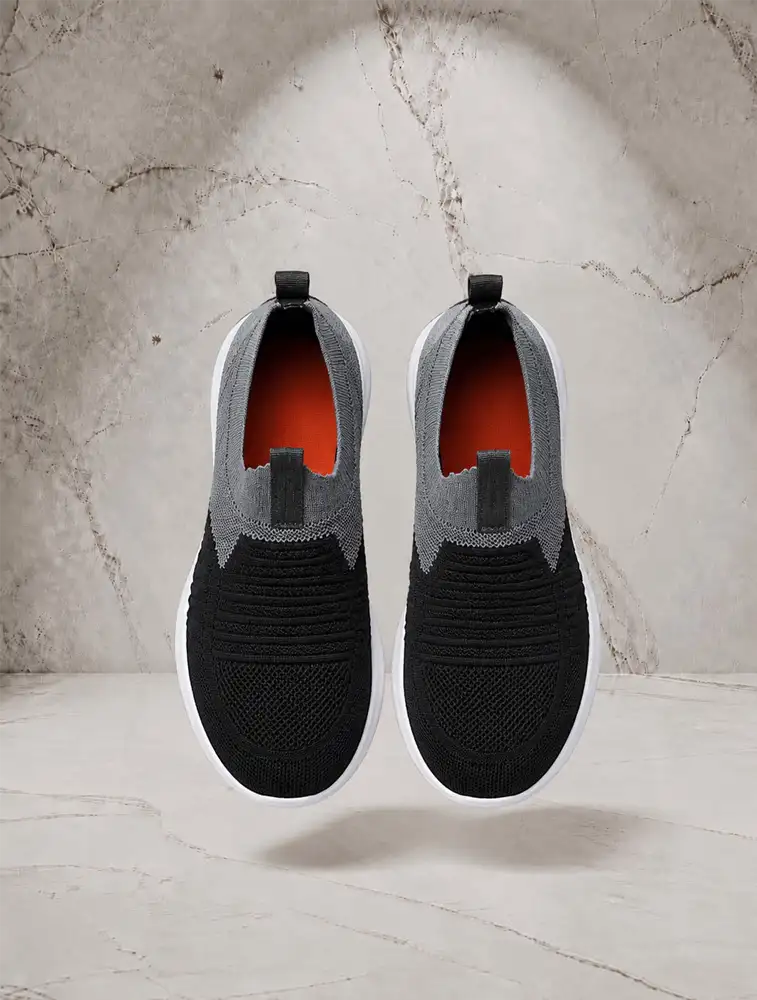
Ready stock & made to order
Bulk footwear
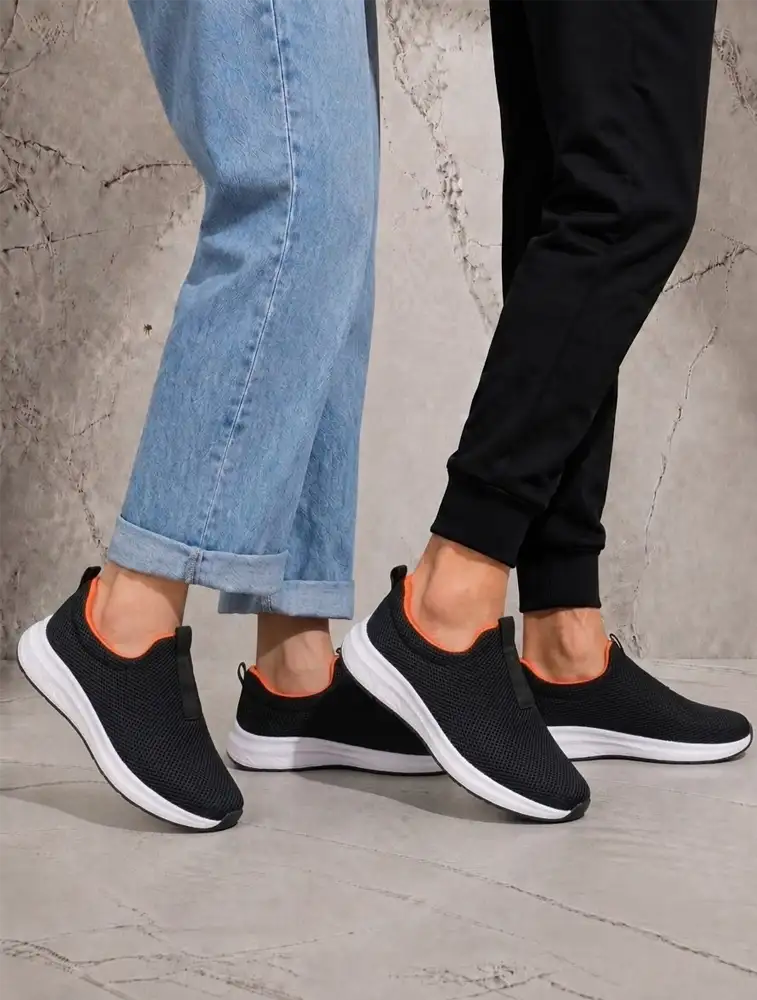
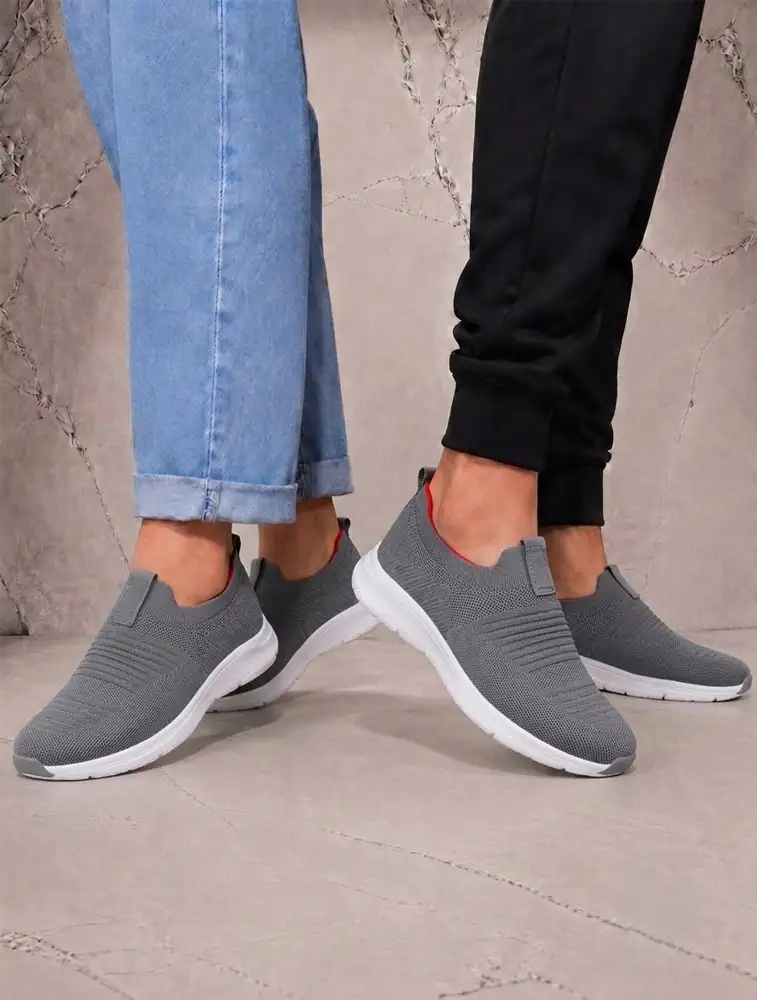
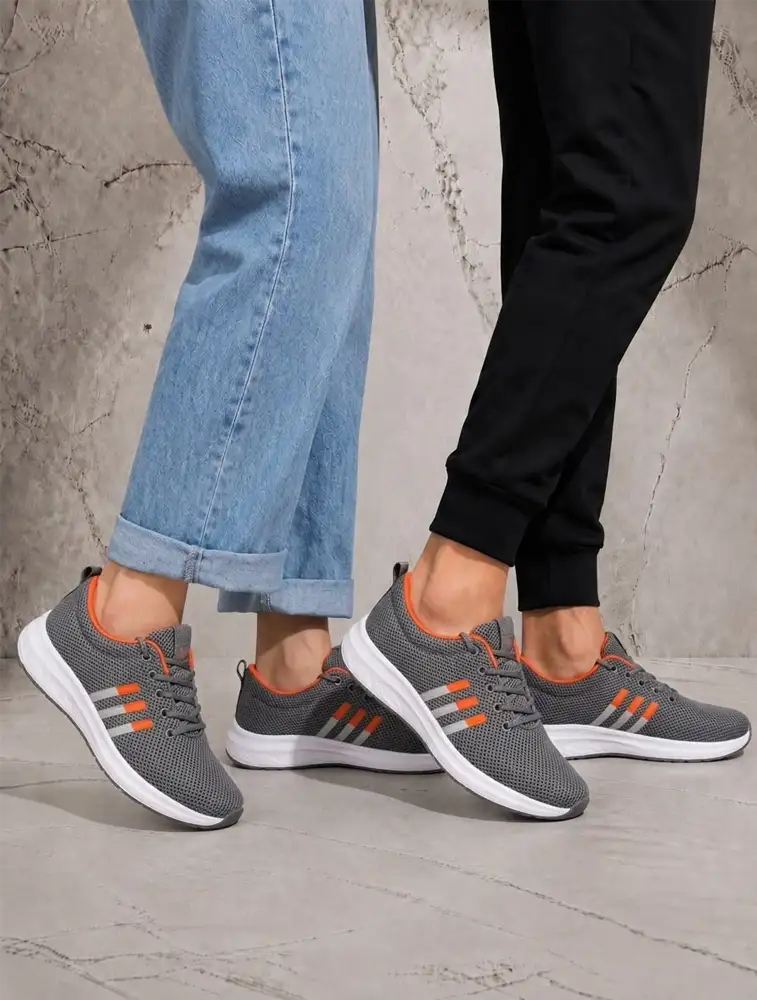
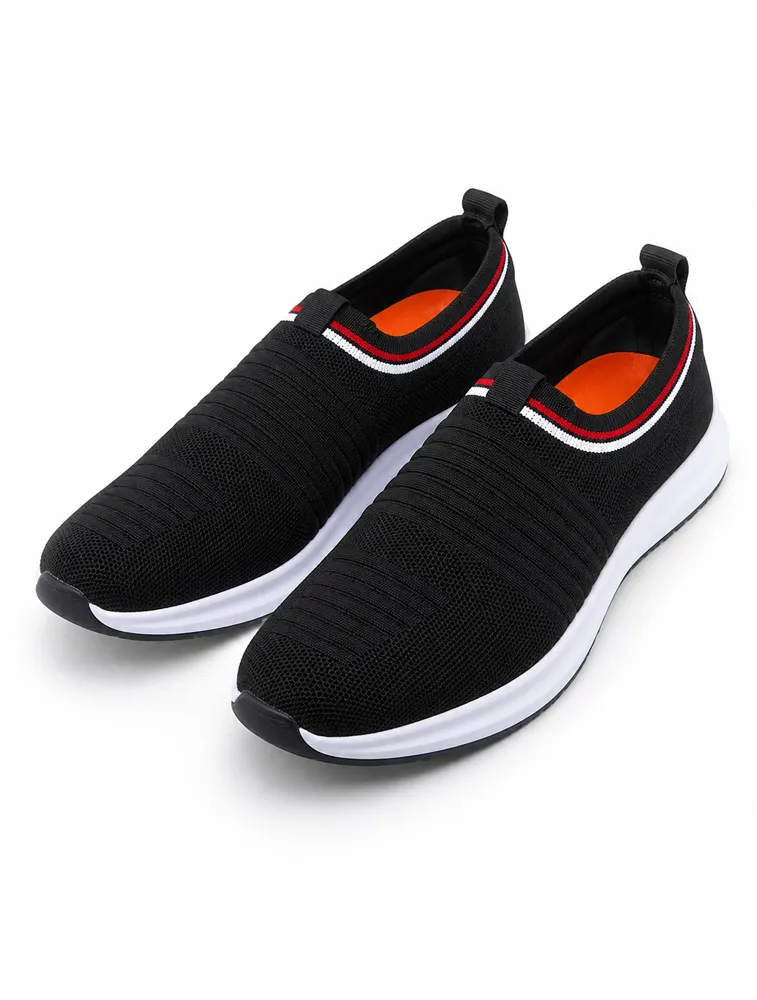
factori.com supplies bulk footwear from ₹359/piece across 662 partner factories — ready stock and custom programmes with GST invoices.
Prices verified October 2026 · shown excluding GST
₹359Entry price
Same dayDispatch on working days
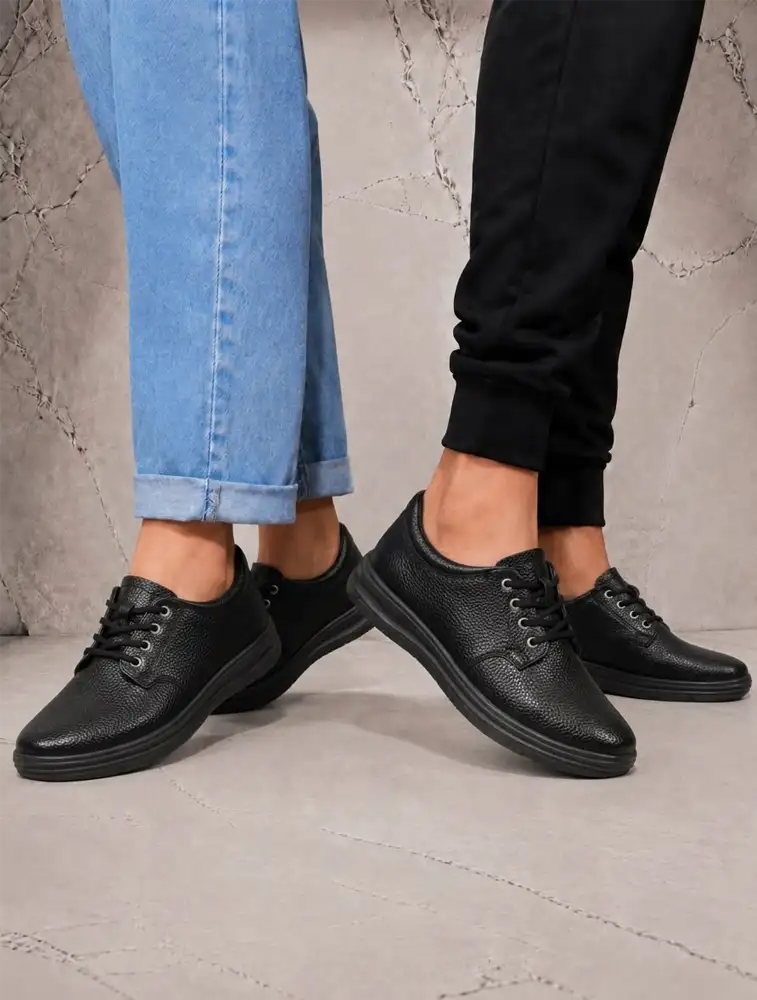
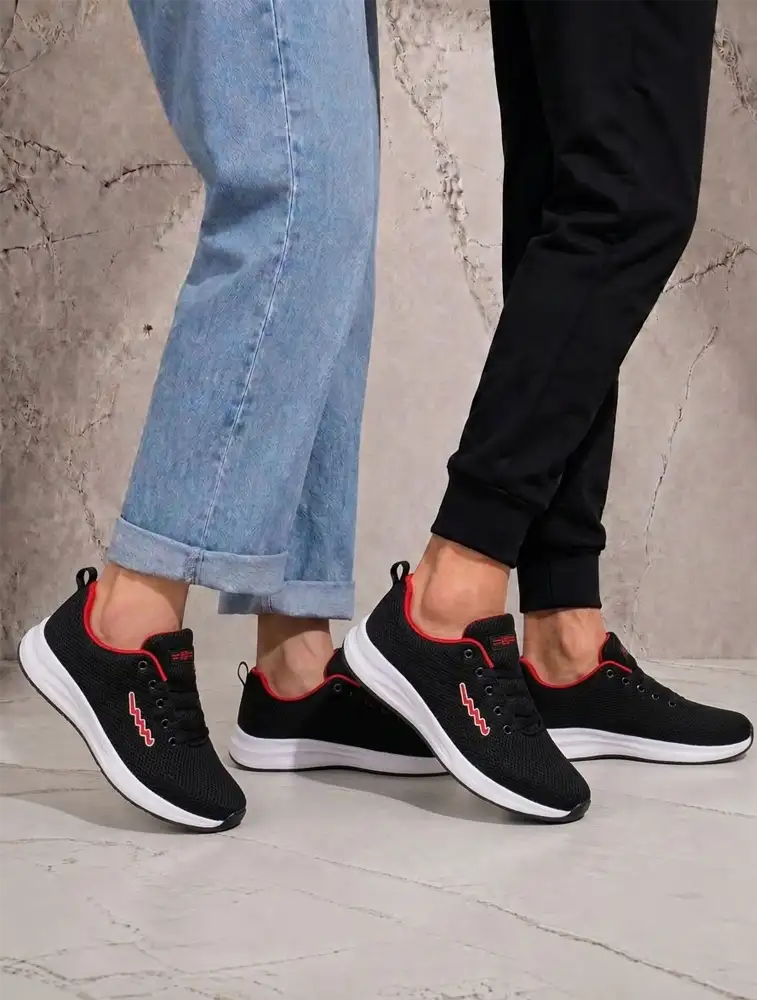
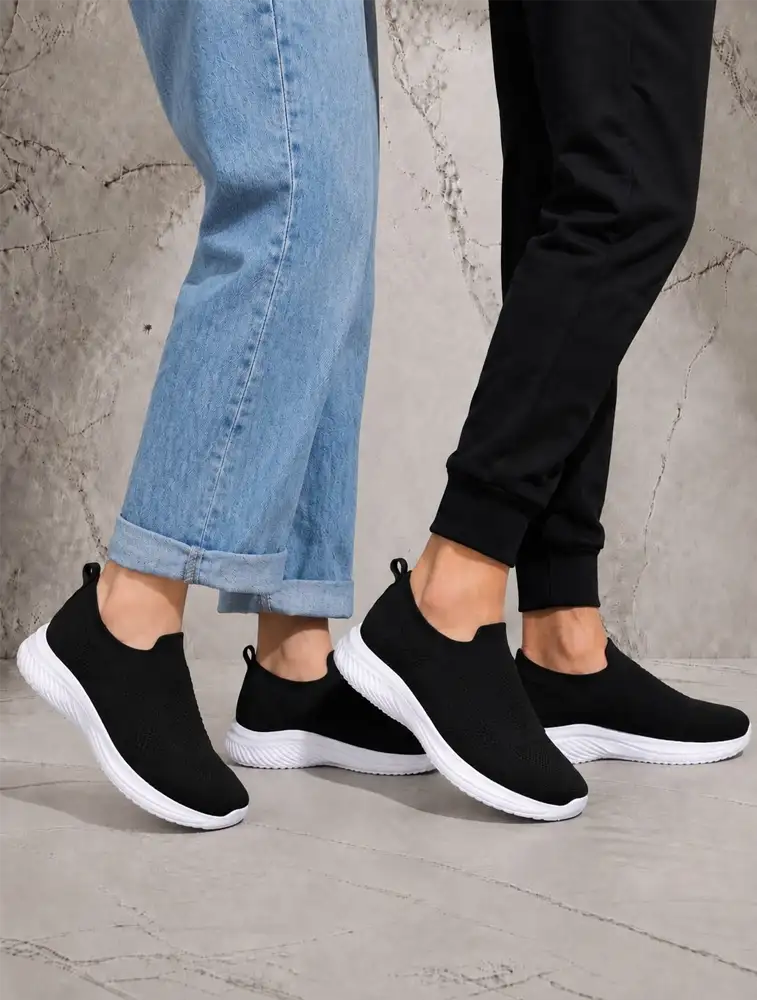
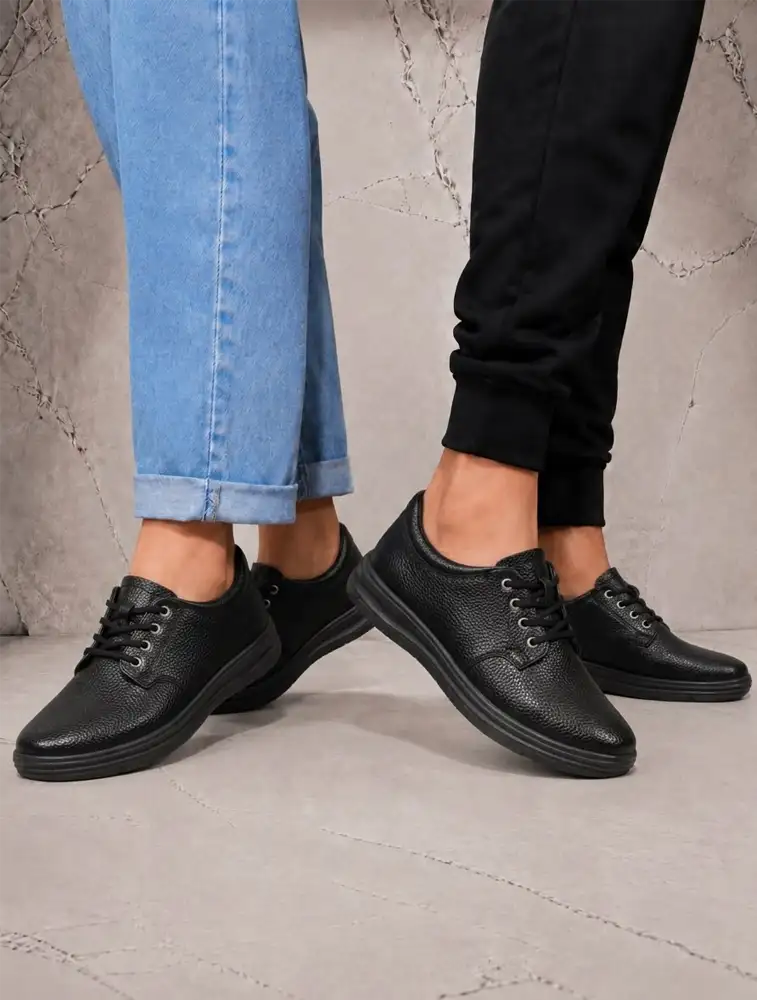
Page 1 of 2
Bulk footwear for every use case
Brand-ready footwear for corporate, retail, uniforms and large custom programmes — sourced across partner factories with published prices.
Corporate & events
Brand-ready footwear for offsites, launches and conferences.
Get quote →
Uniforms & programmes
Consistent supply for schools, factories and frontline teams.
Corporate uniforms →
Own brand / resale
Unbranded or private-label stock for retail brands.
Launch your store →
Large custom runs
Contract manufacturing for high-volume programmes.
Contract manufacturing →Bulk footwear — frequently asked questions
Which standard governs steel toe safety shoes in India, and is certification compulsory?
IS 15298 (Part 2) is the Indian standard for safety footwear, and the Personal Protective Equipment-Footwear (Quality Control) Order, 2020, notification S.O. 3857(E) of 27 October 2020, makes conformity plus the Standard Mark compulsory for goods it covers. Whether a given consignment falls inside its scope is a determination for your own counsel.
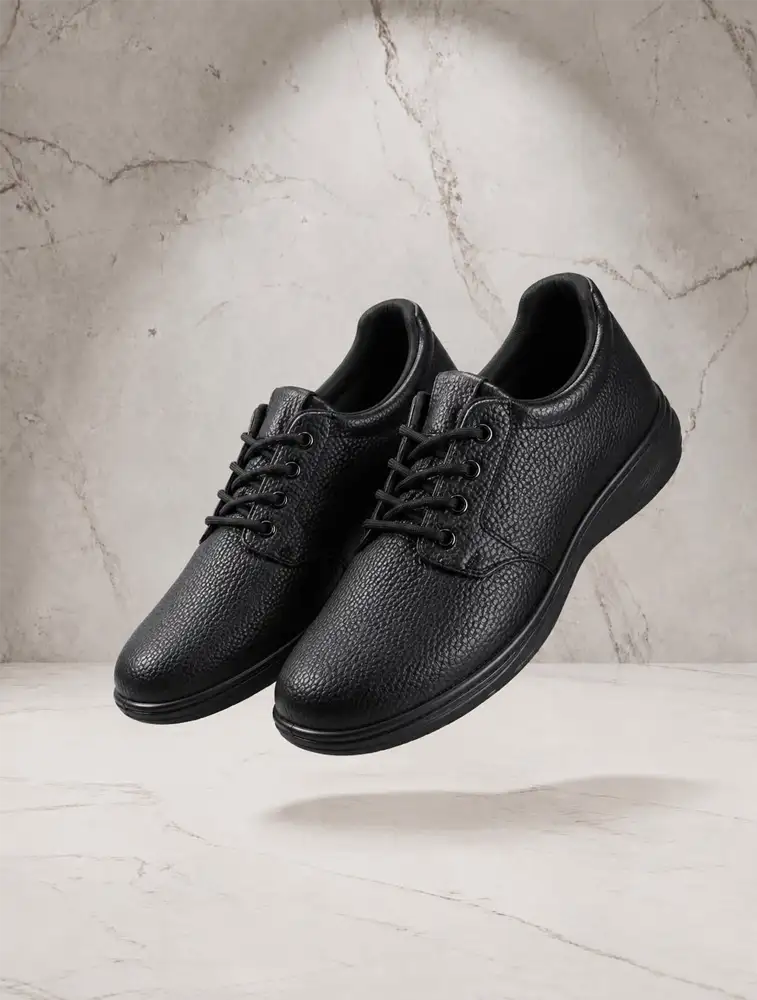
This category contains one article that is not a shoe in the ordinary commercial sense. Black Unisex Steel Toe Safety Shoes, SKUFACTORI9967, is personal protective equipment. Everything else on the page is footwear you buy on style, price and fit. That one article you buy on a class, and a class comes from a standard.
The Order, and what it names
The Personal Protective Equipment-Footwear (Quality Control) Order, 2020 was issued by the Ministry of Commerce and Industry as S.O. 3857(E), New Delhi, 27 October 2020. Its commencement clause reads: (1) This Order may be called the Personal Protective Equipment-Footwear (Quality Control) Order, 2020. (2) It shall come into force from the dated of its publication in the Official Gazette. The typographical error in "the dated of" is in the published text and is reproduced here rather than silently corrected. A subsequent amendment order made the requirement applicable from 1 July 2021.
The Schedule names three Indian Standards:
- IS 15298 (Part 2) : 2016 — Safety Footwear
- IS 15298 (Part 3) : 2019 — Protective Footwear
- IS 15298 (Part 4) : 2017 — Occupational Footwear Those are three different products, not three drafts of one. The distinction between them is the toe protection, and it is the first question a procurement officer should be asking a bidder.
The operative sentence
The Order's compulsory-conformity clause reads: Goods or articles specified in the column (1) of the Table shall conform to the corresponding Indian Standard specified in the column (2) of the said Table and shall bear the Standard Mark under a licence from the Bureau. The generic Bureau of Indian Standards formulation for every Quality Control Order is blunter still: After the date of commencement of the QCO, no person shall manufacture, import, distribute, sell, hire, lease, store or exhibit for sale any product(s) covered under the QCO without the Standard Mark. The Order also states that The Bureau of Indian Standards shall be the certifying and enforcing authority for the goods or articles specified.
The export proviso, quoted rather than applied
The Order carries one proviso: Provided that nothing in this order shall apply to goods or articles meant for export. That sentence matters commercially to several of the buyer types this page serves, and it is quoted here as published text. Whether a particular consignment is "meant for export" within the meaning of the proviso, and what documentary trail is needed to establish it, is a question for your own compliance counsel. Nothing in this answer is advice on it, and factori does not issue rulings on the coverage of any Order.
What this page currently publishes, and what it does not
The specification block for SKUFACTORI9967 publishes Toe Type: Steel Toe Cap, Sole Material: PU (Polyurethane) / Dual Density PU, Closure: Lace-Up and an application list reading Industrial Safety, Construction, Manufacturing, Warehousing, Engineering, Logistics. It publishes no standard number, no part number, no year, no class and no licence reference. If you are buying against a tender that names IS 15298, ask for the licence particulars in writing before you place the order — and ask for them for the specific article, not for the factory in general.
SAFETY STANDARDS,Chemistry & LabellingQueries Targetedsafety shoes BIS standard India, IS 15298 Part 2 safety footwear, PPE footwear quality control order 2020, safety shoe ISI mark bulk purchase
What does a steel toe cap actually have to withstand, and why does the rating matter?
IS 15298 (Part 2) : 2011 defines safety footwear as footwear fitted with toecaps designed to give protection against impact when tested at an energy level of at least 200 J and against compression when tested at a compression load of at least 15 kN. This page publishes neither figure.
That definition is the whole reason the word "safety" is a regulated word in this product family. Take the number away and you are left with a shoe that has a hard piece of metal in the front of it, which is not the same thing at all.
The definition, verbatim
Clause 3.1 of IS 15298 (Part 2) : 2011 defines safety footwear as footwear, incorporating protective features to protect the wearer from injuries which could arise through accidents, fitted with toecaps, designed to give protection against impact when tested at an energy level of at least 200 J and against compression when tested at a compression load of at least 15 kN. The corresponding test clauses repeat the figures with their tolerances: clause 5.3.2.3 tests at an impact energy of at least 200 J ± 4 J, and clause 5.3.2.4 tests at a compression load of 15 kN ± 0,1 kN. The comma in "0,1" is the decimal separator used in the published text.
Two things follow from reading the definition carefully. First, the 200 J and 15 kN in IS 15298 are the entry figures, not the ceiling — the words are "at least". Second, they are the figures that make the article safety footwear at all. A shoe that does not reach them is a different product with a different part number in the same Order.
The edition problem, stated plainly
The figures above were read from the 2011 edition of IS 15298 (Part 2). The Quality Control Order names the 2016 edition. factori has not read the 2016 text, and therefore attributes every figure in this answer to the 2011 edition by year rather than presenting it as the current requirement. If your tender turns on the exact number, buy the current standard from the Bureau of Indian Standards and read it. That is a five- minute purchase and it removes an argument that can otherwise run for weeks.
Part 2, Part 3, Part 4 — the difference is the toe
The Order's three parts separate on toe protection. Part 2 is safety footwear, which is the toecap article. Part 3 is protective footwear. Part 4 is occupational footwear. A buyer who writes "IS 15298" into a specification without a part number has written something a bidder can satisfy three different ways at three different prices. Write the part number.
The gap on this page, in one sentence
SKUFACTORI9967 is sold as a steel toe cap with no number attached. Its Features row reads, in the listing's own words, Impact Resistant, Slip Resistant, Oil Resistant, Abrasion Resistant, Comfortable for Long Working Hours, and its description mentions foot protection and all-day comfort, a protective steel toe cap and a slip-resistant PU outsole. Those are the listing's words and they are reproduced here as such. None of them is a test result, none of them names a standard, and factori makes no protective performance claim of its own for this or any other article in the category. If you need the claim, you need the class, and the class needs a test report against a named part of a named standard. Nothing here is compliance advice; it is a description of what the page does and does not say.
SAFETY STANDARDS,Chemistry & LabellingQueries Targetedsteel toe cap 200 joules 15 kN, safety shoe impact energy rating, toe cap compression resistance standard, what makes a shoe a safety shoe
What do SB, S1, S2, S3, S4 and S5 mean on a safety shoe, and which one should I specify?
Six classes. SB is the basic requirement; S1 adds a closed seat region, antistatic properties and energy absorption of the seat region; S2 adds water penetration and absorption; S3 adds penetration resistance and a cleated outsole; and S4 and S5 are the all-rubber or all-polymeric equivalents of S1 and S3.
This is the single most useful piece of vocabulary in industrial footwear procurement, and it is the vocabulary this page does not use anywhere. The classes below are quoted from Table 16 of IS 15298 (Part 2) : 2011.
The classification that comes first: Class I and Class II
Before the S-codes there is a materials split. Clause 4 of the standard sets out two code designations. Class I is Footwear made from leather and other materials, excluding all-rubber or all-polymeric footwear. Class II is All-rubber (i.e. entirely vulcanized) or all-polymeric (i.e. entirely moulded) footwear. That split decides which S-codes are even available to you, which is why it has to be settled first.
The six categories
- SB — Class I or II. The basic requirement and nothing added.
- S1 — Class I. Closed seat region, antistatic properties, energy absorption of the seat region.
- S2 — Class I. As S1, plus water penetration and water absorption.
- S3 — Class I. As S2, plus penetration resistance and a cleated outsole.
- S4 — Class II. Antistatic properties, energy absorption of the seat region.
- S5 — Class II. As S4, plus penetration resistance and a cleated outsole.
The additional symbols
Beyond the six categories, Table 14 of the same standard lists individual requirement symbols that can be marked on the footwear: P for penetration, C for conductive, A for antistatic, I for insulating, HI for heat insulation, CI for cold insulation, E for energy absorption, WR for water resistance, M for metatarsal, AN for ankle, WRU for water penetration and absorption of the upper, CR for cut resistance and HRO for resistance to hot contact. A specification that reads "S3 SRC HRO" is telling the bidder exactly what to build. A specification that reads "safety shoes with steel toe" is telling the bidder to choose for you.
How to use this in a tender
The practical drafting sequence is: settle Class I or Class II from the construction you want, choose the S- code that matches the hazard the wearer faces, add any additional symbols the site requires, name the part number and the edition, and ask for the test report and the licence particulars as tender documents rather than as post-award paperwork. A government or institutional buyer who does this gets comparable bids. One who does not gets six bids that are not the same product.
What factori will and will not tell you
factori can quote the standard, as above, and can put your written class requirement into a contract- manufacturing brief. factori does not assign a class to any article on this page, does not state that any article here does or does not meet IS 15298 or EN ISO 20345, and does not offer advice on which class your regulator or your safety officer will accept. The class on the shoe you receive has to come from a test report, and the test report has to name the article.
SAFETY STANDARDS, Chemistry & LabellingQueries TargetedS1 S2 S3 safety shoe difference, SB S1 S5 safety footwear classification, what does S3 mean safety boots, specify safety shoe class tender
What has to be marked on a compliant safety shoe, and what is missing from this page?
Six items, under clause 7 of IS 15298 (Part 2) : 2011: size; the manufacturer's identification mark; the manufacturer's type designation; the year and at least the quarter of manufacture; the number and year of the standard; and the symbol or category appropriate to the protection provided. This page publishes no size at all.
Marking is where a lot of safety-footwear disputes are actually won and lost. The shoe either carries the six items or it does not, and an inspector can settle it in ten seconds without a laboratory.
The six items, as the standard words them
Clause 7 requires each item of safety footwear to be marked with: a) size; b) manufacturer's identification mark; c) manufacturer's type designation; d) year of manufacture and at least quarter; e) the number and year of this European Standard; and f) the symbol(s) from table 14 appropriate to the protection provided or, where applicable, the appropriate category (SB, S1. .. S5). The reference to a European Standard inside an Indian Standard is not a transcription error on our side: the 2011 Indian text is an adoption, and its own marking clause cites EN ISO 20345:2003 as the number to be marked.
Why item (d) is the one buyers forget
Year and quarter of manufacture is a shelf-life instrument in disguise. Polyurethane soling ages. A tender that accepts undated stock is a tender that can be filled with old stock, and the buyer discovers it two years later when soles start separating in the field. Institutional and government buyers should write the marking clause into the specification and then actually inspect for it on delivery, on a sample basis, against the delivery note.
The gap, and it is a real one
SKUFACTORI9967 publishes no size information whatsoever — not a run, not a range, not a chart. Every other footwear listing checked on this page publishes one: the laminated EVA article, SKUFACTORI9968, publishes IND 6, 6.5, 7, 7.5, 8, 8.5, 9, 9.5, 10, and the leather moccasin, SKUFACTORI3620, publishes IND 6, IND 7, IND 8, IND 9, IND 10, IND 11. The one article whose governing standard makes size a compulsory marking is the one article that does not tell you what sizes exist. That is recorded in the sign-off section of the content pack as a P0 for the merchandising team.
What the packaging does say
The listing's packaging note reads: Individual corrugated boxes containing one pair, with product labeling including size, color, HSN code, and barcodes. So size is asserted to be on the box label even though it is not on the page. That is worth knowing, and it is not a substitute for publishing the size run, because a buyer cannot build a size-curve purchase order from a sentence about a box.
Ask for this in writing
Before you place a bulk order for protective footwear from anyone, ask for a photograph of the actual marking on the actual article, and ask for the size run with quantities per size. Neither request is unusual and neither should take a supplier more than a day. Nothing in this answer is legal advice on your marking obligations as an importer or an employer.
SAFETY STANDARDS, Chemistry & LabellingQueries Targetedsafety shoe marking requirements, what must be printed on safety footwear, safety boot label size year of manufacture, IS 15298 marking clause
If I export safety footwear into the European Union, what regime applies?
Regulation (EU) 2016/425 applies. It sorts protective equipment into three risk categories in Annex I and attaches a different conformity assessment route to each in Article 19, ranging from internal production control alone to type-examination plus ongoing surveillance by a notified body. Categorising a given article is not a supplier's call.
India is one of the largest footwear exporters in the world and this site advertises delivery to 132 countries, so the European regime is not an academic question for anyone reading this page. It is also a regime that routinely surprises first-time exporters, because the paperwork burden is set by the category, and the category is set by the hazard, not by the product type.
The three categories, from Annex I
Annex I opens: This risk categorisation is intended to be applied to PPE. Category I covers exclusively the following minimal risks, and the list runs: (a) superficial mechanical injury; (b) contact with cleaning materials of weak action or prolonged contact with water; (c) contact with hot surfaces not exceeding 50 °C; (d) damage to the eyes due to exposure to sunlight (other than during observation of the sun); (e) atmospheric conditions that are not of an extreme nature. Category II is defined by exclusion in a single sentence: Category II includes risks other than those listed in Categories I and III. Category III covers exclusively the risks that may cause very serious consequences such as death or irreversible damage to health, and its list runs through substances and mixtures hazardous to health, oxygen-deficient atmospheres, harmful biological agents, ionising radiation, high-temperature and low-temperature environments, falling from a height, electric shock and live working, drowning, cuts by hand-held chainsaws, high-pressure jets, bullet wounds or knife stabs, and harmful noise.
The conformity routes, from Article 19
For Category I, Article 19 prescribes internal production control (module A) set out in Annex IV. For Category II, it prescribes type-examination (module B) set out in Annex V, followed by conformity to type based on internal production control (module C) set out in Annex VI. For Category III, it prescribes module B followed by either conformity to type based on internal production control plus supervised product checks at random intervals (module C2) under Annex VII or conformity to type based on quality assurance of the production process (module D) under Annex VIII. There is a derogation allowing a single unit produced to fit an individual user to be handled as Category II.
The commercial translation
The step from Category I to Category II is the step from self-declaration to a notified body. That is a real cost and a real lead time, and it has to be in the plan before the first production run, not after. If your buyer is asking for CE-marked protective footwear, ask them in writing which category they are treating the article as, and get their notified body's reference. Then get that reference into the manufacturing brief.
What factori does not do here
factori does not read any article on this page into a PPE category, does not state that any article is or is not CE marked, and does not issue conformity declarations. The Regulation's own text is quoted above so you can take it to your compliance counsel; nothing in this answer is advice, and the categorisation decision is theirs and your notified body's, not ours. What factori can do is build to a written specification that already carries the category, the standard and the class.
SAFETY STANDARDS, Chemistry & LabellingQueries Targetedexport safety shoes to EU regulation, PPE Regulation 2016/425 footwear category, CE marking safety footwear notified body, conformity assessment module B safety shoes
Thirty-two of these listings say genuine leather. What chemical restriction applies to leather footwear?
From 1 May 2015, REACH Annex XVII entry 47 has barred leather articles coming into contact with the skin from the European market where they contain chromium VI at 3 mg/kg or more of the total dry weight of the leather. Thirty-two of the forty-two listings on this page say genuine leather.
This is the most consequential unpublished fact in the whole category. A shoe is about as intimate a leather-to-skin article as exists, worn for eight hours a day, and the restriction is written specifically for that case.
The paragraphs, verbatim
Commission Regulation (EU) No 301/2014 inserted three paragraphs into column 2 of entry 47 of Annex XVII to REACH:
- Leather articles coming into contact with the skin shall not be placed on the market where they contain chromium VI in concentrations equal to or greater than 3 mg/kg (0,0003 % by weight) of the total dry weight of the leather.
- Articles containing leather parts coming into contact with the skin shall not be placed on the market where any of those leather parts contains chromium VI in concentrations equal to or greater than 3 mg/kg (0,0003 % by weight) of the total dry weight of that leather part.
- Paragraphs 5 and 6 shall not apply to the placing on the market of second-hand articles which were in end-use in the Union before 1 May 2015. Read paragraph 6 twice
Paragraph 5 catches an all-leather article. Paragraph 6 catches an article that merely contains a leather part in skin contact. On a shoe that means the lining and the sock, not only the upper — and the lining is exactly the component a buyer never specifies and never tests. If you are sourcing leather footwear for a European destination, the lining belongs in your test plan.
What the restriction does not say
The inserted paragraphs name a substance and a threshold. They do not name a test method in the text read for this answer. factori has not obtained the primary text of any chromium VI test method and therefore does not name one here; your testing laboratory will name the method it uses, and that method belongs in the purchase specification alongside the limit.
What this page does not tell you, and should
No listing on this page states a tannage, a country of origin, a grain grade, a finish system or a chromium VI position. The moccasin SKUFACTORI3620 describes its upper as Softy Leather and its lining as Softy; "Softy" is the listing's own trade description and is not a tannage. factori makes no chemical, dermatological or skin-related safety claim of its own for any article in this category, in either direction, and nothing in this answer is legal advice on your obligations as an importer or a distributor.
The practical ask
For any leather footwear order destined for Europe, put four things in the purchase order: the substance, the threshold, the components to be tested including lining and sock, and the batch frequency of testing. Ask for the test report to reference the batch, not the factory. A report dated two years ago against a different hide lot is not evidence about your shipment. factori will route a written requirement of that shape into the manufacturing brief.
SAFETY STANDARDS, Chemistry & LabellingQueries Targetedchromium VI leather footwear limit, REACH annex XVII entry 47 leather 3 mg/kg, chrome VI shoes export EU, leather shoes chemical compliance bulk order
What material labelling does footwear need for European retail, and who is responsible for it?
Directive 94/11/EC. It requires the materials of the upper, the lining and sock, and the outer sole to be labelled by pictogram or written indication, and it defines a material by an 80 per cent rule: you label what makes up at least 80 per cent of that component's surface area or volume.
Brands and retailers buying for European shelves get caught by this more often than by anything chemical, because it is a labelling obligation that attaches at the point of sale to the consumer and travels down the supply chain as a contractual requirement.
The three components, and the 80 per cent rule
The Directive's full title is Directive 94/11/EC of European Parliament and Council of 23 March 1994 on the approximation of the laws, regulations and administrative provisions of the Member States relating to labelling of the materials used in the main components of footwear for sale to the consumer. Annex I defines the three components it cares about: the upper, the lining and sock, and the outer sole. Article 4 requires information on the material that accounts for at least 80 per cent of the surface area of the upper, at least 80 per cent of the surface area of the lining and sock, and at least 80 per cent of the volume of the outer sole. Where no single material reaches 80 per cent, information is given on the two principal materials.
The four material classes
Annex I sets out the classes to be indicated. Leather is defined by reference to hide or skin retaining its original fibrous structure, with the qualification that any surface coating must not exceed 0.15 mm. Coated leather is the product where the coating does not exceed one third of the total thickness but is in excess of 0.15 mm. Then textiles, and other materials. That 0.15 mm threshold is the line between two words a customer reads very differently, and it is the reason "leather" is not a marketing adjective in a European context.
How the label has to be applied
Article 4 requires the information to be conveyed by pictograms or by written indications, to appear on at least one article of footwear in each pair, and to be applied by printing, sticking, embossing or an attached label. It must be visible, securely attached and accessible. Responsibility sits with the manufacturer or their authorised agent established in the Union, and where neither is established there, on the person responsible for first placing the footwear on the market; the retailer nevertheless remains responsible for ensuring the footwear it sells carries the labelling.
Why this is a live issue for this page
No listing on this page publishes a component-by-component material breakdown in the Directive's terms. Several publish a single word. The laminated EVA article publishes Material: Laminated EVA (Ethylene Vinyl Acetate), Sole: EVA and Upper: Laminated EVA, which is closer than most. The safety shoe publishes Upper Material: Synthetic/Leather (as applicable) — a phrase that tells a European labelling officer precisely nothing, because "as applicable" is not a material. That is logged as a P0.
The ask
If you are buying for European retail, require the three-component breakdown, in the Directive's own vocabulary, as a condition of the purchase order, and require the artwork for the pictogram or written indication to be approved before the production run. Nothing in this answer is legal advice on who bears the labelling obligation in your particular chain; that is a question for your counsel and it depends on where each party is established.
SAFETY STANDARDS, Chemistry & LabellingQueries Targetedfootwear labelling directive 94/11/EC, shoe material pictogram label EU, 80 per cent rule footwear upper lining outsole, coated leather 0.15 mm definition
Are ordinary shoes, sandals and slippers also under a Quality Control Order in India?
Two Orders, both dated 2024. One covers footwear made from leather and other materials, across twelve categories including leather safety boots and shoes against IS 1989. The other covers footwear made from all rubber and all polymeric material, also twelve categories, including sandals and slippers against IS 6721:2023.
Buyers often assume the Indian certification regime touches only protective footwear. It does not. The two 2024 Orders reach a large part of ordinary commercial footwear, and a wholesaler or retailer stocking domestically needs to know that before, not after, a consignment lands.
The two Orders and what they name
The first is the Footwear made from Leather and other materials (Quality Control) Order, 2024. Its category list runs to twelve entries and includes Leather Safety boots & shoes, referred to IS 1989 in its Parts 1 and 2. The second is the Footwear made from all Rubber and all Polymeric material and its components (Quality Control) Order, 2024. Its twelve categories include Industrial and Protective rubber knee and ankle boots, referred to IS 5557:2004, and Sandal and Slippers, referred to IS 6721:2023.
Alongside those, the Bureau of Indian Standards revised three footwear standards with a six-month compliance period that ran through 31 December 2023: IS 15844:2023 for sports footwear in Parts 1 and 2, IS 10702:2023 for hawai chappal, and IS 6721:2023 for sandals and slippers.
The enterprise-size phasing
Application to smaller manufacturers was staged. Small-scale enterprises were brought in from 1 January 2024 and micro enterprises from 1 July 2024. That phasing is worth knowing when you are evaluating a small supplier's history: an absence of certification in 2023 does not mean the same thing as an absence of certification today.
The limits of this answer, stated openly
factori has read the category lists and the standard references for these two Orders, but has not obtained their gazette notification numbers, their commencement dates or their exemption clauses from a primary source. Those are therefore not stated here in either direction. factori does not assert that any Order does or does not cover a particular consignment, does not state that any article on this page carries or lacks the Standard Mark, and does not state that certification is mandatory or voluntary for any given article. Those are determinations for your own compliance counsel, and nothing in this answer is advice.
What to do with this commercially
If you are a retailer, wholesaler or brand buying footwear for the Indian market, treat the certification status of each article as a line item in the purchase order rather than an assumption about the supplier. Ask which Order the article falls under, which standard and edition, and whether a licence exists for that specific article. Then ask for the licence number and check it against the Bureau's own register. That check takes minutes and it is the cheapest risk control available in this category.
SAFETY STANDARDS, Chemistry & LabellingQueries Targetedfootwear quality control order 2024 India, BIS mandatory footwear leather rubber, IS 6721 sandal slipper QCO, hawai chappal BIS standard mandatory
What is actually in this footwear range, and how wide is the price ladder?
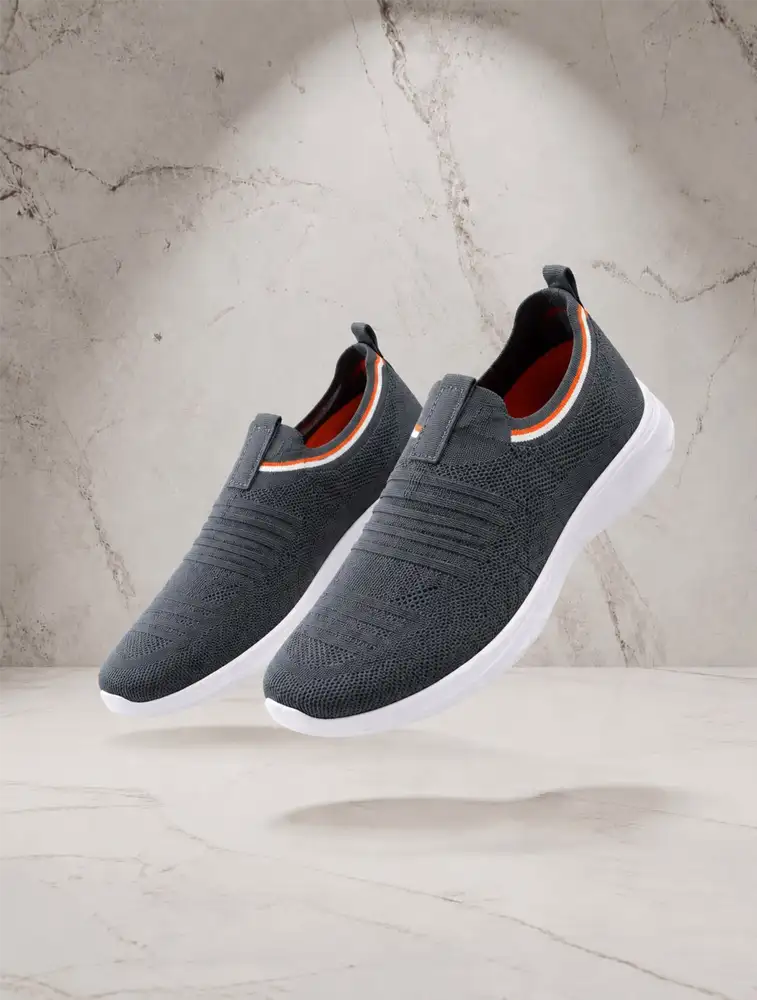
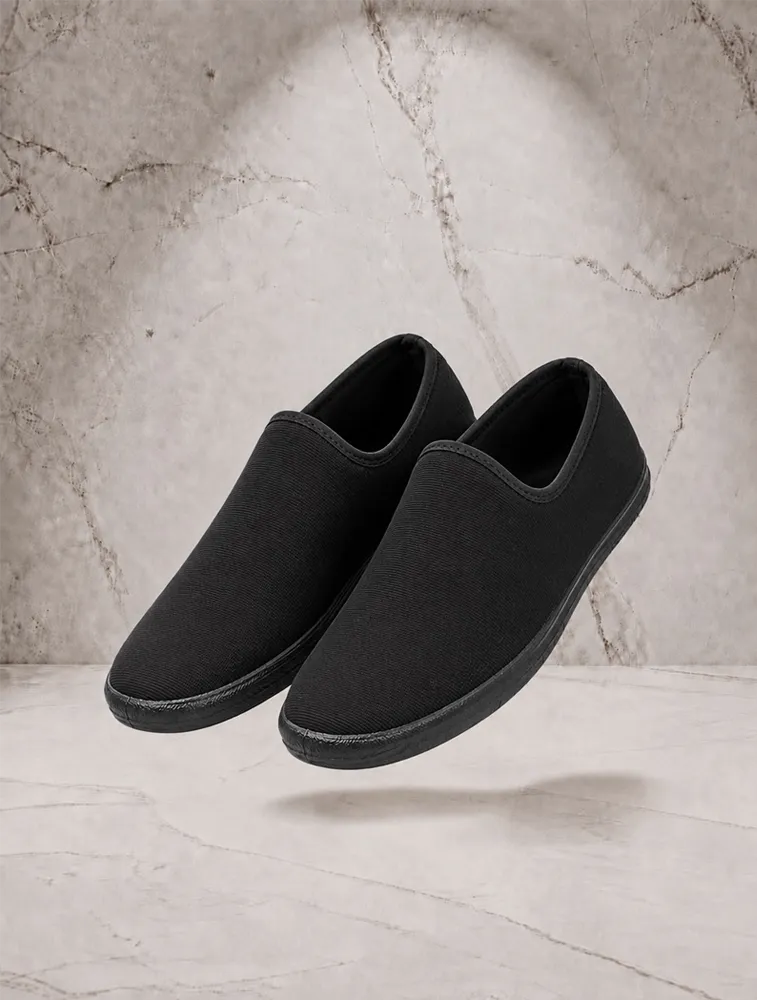
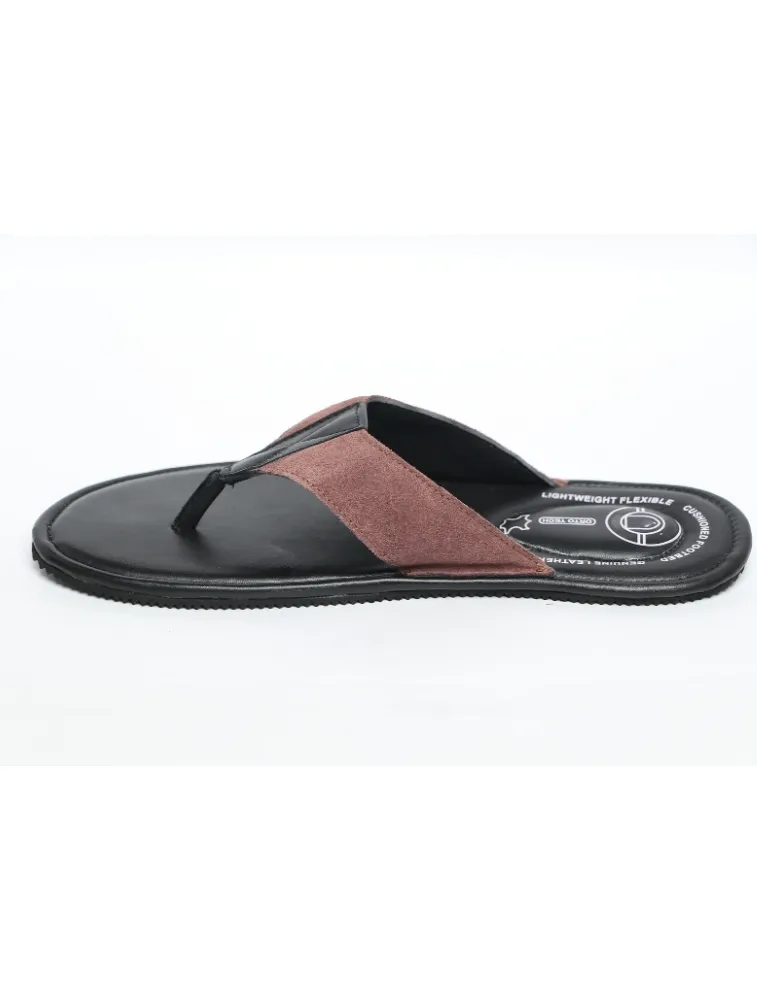
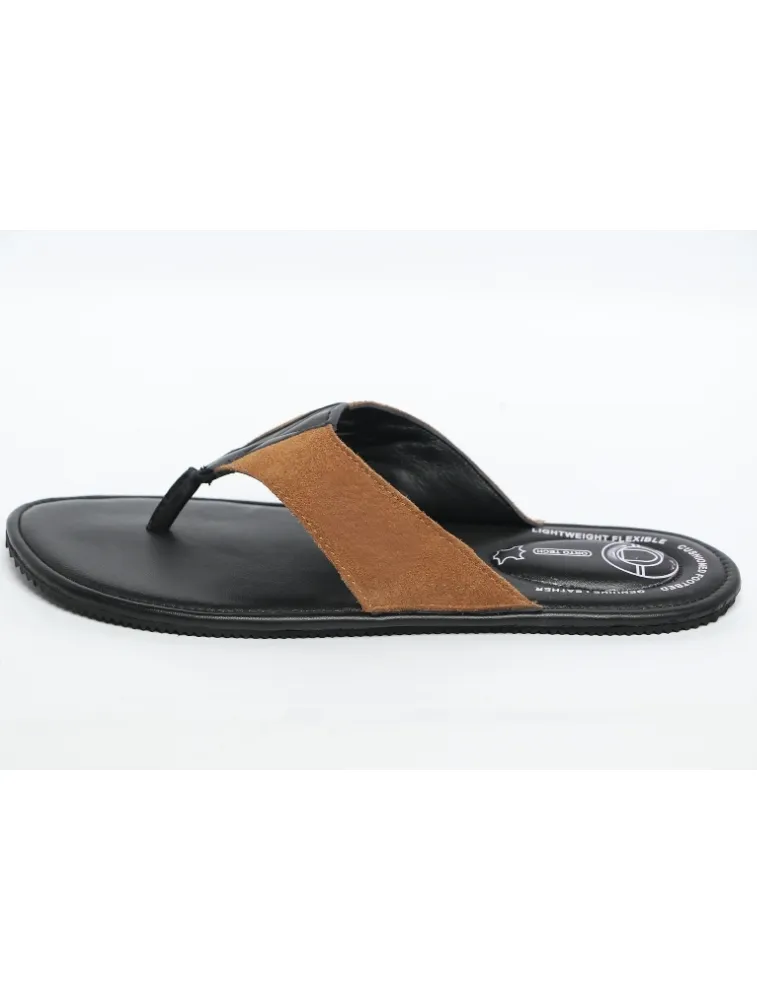
Forty-two listings across two pages, in four construction families plus one protective article: laminated EVA, foam lycra, knitted EVA and genuine leather, with thirty-two of the forty-two saying genuine leather. Published prices run from Rs 359 to Rs 1740 per piece, and both ends of that range genuinely exist.
That last clause is not filler. Across twenty category audits on this site, this is only the fifth page whose published price range actually matches its listings at both ends. Worth saying out loud.
The four families, and why they are four different purchases
The cheap end is moulded and injected: laminated EVA, knitted EVA, and foam lycra constructions, sold as slip-ons and floaters. The expensive end is cut and stitched leather — moccasins, floaters and formal styles. Those are not two price points on one product; they are two manufacturing processes with different tooling, different lead times, different defect modes and different minimum runs. A buyer who compares a Rs 359 EVA slip-on to a Rs 1390 leather moccasin on price per pair is comparing an extrusion to a garment.
Two worked examples from the page
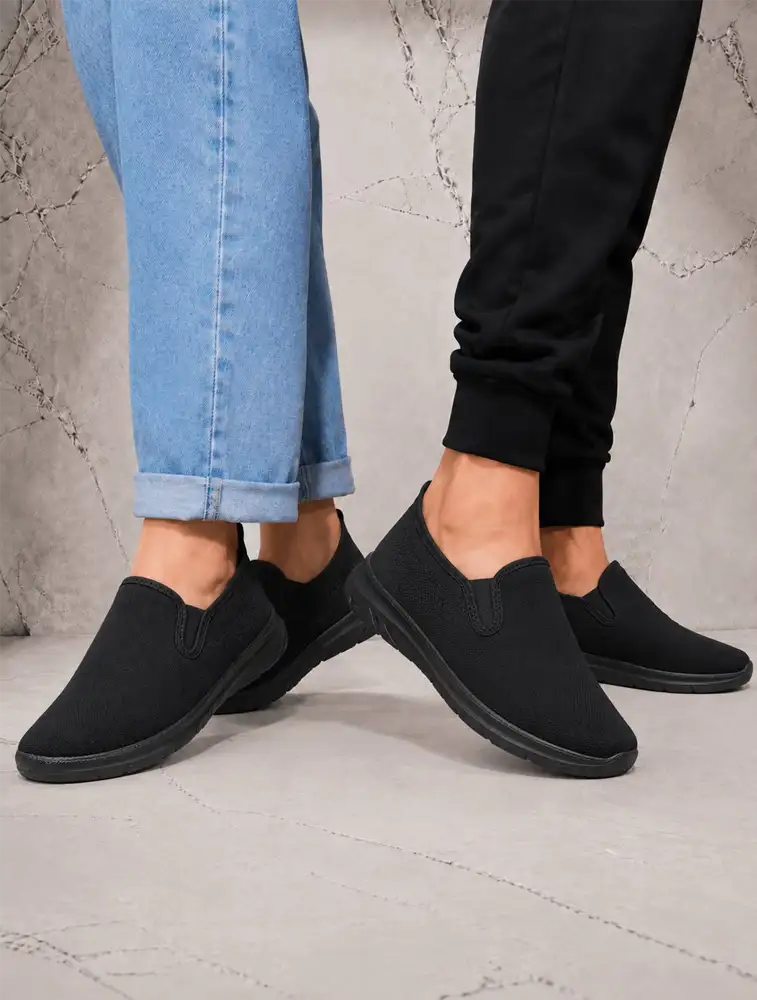
Black Unisex EVA Laminated Footware, SKUFACTORI9968, from Rs 359.00. Its specification publishes Material: Laminated EVA (Ethylene Vinyl Acetate), Sole Material: EVA, Upper Material: Laminated EVA, Closure: Slip-On, Pattern: Solid, and a usage line reading Casual Wear, Daily Wear, Indoor and Outdoor Use. Its Features row reads, in the listing's words, Lightweight, Flexible, Water-Resistant, Anti-Slip, Durable, Comfortable.
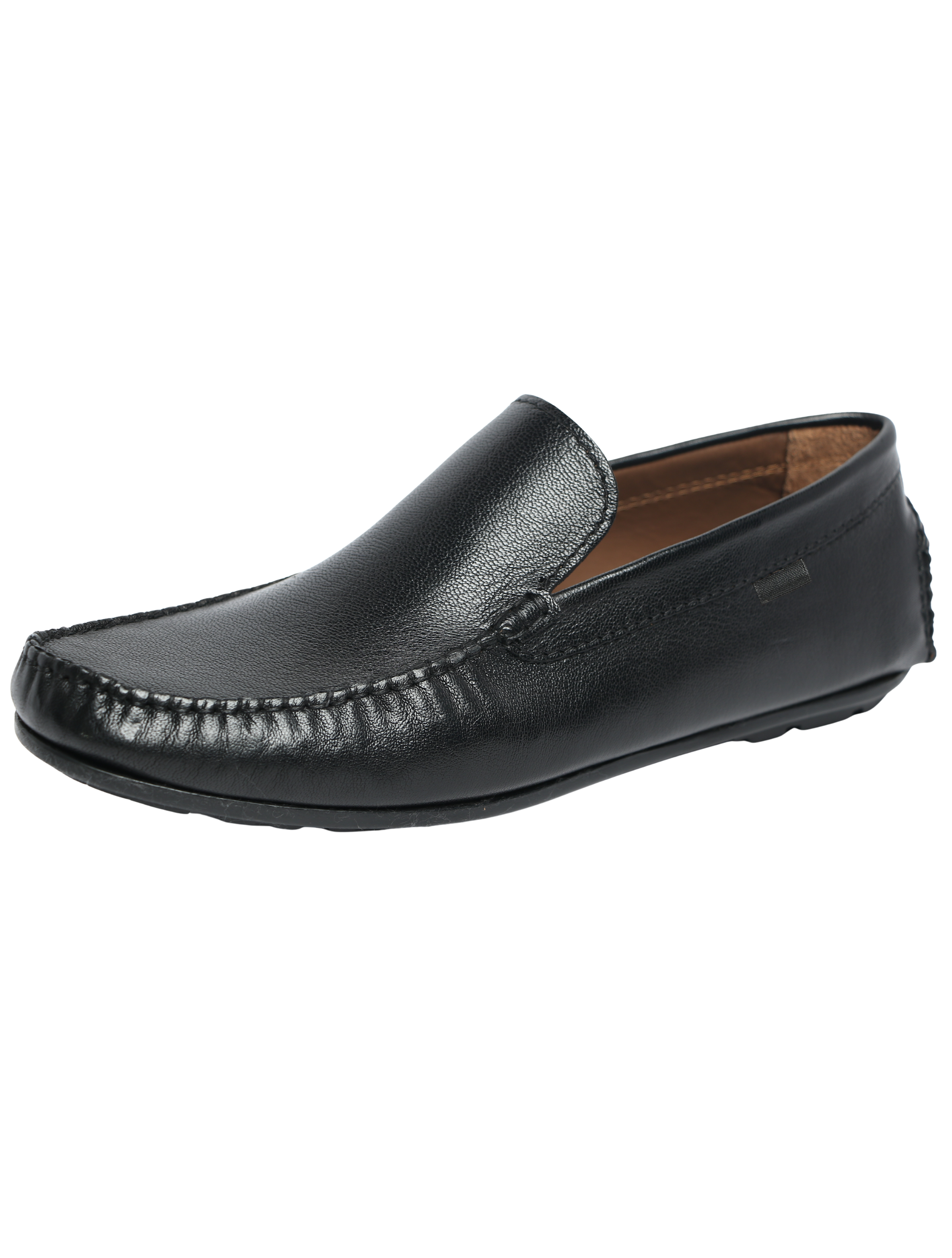
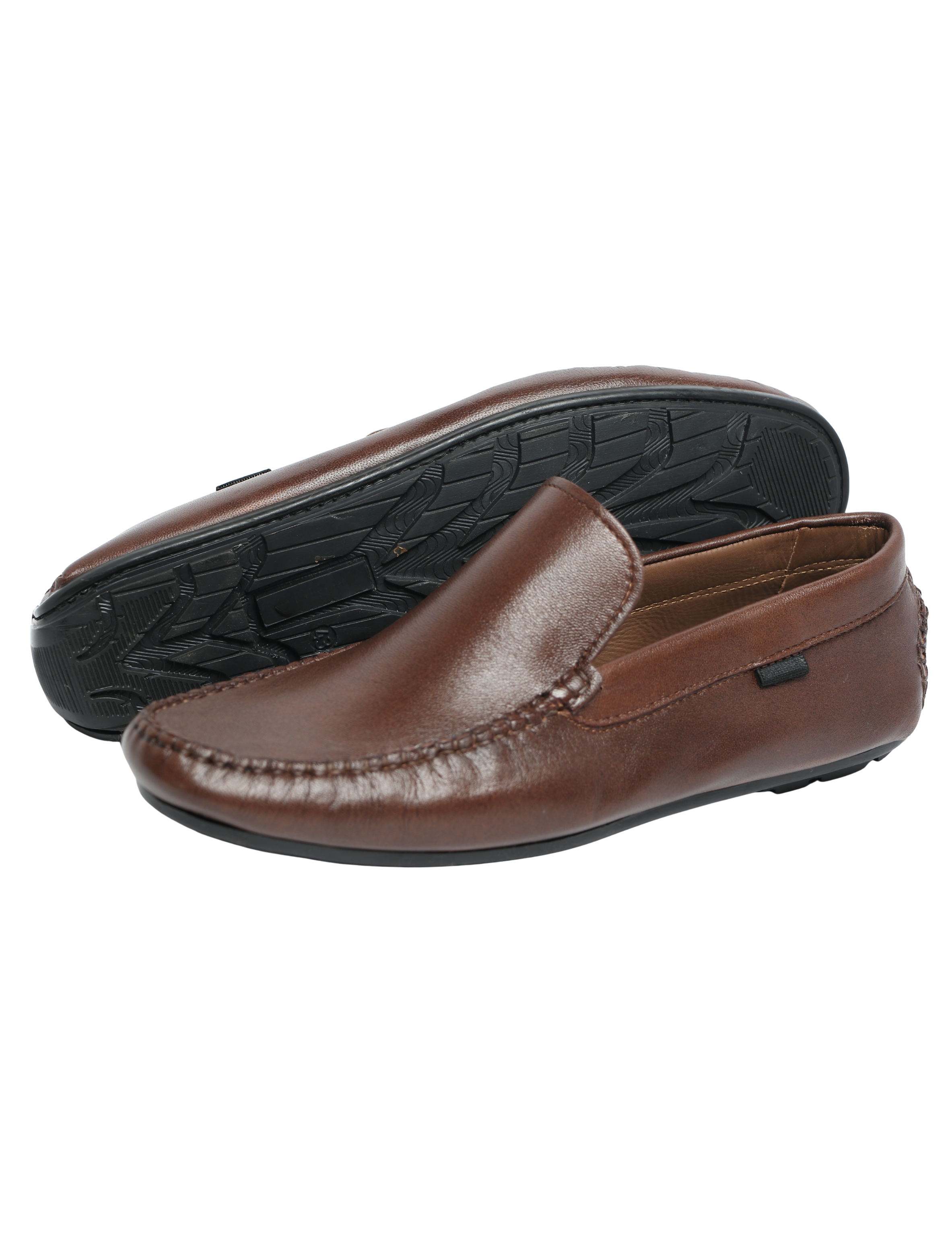
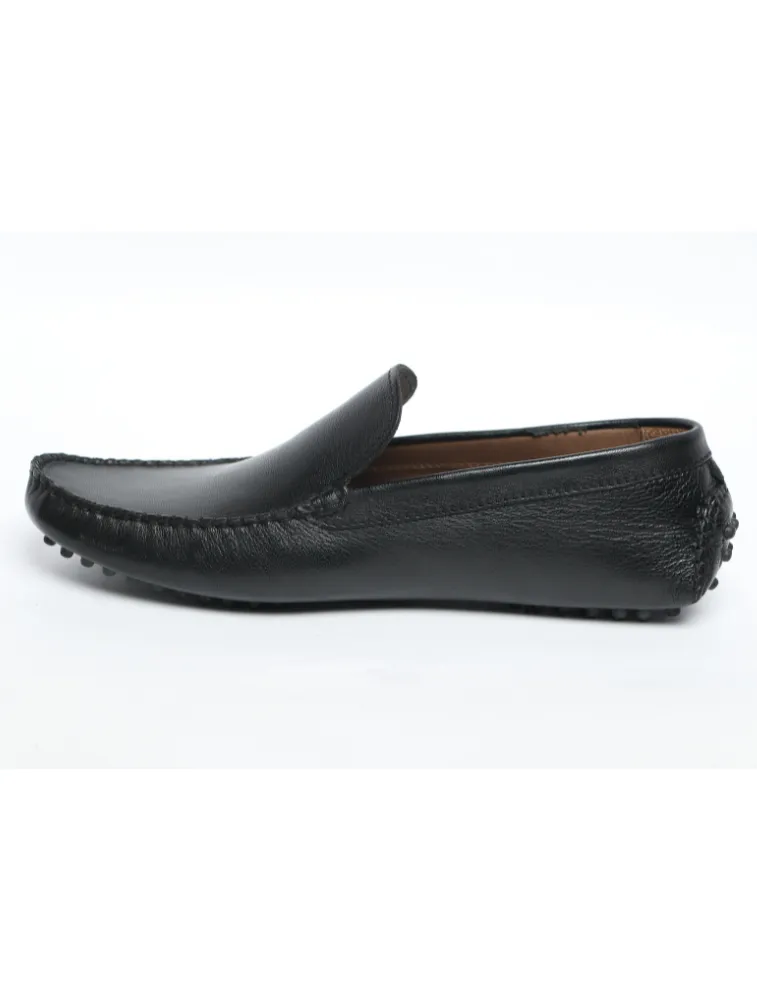
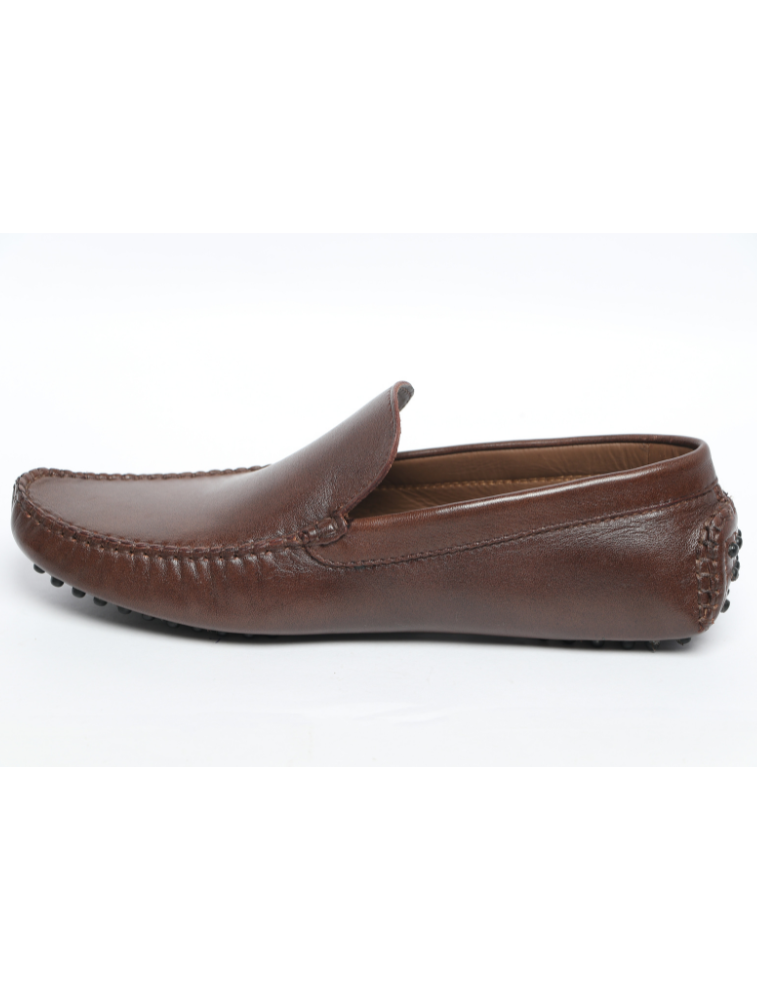
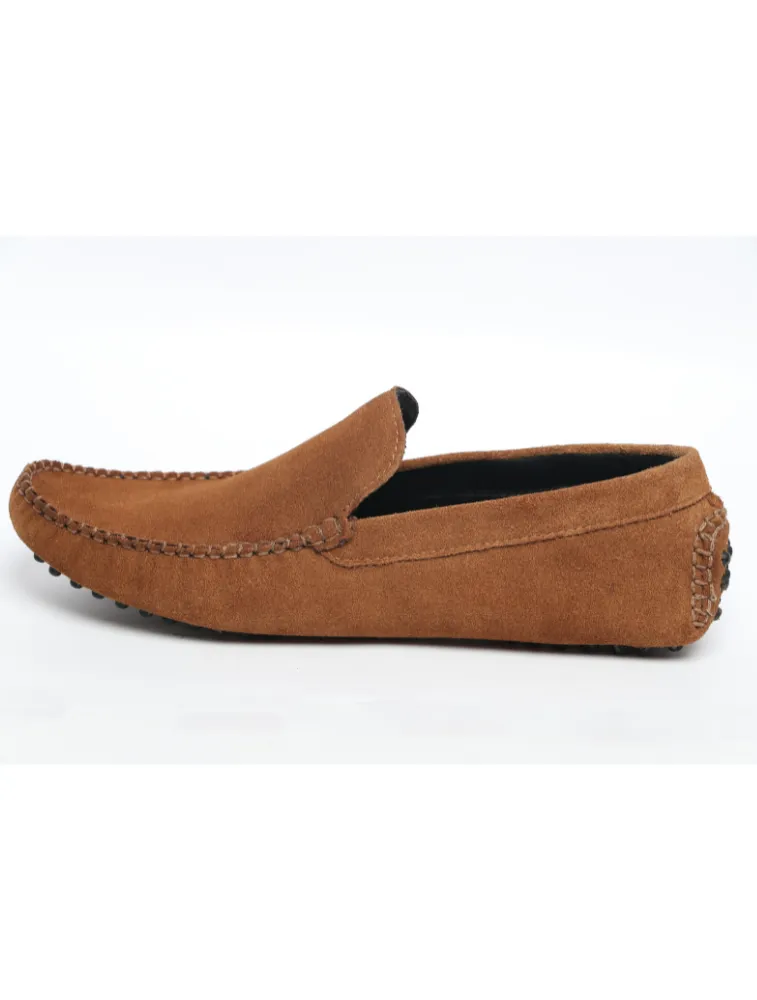
Black Sam Comfort Driver Genuine Leather Moccasin, SKUFACTORI3620, from Rs 1390.00. Its specification publishes Upper: Softy Leather, Lining: Softy, Insole: Softy with Orthopaedic Cushioning, Outsole: TPR (Thermo Plastic Rubber), Category: Casual / Workwear, Closure: Pull On and Style: Moccasin.
Every adjective in both paragraphs above is the listing's word, quoted as such. factori makes no performance, comfort, orthopaedic or resistance claim of its own for any article in this category.
A defect worth naming
The moccasin's colour is Black and its title says Black, but its description text refers to a rich brown finish. That is a copy-paste artefact from another colourway and it is logged for correction. If you are ordering from this page, order to the SKU and the stated colour attribute, and confirm the colourway in the pro- forma invoice.
The construction question to ask before anything else
Decide whether you are buying a moulded article or a stitched one, because almost every downstream question — lead time, size curve, defect tolerance, whether a leather regime applies at all — follows from that one decision. Then pick the family. Then pick the SKU. Buyers who work in the opposite order end up renegotiating.
RANGE, Sizes & SpecificationQueries Targetedbulk footwear wholesale India range, EVA slipper leather moccasin bulk price, factori footwear catalogue, wholesale shoes 359 to 1740
What sizes are available, and how do I build a size curve for a bulk footwear order?
Three different granularities on one page. The laminated EVA article publishes IND 6 through 10 in half sizes, the leather moccasin publishes IND 6 through 11 in whole sizes only, and the steel toe safety shoe publishes no sizes at all. You cannot build one size curve across them.
Footwear is the only category on this site where the order quantity is not one number. It is a vector, and getting the vector wrong is the single most expensive mistake in bulk footwear buying, because the wrong sizes do not sell and cannot be exchanged.
What each listing publishes
SKUFACTORI9968, the laminated EVA slip-on, publishes IND 6, 6.5, 7, 7.5, 8, 8.5, 9, 9.5, 10 — nine steps including half sizes. SKUFACTORI3620, the leather moccasin, publishes IND 6, IND 7, IND 8, IND 9, IND 10, IND 11 — six steps, whole sizes only, and one step further up the range. SKUFACTORI9967, the steel toe safety shoe, publishes nothing. Those are the listings' own published figures; factori publishes no size chart, last specification, width fitting or measurement of its own for any article in this category.
Why the granularity difference is not a detail
A nine-step half-size run and a six-step whole-size run are different purchasing objects. If you are placing one order that spans both families, your purchase order needs two size tables, not one, and your allocation logic has to handle a wearer who is a 7.5 in one family and has to be rounded in the other. Institutions issuing footwear to a named roll — a school, a factory, a security contractor — should collect measured sizes before ordering rather than applying a generic curve.
How to write the size line in a purchase order
Give quantities per size, not a total with a note. Name the size system explicitly — IND here, and IND is not UK and is not EU. State what happens to the balance if a size runs short: substitution up, substitution down, or short-ship. And state whether the price is per pair or per piece, because this page quotes every tier "/Piece" while the packaging note says one pair per box. That ambiguity is logged as a P0 and you should resolve it in writing on your own order rather than assume.
The safety shoe, again
The one article with no published size run is the one whose governing standard, IS 15298 (Part 2) : 2011, requires size to be marked on the footwear itself under clause 7(a). Until the size run is published, treat the size line for that article as an open item in your negotiation and get it confirmed in the pro-forma invoice.
Fit is not a claim factori makes
Several listings publish Fit: Regular Fit. That is the listing's attribute value, not a measured width fitting, and factori makes no fit, last-shape or foot-health claim of its own for any article here. If fit tolerance matters to your application, put a physical sample in front of the people who will wear the shoes before you commit the run.
RANGE, Sizes & SpecificationQueries Targetedbulk shoe size curve order, IND shoe sizes wholesale India, footwear size run purchase order, how many pairs per size bulk shoes
The listings just say "genuine leather". What should I actually specify when buying leather footwear in bulk?
Eight things, none of which this page publishes: tannage, country of origin, hide type, grain grade, thickness in millimetres, finish system, lining material and the chromium VI position. The listings say Genuine Leather and Softy Leather. Neither phrase is a specification you can buy against or test to.
"Genuine leather" is a phrase that survives in trade because it sounds like a grade and is not one. In a European labelling context it is close to a defined term — Annex I to Directive 94/11/EC defines leather by reference to a hide or skin retaining its original fibrous structure with any surface coating not exceeding 0.15 mm. In an Indian purchase order it is, on its own, a word.
The eight lines to put in the specification
- Tannage. The single biggest driver of cost, hand, colour behaviour and chemical profile.
- Hide type. Cow, buffalo, goat and sheep behave differently and are priced differently per square foot.
- Grain grade. Whether you are buying the top surface of the hide or a split, and whether it is corrected.
- Thickness. Stated in millimetres with a tolerance, per component.
- Finish system. What is on top of the leather, and how thick it is — which is exactly the 0.15 mm coated-leather question that Directive 94/11/EC turns on.
- Lining and sock material. The component most often left unstated and the one paragraph 6 of REACH entry 47 reaches.
- Country of origin. Needed for preference claims, for labelling and for several buyers' own policies.
- Chemical test plan. Substances, thresholds, components and batch frequency.
What "Softy" is and is not
SKUFACTORI3620 publishes Upper: Softy Leather, Lining: Softy and Insole: Softy with Orthopaedic Cushioning. Those are the listing's own words and are quoted as such. "Softy" is a trade description for a hand, not a tannage, not a grade and not a standard. "Orthopaedic Cushioning" is likewise the listing's attribute text; factori makes no orthopaedic, medical, foot-health or fatigue claim of its own for this or any article, and that phrase should not be relied on as a health representation.
Care and handling, as published
The moccasin's care text reads: Clean gently with a soft, dry or slightly damp cloth; do not wash, soak, or machine clean. Keep away from direct sunlight and heat; store in a cool, dry place and use leather conditioner periodically. For an institutional buyer issuing footwear at scale, that sentence has a budget attached to it. Leather that cannot be machine cleaned needs a different issue-and-replace policy from a moulded EVA article that can be hosed down.
Contract manufacturing is where this gets solved
If you are buying ready stock you take the specification as it is. If you are running a contract manufacturing programme, the eight lines above go into the brief and become the thing the factory is held to. That is the actual difference between the two routes, and it is a bigger difference than price. Nothing in this answer is legal advice on labelling or chemical obligations in your market.
RANGE, Sizes & SpecificationQueries Targetedhow to specify leather for shoes bulk order, genuine leather meaning wholesale footwear, leather tannage grain grade specification, softy leather what is it
EVA, PU, dual density PU, TPR — what is the difference between the soles on this page?
Four different soling systems appear across the category: EVA, PU polyurethane, dual density PU, and TPR thermoplastic rubber. Each is a different polymer with a different cost, a different tooling route and a different ageing behaviour, and the standard's own classification splits footwear into Class I and Class II partly on this basis.
The sole is where most of the engineering in a shoe lives and where most of the price difference sits. It is also the component buyers specify least precisely, usually because the vocabulary is unfamiliar.
What each listing publishes
SKUFACTORI9968 publishes Sole Material: EVA with a Laminated EVA upper. SKUFACTORI9967 publishes Sole Material: PU (Polyurethane) / Dual Density PU. SKUFACTORI3620 publishes Outsole: TPR (Thermo Plastic Rubber). Those are the listings' words. factori publishes no abrasion figure, no slip figure, no oil- resistance figure and no wear-life figure of its own for any sole in this category, and makes no resistance claim of its own in either direction.
"Dual density" is a construction, not a material
The phrase describes a sole built in two layers of the same polymer family at different densities — typically a softer layer against the foot and a harder layer at the ground. It is worth understanding because a specification that says only "PU sole" does not tell you whether you are getting one density or two, and the two are different articles at different prices. If you want dual density, write "dual density" and specify which layer is which.
Where the standard's classification bites
Clause 4 of IS 15298 (Part 2) : 2011 designates Class I as Footwear made from leather and other materials, excluding all-rubber or all-polymeric footwear and Class II as All-rubber (i.e. entirely vulcanized) or all-polymeric (i.e. entirely moulded) footwear. That is a construction split, and it determines which protective categories are available: the S1, S2 and S3 categories are Class I, while S4 and S5 are Class II. So the soling and construction decision is upstream of the protective class decision, not downstream of it.
Bonding is the failure mode nobody specifies
In stitched-and-cemented footwear the commonest field complaint is not the sole material at all; it is the bond between sole and upper. If you are buying at institutional scale, ask what the attachment method is — cemented, direct injected, vulcanised or stitched — and put a bond requirement into the specification with a named test. factori does not publish a bond figure or a failure-rate figure of its own.
Matching the sole to the job, not to the price
An article issued to warehouse staff on concrete, a slip-on issued to housekeeping indoors, and a moccasin worn by a driver are three different duty cycles. Buy the sole for the duty cycle and let the price fall where it falls; buying the cheapest sole across all three usually costs more within a year.
ConstructionQueries TargetedEVA vs PU vs TPR sole difference, dual density PU sole meaning, best sole material for work shoes bulk, footwear outsole material comparison
How does the quantity pricing work, and why does the category tile say a different starting price?
Prices start at Rs 359 per piece and the quantity tiers step down from there: the EVA slip- on runs Rs 378, Rs 371 and Rs 359 across its three bands, and the leather moccasin runs Rs 1463, Rs 1434 and Rs 1390. The entry premium over the floor is about 5.3 per cent.
Two things are worth understanding here: how the ladder is built, and why the number on the home-page tile does not match it.
The ladder, as published
SKUFACTORI9968 publishes three bands: 100 - 999 Footwear at Rs 378.00 / Piece, 1000 - 9999 Footwear at Rs 371.00 / Piece, and Above 10000 Footwear at Rs 359.00 / Piece. SKUFACTORI3620 publishes Rs 1463.00, Rs 1434.00 and Rs 1390.00 across the same three bands. The steel toe safety shoe publishes Rs 1236, Rs 1212 and Rs 1174. The spread from entry band to top band is 5.29 per cent, 5.25 per cent and 5.28 per cent respectively — a consistent ladder, applied uniformly.
Read the headline price correctly
The headline "From Rs 359" is the top-tier price, reachable above ten thousand units. A buyer taking a hundred pairs pays Rs 378. That is not a trick, but the page presents the tiers in an order that invites the wrong reading, and it is logged as a site-wide presentation issue. Budget against the band you will actually land in.
The tile that says Rs 1,463, and what is really happening
The Footwear tile on the home page reads "Starting at Rs 1,463" against a floor of Rs 359. That figure is not a rounding error and it is not a stale price. Rs 1463.00 is exactly the 100 - 999 Footwear tier row of SKUFACTORI3620, a mid-range leather moccasin. In other words the tile module is reading a quantity-tier row from an arbitrary listing rather than the minimum across the category. This audit is the first in the programme to isolate that mechanism, and it explains the pattern of wrong tile prices found on other categories too. Treat the tile as decorative until it is fixed; the category page is the price of record.
Why the number is lower than a distributor quote
The short answer is that there are fewer parties between the factory and you. A conventional chain runs factory, exporter or converter, national distributor, regional stockist, then buyer, and each layer holds inventory, carries risk and prices for it. This model routes a bulk order to a partner factory directly and holds the ready-stock range centrally, so the layers that would otherwise add margin are simply not in the chain. factori does not publish factory rates, conversion costs or how margin is distributed, and no figure in this answer is a cost.
One unit-noun bug worth flagging
The tier rows read 100 - 999 Footwear rather than "100 - 999 pairs" or "100 - 999 pieces". Combined with the "/Piece" suffix and a packaging note that says one pair per box, that leaves genuine ambiguity about whether the quoted price is per shoe or per pair. Resolve it in writing on your own purchase order. It is logged as a P0.
ProcurementQueries Targetedbulk footwear price per pair India, wholesale shoe quantity discount tiers, factori footwear price 359, why is wholesale shoe price lower than distributor
What is the real minimum order across a nine-size run, and how does sampling and branding work?
The page says three different things. The stats band says ready stock from 1 piece, the existing on-page FAQ says from a single piece, and every product listing checked says Minimum Order Quantity - 100 Units. Until that is reconciled, get your own minimum confirmed in writing before you plan.
Being straight about a contradiction is more useful than papering over it. The three statements are all on the same site and they cannot all be describing the same thing.
The most likely reading, offered as a reading
The reconciliation that fits the rest of the site is that ready stock ships in small quantities while the published quantity ladder starts at a hundred, and the listing's MOQ field is showing the first band of the ladder rather than a true order minimum. That is an inference from the page structure, not a policy statement, and it is flagged for the business to confirm or correct. Ask the question on your specific SKU and get the answer in the quotation.
Sampling
The existing on-page FAQ states that samples are available and that the sample cost is credited back against a subsequent bulk order. For footwear this matters more than for any other category on this site, because fit and finish cannot be judged from a photograph and because you are buying an article that somebody wears for eight hours. Order the sample in the specific size you are most likely to buy in volume, not in the smallest size, and get a second pair in the largest size in your curve if the run is wide.
Customisation and what it means on a shoe
The page offers custom printing with your logo and contract manufacturing at any scale, and the existing FAQ mentions a free mock-up. On footwear the realistic branding surfaces are the sock or insole print, the tongue label, the heel patch, the box and the swing tag — not the upper, in most constructions. Bring your artwork with a stated placement and a stated size, and ask which surfaces are available on the specific construction you have chosen. A branding placement that works on a moulded EVA slip-on may not exist on a stitched leather moccasin.
Lead times, as published
The existing FAQs state dispatch from Bengaluru, roughly 7 to 10 days pan-India for ready stock, and 15 to 30 days where customisation is involved. Treat those as the published figures and get your own dates confirmed against your size curve, because a wide curve in a stitched construction is a different production problem from a narrow curve in a moulded one.
The one thing to settle before you sample
Settle whether the price you have been quoted is per shoe or per pair, and settle the size run. Everything else in a footwear negotiation is easier once those two are written down. The rest of this content pack records both as open items for the business to publish.
ProcurementQueries Targetedminimum order quantity bulk shoes India, footwear sample before bulk order, custom branded footwear MOQ, private label shoes minimum quantity
How should a government body, a corporate, a brand and a wholesaler each approach this category?
Differently, and the split is not by budget. Governments and institutions buy against a class and a marking clause; corporates buy on issue-and-replace cost; brands and retailers buy on labelling and chemical compliance for their destination market; wholesalers buy on the size curve and the tier ladder. Same catalogue, four different documents.
Footwear is the category where the six buyer types this page serves diverge most sharply, so it is worth setting out what each one should actually be doing with it.
Governments and institutions
Write the specification around the standard, not the product. Name the part number and edition, name the class, name any additional symbols, require the marking under clause 7 including size and year-and- quarter of manufacture, and require the licence particulars and test report as tender documents. Collect measured sizes from the roll before ordering. Build inspection-on-delivery into the contract rather than trusting the paperwork.
Corporates and industrial employers
The number that matters is not the price per pair, it is the cost per wearer-year. That is a function of the duty cycle, the soling, the issue policy and the replacement interval. Decide the duty cycle first, then the construction, then the article. If protective footwear is part of your safety programme, the class comes from your safety officer's hazard assessment, and factori does not advise on that assessment or read any article into a class.
Brands and retailers
Your binding constraints are downstream: material labelling for the destination market, the chemical test plan, the country-of-origin declaration and the packaging. Settle those before you settle the design. For European shelves that means the three-component breakdown under Directive 94/11/EC and a chromium VI test plan that includes lining and sock, both covered in detail elsewhere in this set.
Wholesalers
Your economics are the size curve and the tier ladder. A hundred pairs in the wrong sizes is dead stock; ten thousand pairs at the top tier is a working capital decision. The published ladder is uniform at roughly 5.3 per cent from entry band to top band, so model the band you can actually clear.
Export documentation and the tariff chapter
Footwear sits in Chapter 64 of the customs tariff. The headings are 6401 for waterproof footwear with outer soles and uppers of rubber or plastics where the uppers are neither fixed to the sole nor assembled by stitching, riveting, nailing, screwing, plugging or similar processes; 6402 for other footwear with outer soles and uppers of rubber or plastics; 6403 for footwear with outer soles of rubber, plastics, leather or composition leather and uppers of leather; 6404 for the same soles with uppers of textile materials; 6405 for other footwear; and 6406 for parts of footwear. Those texts were read from a secondary aggregator rather than the primary tariff schedule and should be verified against the official schedule before use. factori does not state which heading applies to a given consignment and publishes no duty or tax rate; classification is a determination for your customs broker and your counsel, and nothing here is advice. It is also worth noting for exporters that the Personal Protective Equipment-Footwear (Quality Control) Order, 2020 carries the proviso Provided that nothing in this order shall apply to goods or articles meant for export — quoted as text, not applied to your facts.
What every segment should ask for in writing
Price per pair or per piece; the size run with quantities; the construction and attachment method; the material breakdown by component; the certification status of the specific article; and the marking that will actually appear on the shoe. Six lines. They fit on one page and they prevent most of the disputes this category produces.
ProcurementQueries Targetedgovernment tender footwear procurement India, corporate safety shoe issue policy, brand private label footwear sourcing, wholesale footwear import export documentation
From ₹359excl. GST
View cart & checkout ›