Choose your delivery location
Enter a 6-digit Indian PIN code to see delivery options for that area.
Currently delivering to Bengaluru 560105
Ready stock & made to order
Bulk trousers
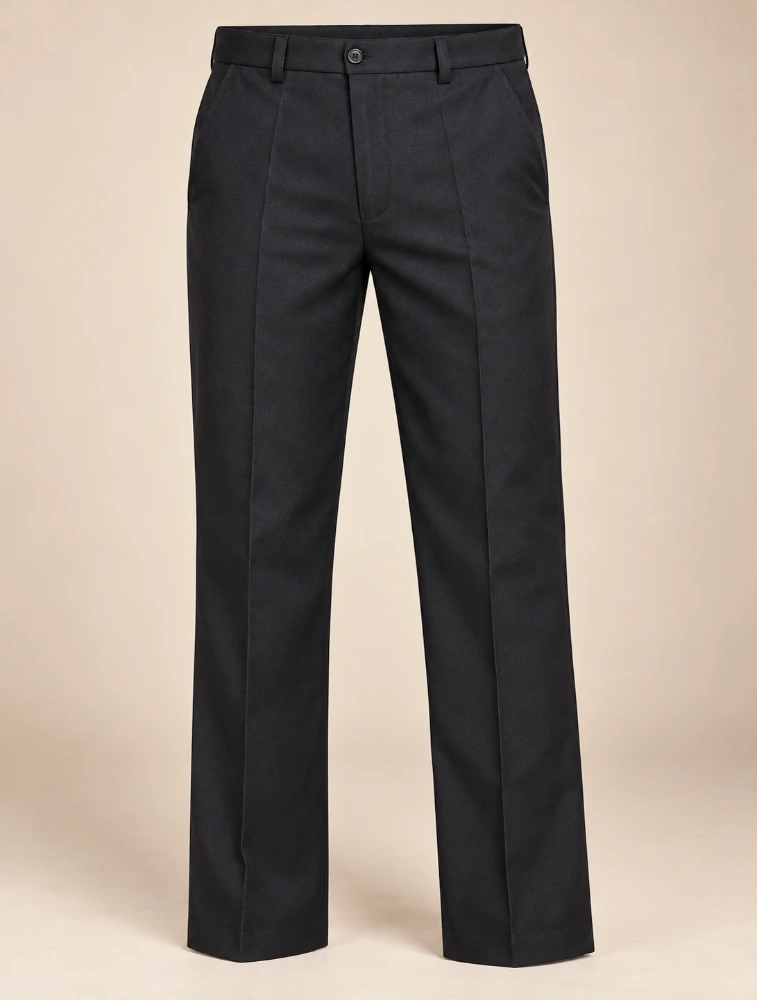
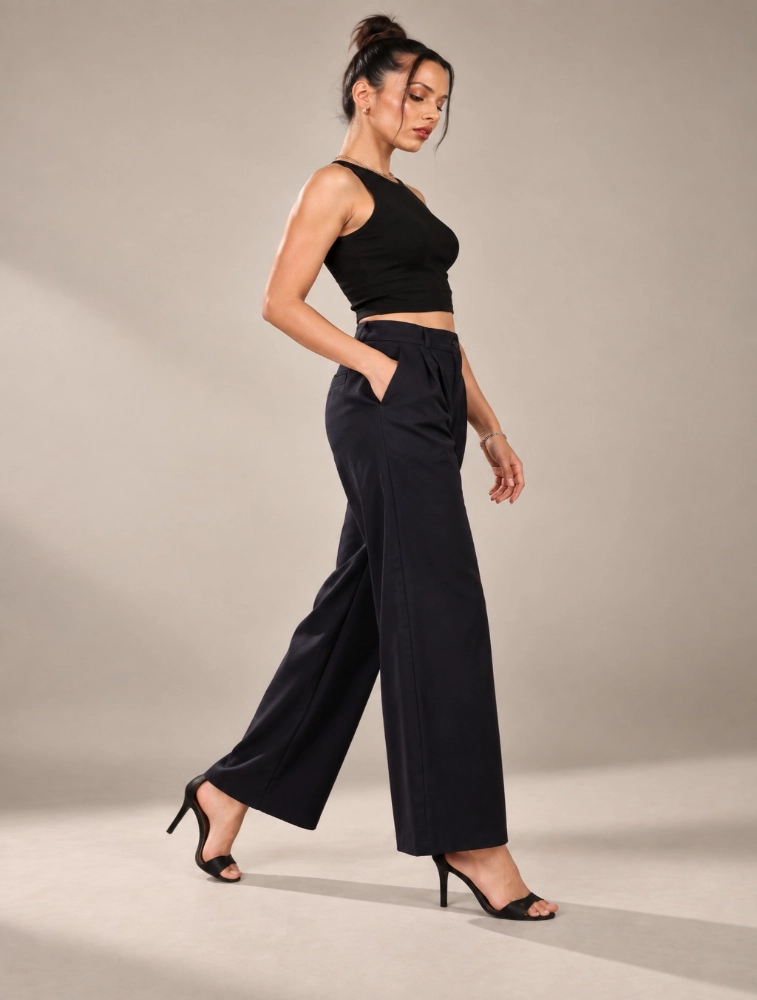
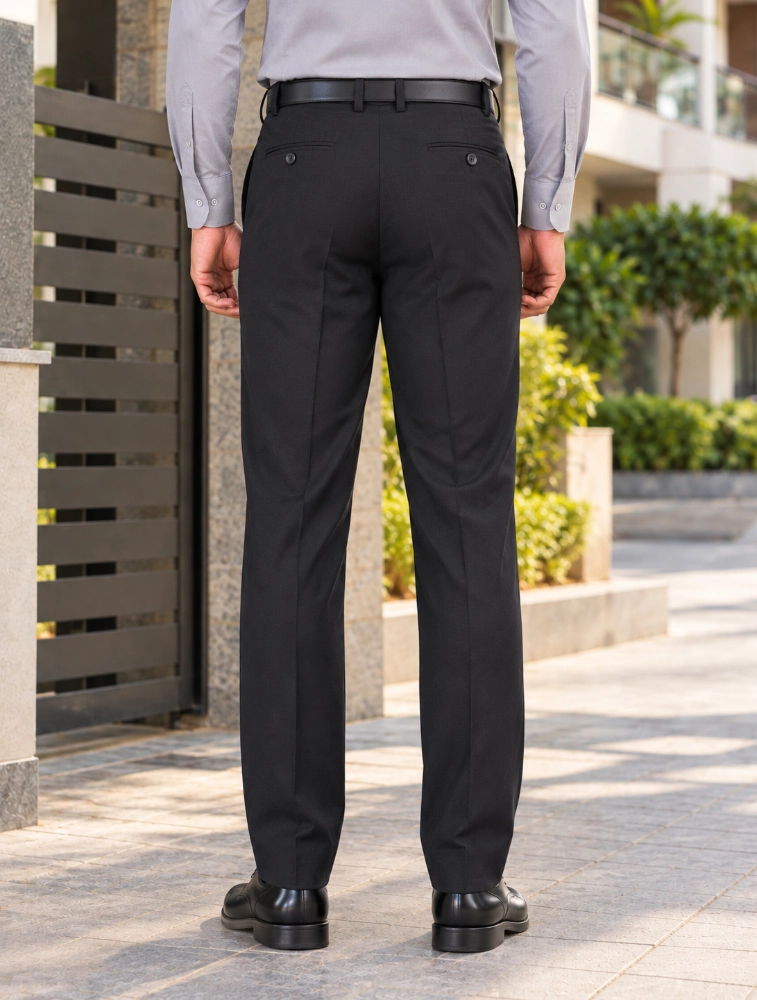
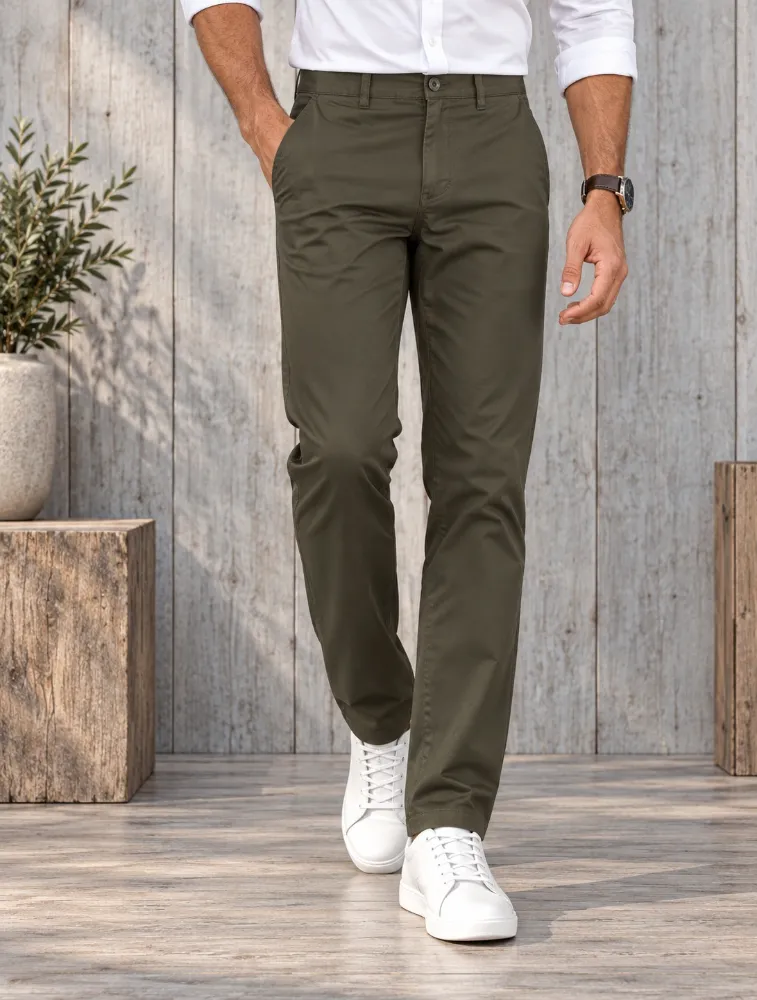
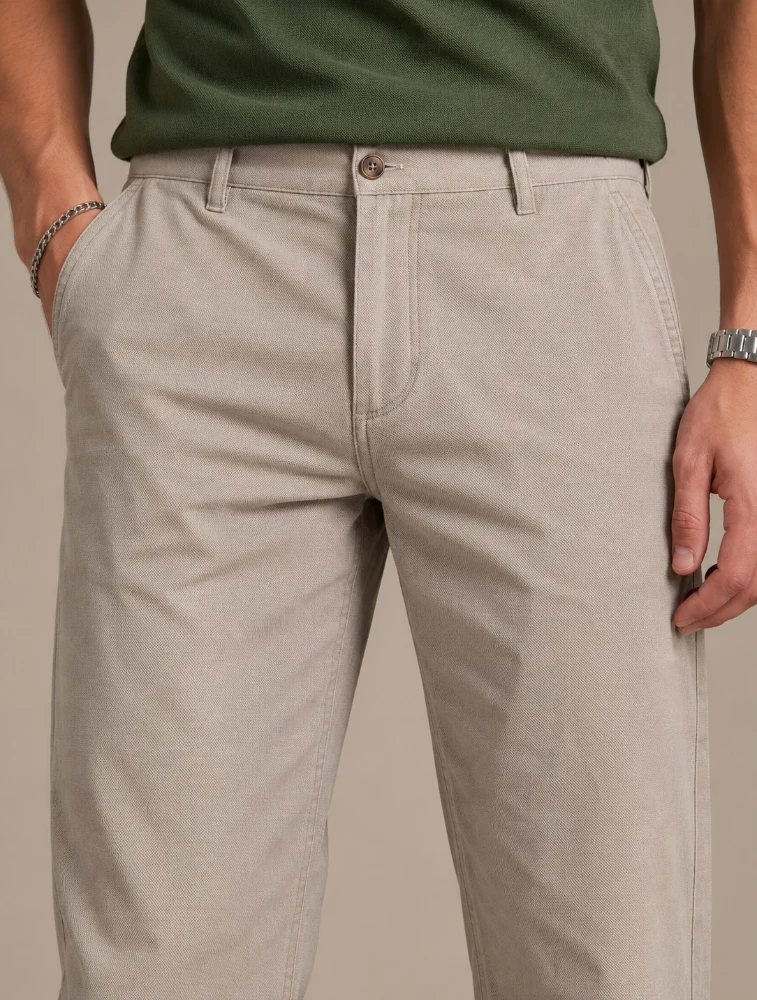
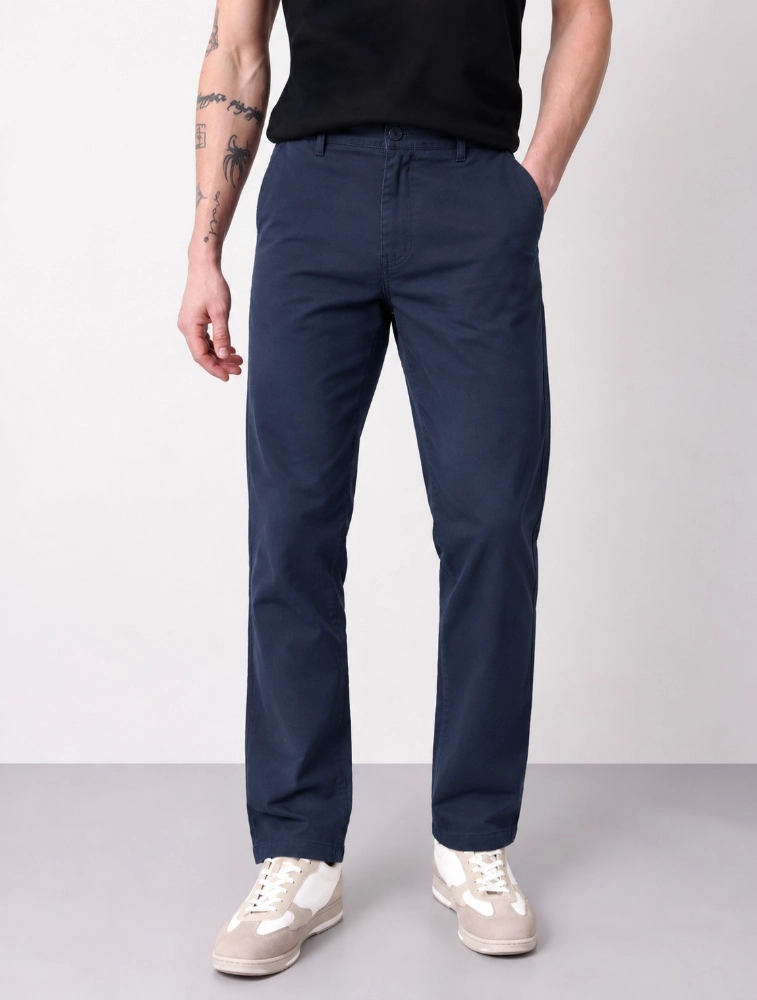
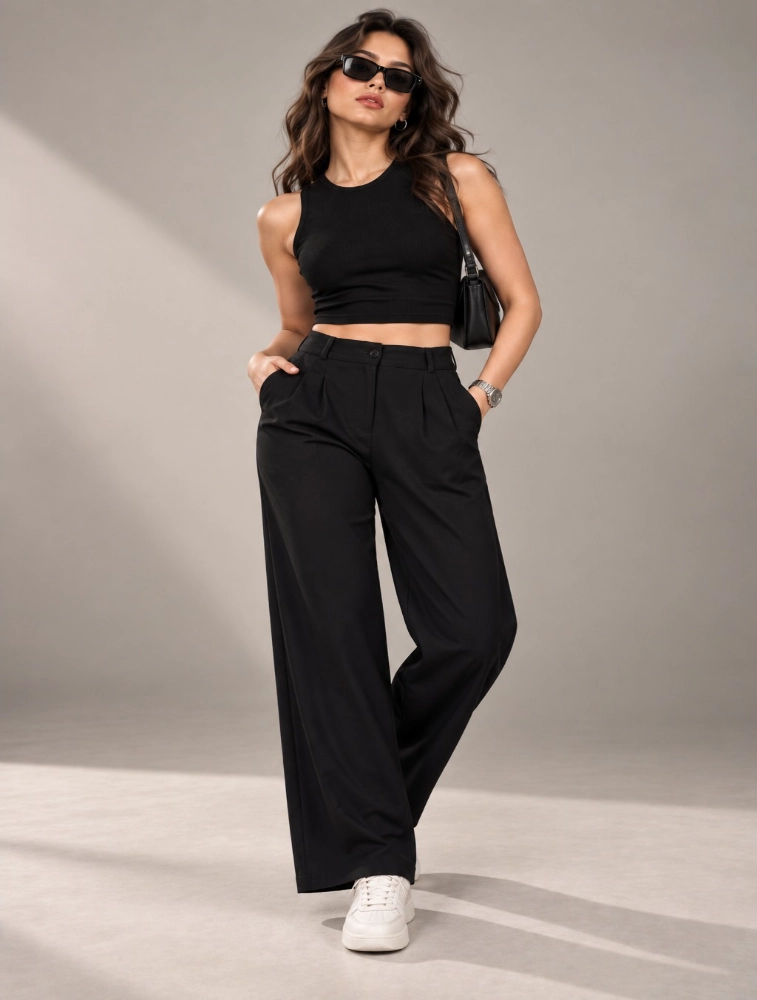
factori.com supplies bulk trousers from ₹392/piece across 662 partner factories — ready stock and custom programmes with GST invoices.
Prices verified October 2026 · shown excluding GST
₹392Entry price
Same dayDispatch on working days


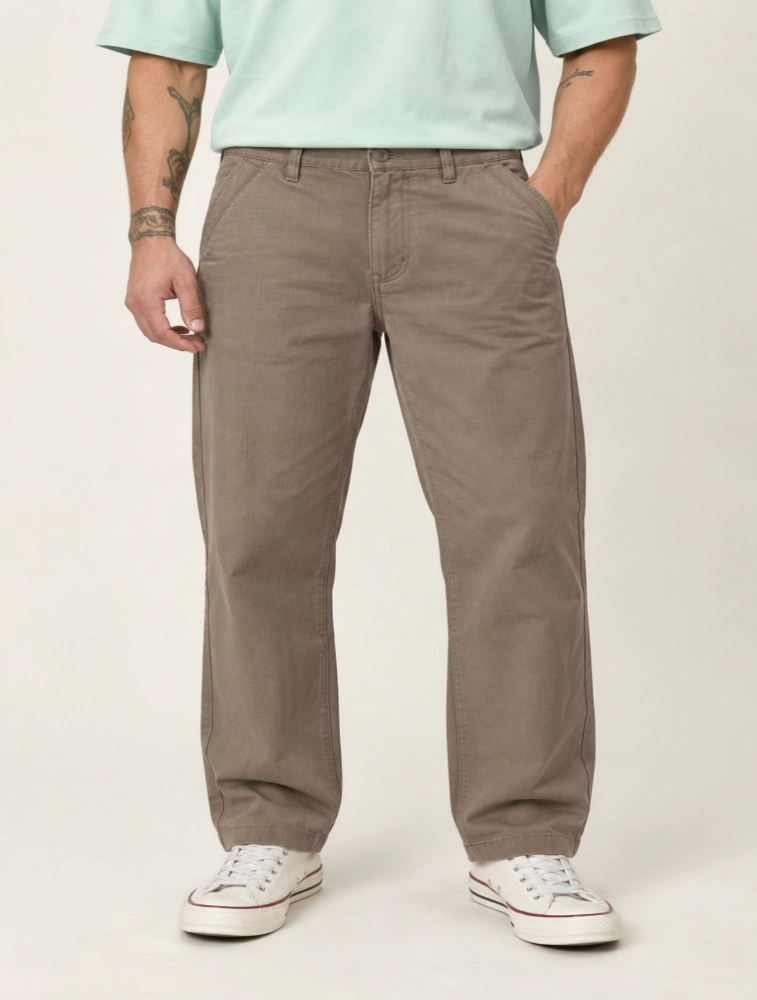
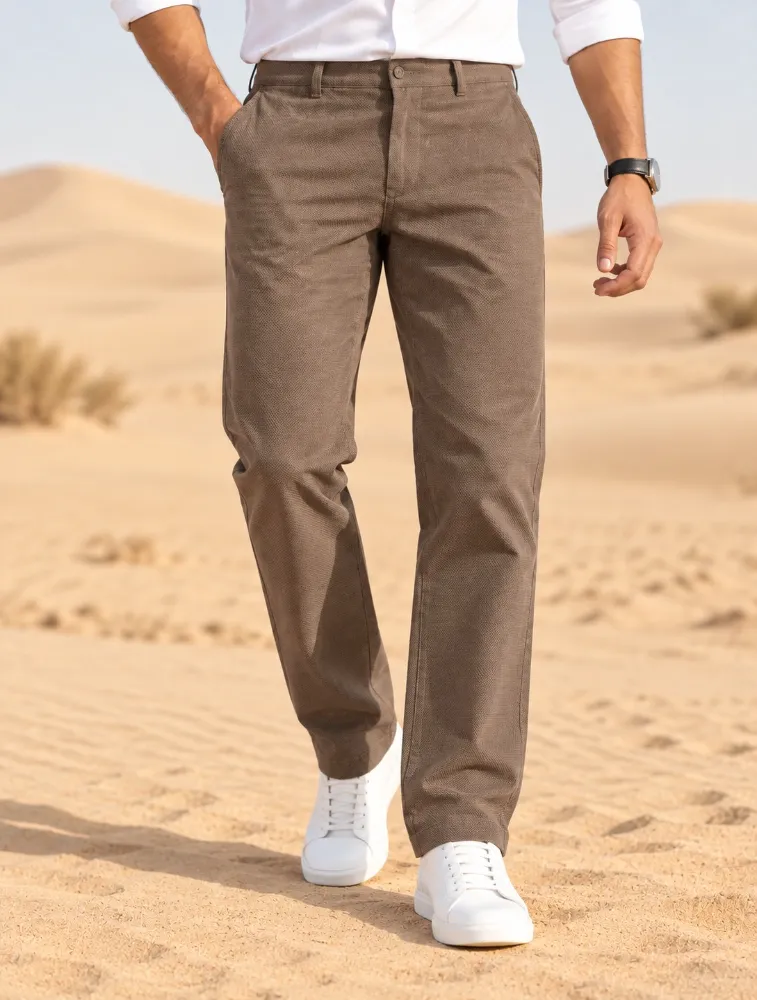
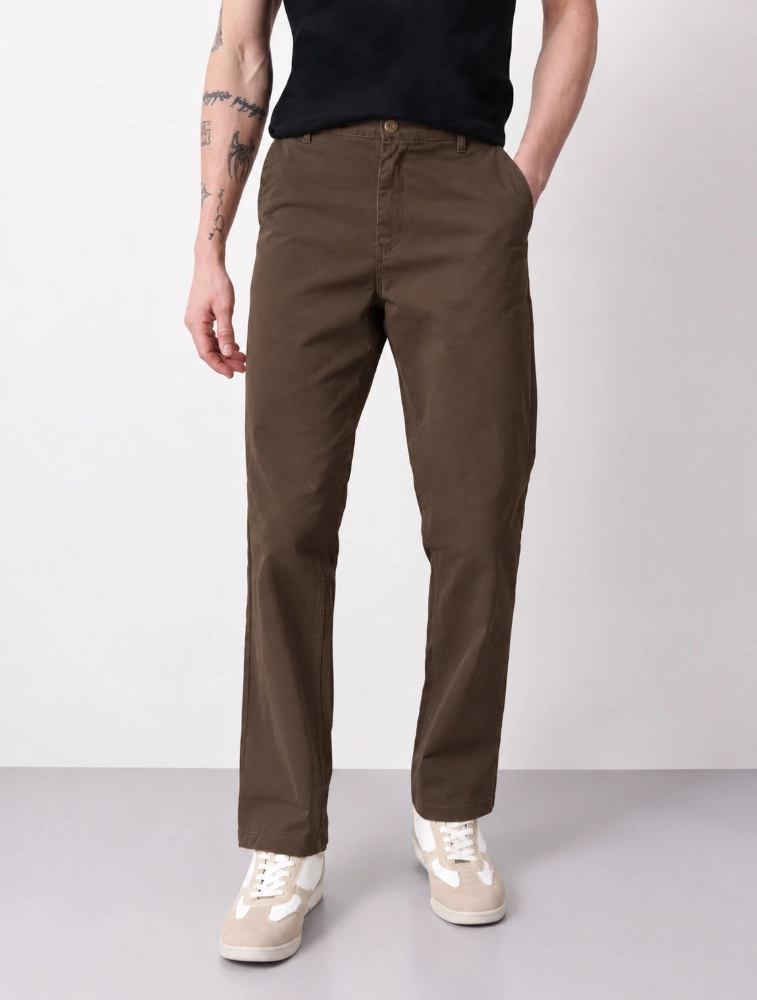

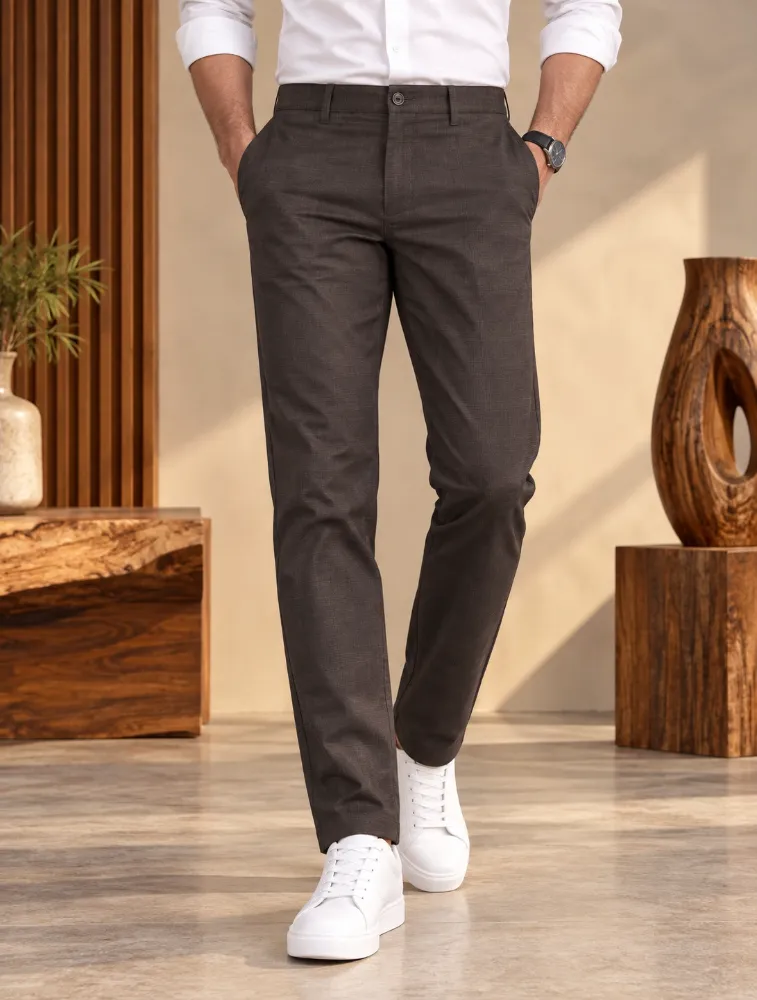





Page 1 of 3
Bulk trousers for every use case
Brand-ready trousers for corporate, retail, uniforms and large custom programmes — sourced across partner factories with published prices.
Corporate & events
Brand-ready trousers for offsites, launches and conferences.
Get quote →
Uniforms & programmes
Consistent supply for schools, factories and frontline teams.
Corporate uniforms →
Own brand / resale
Unbranded or private-label stock for retail brands.
Launch your store →
Large custom runs
Contract manufacturing for high-volume programmes.
Contract manufacturing →Bulk trousers — frequently asked questions
Every title on this page says Lycra. Is that a fabric or a brand, and what should the purchase order say?
Lycra is a registered trade mark, not a generic fibre name. The generic name for the stretch fibre in a formal trouser is elastane, also called spandex. Fifteen product titles and several specification rows on this page use the mark as though it were a fabric, and a bulk contract should say elastane instead.
This is the first thing to settle on this category because it changes what a purchase order actually obliges a supplier to deliver, and because it is the one defect on the page that a buyer can inherit rather than merely observe. A brand name written into a specification is a promise about provenance. A generic fibre name is a promise about material. They are not the same promise and they do not carry the same risk.
What the listings actually say
Thirteen of the fifteen listings share one product title, “Mens Textured Polyester Lycra Slim Fit Formal Trouser”, differing only in the colour word in front of it. The remaining two are titled “Light Grey Men Printed Cotton Lycra Narrow Fit Formal Trouser” and “Sage Green Men premium Printed Cotton Lycra Narrow Fit Formal Trouser”. The specification rows repeat the construction: one row on the first article reads “Textured polyester lycra blend offering durability, stretch, and comfort”, and another listing's row reads “Fabric: Cotton Lycra (Stretchable)”. In every one of those places the word is doing the work of a fibre name.
Why that is the wrong word
Elastane is the generic name for the segmented polyurethane elastic fibre that gives a woven formal trouser its recovery. Spandex is the same fibre under a different generic name, used chiefly in North America. Lycra is a brand under which one fibre producer sells its own elastane. A fabric can contain elastane without containing that producer's fibre, in the same way that a bottle can contain a cola without containing one particular company's cola.
Section 29(1) of the Trade Marks Act, 1999 sets out the basic shape of infringement in these words: “A registered trade mark is infringed by a person who, not being a registered proprietor or a person using by way of permitted use, uses in the course of trade, a mark which is identical with, or deceptively similar to, the trade mark in relation to goods or services in respect of which the trade mark is registered and in such manner as to render the use of the mark likely to be taken as being used as a trade mark.” Reading a particular listing into or out of that provision is a question for counsel on the marks actually registered in your markets, and nothing here is legal advice; we are pointing at the text, not applying it.
The practical exposure for a bulk buyer
Three things happen downstream. A retailer or a brand that resells the garment repeats the description on its own label and its own listing, and inherits whatever the description asserts. A large retail buyer or a platform that gates brand names will ask for a licence or an authorisation letter for the mark, and there is nothing on this page that would satisfy that request. And an exporter writing a customs description is describing goods to a revenue authority, where a brand name and a fibre name are different declarations.
What to write instead
- Say elastane, and require the mill to state the percentage on the fabric test report and the invoice.
- Describe the blend by generic fibre names, for example a woven polyester and elastane blend, or a cotton and elastane blend.
- Do not carry a brand name into the care label, the size label, the hangtag, the carton marking or the shipping documents unless the supplier has given you the mark owner's authorisation in writing.
- Specify what you actually want from the fibre — a stretch percentage and a recovery test after washing — rather than naming a brand and hoping the property follows.
Ask us for the fabric description in generic terms and it will be quoted that way. The listing titles on this page are being corrected; a purchase order does not have to wait for them.
TRADE MARK,Packaging Law & ClassificationQueries Targetedis lycra a brand or a fabric, elastane vs lycra vs spandex, trade mark used as fabric name, what to write in a trouser purchase order, section 29 Trade Marks Act 1999
Each trouser is packed in an individual polybag. What must be declared on it, and does size count?
Rule 6(1) of the Legal Metrology (Packaged Commodities) Rules, 2011 requires every package to bear a plain and conspicuous declaration of the maker's name and address, the generic name, the net quantity, the month and year of packing, the retail sale price and, under clause (f), the dimensions of the commodity where its size is relevant.
Clause (f) is the one that matters on a trouser category, and it is the one this page is least equipped to satisfy, because size is the single most relevant dimension of a trouser and no size chart is published anywhere on it.
What the listings say about packaging
The packaging row on the thirteen slim-fit listings reads “Each trouser is individually packed in protective polybags to maintain finish and hygiene. Bulk orders are packed in durable corrugated cartons for safe storage and transport.” The two printed narrow-fit listings describe a garment “securely enclosed in a high-quality, moisture-resistant polybag”, with one adding that it is “neatly folded and packed as a single piece”, and both offer “optional branded packaging”. So the article ships pre-packed, in a package, one garment at a time. That is the fact the rules attach to.
The declarations, as the rule is written
Sub-rule (1) opens: “Every package shall bear thereon or on the label securely affixed thereto, a definite, plain and conspicuous declaration made in accordance with the provisions of this chapter as, to -” and the clauses then run:
- “the name and address of the manufacturer, or where the manufacturer is not the packer, the name and address of the manufacturer and packer and for any imported package the name and address of the importer shall be mentioned.”
- “The common or generic names of the commodity contained in the package…”
- “The net quantity, in terms of the standard unit of weight or measure, of the commodity contained in the package or where the commodity is packed or sold by number, the number of the commodity contained in the package shall be mentioned.”
- “The month and year in which the commodity is manufactured or pre-packed or imported shall be mentioned in the package.”
- “the retail sale price of the package;”
- “Where the sizes of the commodity contained in the package are relevant, the dimensions of the commodity contained in the package and if the dimensions of the different pieces are different, the dimensions of each such different piece shall be mentioned.”
Where the generic-name clause bites on this page
Read the second clause against the first answer in this list. The common or generic name of a stretch woven trouser fabric is a polyester and elastane blend, or a cotton and elastane blend. A brand name is not a generic name. If the polybag label is generated from the product title as it currently stands, the label inherits the same wording problem the title has.
What this does and does not settle
It does not settle whether a particular consignment is inside the chapter at all. The scope of that chapter is set by rule 3, and reading an institutional or industrial supply into or out of it depends on facts about the buyer and the transaction that only your own counsel can weigh. Nothing here is legal advice, and no position is taken on your consignment. What can be said flatly is that the text above is the text, and that a bulk buyer should decide the labelling question before artwork is cut rather than after cartons are printed.
What to put in the order
- Who is named as manufacturer, who as packer, and whose address appears.
- The generic fibre description that will appear on the label, agreed word for word.
- Whether the polybag is the package, or the carton is, or both are declared.
- The size declaration and the measuring convention behind it.
- Who supplies and approves the artwork if branded packaging is taken up.
TRADE MARK,Packaging Law & ClassificationQueries Targetedlegal metrology packaged commodities rules trouser polybag, rule 6(1) declarations garment package, dimensions declaration clause f, branded packaging bulk trousers India
Under which tariff heading does a formal trouser fall, and what decides the men’s or women’s line?
Two headings compete. Heading 6203 covers men's or boys' trousers and heading 6204 covers women's or girls'. Note 8 to Chapter 62 decides between them by closure direction — left over right at the front is men's — and any garment that cannot be identified either way goes into the women's headings.
An exporter, an importer and a government buyer writing a tender schedule all need the heading before they need anything else, because it drives the documentation, the description on the invoice and the classification declared to the revenue authority. It is worth setting out the published words rather than paraphrasing them.
The men's heading, as published
Heading 6203 reads “MEN'S OR BOYS' SUITS, ENSEMBLES, JACKETS, BLAZERS, TROUSERS BIB AND BRACE OVERALLS, BREECHES AND SHORTS (OTHER THAN SWIMWEAR)”. Within the trousers group the eight-digit lines are “6203 41 00 Of wool or fine animal hair”, “6203 42 00 Of cotton”, “6203 43 00 Of synthetic fibres”, “6203 49 10 Of silk” and “6203 49 90 Other”.
The women's heading, as published
Heading 6204 reads “WOMEN'S OR GIRLS' SUITS, ENSEMBLES, JACKETS, BLAZERS, DRESSES, SKIRTS, DIVIDED SKIRTS, TROUSERS, BIB AND BRACE OVERALLS, BREECHES AND SHORTS (OTHER THAN SWIMWEAR)”, and its trousers group runs “6204 61 Of wool or fine animal hair”, “6204 62 00 Of cotton”, “6204 63 00 Of synthetic fibres” and “6204 69 Of other textile materials”.
Note 8, which decides between them
Note 8 to Chapter 62 reads: “Garments of this Chapter designed for left over right closure at the front shall be regarded as men's or boys' garments, and those designed for right over left closure at the front as women's or girls' garments. These provisions do not apply where the cut of the garment clearly indicates that is designed for one or other of the sexes. Garments which cannot be identified as either men's or boys' garments or as women's or girls' garments are to be classified in the headings covering women's or girls' garments.”
Three consequences follow for anyone buying here. First, the closure direction of the fly and waistband is a documentary fact, not a styling detail, and it belongs in the specification. Second, unisex is not a classification: the last sentence of Note 8 tells you exactly where an unidentifiable garment lands, so a catalogue that sells a garment as unisex has not avoided the question, it has answered it by default. Third, the eight-digit line turns on the fibre, and this page publishes no fibre-composition percentage for any of the fifteen articles, so nothing on the page settles the choice between the cotton line and the synthetic- fibres line.
What to do about it
- Get the fibre composition, by percentage, onto the fabric report and the commercial invoice before the first shipment is booked.
- State the closure direction in the specification and confirm it on the sealed sample.
- Where a garment is intended for women, say so in the specification and cut it that way, rather than relying on a size number to communicate it.
- Keep the classification decision with the person who is legally responsible for the declaration in the destination market.
The published heading and note text above is reproduced so you can read it yourself. We do not classify your consignment, we do not publish a rate, and none of this is legal or customs advice — your customs broker or counsel makes the call on the goods actually shipped.
TRADE MARK, Packaging Law & ClassificationQueries TargetedHS code formal trousers India, heading 6203 vs 6204 trousers, chapter 62 note 8 closure direction, 6203 43 00 synthetic fibres trousers, export documentation bulk trousers
Fifteen listings appear under Trousers. Thirteen of them are the same article — what is really on offer?
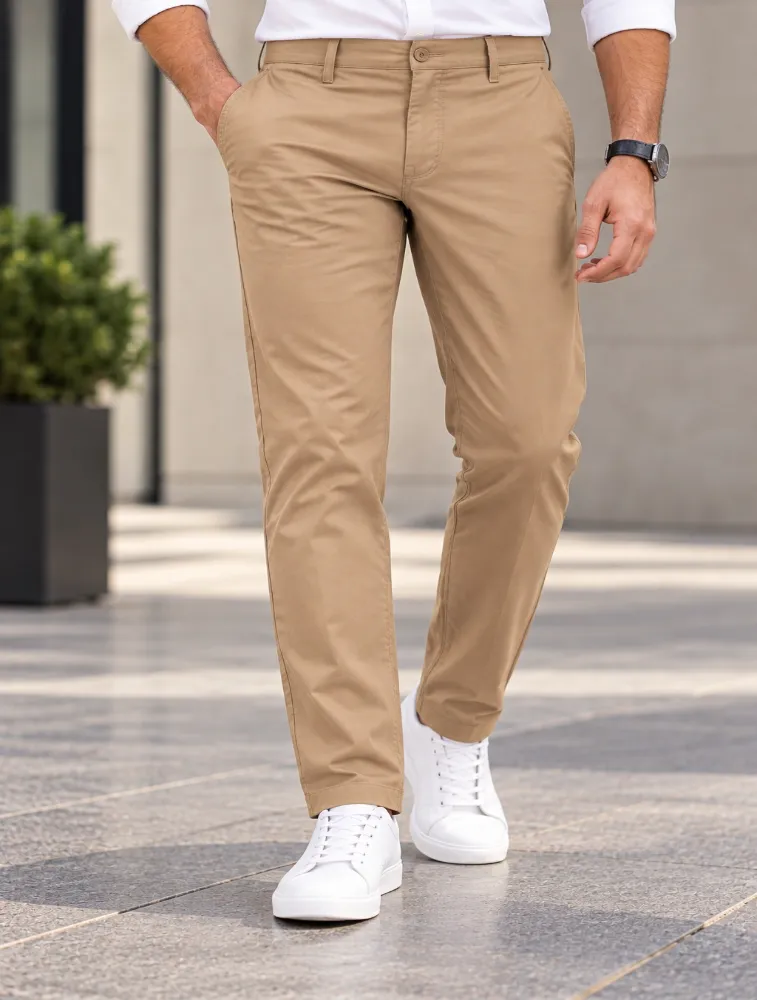
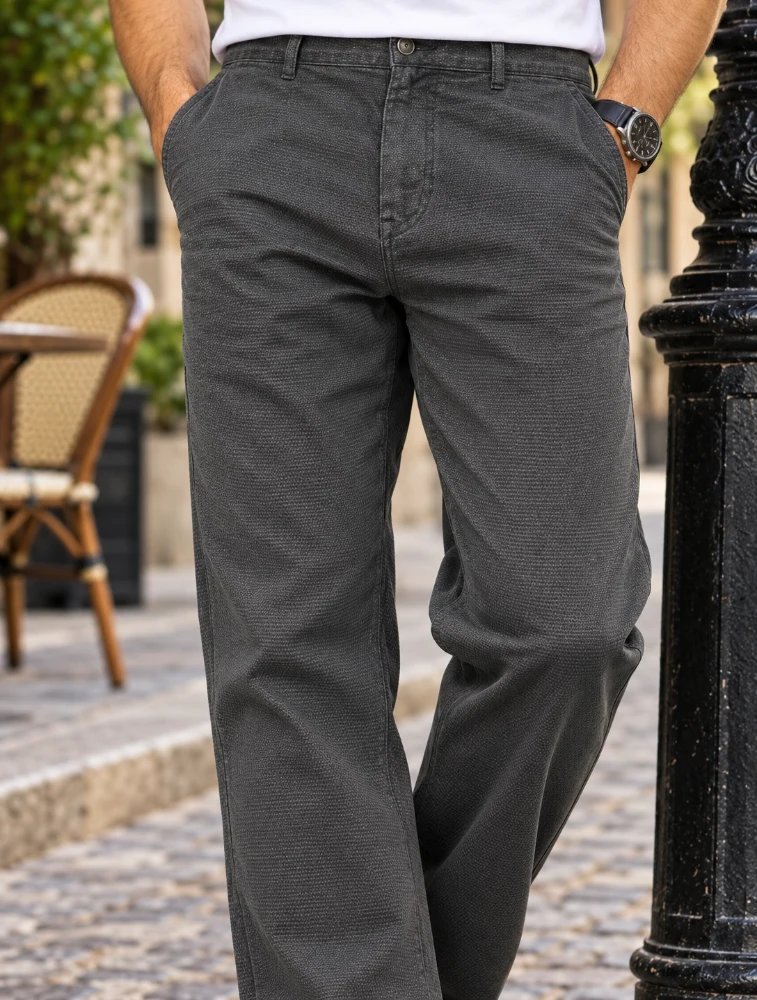
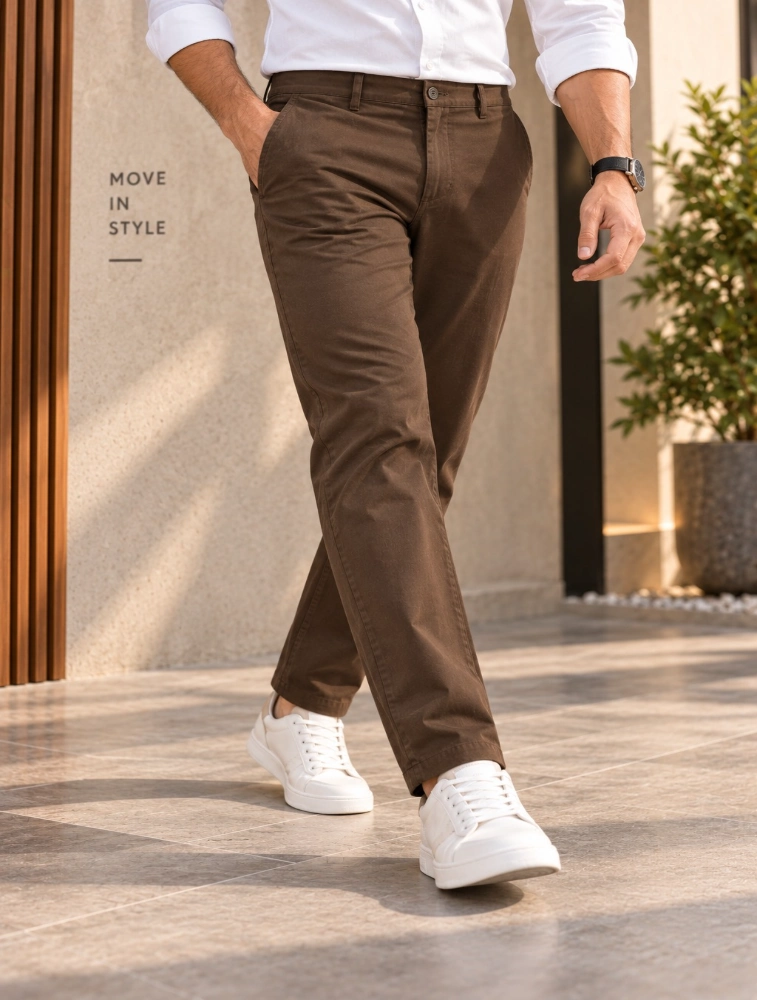
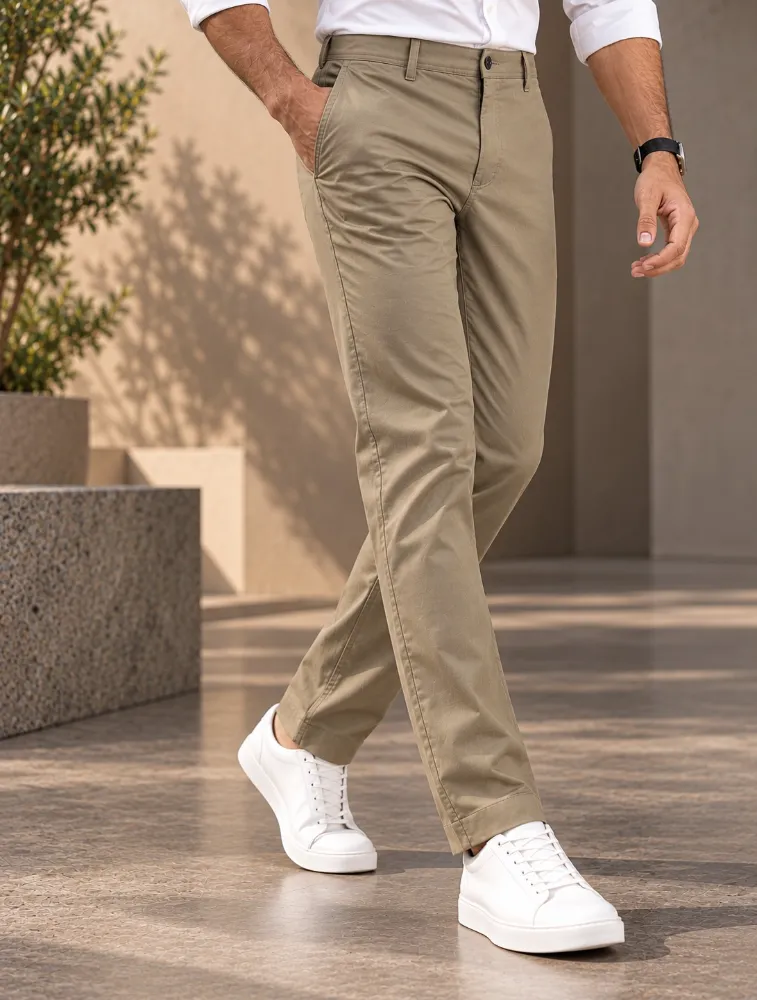
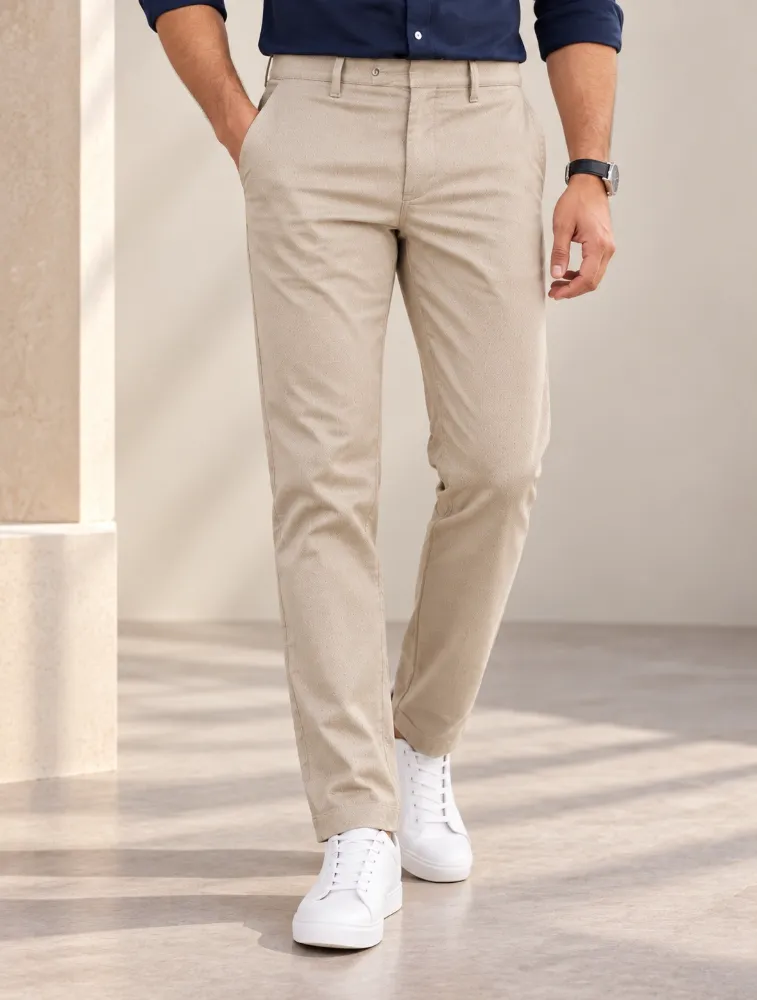
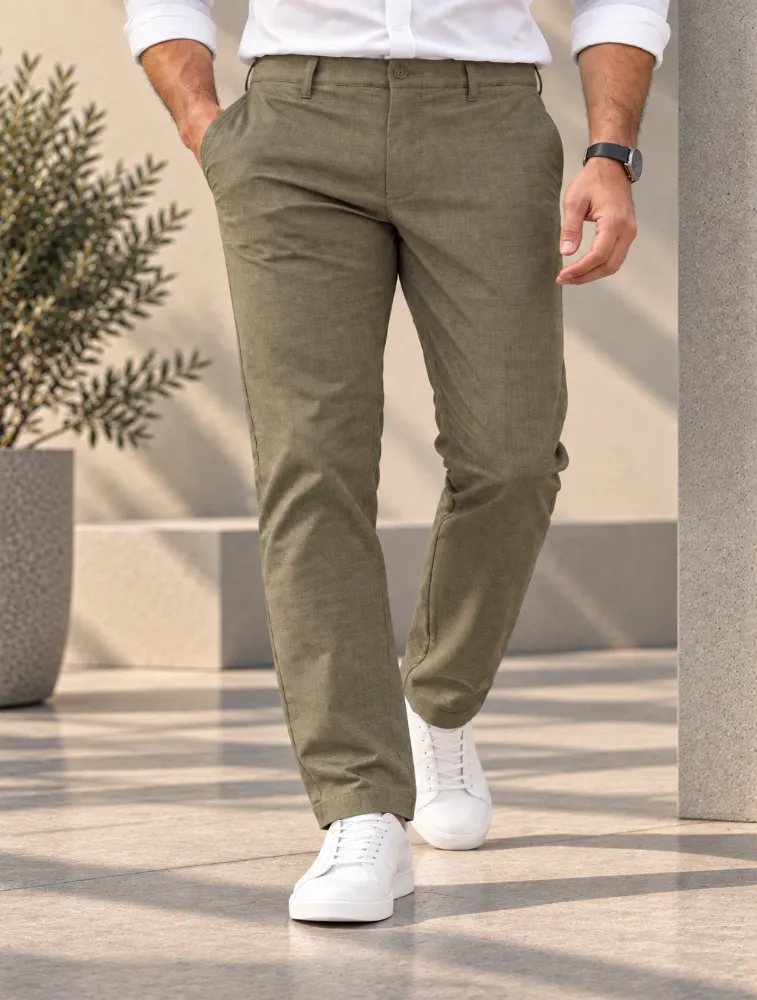
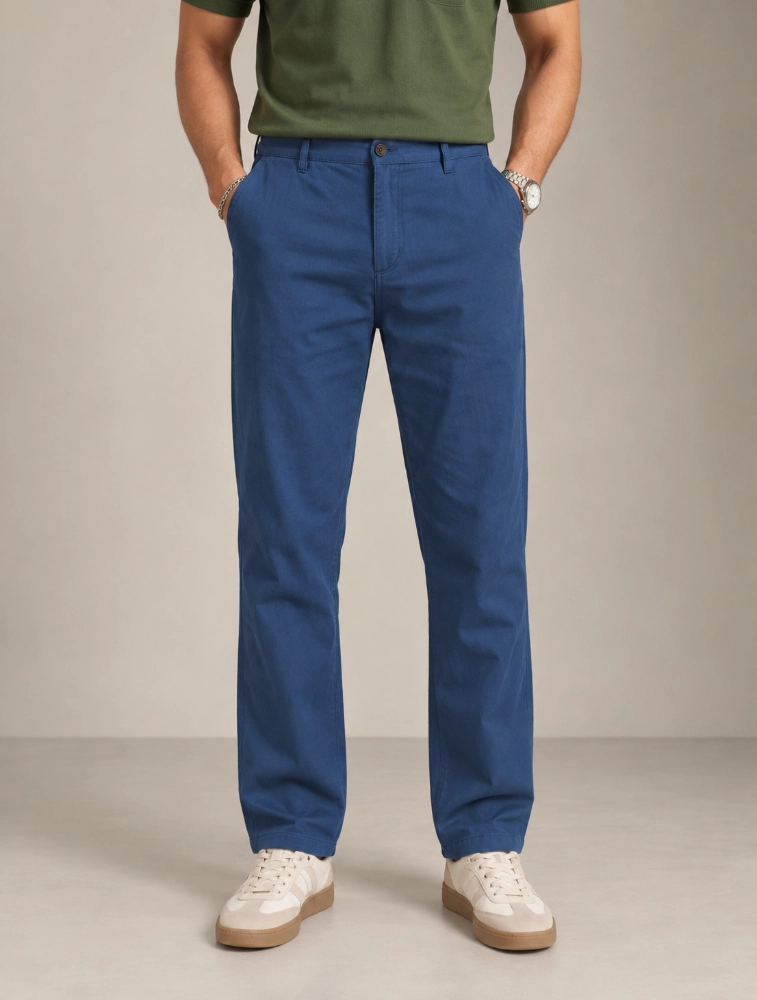
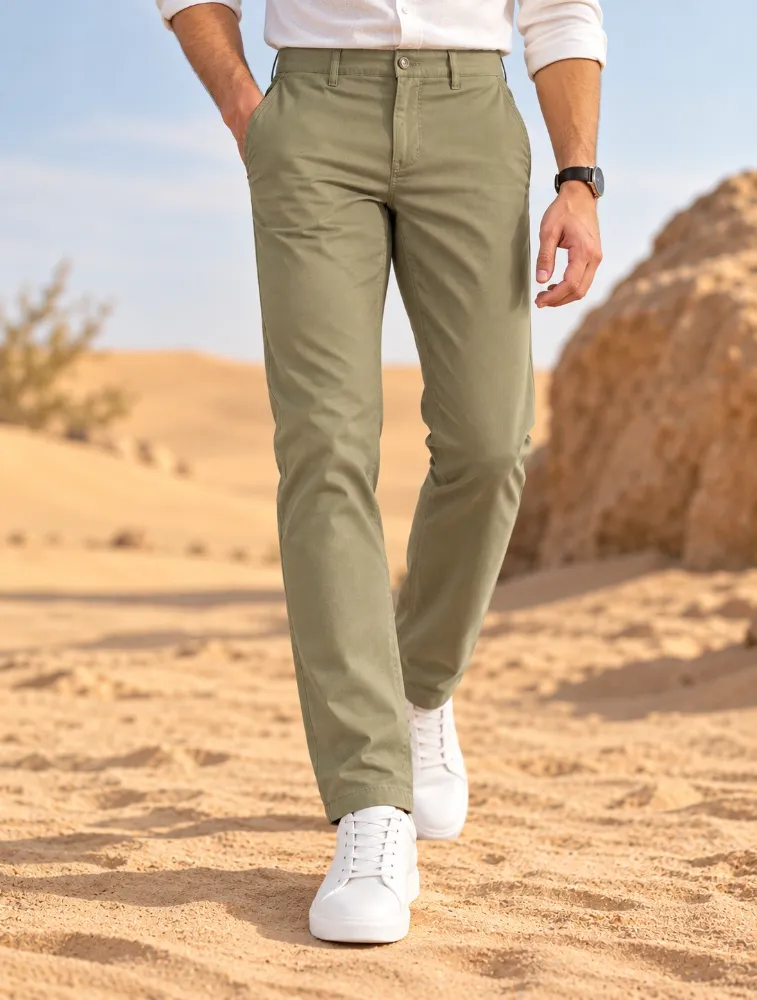
Fifteen listings, three prices and two garments. Thirteen tiles are one article, a men's slim- fit formal trouser, in thirteen colourways at Rs 392. The other two are printed narrow-fit formal trousers at Rs 643 and Rs 690. There are no women's trousers, no chinos, no cargos and no work trousers.
This is a small, tightly focused category presented as a broad one, and a buyer arriving from a search for trousers in bulk should know the shape of it before spending time on filters.
The thirteen colourways
All thirteen carry the same product title with a colour word in front, and all thirteen are priced at Rs 392. They are Khaki (SKUFACTORI4231), Brown (4232), Sage Green (4233), Charcoal Grey (4234), Light Sage (4235), Sand Beige (4236), Steel Blue (4237), Dark Green (4238), Navy Blue (4239), Dark Grey (4241), Dark Brown (4242), Black (4246) and Mint Green (4248). The product page for the first of them lists all thirteen colours as ready-stock options, so the grid is showing you one article thirteen times rather than thirteen articles.
The two outliers
SKUFACTORI5898 is a light grey printed narrow-fit formal trouser at Rs 643, and SKUFACTORI5908 is a sage green printed narrow-fit formal trouser at Rs 690. Both are described in their specification rows as a printed cotton blend with a mid rise, a button and zip fly and full length. Those two listings alone carry the advertised range: the page's own sentence that trousers run from Rs 392 to Rs 690 is true at both ends, but the top end is held up by a single tile.
Thirteen colourways of one article, and two printed trousers beside them.
What this category does not carry
Everything here is a men's formal trouser. There is no women's trouser of any kind, no chino, no cargo, no cotton casual trouser, no track pant or jogger, no school trouser, no industrial or workwear trouser, no flame-resistant or high-visibility trouser, no jean, no short, no plus-size range and no petite or tall range. A public-sector uniform tender, a hotel or hospital issue, a factory workwear programme or a retail assortment plan will all need at least one of those, and none of them is visible on this page.
Why the gap matters more than it looks
A category with no women's trouser cannot serve a mixed workforce from its own shelf, and the classification note discussed elsewhere in these answers shows that the men's and women's split is a documentary distinction, not a marketing one. Institutions issuing uniforms count heads, not styles; if half the roll needs a women's cut, half the order cannot be placed against this grid.
What is actually behind the page
The grid is a stock window, not the manufacturing capability. Trousers are cut to specification across a large partner-factory network, and the styles absent from the grid are made routinely. If what you need is a women's formal trouser, a cargo, a school trouser or a workwear trouser in bulk, send the style, the quantity, the size break-up and the destination and it will be quoted against a written specification rather than picked off a tile. Do not read the fifteen tiles as the limit of what can be supplied, and do not assume a tile you can see is the article you will get without a sealed sample.
What The Page PublishesQueries Targetedbulk trousers wholesale India range, formal trouser colourways bulk, no womens trousers category, cargo chino work trouser bulk supplier, factori trousers catalogue
Three prices, Rs 392, Rs 643 and Rs 690 — what actually differs between them?
Fabric, fit and finish, as the listings describe them. The Rs 392 article is described as a textured polyester blend in a slim fit; the Rs 643 and Rs 690 articles are described as printed cotton blends in a narrow fit with a mid rise, a zip fly and, on the dearer of the two, four pockets.
Those are the differences the page states. Below them sit several differences the page does not state, and a bulk buyer needs both lists.
What the specification rows say, in their own words
On the Rs 392 article the fabric row reads “Textured polyester lycra blend offering durability, stretch, and comfort”, the fit row reads “Slim fit design for a modern and professional appearance”, and the waist row reads “Secure waistband with button closure and belt loops for a neat finish”. On the Rs 643 listing the rows read “Fabric: Cotton Lycra (Stretchable)”, “Fit: Narrow Fit”, “Pattern: Printed”, “Waist Type: Mid Rise”, “Closure: Button & Zip Fly” and “Length: Full Length”. The Rs 690 listing repeats those and adds “Pockets: 2 Side Pockets, 2 Back Pockets”.
Reading the gap commercially
The spread from the floor to the ceiling of this page is Rs 298, which is Rs 690 less Rs 392, and it is roughly three quarters of the floor price again. A gap that size on a formal trouser is normally driven by fibre content, by fabric weight and construction, by the number of operations in the make and by the finishing. Two of those four — a change of base fibre and a change of pattern from plain textured to printed — are visible in the rows above. The other two are not published at all.
What the price difference does not tell you
- No fibre-composition percentage is given for any of the three, so you cannot see how much cotton the dearer articles actually carry.
- No fabric weight, no weave and no construction is stated, so two fabrics with the same fibre names can differ enormously and the page will not show it.
- No stitch density, seam type or number of operations is stated, so the make quality behind the price gap is invisible.
- No shade or print reference is given, so a printed pattern cannot be repeated from the page alone.
- No listing states where the garment was made.
What to compare instead
Price per piece is the wrong first comparison on a garment that will be worn five days a week for a year or more. The comparisons that decide cost in use are the fabric's behaviour after repeated laundering, the recovery of the stretch, the shade holding across a repeat order and the seam integrity at the seat and crotch. None of those is on this page and all of them can be fixed in a purchase order and evidenced on an approved sample.
A note on the third price
Because thirteen of the fifteen tiles sit at Rs 392, the visible average of this category is not the middle of the published range. If you are benchmarking, benchmark against the article you will actually buy: for almost every buyer arriving here, that is the Rs 392 slim-fit trouser, and the two printed articles are a small, separate proposition rather than the top of a ladder.
What The Page PublishesQueries Targetedtrouser price difference polyester vs cotton blend, formal trouser cost bulk India, slim fit vs narrow fit trouser, what makes a trouser more expensive
The listing calls the fabric durable, breathable and shape-retaining. Is any of that measured?
No. Those are the listing's own words, not test results. The specification rows on this category publish no fibre-composition percentage, no fabric weight, no weave, no shrinkage figure, no colourfastness grade, no pilling rating and no seam-strength figure, so there is nothing on the page a laboratory could verify a delivery against.
That is a statement about the page, not about the goods. The garments may well perform. The point is that nothing published here would let you prove it, reject a bad lot, or hold anyone to a standard.
The rows, quoted as written
On the Rs 392 article the rows read “Lightweight and breathable fabric suitable for long working hours”, “Strong stitching ensures shape retention and long product life” and “Ideal for office wear, corporate uniforms, and formal occasions”. The description adds that the garment is “Made from durable polyester blended with lycra” and that “The textured fabric enhances the premium appearance”. Every one of those is a sentence of marketing copy written by the listing. None is a measurement, and none of them becomes one by being repeated here.
The care row is the one exception, and it is useful
The care instructions are specific and worth quoting because they tell you how the maker expects the fabric to behave: “Machine wash cold with similar colours using mild detergent”, “Do not bleach or use harsh chemicals”, “Tumble dry low or line dry in shade to maintain fabric quality and colour” and “Iron on low to medium heat if required; avoid high heat”. A cold-wash, low-heat, shade-dry regime is a meaningful constraint for an institution running an industrial laundry, and it should be read before a hospital, hotel or factory adopts the article.
The seven fields no listing fills
- Fibre composition by percentage. Named fibres appear; a ratio never does.
- Fabric weight. Nothing anywhere on the category.
- Weave and construction. The word textured appears; a construction does not.
- Dimensional stability after washing. No figure, and no test named.
- Colourfastness. No grade for washing, rubbing, light or perspiration.
- Pilling and abrasion. Not mentioned on any listing.
- Seam and stitch data. Strong stitching is asserted; stitch density, seam type and thread are not stated.
How to close the gap
Put the properties you care about into the purchase order as testable requirements and require a report against a named method agreed with the supplier before bulk is cut. Ask for a fabric test report on the actual lot rather than a generic one, ask for a wash trial on a made-up garment rather than on a fabric swatch, and ask for the report to be issued in the name of the consignment. Where an institution has an existing uniform specification, send it and have the fabric quoted against it — that is a far better basis than a tile.
Nothing on this page should be read as a performance claim by factori.com, because none of it is traceable to a test. Where a figure matters to you, name it in the contract and we will quote to it.
What The Page PublishesQueries Targetedtrouser fabric specification bulk order, GSM composition shrinkage colourfastness trousers, what to test on bulk trousers, formal trouser quality specification
Sizes here are bare numbers with no chart and no length. What has to be fixed before an order is cut?
A trouser cannot be specified without a length, and no length appears anywhere on this category. Two listings offer 30, 32, 34, 36 and 38; a third offers 28, 30, 32, 34 and 36. The numbers carry no unit, and there is no size chart, no waist measurement and no inside-leg measurement.
This is the largest practical gap on the page. Everything else can be recovered from a sample; a missing length dimension is recovered only by measuring garments that have already been cut.
What the three product pages publish
SKUFACTORI4231, the Rs 392 slim-fit article, lists 30, 32, 34, 36 and 38. SKUFACTORI5908, the Rs 690 printed article, lists the same five. SKUFACTORI5898, the Rs 643 printed article, lists 28, 30, 32, 34 and 36 — a different range on the same category, with a smaller size added at the bottom and the largest one removed at the top. Nothing on either page explains the difference, and nothing states whether the numbers are inches, whether they describe the body or the finished garment, or whether they are measured on the relaxed or the stretched fabric.
Why a bare number is not a size
On a formal trouser the waist number is the smaller half of the problem. The wearer's experience is decided by the rise, the thigh, the knee and above all the inside leg, and the same waist number is worn by people whose leg length differs by a hand's width. A garment issued at the correct waist and the wrong length is either altered at the buyer's cost or rejected. On a stretch fabric the ambiguity is worse, because a waist measured relaxed and a waist measured extended are two different numbers on the same garment.
What the page should publish, and what you should demand meanwhile
- A size chart giving waist, hip, thigh, knee, leg opening, front rise, back rise, inside leg and outseam for every size.
- The unit, stated explicitly, and whether the chart is body measurements or finished-garment measurements.
- The measuring convention — where each measurement is taken and whether the fabric is relaxed.
- The tolerance permitted on each measurement.
- One consistent size range across the category, or a plain explanation of why one article stops at a different size.
- The length options offered, or a statement that garments are supplied unhemmed for finishing at the buyer's end.
How to place an order safely today
Ask for a graded specification sheet before you confirm, and approve a size set rather than a single sample, so that the grading between sizes is checked and not assumed. Fix the length explicitly in the order, either as a finished inside leg per size or as an unhemmed allowance with a stated amount of fabric at the hem. Decide who hems, where, and at whose cost. For an institutional issue, run a small fitting round on real wearers across the size range before the bulk is cut, and record the size curve you observe rather than ordering an even split. And measure the sealed sample yourself, after one wash, so the numbers you contracted against are the numbers you can verify on delivery.
What The Page PublishesQueries Targetedtrouser size chart bulk order India, waist size 30 32 34 36 38 meaning, inseam inside leg not published, bulk trouser size curve institutional
The three quantity ladders on this page are printed cheapest-last. What does a trial run actually cost?
More than the headline. On the Rs 392 article the published bands are Rs 413 for 100 to 999 pieces, Rs 405 for 1,000 to 9,999 and Rs 392 above 10,000. So a hundred-piece trial is invoiced Rs 413, which is Rs 21 above the advertised figure, or about 5.4 per cent.
The three ladders, exactly as published
Every product page in this category prints its quantity bands in ascending-quantity order, which means the number a buyer sees last is the cheapest one, and the number in the page title is the number almost nobody pays first. The three distinct ladders on this category are these:
- The Rs 392 article (the slim-fit textured trouser, thirteen colourways) — 100 to 999 pieces at Rs 413.00; 1,000 to 9,999 at Rs 405.00; above 10,000 at Rs 392.00.
- The Rs 643 article (the light grey printed narrow-fit trouser) — 100 to 999 at Rs 677.00; 1,000 to 9,999 at Rs 664.00; above 10,000 at Rs 643.00.
- The Rs 690 article (the sage green printed narrow-fit trouser) — 100 to 999 at Rs 726.00; 1,000 to 9,999 at Rs 712.00; above 10,000 at Rs 690.00.
What the entry premium works out to
Subtract the top band from the bottom band and the picture is consistent across all three articles. The premium a hundred-piece buyer pays over the advertised figure is Rs 21 on the first, Rs 34 on the second and Rs 36 on the third — between about 5.2 and 5.4 per cent in each case. That is a narrow, disciplined ladder by the standards of this catalogue, and it is worth saying plainly that the spread is small. What it is not is invisible. On a five-hundred-piece institutional issue the difference between budgeting from the headline and budgeting from the band is real money, and it is the kind of money that gets discovered at invoice stage rather than at approval stage.
Where the ladder actually breaks in your favour
The ladder has only three steps and the middle one starts at a thousand pieces. For a buyer sitting at seven hundred or eight hundred pieces, the arithmetic of rounding up to a thousand is usually favourable: you cross into the middle band, the per-piece figure drops, and the extra pieces frequently cost less in total than the saving on the pieces you were already buying. Run that calculation before you fix the quantity, not after. It is the single cheapest optimisation available on this page and it requires no negotiation at all.
What the ladder does not include
These are the published prices for the garment as listed. They are not landed cost. Branding, any change to the specification, packing beyond the standard polybag, freight, insurance and applicable taxes sit outside them, and on a formal trouser the alteration question — who hems, and at whose cost — is a real line item rather than a rounding error. Ask for a written quotation that shows the garment price, the branding charge, the packing charge and the freight basis as separate lines, and ask for the quantity band to be named on the face of it. A quotation that gives you one blended number is a quotation you cannot audit later.
What to do about the display order
Nothing on your side, but be aware of it when you circulate the page internally. A colleague who screenshots the tile and writes Rs 392 into a budget note has, without meaning to, understated the trial cost. Quote from the ladder, name the band, and put the band in the purchase order.
ProcurementQueries Targetedbulk trouser price 100 pieces India, trouser quantity discount slab, formal trouser wholesale rate ladder, minimum quantity trouser price
Each trouser page prints a hundred-unit floor while the FAQ above offers a single piece. Which is binding?
The hundred-unit floor is the one printed on the goods. Every trouser product page on this category carries “Minimum Order Quantity - 100 Units”, while the second question in the FAQ block above offers ready stock “from a single piece”. Treat the product page as binding and get the exception in writing.
The two statements, side by side
Open any of the fifteen listings on this category and the minimum order quantity is stated as a hundred units, unqualified. Scroll the category page to the question set already published on it and the answer to the minimum-order question reads that ready-stock items can typically be ordered from a single piece, with custom or branded runs starting from a hundred pieces per style per colour. Both statements are on factori.com. They cannot both govern the same order.
Why this matters more here than on most categories
Because of how this page is built. Thirteen of the fifteen listings are the same article in thirteen different colours. If the hundred-piece floor is read as per style per colour — which is how the on-page FAQ words it for custom runs — then a buyer who wants a modest quantity of each of the thirteen colours is looking at thirteen hundred pieces, not the couple of hundred they had in mind. If instead the floor is read as per style, with colours drawn against a single pooled minimum, the same requirement is a hundred pieces. That is a thirteen-fold difference in commitment turning entirely on a reading of one sentence.
The three questions to settle before you commit
- Is the floor per style, per style per colour, or per order? Ask in exactly those words and ask for the answer in the quotation, not in a chat window.
- Does ready stock have a different floor from a made-to-order run? The on-page answer implies it does. The product pages do not distinguish. Get the distinction stated.
- What is the size ratio at the floor? A hundred pieces spread across five sizes is not the same commercial proposition as a hundred pieces in one size, and the page publishes no guidance on this at all.
The sample question is separate, and easier
Nothing above prevents you from buying a sample. The published answer on this page says the sample cost is credited back against the bulk order and that a pre-production sample is approved before a custom run starts. Take both. On a trouser the sample is not a formality — it is the only place a fit, a waistband, a fly construction and a shade can be judged, because the page publishes measurements for none of them. Buy one of each colour you are considering if shade matters to you, and buy them in the size you expect to order most of.
What to write in the purchase order
State the minimum-order basis you have been quoted, in the words you were given, on the face of the order. If you have been granted a smaller quantity than the printed floor, that concession belongs in writing too — a printed hundred-unit minimum on the live product page is what any later dispute will be read against, and a verbal exception will not survive it.
ProcurementQueries Targetedtrouser MOQ India, minimum order quantity formal trouser, 100 units minimum trouser bulk, sample order before bulk trousers
Which clauses belong in a bulk trouser contract when the page publishes no measurements?
Sixteen, and every one of them exists because the page is silent on it. Fibre composition by percentage, fabric weight, weave, stretch and recovery, shrinkage after washing, colourfastness, pilling, shade reference, the full size chart with inside leg, waistband construction, closure, pocketing, thread, labelling, packing and origin.
Why the list is this long
A formal trouser is a more demanding garment to specify than almost anything else in a uniform programme. It is cut close, it is worn seated for most of the day, it is washed more often than a jacket, and the two things wearers complain about — seat and knee bagging, and hem length — are both properties of the fabric and the pattern rather than of the finishing. None of the fifteen listings on this category publishes a single measured value. The specification rows are adjectives. So the contract has to carry what the catalogue does not.
The sixteen clauses, in the order they belong in the document
- Fibre composition, stated as percentages by weight, for both the face fabric and the pocketing, with the elastane content named separately.
- Fabric weight, stated in the unit you intend to test in, with the test method named.
- Weave and construction — twill, plain, the ends and picks, and whether the fabric is piece-dyed or yarn-dyed.
- Stretch and recovery, both figures, with the method named. Recovery is the one that decides whether the knees bag by four o'clock.
- Dimensional stability after washing, stated as a maximum permitted change in each direction, tested after a named number of wash cycles.
- Colourfastness to washing, rubbing, perspiration and light, each to a named method and each with a minimum grade you will accept.
- Pilling and abrasion resistance, to a named method with a stated minimum. On a seated garment this is what protects the seat.
- Shade reference and lot tolerance — a physical sealed swatch or a numbered colour standard, plus the tolerance you will accept between lots.
- The complete size chart, every measurement point, with the inside leg stated for every size and the measuring convention written out.
- The size ratio per colour, so the delivery arrives in the mix you can actually issue.
- Waistband construction — curtain, canvas, elastic insert or none, belt loop count and width, and whether a side adjuster is fitted.
- Closure — button and zip fly, the zip type and brand class, and the button type.
- Pockets and pocketing fabric — the count, the placement, and the composition of the pocket bag, which is where cheap trousers fail first.
- Thread, stitch density and seam type for the main seams, plus how the inside leg and seat seams are finished.
- Labelling — the main label, the care label, the fibre content declaration and any brand label, with placement and artwork approved in advance.
- Packing, inspection and lead time — polybag and carton specification, the inspection standard and acceptance level, who inspects, sample approval, and the delivery schedule with the remedy if it slips.
How to use the list
Do not send it as a list. Turn it into a one-page technical specification, attach it to the enquiry, and ask for it to be returned signed with each line either accepted or countered. A supplier who returns it complete has told you a great deal about how the order will run. This is general procurement guidance rather than legal advice, and a contract of any size should be reviewed by your own counsel before signature.
ProcurementQueries Targetedtrouser purchase order specification checklist, bulk trouser contract clauses India, formal trouser tech pack, uniform trouser procurement specification
One listing says Narrow Fit in the title and Regular Fit in the specification. How should fit be approved?
Approve fit on a sealed sample, not on the words. SKUFACTORI5908 is titled “Narrow Fit” and its own specification row reads “Fit: Regular Fit” — a direct contradiction on a single product page. Nothing else on this category defines what narrow, slim or regular means in centimetres.
What the three articles say about fit
The thirteen-colourway article describes itself as a “Slim fit design for a modern and professional appearance”. The light grey printed trouser gives “Fit: Narrow Fit” in its specification and repeats narrow fit in its title, so it at least agrees with itself. The sage green printed trouser gives “Narrow Fit” in the title and “Fit: Regular Fit” in the row immediately below. Those are not two ways of saying the same thing. Narrow and regular are the two ends of the range on a formal trouser, and a buyer reading the title and a buyer reading the specification would order two different garments.
Why fit words cannot be contracted against
Slim, narrow, regular, comfort and classic are marketing vocabulary. There is no industry register that fixes them, no published tolerance attached to them, and no two manufacturers use them identically. A trouser sold as slim by one factory will measure as regular at another. The only thing that makes a fit contractual is a set of numbers: the thigh, the knee, the leg opening, the front and back rise, and the finished waist, each stated for each size with a permitted tolerance. This category publishes none of them.
The approval sequence that actually works
- Order one sample of the article you intend to buy, in the middle size of your range, before you discuss quantity.
- Measure it yourself, flat, at every point above, and write the numbers down. Those numbers — not the word on the listing — become your specification.
- Have three or four real wearers put it on and sit in it for an hour. Seated comfort on a slim formal trouser is the complaint you will otherwise receive on week two.
- Send the measured chart back and ask the supplier to confirm every figure and to state the tolerance they will hold, size by size.
- Seal the approved sample, signed and dated by both sides, and reference it in the purchase order. Grade the remaining sizes from the approved chart, and get the graded chart confirmed too.
The size numbers, and what they leave open
Two of the three articles offer 30, 32, 34, 36 and 38. The third offers 28, 30, 32, 34 and 36. Those are bare numbers with no unit stated and no chart behind them, and the two ranges do not align — a buyer who standardises on the smaller article cannot serve the top of the range, and one who standardises on the other cannot serve the bottom. If you are issuing across a real population you will need both ends, and you will need to confirm which body measurement the number refers to before you order a single piece.
What to ask for in writing
Ask for the fit word to be removed from the order entirely and replaced by the measured chart. Ask for the contradiction on the sage green article to be resolved on the live page as well, because a specification row and a title that disagree will eventually be quoted back at somebody.
ProcurementQueries Targetedslim fit vs regular fit trouser bulk, trouser fit approval sample, formal trouser fit specification India, narrow fit trouser wholesale
Where can a logo go on a formal trouser without spoiling the line of the garment?
On a formal trouser, almost nowhere visible — and that is the point. The durable options are a woven label at the inner waistband, a small embroidery on the back pocket or a belt loop, a heat-seal inside the waistband, custom buttons or a branded zip puller, and contrast pocketing that shows only when a pocket is used.
Why a trouser is not a t-shirt
Every other garment in a corporate wardrobe has a chest, a sleeve or a back panel that will carry a mark without looking wrong. A formal trouser has none. It is a garment whose whole job is to be unremarkable below the waist, and a visible logo on a thigh or a hip reads as sportswear rather than office wear. So branding here is either internal, structural or trim-level. That is a constraint, not a limitation — on a uniform programme the trouser is usually the piece you want to be quiet, with the identity carried by the shirt or the jacket.
The options, in order of how well they survive washing
- Woven or printed label at the inner waistband. The default. Lasts the life of the garment, costs very little at volume, and is what most institutional buyers actually want — it identifies the issue and the size without being seen.
- Embroidery on the back pocket, the coin pocket or a belt loop. Small scale only. Ask for a stitch- out on the actual fabric before approving, because a stretch fabric behaves differently under a needle from a rigid one and puckering is the usual failure.
- Heat-applied transfer inside the waistband. Cheap, quick, useful for departmental coding. It is the least durable of the group under repeated hot washing, so it suits an annual issue rather than a five- year one.
- Custom buttons, rivets or a branded zip puller. Understated, permanent, and the most convincing at close range. It requires a trim lead time of its own, so raise it at the enquiry stage and not after the fabric is booked.
- Contrast pocketing or waistband curtain in a house colour. Invisible when worn, visible whenever the garment is handled. It reads as considered rather than branded, which on a formal trouser is the right register.
- Hangtags, belly bands and printed polybags. These brand the presentation rather than the garment, and for a retail or gifting buyer they often do more work than anything stitched into the trouser.
What the page currently offers
The question set already published on this category says artwork or specifications can be shared and a mock-up is prepared for approval before production, with printing, embroidery and other finishes available where suitable. Unlike some categories in this catalogue, embroidery is a genuinely appropriate technique here, so that answer holds. What it does not do is tell you which placements this particular article supports, and the product pages are silent on it.
How to run the artwork sign-off
Send vector artwork with the colours specified as a numbered reference rather than described by name. Ask for a physical sample of the chosen method on the actual fabric, in the actual colour, before bulk. Wash it yourself — five cycles at the temperature your wearers will really use — and only then sign it off. Keep the approved piece. It is the reference every later delivery gets measured against, and it is far more useful in a dispute than an email chain.
BRANDING, Shade & Catalogue QualityQueries Targetedcustom branded trousers bulk India, logo on formal trouser, corporate trouser branding options, embroidered trouser uniform
Thirteen colourways, one article, and no colour reference published. How is shade held across a repeat order?
By sealing a physical swatch, because the page gives you nothing else. Thirteen colour names are published — Khaki, Sage Green, Charcoal Grey and the rest — and not one carries a colour reference number, a lot tolerance or a colourfastness grade. A name is not a shade standard.
What is actually published
The ready-stock colour list on the slim-fit article reads: Black, Brown, Charcoal Grey, Dark Brown, Dark Green, Dark Grey, Khaki, Light Sage, Mint Green, Navy Blue, Sage Green, Sand Beige and Steel Blue. Two of those pairs — Sage Green and Light Sage, Dark Grey and Charcoal Grey — are close enough that two people looking at two screens will not agree on which is which. There is no numbered reference behind any of them, and the images on a category grid are photographs, taken under lighting you did not control, displayed on a screen you did not calibrate.
Why this bites on the second order rather than the first
The first delivery is whatever it is, and if you like it you accept it. The problem arrives six months later when you reorder against a garment that has since been washed thirty times, from a dye lot that was not the original one, and the two are placed side by side in the same room on the same person. Piece-dyed fabric moves between lots. That is normal and it is manageable, but it is only manageable if somebody wrote down what the target was before the first order shipped.
The four things to fix, in writing, before the first order
- Seal a physical swatch. Cut the approved sample fabric in three, sign and date all three, keep one, send one to the supplier and keep one with the file. This is the standard. Everything else is commentary.
- State a lot-to-lot tolerance and name the method and the conditions under which shade will be judged, including the light source. Shade disputes are almost always disputes about lighting.
- Ask for colourfastness testing to washing, rubbing, perspiration and light, each to a named method, with the minimum grade you will accept written into the order. This category publishes no grades at all, so the figures have to come from a test report on your goods rather than from the page.
- Book the fabric in one lot if the whole requirement is known. A single dye lot removes the problem entirely and costs nothing to ask for.
The care instruction is on your side here
The article's own care row is unusually complete for this catalogue: machine wash cold with similar colours using mild detergent, do not bleach or use harsh chemicals, tumble dry low or line dry in shade, iron on low to medium heat. That wording is worth reprinting on the care label and worth putting in the issue note to wearers. A shade complaint that turns out to be a hot-wash complaint wastes everybody's time, and the instruction that would have prevented it is already written.
If shade is critical
Say so at enquiry stage rather than at inspection stage. A buyer who declares shade as a critical parameter up front gets a lab dip, a bulk approval and a single lot. A buyer who raises it after delivery gets a conversation about tolerances nobody agreed to.
BRANDING, Shade & Catalogue QualityQueries Targetedtrouser colour matching bulk order, shade variation between lots uniform, colourfastness trousers wholesale, pantone reference garment order India
Which contradictions on this page should be resolved in writing before a quotation is issued?
Six. The minimum order quantity, a hundred units on every product page and a single piece in the FAQ above it. The factory count, 606 in the statistics band and “hundreds” in the FAQ. The fit on the sage green article. The two size ranges. The thirteen colourways priced as one article. And the trade mark used as a fabric name.
Taking them one at a time
One, the minimum order quantity. Every product page in this category prints a hundred-unit floor. The published question set on the same category says ready stock can typically be ordered from a single piece. Ask which governs, and ask whether the floor is per style or per style per colour, because with thirteen colourways the answer changes the commitment by an order of magnitude.
Two, the factory count. The statistics band on this page states that supply runs across 606 partner factories in India. The seventh question in the published FAQ set says production runs across hundreds of audited partner factories. Those are not inconsistent, but a specific number and a vague one sitting a few hundred pixels apart invites the reader to wonder which was written more recently. For what it is worth, a category audited on the same day carries a different specific number, which suggests the figure is generated rather than curated.
Three, the fit on the sage green printed trouser. The title says Narrow Fit. The specification row on the same page says Fit: Regular Fit. One of them is wrong and neither is contractual.
Four, the size ranges. Two articles offer 30 to 38. The third offers 28 to 36. If you are issuing across a mixed population you need to know which article can actually cover your range before you standardise on one.
Five, the shape of the assortment. Fifteen listings look like fifteen choices. Thirteen of them are one article in thirteen colours at one price. The advertised range from the lowest to the highest published price is carried entirely by the two remaining listings. That is not a defect, but it changes how you read the page.
Six, the fabric name. Every title on this category uses a registered trade mark where a generic fibre name belongs. The generic term is elastane. This is dealt with at length in the first question on this page.
Smaller things worth a line in the same email
The word premium appears in lower case in the middle of one product title. Mens is written without an apostrophe throughout. And the stock-keeping codes across the thirteen colourways skip five numbers in an otherwise sequential block, which usually means articles were withdrawn rather than that anything is wrong — but if you were expecting a fourteenth or fifteenth colourway, that is where it went.
Why raise any of this with a supplier
Because the reply tells you what you need to know. A supplier who corrects the page, confirms the binding figures in writing and attaches a measured chart is a supplier whose quotation you can rely on. A supplier who does not answer has given you the same information in a different form.
BRANDING, Shade & Catalogue QualityQueries Targetedfactori trousers page accuracy, verify supplier product page claims, bulk trouser due diligence, conflicting product information supplier
A ministry, a college, an employer, a fashion label, a retail group and a wholesaler all buy formal trousers. What changes for each?
The specification does. A ministry buys against a tender document and needs origin and audit trail. A college needs the length rule and a mid-year repeat. An employer needs seated comfort and a size curve. A label needs shade control and its own branding. A retail group needs size ratios and barcodes. A wholesaler needs stock depth and shade continuity.
Government departments and public bodies
The tender document is the specification, and it will usually require things this page does not publish: fibre composition by percentage, a named test method with a minimum result, country of origin, and a declaration on the label. Build the technical specification first, then ask whether it can be met, rather than the other way round. Ask about origin explicitly — no listing on this category states it — and expect to need test reports on the delivered goods rather than on a generic article.
Schools, colleges and institutions
Two things matter more than price. The first is length: a formal trouser issued to a growing student population needs an inside-leg policy, and since no listing here publishes a length at all, that policy has to be written into the order along with who hems and at whose cost. The second is repeatability. An institution buys again in six months for the intake it did not anticipate, so a sealed shade swatch and a single reserved fabric lot are worth more than a discount.
Corporates and employers
Your wearers sit down. Seated comfort, recovery at the knee and seat, and pocket-bag durability decide whether this uniform is liked or resented, and none of them appears on the page. Run a wearer trial across the size range before the bulk is cut and record the size curve you actually observe — ordering an even split across five sizes is the most common and most expensive assumption in uniform procurement. Waistband adjusters are worth asking about if the population is broad.
Fashion brands and private labels
You are buying a base garment and putting your name on it, so the two questions are exclusivity of the make and control of the shade. Neither is offered by default on a stock article sold in thirteen colours to everybody. Expect to move to a made-to-order run with your own fabric approval, your own trims and your own labelling, and expect a longer lead time and a higher floor in exchange for it. Get the branding placements and the label artwork approved on a physical sample before anything is cut.
Retail groups and multi-store chains
Size ratio per colour per store, barcoding and labelling to your own format, and a packing specification that lets a store receive without re-sorting. Ask what the ratio is at the minimum quantity and whether it can be varied by store. Also ask about replenishment: a thirteen-colour offer only works at retail if the colours you sell through can be reordered without a fresh minimum on each one.
Distributors and wholesalers
Depth, continuity and shade. You are carrying the inventory risk, so the questions are how long this article will remain available, whether the fabric is held or booked per order, and what happens to shade across the lots you will inevitably buy across. A written continuity statement is worth more to you than any of the other five buyers, and it is the one thing least likely to be volunteered.
The one thing common to all six
The page publishes adjectives. Whatever you are buying and whoever you are, the order has to carry the numbers.
BRANDING, Shade & Catalogue QualityQueries Targetedgovernment trouser tender India, college uniform trousers bulk, corporate trousers for staff, private label trousers manufacturer, wholesale formal trousers supplier
From ₹392excl. GST
View cart & checkout ›