Choose your delivery location
Enter a 6-digit Indian PIN code to see delivery options for that area.
Currently delivering to Bengaluru 560105
Ready stock & made to order
Bulk western shrug
factori.com supplies bulk western shrug from ₹578/piece across 670 partner factories — ready stock and custom programmes with GST invoices.
Prices verified October 2026 · shown excluding GST
₹578Entry price
Same dayDispatch on working days
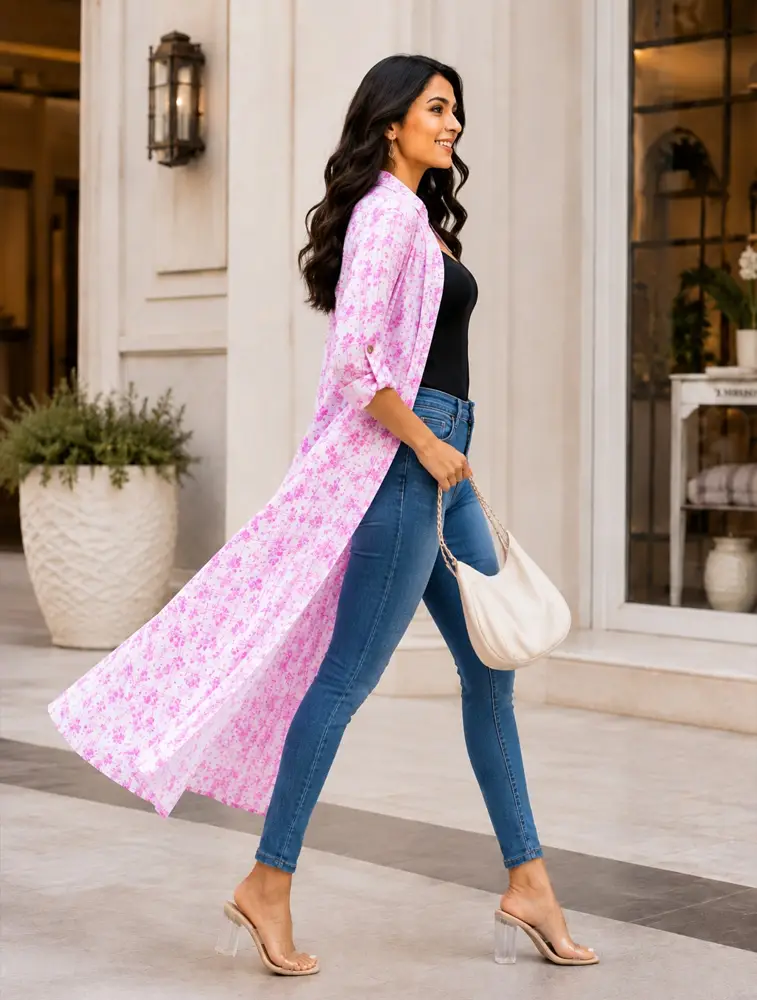
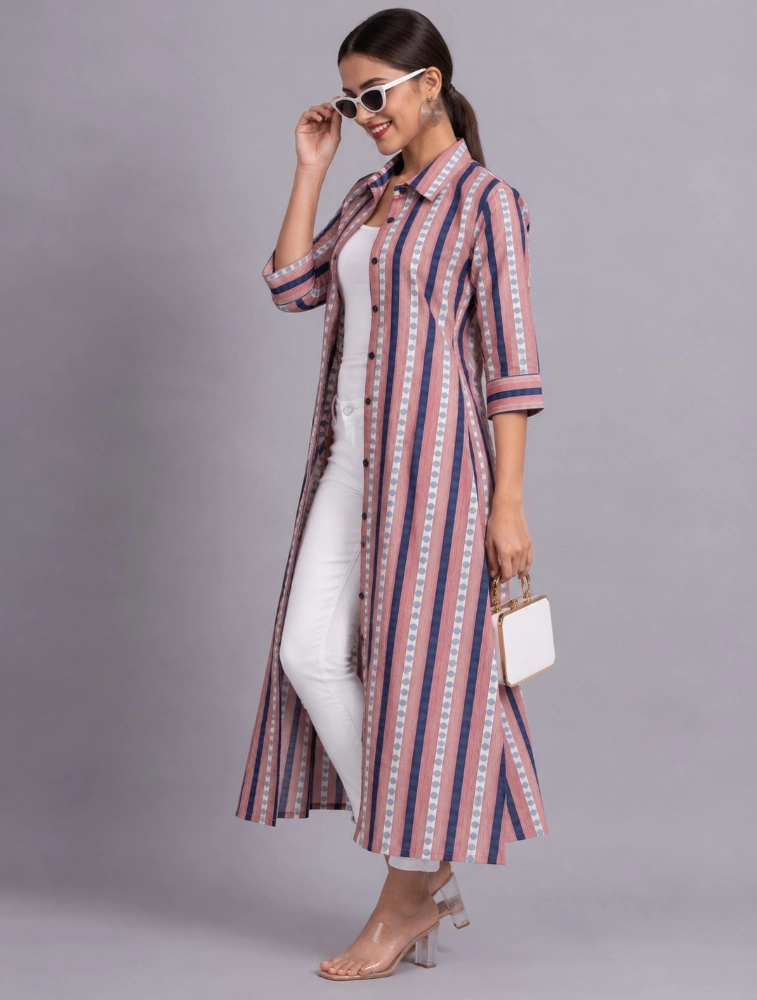
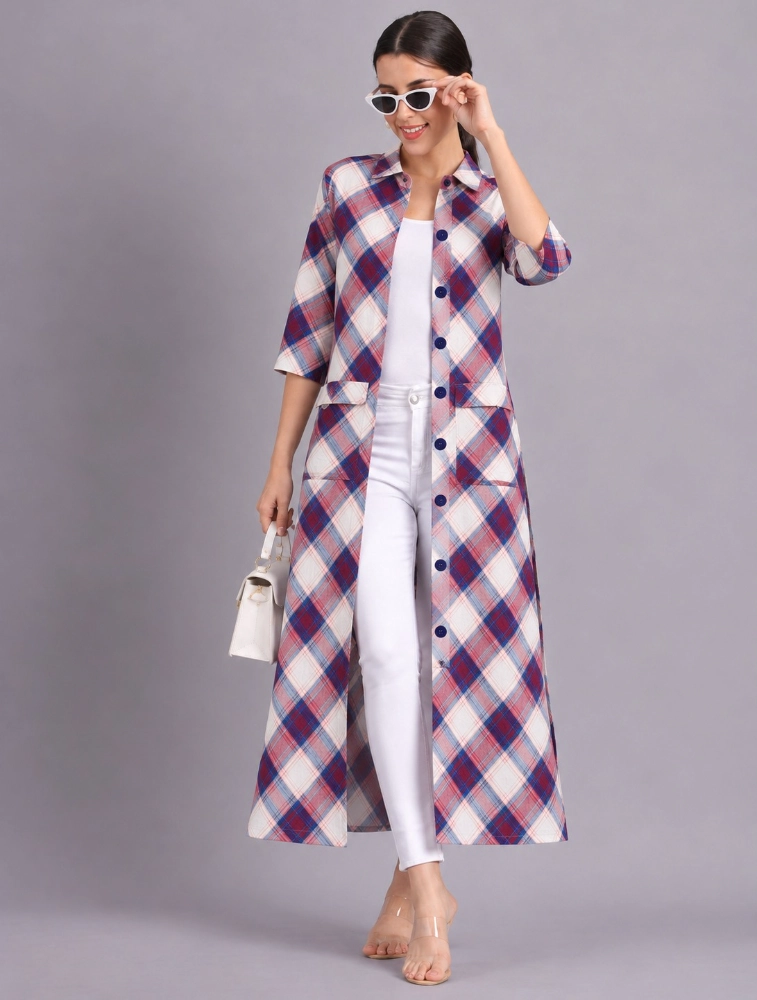
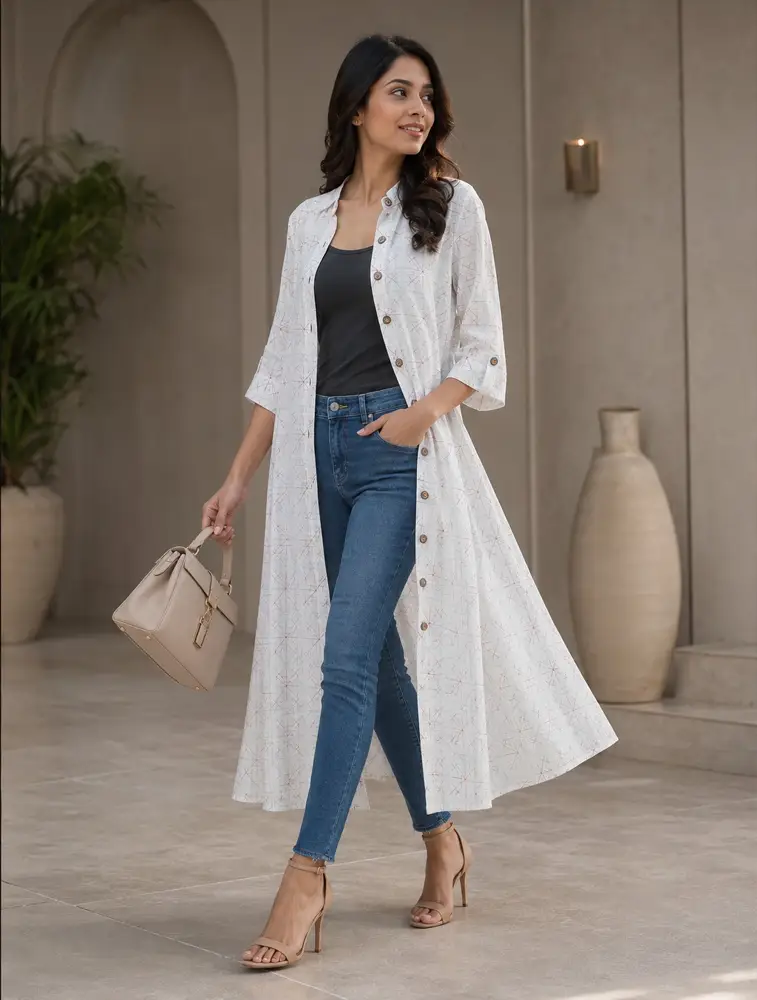
Bulk western shrug for every use case
Brand-ready western shrug for corporate, retail, uniforms and large custom programmes — sourced across partner factories with published prices.
Corporate & events
Brand-ready western shrug for offsites, launches and conferences.
Get quote →
Uniforms & programmes
Consistent supply for schools, factories and frontline teams.
Corporate uniforms →
Own brand / resale
Unbranded or private-label stock for retail brands.
Launch your store →
Large custom runs
Contract manufacturing for high-volume programmes.
Contract manufacturing →Bulk western shrug — frequently asked questions
Why does the web address of this shrug catalogue read /dresees?
Because the category slug is misspelled, and it is the parent of every product address on the page. The title, the H1 and the breadcrumb all read Western Shrug. Nothing about the garments is affected, but search engines, answer engines and your own procurement links all inherit the typo.
What the address actually is
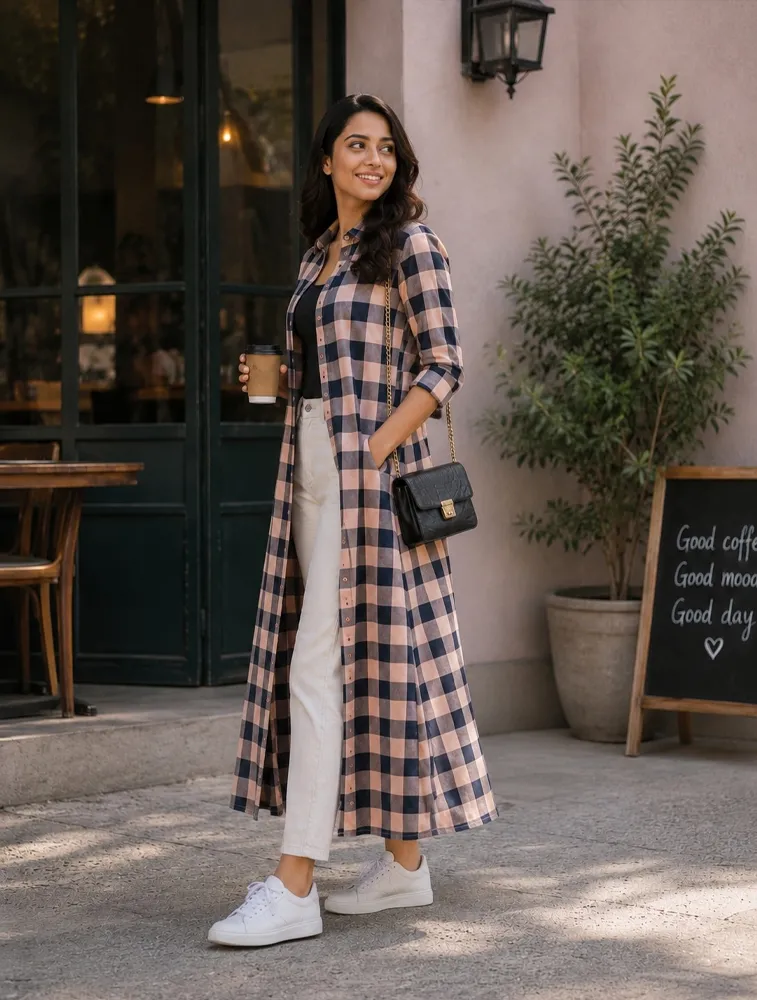
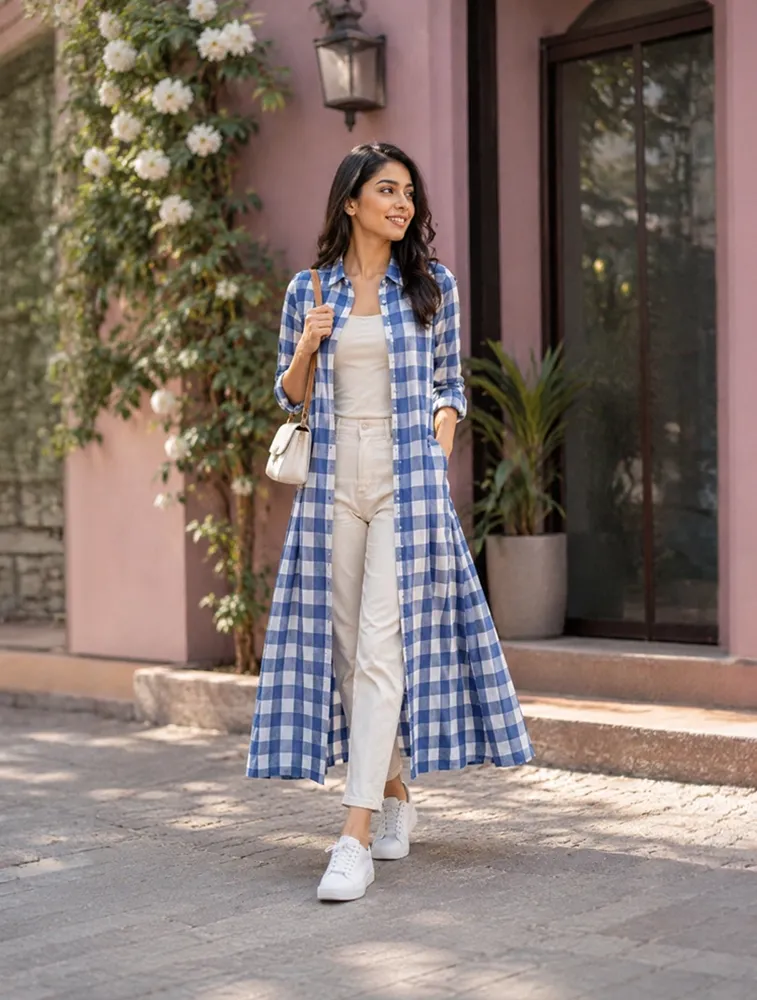
The catalogue lives at factori.com/dresees. Each of the four articles hangs beneath it, so the sky blue checked style, the peach checked style, the white printed style and the pink printed style all carry /dresees in front of their own clean, readable, SKU-bearing slug. The leaf part of every address is well formed. It is the folder above them that is wrong, and because it sits above them it appears four more times than it would if it were a one-off page.
Why a slug is not cosmetic
Three things read a web address before a human does. A crawler treats the path as a strong hint about the subject of the page, which is why category slugs are normally the plain-English name of the category. A link, wherever it is placed, carries that string as visible text unless somebody rewrites it. And an internal search or a site-wide report groups by path, so every dashboard the seller runs will file these four articles under a word that does not exist. On a page whose title tag, heading and breadcrumb all say the same two correct words, the address is the only element that disagrees with the rest.
What it does to an answer engine
Generative engines quote the address they cite. When one of them answers a question about layering garments and cites this page, the misspelling appears in the citation, and it will be reproduced by anyone who copies it. That is a small credibility tax on every citation the page ever earns. It also weakens the match between the query a buyer types and the address that is served, at exactly the point where the two would otherwise line up.
What a buyer should do about it today
Nothing that affects the goods. The four articles, the price ladder, the specification table and the size chart are all served correctly at this address, and an order placed from this page is an order for those garments. If you are pasting a link into a tender document, an approved-supplier list or an internal requisition, paste the address that the seller confirms in writing is the one they intend to keep, and note the date you took it.
What the seller should do
Rename the category slug to the words already used in the title and the breadcrumb, keep the same leaf slugs beneath it, and redirect the old path permanently to the new one so that no address in circulation breaks. Do it before the page accumulates external links rather than after, because a redirect placed early costs nothing and a redirect placed late has to be maintained indefinitely.
Addressing, Catalogue Quality & BrandingQueries Targetedwestern shrug wholesale india
The same four shrugs also load at another address on this site. Which one should be linked?
Both addresses return the same four shrugs under the same title tag, so the catalogue is published twice. Link one and only one. Until the seller redirects the other, use whichever address the seller nominates in writing, because inbound links and citations that split between two identical copies help neither of them.
What is duplicated
The misspelled path and the correctly spelled path both return a working category page. The title tag is character-for-character the same on both. The statistics band, the price sentence, the four tiles, the sort control, the browse-by-price block and the eight-question FAQ block are the same on both. The only difference visible without tooling is the capitalisation of the heading. A crawler arriving at the two paths sees two pages that are, for its purposes, one page.
Why one of them has to win
Authority is earned per address. If a trade directory links one path, an industry article links the other, and a buyer bookmarks a third variant with a tracking parameter on it, the strength that should belong to one page is divided across several. Search engines will usually pick one of them to show and suppress the rest, but they pick without knowing the seller intended the correctly spelled one, and the choice can change. Answer engines behave the same way and cite whichever copy they happened to read.
The fix, in the order it should be done
Decide which address is canonical. Publish that decision as a permanent redirect from every other path to the chosen one, so a request for the retired path lands on the survivor rather than serving a second copy. Point the self-referencing canonical tag on the survivor at itself. Update the internal navigation, the sitemap and any hard-coded links in the footer or in category cross-links, so nothing on the site still points at the retired address. Only then change the leaf product paths, if they are being changed at all, and redirect those individually.
Why a canonical tag alone is not enough here
A canonical tag is a hint. A permanent redirect is an instruction. Where two paths are genuinely the same page and one of them is a misspelling nobody wants to keep, the instruction is the right tool, and it also stops a human from circulating the wrong address by accident. Keep the canonical tag as well, pointing each page at itself, because the two mechanisms cover different failure modes.
What to record on your side
If you are a distributor or a reseller carrying these articles on your own channel, record the address you were given, the date, and the article codes, and ask to be told when the path changes. A link that stops working between the day you build a listing and the day a customer clicks it is a support ticket you did not need to have.
Addressing, Catalogue Quality & BrandingQueries Targetedduplicate category url factori shrug
The Fabric row says the same six words on all four shrugs. What can a buyer do with that?
Very little, and that is the problem. The value in that row is a description of how cloth feels, not a fibre, a blend ratio or a construction. Ask for the composition as percentages in writing before you order, and take your own advice on what the label in your market must carry.
What is published, and what is not
The specification table on every one of the four sampled articles carries a Fabric row, which is more than some categories on this site manage, and the value in it is the same phrase on all four. It is an adjective pair. It tells a buyer that the maker considers the cloth light in hand. It does not name a fibre, it does not give a percentage split, it does not say whether the cloth is knitted or woven, and it references no test report and no standard.
Why a feel word cannot be checked
A specification is only useful if a third party can independently confirm or reject it. A laboratory can run a composition test on a delivered piece and produce a number. Softness cannot be tested. If the delivered garments feel different from the sample, there is no published claim to hold the supplier to, no tolerance to have been exceeded and no basis on which to reject a consignment. That is the practical cost of an adjective in a data field.
What the fibre decides on this particular garment
A shrug is worn over something else, so its cloth is doing a different job from the cloth in the garment beneath it. Fibre drives how the sleeve drapes when the arm is bent, whether the open front hangs straight or curls at the edge, how quickly the piece dries, whether it holds a crease from folded storage, how it behaves under an iron and how it takes a print or an embroidery. A cotton-rich woven, a viscose-rich woven and a synthetic knit will each answer those questions differently, and none of them is named here.
What to put in the request
Ask for the fibre split as percentages with a stated tolerance, separately for the body cloth and for any trim, binding or contrast panel. Ask whether the cloth is knitted or woven. Ask for the composition to be confirmed on the pre-production sample and again on the first bulk lot, and name the test method you will accept. Then say plainly that the composition on the delivered goods must match the tested composition, and that a difference beyond the stated tolerance is a rejection.
The disclaimer that belongs with this
Labelling duties differ by destination and by channel, and what has to appear on a garment sold into an institutional programme is not always what has to appear on one sold through a shop. None of this is legal advice. It is the ordinary content of a garment specification, and your own adviser should confirm what your route to market requires before you print anything.
Classification, Packaging Law & ClaimsQueries Targetedwestern shrug fabric composition bulk order
Where does an open-front longline shrug sit in the customs tariff?
It depends on construction, and nothing published states it. A knitted or crocheted cardigan-type garment sits in heading 6110; a woven one is normally taken to heading 6211 as an other garment. Get the construction in writing, confirm the eight-digit item with your broker and take your own customs advice.
The knitted route
Heading 6110 of the Customs Tariff covers jerseys, pullovers, cardigans, waistcoats and similar articles, knitted or crocheted. An open-front layering garment with sleeves is a cardigan-type article in the ordinary sense of that phrase. The items beneath the heading split by fibre and not by style: 6110 11 for wool, with separate lines for jerseys and for sweaters and cardigans, 6110 12 for cashmere goats, 6110 19 for other animal hair, 6110 20 for cotton, 6110 30 for man-made fibres split between 6110 30 10 synthetic and 6110 30 20 artificial, and 6110 90 for other textile materials. Every one of those turns on the fibre this page does not publish.
The woven route
If the cloth is woven rather than knitted, the cardigan heading is not available. Heading 6211 covers track suits, ski suits and swimwear together with other garments, and the women's lines under it also split by fibre: 6211 42 for cotton with a dedicated line for kurta and salwar sets and an other line beneath it, 6211 43 for man-made fibres, and 6211 49 for other textile materials with a wool line inside it. A longer, heavier layering piece cut like outerwear may instead be considered against heading 6202, which covers women's overcoats, capes, cloaks, anoraks, wind-cheaters and similar articles other than those of heading 6204; the knitted equivalent is heading 6102.
Why the label on the page cannot settle it
The Product Type row reads as a length plus a garment word, and the Length row repeats it. Neither says knitted or woven, and neither names a fibre. So the page identifies the style and leaves both of the facts that pick a tariff item unstated. A shipping document cannot be completed from what is displayed here, and a customs broker asked to guess will price the guess into the quotation or ask you anyway.
Why the choice is worth money
Different headings can attract different rates, different preferential treatment under a trade agreement and different documentary requirements at the border. A description that is contradicted by the goods is a far worse outcome than an unusual but accurate one, because it invites reclassification, delay and penalty. On a repeat programme the difference compounds across every shipment.
What to ask for
Require the seller to state, in writing, whether the cloth is knitted or woven, the fibre split as percentages, and the eight-digit item they intend to declare. Put both on the specification sheet and on the pre- production sample approval. None of this is legal advice and classification is finally a matter for the customs authority on the actual goods; your own broker should confirm the line for your destination before the first shipment moves.
Classification, Packaging Law & ClaimsQueries Targetedshrug hs code 6110 6211 india
The specification table publishes Open Front and Full Sleeves. What do those two rows actually commit a factory to?
More than you might expect, and they are worth keeping. Open Front rules out buttons, zips and hooks, so there is no closure to specify. Full Sleeves rules out cap and three- quarter styles. Neither row states sleeve length, cuff finish or the drop from the shoulder, so all three still belong in the order.
Why these two rows are a genuine improvement
It is worth saying clearly that these are real values. Several neighbouring categories on this site publish a fill-in placeholder in the sleeve and neckline rows, which is worse than an empty row because a filter and an answer engine both read it as data. Here the specification table gives a closure type and a sleeve type that describe the garment. Four articles, two useful facts each, no placeholders. Keep them.
What Open Front actually removes from the conversation
A garment with no closure has no button spacing to argue about, no zip brand or gauge to approve, no hook and bar to fail, and no placket to fuse and topstitch. It also has no closure to break in an institutional laundry, which is a real durability advantage on a garment that will be washed centrally. What it introduces instead is an edge. On an open-front piece the front edge is the visible line of the whole garment, so the finish on that edge, whether it is a self facing, a bound edge, a folded and stitched hem or a knitted rib, is the single detail that decides whether the piece looks made or looks cut.
What Full Sleeves does not tell you
Full sleeve is a category, not a measurement. It does not say the sleeve length in centimetres, and it does not say whether that length is measured from the shoulder point or from the centre back neck. It does not say the cuff: a plain hem, a turned band, a rib, an elastic casing and a buttoned cuff all read as full sleeve and none of them behaves the same on the arm or in the wash. It does not say the armhole shape, which decides whether the piece can be worn over a jacket or only over a shirt.
The measurements that finish the description
Ask for the sleeve length and the cuff opening at each size, the shoulder drop, the armhole depth, the front edge finish with its width, and the way the edge is stabilised so it does not stretch out of line after washing. Ask whether the two checked styles and the two printed styles share one block, because if they do the same measurements govern all four and approval is quicker.
How to use the good rows
Quote them back. When you write the order, restate the closure type and the sleeve type from the specification table as contractual, and then add the numbers underneath them. A published attribute that a buyer repeats into the contract becomes enforceable; one that is only read on a page does not.
What The Page PublishesQueries Targetedshrug specification sleeve closure details
What has to be declared on the bag a shrug ships in?
Rule 6 of the Legal Metrology (Packaged Commodities) Rules, 2011 lists what a pre-packed commodity has to declare, and the packaging paragraph on all four sampled articles describes a bag without showing any of it. Specify the artwork in the purchase order and take your own legal advice on your channel.
What the pages say about packing
The packaging paragraph is close to identical on all four sampled articles. Each says the garment is carefully folded and packed in a premium-quality polybag to protect it from dust, moisture and damage during storage and transit, and each closes by saying the secure packaging preserves the quality and finish until the product reaches you. That is a statement about protection. It is not a statement about labelling, and no sampled page claims that a tag, a care label or a printed declaration travels inside the bag.
The list in Rule 6
Rule 6(1) requires a declaration of the name and address of the manufacturer, or where the manufacturer is not the packer, of both, and for an imported package the name and address of the importer. It requires the common or generic name of the commodity, and where a package holds more than one product, the name and number or quantity of each. It requires the net quantity in the standard unit of weight or measure, or where the commodity is sold by number, the number. It requires the month and year of manufacture, pre-packing or import. It requires the retail sale price of the package. Where the sizes of the commodity are relevant, it requires the dimensions. And Rule 6(2) requires contact details for consumer complaints, including a name, an address, a telephone number and an email address where one exists.
How the declaration has to look
Rule 9 requires declarations to be legible and prominent, with the numerals for retail price and net quantity in a colour that contrasts conspicuously with the background, and requires the declaration to be in Hindi in Devanagari script or in English. Rule 10 requires the name and complete address of the manufacturer, or of the manufacturer and packer where they differ, to be given conspicuously, with complete address meaning an address at which the consumer can actually identify and reach the party. There are minimum letter and numeral heights specified in the rules; a garment bag with a small printed panel is exactly where those bite.
Where the exposure sits for a distributor
This is the part that matters to wholesalers and retailers. Inspection under these rules is not confined to the factory gate; the premises of the wholesale dealer and the retail dealer are also where packages are examined. If the bag arrives bare, the party who put it on a shelf is the party holding it. That is why the declaration belongs in the purchase order rather than in a conversation.
What to specify
Give the seller the finished artwork for the pack: the name and full address of the manufacturer, the generic name of the commodity, the net quantity as a number of pieces, the month and year of packing, the country of origin, the consumer-care line, and the retail sale price where your channel requires one. Approve it on the pre-production sample. None of this is legal advice; the requirements differ by route to market and by destination, and your own adviser should confirm what applies to yours before you print.
Classification, Packaging Law & ClaimsQueries Targetedlegal metrology declaration garment polybag india
What does the first hundred pieces actually cost per shrug?
Nine hundred and sixty-five rupees a piece, not the figure in the heading. Every sampled product page prints a minimum of one hundred units, and the first band of the published ladder runs from one hundred to nine hundred and ninety-nine pieces at that price. The headline figure is the ten-thousand-piece rung.
The ladder as published
Each of the four sampled product pages shows the same three rungs and the same break points. One hundred to nine hundred and ninety-nine pieces is Rs 965 each. One thousand to nine thousand nine hundred and ninety-nine pieces is Rs 946 each. Above ten thousand pieces is Rs 917 each. The base line on each page reads Rs 917 onwards, the category heading uses the same number, and the minimum order quantity printed on every one of those pages is one hundred units. So the advertised figure sits two rungs below the smallest order the page will accept, and the gap between what is advertised and what a hundred-piece buyer pays is a little over five per cent.
Why this is not a trick, and why it still matters
Publishing the full ladder with its break points is more disclosure than most suppliers in this trade offer, and it is what makes the arithmetic possible at all. The problem is placement, not honesty. A buyer builds a shortlist from headline numbers before opening anything, and a competitor publishing the price at the minimum order quantity will look dearer on the shortlist and cheaper at the quantity that is actually going to be ordered. On a four-article catalogue where every article carries the identical ladder, that ranking error costs the seller the enquiry rather than the order.
The volume you would need to reach the headline
Ten thousand pieces of a single style, or of the range if the seller will aggregate across the four, is a substantial programme for a layering garment. Ask explicitly whether the ladder is applied per article or across the order. A ten-thousand-piece commitment spread over four colours will be quoted very differently depending on the answer, and it is the single question that decides whether the bottom rung is real for you.
What else sits on top of the piece price
The published number is a piece price. A landed cost adds goods and services tax, freight to your location, any branding and packing charges, sampling costs before the run, and an allowance for the size ratio you will inevitably over-order on. If the goods are moving across a border, add duty at the rate for the correct tariff item, plus clearance and documentation. On a light layering garment the freight line is more sensitive to carton efficiency than to weight, and neither pieces per carton nor carton dimensions appears on any of these pages.
Where to put the answer
Whatever tier you land on, state the unit price, the tier basis, the quantity it is conditional on, and what happens if the final quantity falls short. A tier discovered at invoice time is the most avoidable dispute in bulk apparel, and one sentence in the order prevents it.
What The Page PublishesQueries Targetedwestern shrug minimum order quantity price india
How heavy is the cloth on these shrugs, and why does it decide everything?
Not published, on any of the four. There is no weight in grams per square metre and no garment weight anywhere in the category. On a layering piece the cloth weight is close to the whole specification, because it decides which season the garment belongs to and whether the open front hangs straight or clings.
What a weight figure buys you
Cloth weight is the closest thing apparel has to a single quality index. It correlates with opacity, with drape, with how a seam behaves under load, with how many wash cycles the piece will take before it looks tired, and with cost, because cloth is sold by weight. A buyer who knows the weight can predict most of the rest. A buyer looking at four photographs and a phrase in the Fabric row about the cloth being light in the hand can predict none of it.
Why a shrug is the worst garment to omit it from
Everything else in a wardrobe is worn on its own; a shrug is worn over something. That means its weight is not a comfort preference, it is a function. A very light cloth over a shirt is a summer office layer and does almost nothing in a cold room. A middleweight cloth is a three-season layer that will actually be worn. Go heavier again and the piece stops being a shrug and starts competing with a jacket, at which point the open front becomes a drawback rather than the point. The same four photographs are consistent with all three garments.
What weight does to the open front
On a garment with no closure, the front edges are unsupported for their whole length, and on a longline piece that is a long unsupported line. A cloth that is too light will curl at the edge and lift when the wearer moves. A cloth with poor recovery will grow along that edge in wear and never come back. This is why the edge finish and the cloth weight have to be specified together rather than separately, and why a sample approved in one weight tells you nothing about a bulk lot cut in another.
The commercial consequence of leaving it out
Weight is also the number a landed-cost model needs. A programme moving by air prices on chargeable weight; a programme moving by sea prices on volume, and a folded layering garment is bulky for its mass. Carton dimensions and pieces per carton are absent too, so neither model can be constructed from this page. A buyer comparing this catalogue against a quotation that does publish a weight is not comparing like with like, and the failure surfaces after delivery rather than before it.
What to specify
Ask for the cloth weight in grams per square metre with a tolerance, the finished garment weight in a stated size, an opacity requirement if the piece will be worn over a fitted top, and pieces per carton with carton dimensions. Approve all of them on the pre-production sample, and make the first bulk lot subject to the same figures. Every one of these is a fact the factory already knows.
What The Page PublishesQueries Targetedshrug fabric gsm weight bulk buying
Two of these shrugs are checked and two are printed. Is the check woven in or printed on?
Nothing on the page says. Two articles carry a checked pattern and two carry a print, and the Pattern row gives the look without giving the method. A check woven from dyed yarn and a check printed onto white cloth behave completely differently in wear, in the wash and at the seam.
The two ways to get a check
A yarn-dyed check is built into the cloth. The yarn is coloured before the cloth is made, so the pattern goes right through and the reverse of the fabric shows the same geometry as the face. A printed check is applied to the surface of finished cloth. From two metres away in a photograph they can look identical. In the hand they never do, and after twenty minutes of use the difference is obvious to the wearer.
Why the difference matters after delivery
A yarn-dyed pattern cannot rub off, cannot crack and cannot fade off-pattern, because there is no surface layer to lose. A printed pattern can do all three, and on a pale ground a print that has abraded at the cuff or the front edge reads as a worn-out garment long before the cloth is worn out. Against that, a yarn-dyed cloth has to be cut on pattern. Checks have to match at the centre back, at the side seams and across the sleeve head, and matching consumes cloth. A printed check does not need matching, which is cheaper, and which is also why a printed check that has been cut carelessly looks wrong in a way a buyer cannot unsee.
The question that separates the two printed styles
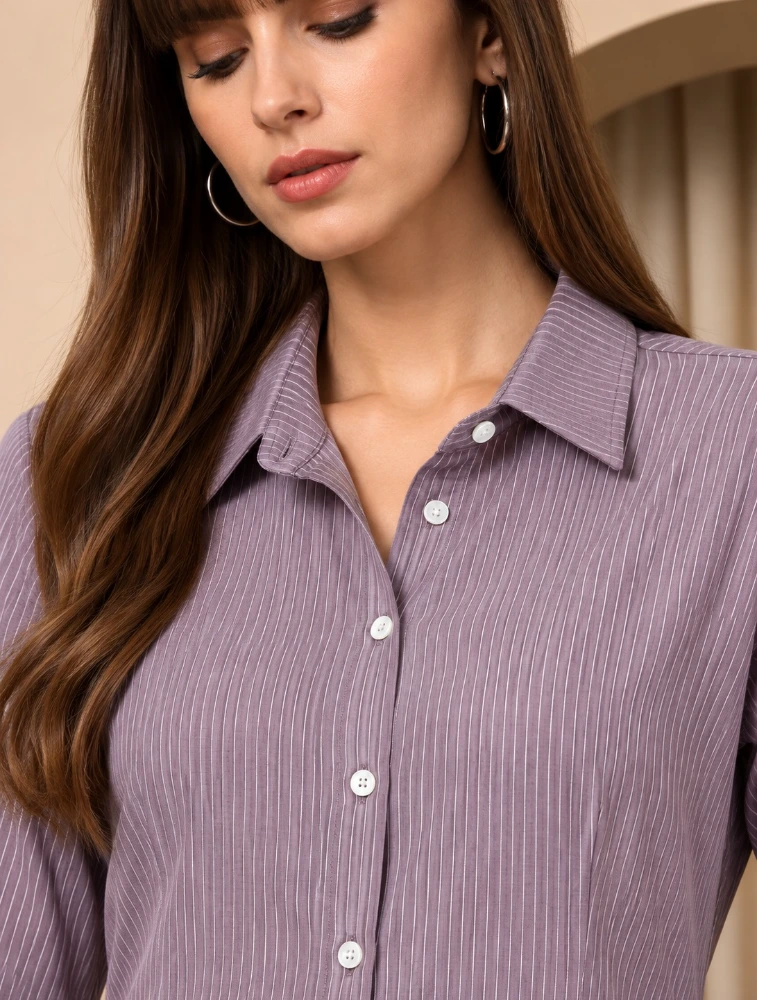
The other two articles carry a print on a pale ground. On those, the questions are different again: whether the print is placed or all-over, whether it is pigment or reactive, how it behaves under an iron, and whether the reverse of the cloth shows through when the garment is worn over a dark top. None of that is published either, and on a white ground the show-through question is not academic.
What this has to do with repeat orders
Pattern method drives repeatability. A yarn-dyed check repeats if the yarn dye lot is controlled and the loom setting is recorded. A print repeats if the screen or file, the paste, the substrate and the cure are controlled. They are different failure modes with different remedies, and a buyer who does not know which one they have bought cannot write a sensible acceptance clause for the second delivery.
What to ask for
Require the seller to state, for each of the four articles, whether the pattern is yarn-dyed or printed, and if printed, the print type. For a yarn-dyed cloth, require pattern matching at named seams and state the tolerance in millimetres. For a printed cloth, require a crocking result against a named method and a statement of how the print is cured. Ask for a physical swatch of each of the four rather than a photograph, because this is a question a screen cannot answer.
What The Page PublishesQueries Targetedyarn dyed check versus printed check shrug
What temperature do these shrugs wash at?
There are none. The Care Guidelines section on all four sampled articles holds product- description prose instead, and every one of them says the garment is easy to maintain. No temperature, no bleach rule, no ironing rule, no drying rule and no separate-wash note appears anywhere in the category.
What sits in the block instead
On the two checked articles the Care Guidelines section describes a light and comfortable cloth, an effortless year-round layer, a modern and versatile look and a garment that is easy to maintain and comfortable to wear. On the two printed articles it describes a breathable and comfortable cloth, a fashionable printed pattern, a flattering longline shape and a garment that is easy to style and maintain. Both are sales copy under a care heading. Neither contains an instruction a laundry could follow.
Why easy to maintain is the wrong sentence to publish
Saying a garment is easy to maintain is a performance claim. It is the kind of sentence a buyer relies on and a supplier cannot defend, because with no fibre published to support it, no cloth weight, no colourfastness grade and no test method anywhere in the category, there is nothing behind the words. If a printed front edge abrades in a first wash, or a checked cloth shrinks out of pattern, the phrase is what the complaint will be pinned to. Removing it costs nothing. Substantiating it costs a test report.
What a care instruction has to contain to be worth anything
Five elements, in order. A washing method with a maximum temperature and whether the piece may be machine washed. A bleaching rule, permitted or not, and with what. A drying rule, including whether the garment may be tumbled and at what heat. An ironing rule, with a maximum plate temperature and whether steam is allowed. And a professional-cleaning rule, permitted or not and by which process. For a printed or an embroidered layering piece two more lines belong there as well: wash dark and printed shades separately for the first several washes, and iron on the reverse to protect the print or the stitching.
The gap between the page and the garment in the bag
It is very likely that the delivered garments carry a sewn-in care label, because almost all commercially produced apparel does. The point is that a buyer cannot see it before the goods arrive, cannot write it into a purchase order they have not been shown, and cannot answer their own customer's question about it. Publishing the label content on the page is the cheapest single improvement available to this category, and unlike a fibre percentage or a weight figure it requires no testing at all, only transcription.
What to ask for
Request a photograph of the actual sewn-in care label from the pre-production sample, ask for the wash- test report behind whichever symbols it carries, and put the care instruction on your specification sheet as text so that a change in the factory's label is a deviation rather than a surprise.
What The Page PublishesQueries Targetedshrug wash care instructions wholesale
These shrugs come in pale pink, peach and white. What is published about how the colour behaves?
Nothing. Not one of the four shrug pages carries a colourfastness grade, a shrinkage figure, a wash test method or even a note that the delivered shade can differ from the photograph. Three of the four grounds are pale, which is exactly where dye behaviour shows first, so the silence sits on the riskiest colours in the set.
What the four grounds actually are
The catalogue publishes a sky blue checked shrug, a peach checked shrug, a white printed shrug and a pink printed shrug. Every one of those is a light ground. A light ground is unforgiving in two directions at once. It shows any dye that migrates onto it from a darker garment packed beside it, and on the printed pair it shows any dye that migrates out of the print into the surrounding cloth. A navy shrug can hide a moderate rub-fastness failure for a year. A white one cannot hide it for a single wash.
The three numbers that would settle it
Colour behaviour is normally reported as three separate grades on a scale, and they are not interchangeable. Fastness to washing says whether the colour survives laundering and whether it stains the fabric next to it. Fastness to rubbing, tested dry and again wet, says whether the colour transfers onto a car seat, a handbag strap or a paler garment underneath. Fastness to light says whether the shade holds on a shop rail near a window or on a body in daylight. A shrug is worn open over something else all day, so rubbing fastness matters more here than it would on a closed garment, and none of the three is published.
Shrinkage is the second silence
Dimensional change after washing is a separate measurement from colour and it is also absent. On a longline shrug this is not cosmetic. The whole proposition of the style is that it falls past the hip, so a garment that loses a few per cent of its length in the first wash stops being the thing the customer bought. There is no residual shrinkage figure, no wash cycle stated for one, and no tolerance.
What is missing that even the sister category has
Some catalogues at least publish a plain sentence warning that the delivered colour may vary slightly from the on-screen image. These four pages do not carry even that. So a buyer receiving a peach that reads more apricot than the photograph has nothing on the page to have set expectations, and nothing to argue with either.
What to put in the order instead
Ask for the three fastness grades and the residual shrinkage figure to be written into the purchase order as minimums, each one naming the test method the mill used and the laboratory that ran it, with a report against the same dye lot you are buying. Ask separately for a bleeding test on the printed pair, because a print on a white ground fails visibly in a way a print on a dark ground does not. Then ask for a sealed reference swatch of each of the four shades so the delivered goods can be compared against something physical rather than against a photograph. None of this is legal or technical advice and it does not replace your own testing programme, but a garment sold on the strength of a pale colour should arrive with that colour documented.
What The Page PublishesQueries Targetedshrug colourfastness, dye bleeding wholesale, pale colour bulk garment risk
Every shrug is offered in S to XXL. What does longline actually measure at each of those letters?
The pages do not say. All four shrugs publish the same run of S, M, L, XL and XXL, which is a real consistency worth having, and all four publish a size chart as a picture with no readable measurement behind any letter. On a garment whose entire selling point is its length, the length is the number that is missing.
The part that is genuinely good
Size runs on this platform are not always consistent across a category, and here they are. The same five letters appear on the sky blue checked shrug, the peach checked shrug, the white printed shrug and the pink printed shrug. A buyer building a size ratio can build one ratio and apply it across all four styles without reconciling different grids. That is a real operational saving and it deserves to be said before the complaint.
Why a letter is not a size
S, M, L, XL and XXL are not units. They are labels a factory applies to a set of measurements it chose, and two factories in the same city will disagree about what an L is by several centimetres. Without the measurement table behind them, the letters transfer no information at all between a seller and a buyer. They only look like information because everyone recognises them.
The dimension this particular garment lives or dies on
The Length row on every one of these four pages reads Longline, which is a shape description rather than a figure. Longline means the hem falls somewhere below the hip, and that somewhere is the whole product. A centre-back length that sits at mid thigh and one that sits just past the seat are two different garments sold under one word. For a shrug worn open, the front edge length matters as well, because the two open panels are the visual line of the piece.
The rest of the grid a shrug needs
Beyond centre back length, an open-front garment with full sleeves needs across shoulder, chest measured flat with the panels laid edge to edge, sleeve length taken from the shoulder point, cuff opening and armhole depth. Armhole depth in particular decides whether the shrug can be worn over a fitted top or only over a vest, and a buyer who does not specify it discovers the answer on the first customer return.
How to make the letters mean something
Ask for the size chart as text rather than as an image, with every one of those points listed in centimetres for each of the five letters, and ask for the grade rule between letters so you can see how the pattern steps up. Ask whether the figures are body measurements or finished garment measurements, because the two differ by the ease the pattern maker allowed and confusing them is the single most common cause of a bulk sizing dispute. Then ask for a stated tolerance in centimetres, and have the tolerance written into the order so an out-of-grid delivery has a defined remedy. Fix the reference by approving one sealed size set before production starts.
ProcurementQueries Targetedshrug size chart measurements, longline length centimetres, bulk garment sizing
A shrug has no chest panel and no placket. Where can a brand mark actually go?
On a shrug, branding lives at the neck, the side seam, the hangtag and the bag. There is no closed chest to print on, no placket to embroider along and no pocket to badge, because the front is two open panels that hang apart. That removes the placements most buyers ask for first and makes those four carry the whole identity.
Why the usual placements are unavailable
The Closure row on all four pages reads Open Front. A shrug is worn over something else and the garment underneath is what the viewer sees in the centre of the chest. Anything printed near the front edge is folded, partly hidden and read at an angle, so a chest logo on this silhouette is money spent on a mark nobody sees straight on. This is a property of the style, not a limitation of any particular factory.
The four placements that do work
A woven label at the inside back neck is the primary one, because it is the only spot on an open garment that is consistently visible when the piece is on a hanger and consistently present when it is worn. A woven or printed tab at the lower side seam is the second, and on a longline shrug it sits at roughly hip height where it is genuinely seen. A hangtag on a swing string carries the retail-facing identity and takes far more information than a label can. The polybag itself is the fourth, and it is the one buyers forget, even though on a distributed order the bag is what the receiving warehouse sees first.
What the pattern does to your artwork
Two of these four shrugs carry a check and two carry a print. A check is a repeating grid, so any mark placed on it competes with a set of straight lines and will look misaligned unless the placement is registered against the check. A print with an irregular motif hides small marks entirely. On both, a flat single-colour mark on a solid woven tab reads better than a mark applied directly onto the patterned cloth, which is another argument for the label and tab route rather than a direct application.
What the pages already tell you about the bag
The packaging paragraph on these pages describes a polybag and nothing else. There is no statement that a hangtag or a printed care instruction ships inside it. If your programme depends on either arriving attached, that has to be bought explicitly, because at present the page does not promise it.
What to put in the branding brief
Specify the label type and its exact position measured down from the neck seam, the tab position measured up from the hem, the artwork in vector form with named colour references rather than a screen image, and the thread or weave colours. State whether the hangtag is attached at the neck or the side seam and who supplies the string. State what is printed on the polybag and whether it carries the statutory declarations. Then approve a physical sample of every mark on the actual cloth before production starts, because a colour that reads well on a white screen can disappear on a peach check.
Addressing, Catalogue Quality & BrandingQueries Targetedcustom branded shrug wholesale, private label shrug, garment branding placement
What should a written order for these shrugs contain that the page does not?
Everything about the cloth, every measurement, the whole of the colour performance, the care instruction, the statutory declarations on the bag and the acceptance rules. The page settles price, quantity break, size letters, pattern, closure, sleeve type and packing format. That is about a third of what a bulk apparel order needs, and the missing two thirds belong in your document.
The cloth clauses
Name the fibre composition as a percentage split, and require that the split be verified rather than declared. Name the construction, meaning whether the cloth is knitted or woven, and if woven the weave and the yarn count. Name the weight in grams per square metre with a stated tolerance either side. On the checked pair, state whether the check is woven into the cloth or printed onto it. These four clauses turn Soft and Lightweight Fabric from an adjective into a purchasable specification.
The measurement clauses
Attach the finished garment measurement table for all five letters, with centre back length, front edge length, across shoulder, chest laid flat, sleeve length, cuff opening and armhole depth. State the tolerance in centimetres for each point and the measuring method for each, because two people measuring a chest on an open garment will disagree unless the method is fixed. Approve a sealed size set before bulk cutting.
The performance clauses
Set minimum grades for fastness to washing, to rubbing dry and wet, and to light, each against a named test method with a report from a named laboratory on your dye lot. Set a maximum residual shrinkage after a stated wash cycle. Add a bleeding clause for the printed styles on their pale grounds. Require a sealed colour swatch per shade as the reference for the shade band.
The label and packing clauses
Require a sewn care label carrying the wash symbols and the fibre content, not a paper insert. Require the country of origin. Require that the polybag carries every declaration the packaged commodity rules ask for, including the name and address of the manufacturer or packer, the common name of the commodity, the net quantity, the month and year of packing, the retail sale price and a consumer complaint contact, laid out to the legibility and letter-height requirements those rules set. Nothing here is legal advice and your own counsel should confirm which of the rules apply to your channel and how they interact with any state requirement.
The commercial clauses
State the quantity break you are buying against and what happens if the delivered quantity crosses or falls short of it. State the inspection standard, the sampling plan and the acceptance level. State the remedy for an out-of-tolerance delivery, whether that is rework, discount or rejection, and who pays the freight in each case. State the lead time, the packing ratio per carton and the carton marking. Then keep the whole document to one version and reference it by number on every purchase order, so the specification and the order can never drift apart.
ProcurementQueries Targetedgarment purchase order specification, shrug bulk order clauses, apparel sourcing checklist
The page says prices run from Rs 917 to Rs 917. What does a four-style catalogue at one price actually tell a buyer?
It tells you the platform is quoting a capability, not selling an assortment. Four styles at a single price point, priced identically at every quantity break, is what a category opened with a small reference set looks like. Read it as a starting point for a made-to-order conversation and it makes sense. Read it as a range and it disappoints.
What the sentence actually says
The category prints a sentence stating that bulk western shrug are available from Rs 917 to Rs 917 per piece. A range where both ends are the same number is not a range. It is a template designed to report a spread, fed by a catalogue that has no spread to report. Every one of the four styles carries the same headline figure and the same three quantity tiers, so the sentence is accurate and useless at the same time.
The controls that have nothing to control
The page offers a sort control and a browse-by-price section. With four items at one price, sorting by price reorders nothing and browsing by price band puts everything in one band. A buyer who arrives, sorts, filters and finds the same four tiles in the same order concludes that the catalogue is thin, and they conclude it in about four seconds. The filter panel compounds this, because it renders and then stalls before the options appear.
What is genuinely on offer underneath
The commercial reality behind a page like this is a network of partner factories and a make-to-order model, which is a much stronger proposition than four tiles. A buyer who wants a shrug in a different length, a different cloth, a different colour or with their own label is not restricted to what is displayed. But nothing on the page says so, so the buyer never asks. The catalogue is functioning as a shop window when it should be functioning as a sample of what can be built.
How to read the four styles
Treat them as evidence of what the platform is set up to make. Two checked and two printed longline shrugs, all open front, all full sleeves, all regular fit, tells you the pattern block exists and the make is established. What it does not tell you is the ceiling, and the ceiling is the useful number.
What to ask for
Ask what the same style costs in a specified fibre and a specified weight rather than in the unnamed cloth, because that is where the real price conversation is. Ask what a colour outside the four displayed does to price and lead time, and what the minimum is per colour rather than per order. Ask whether the length can be moved and what a pattern change costs. Ask for the price at your actual volume rather than at the published tiers. The published figures are a floor for a standard make, and the standard make is not what most buyers end up ordering.
Addressing, Catalogue Quality & BrandingQueries Targetedshrug wholesale range, bulk shrug catalogue depth, custom manufacturing capability
From ₹578excl. GST
View cart & checkout ›