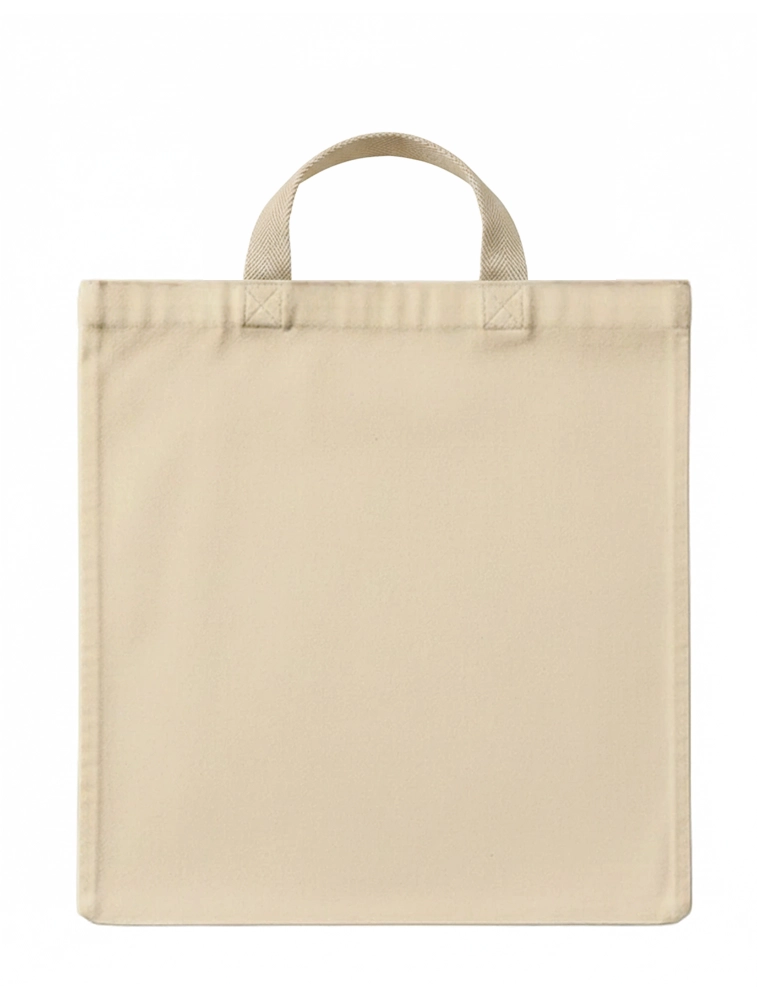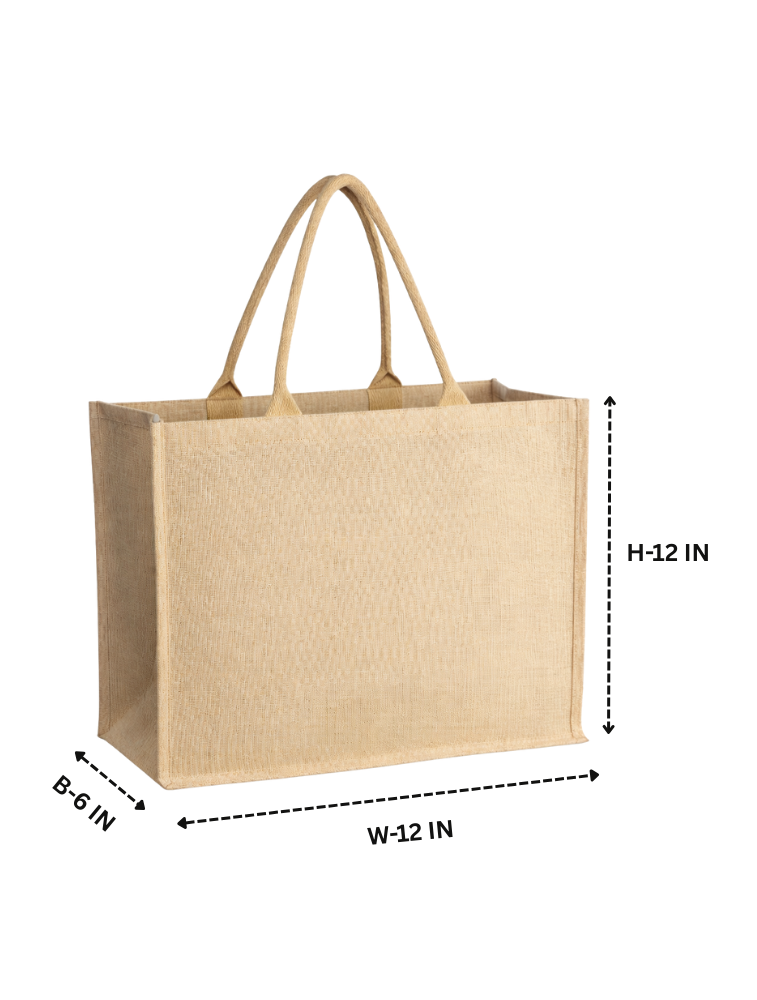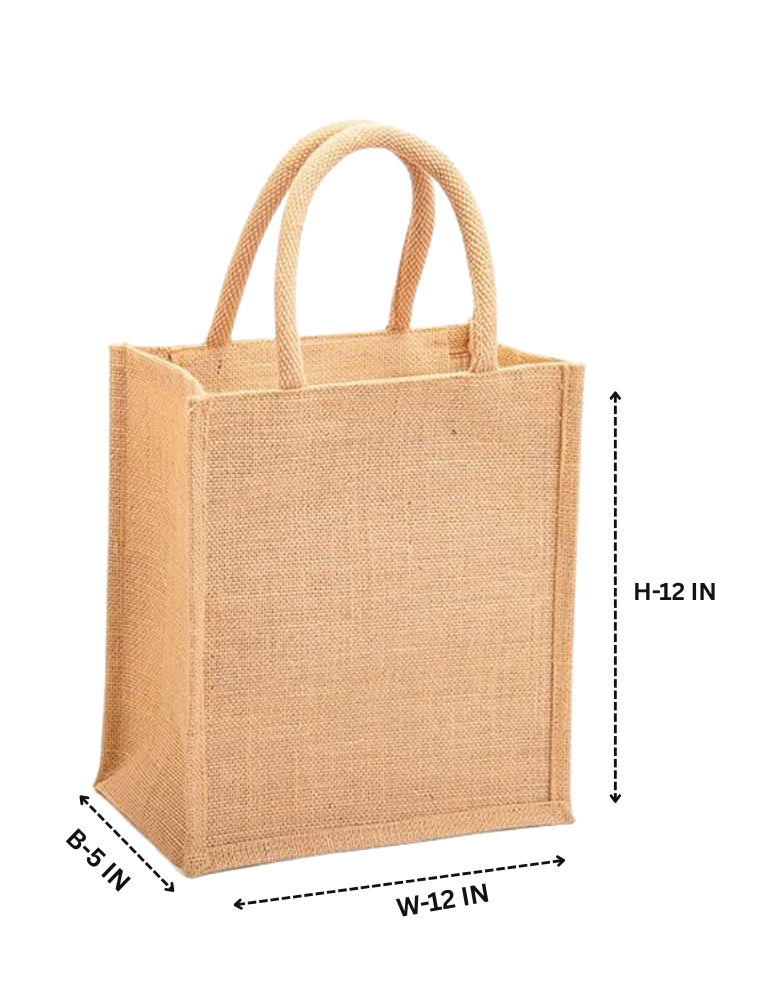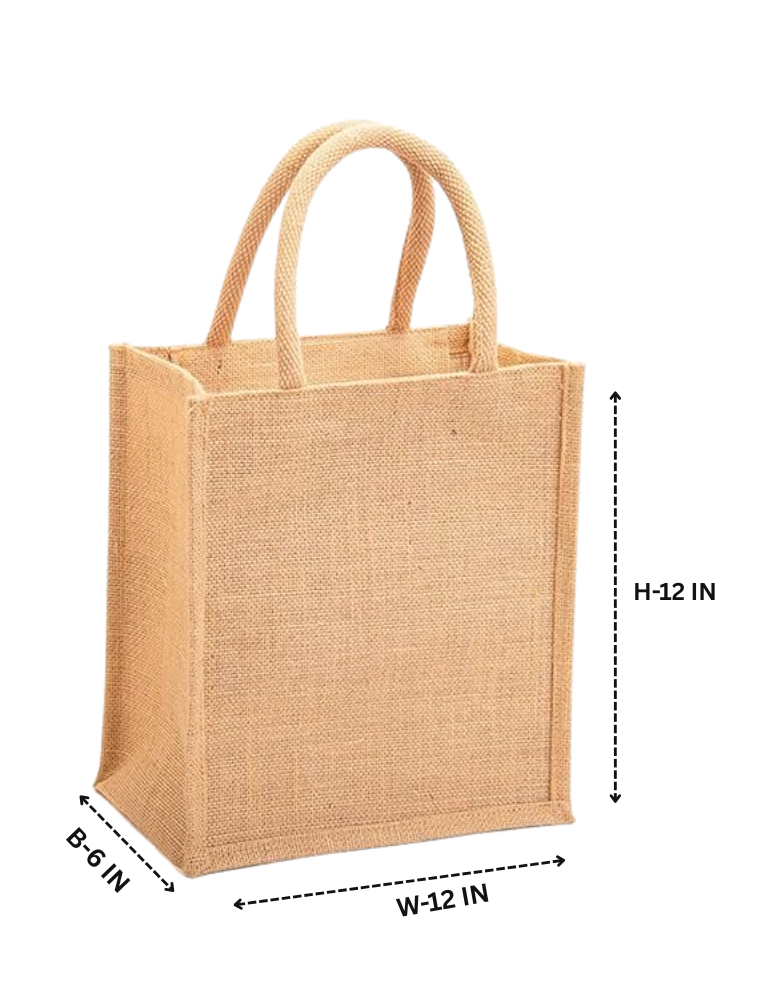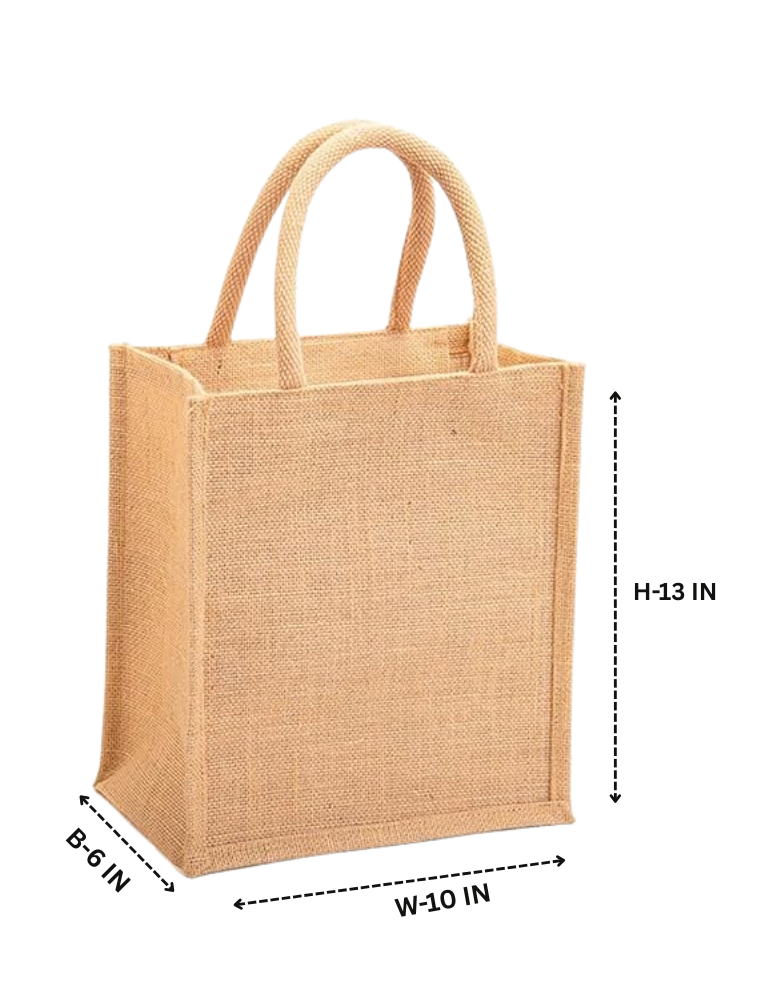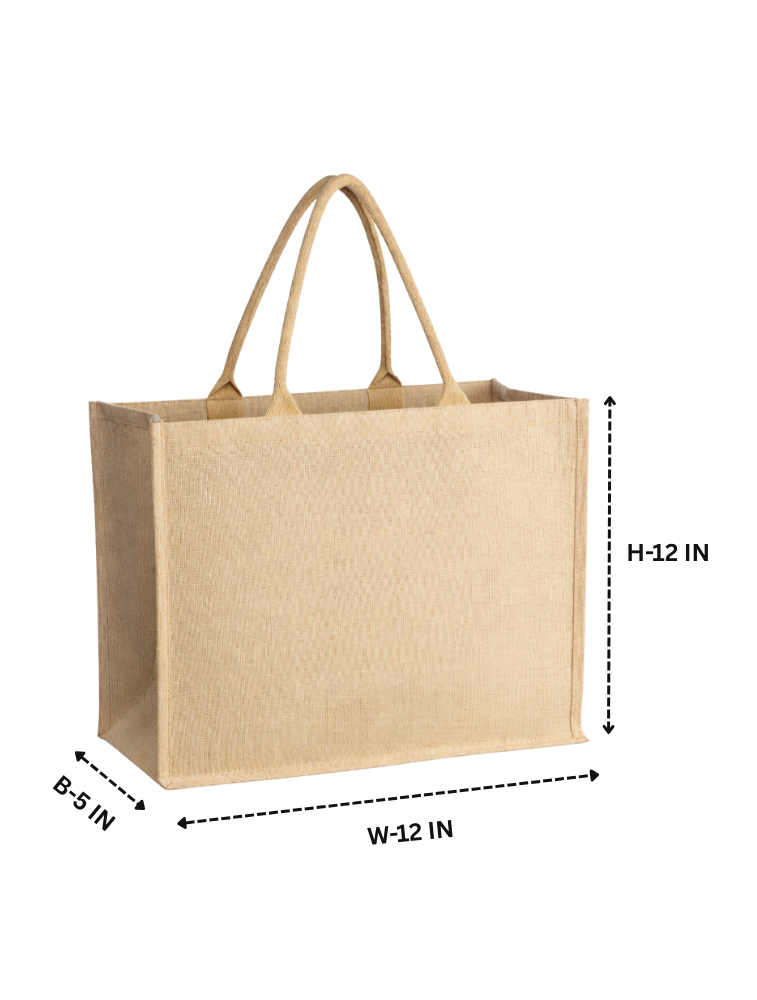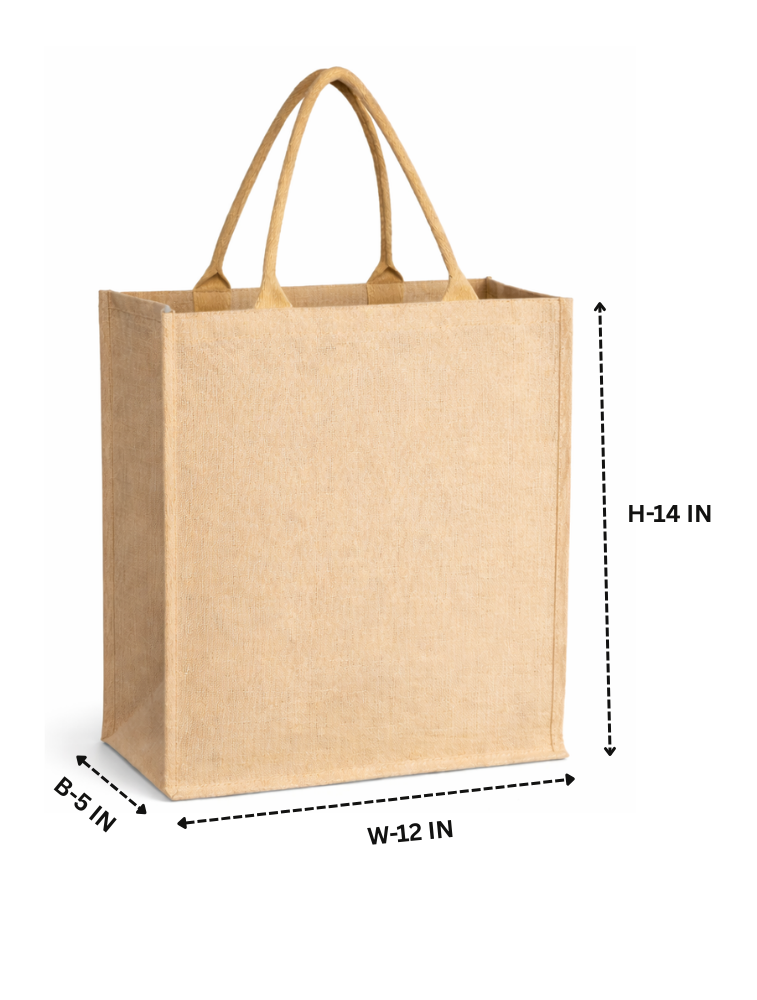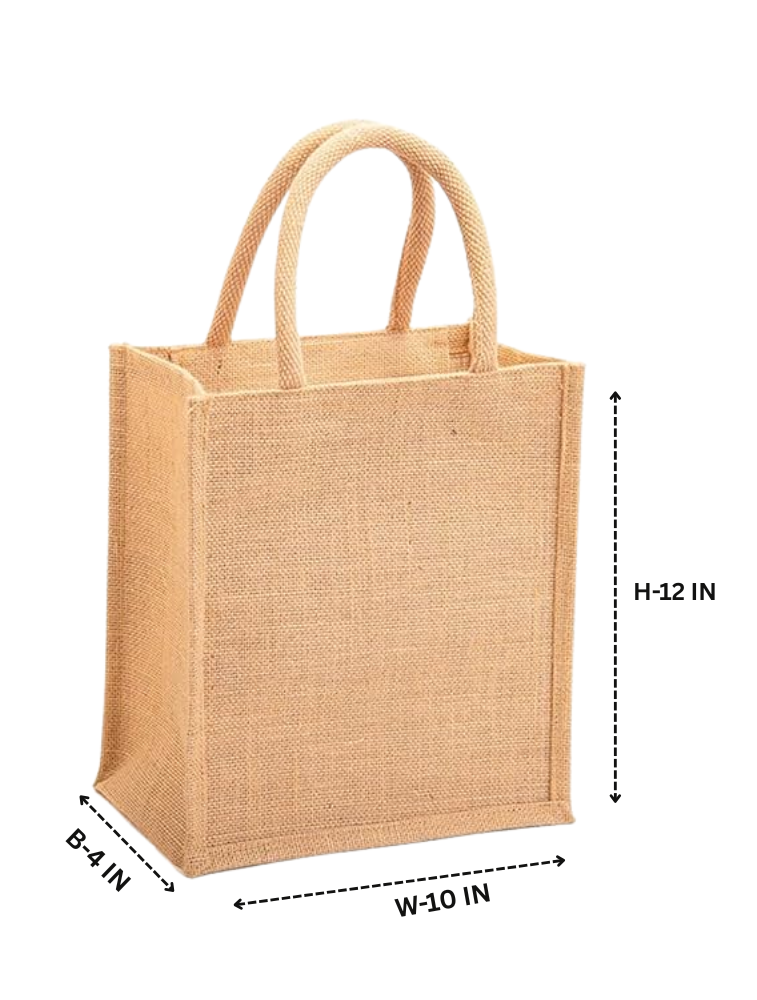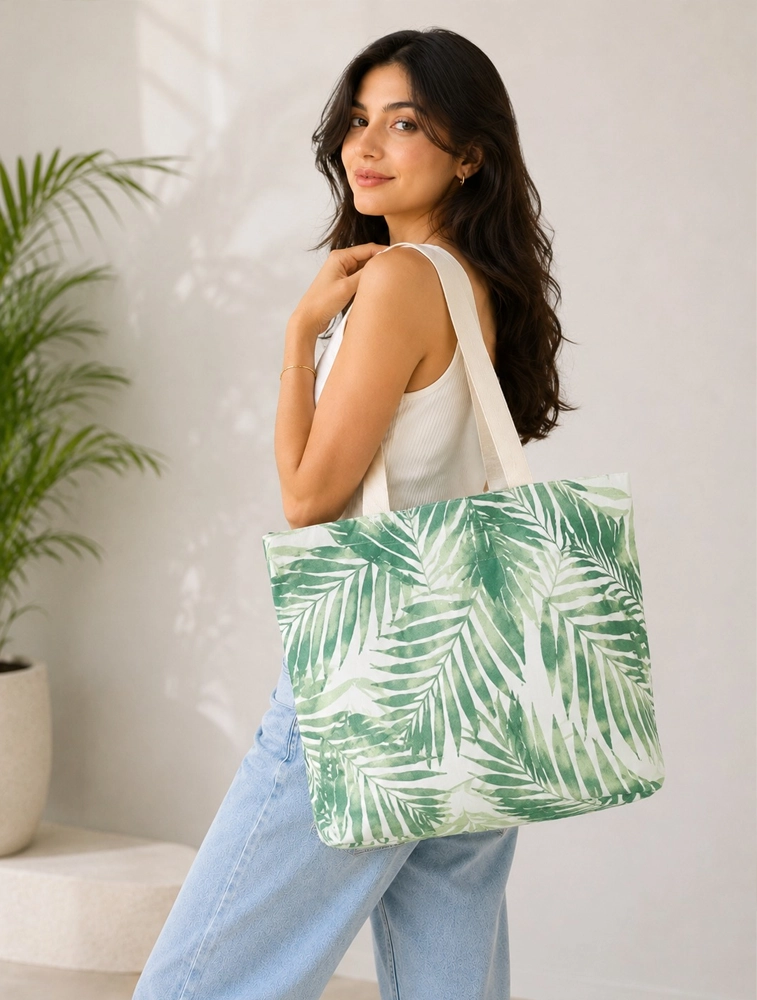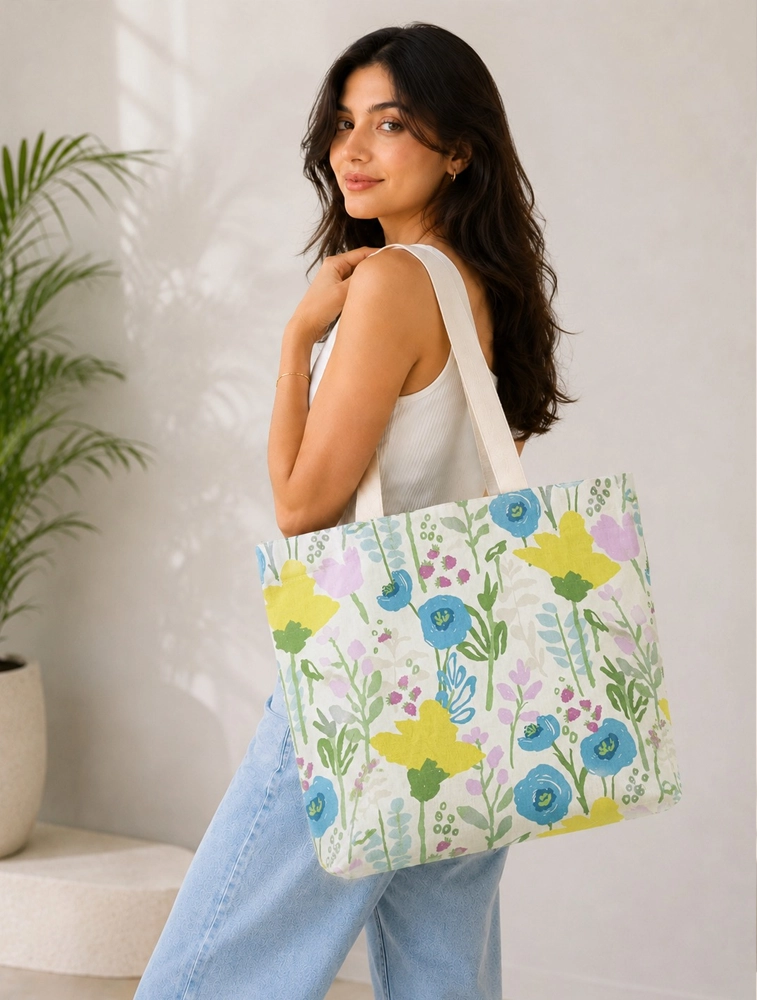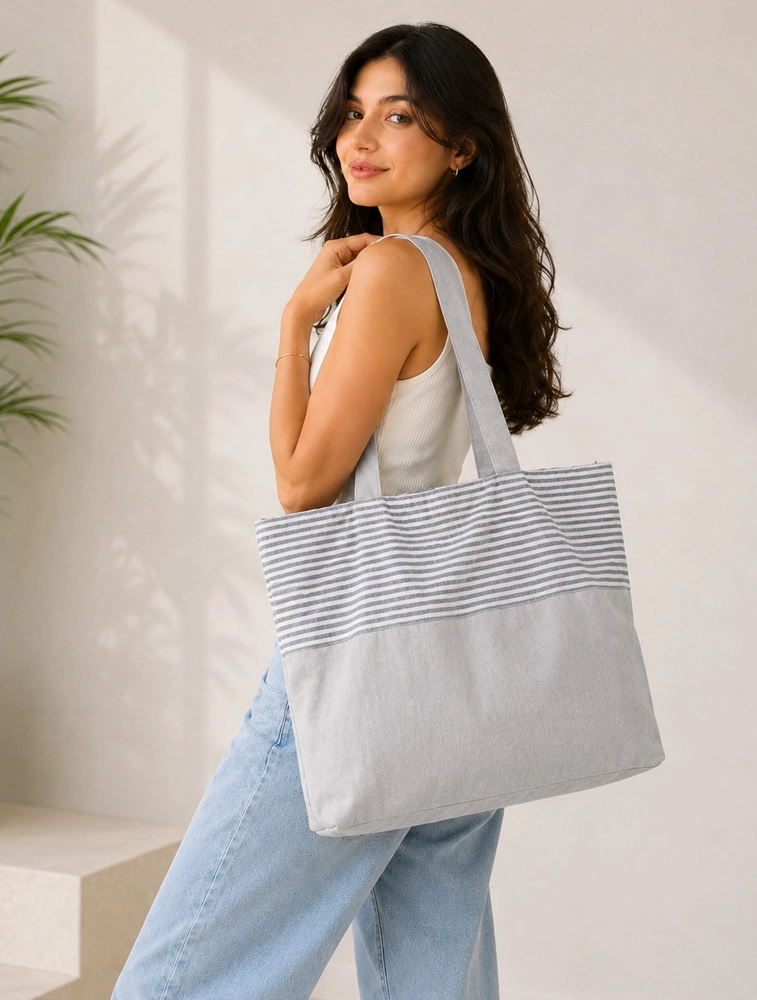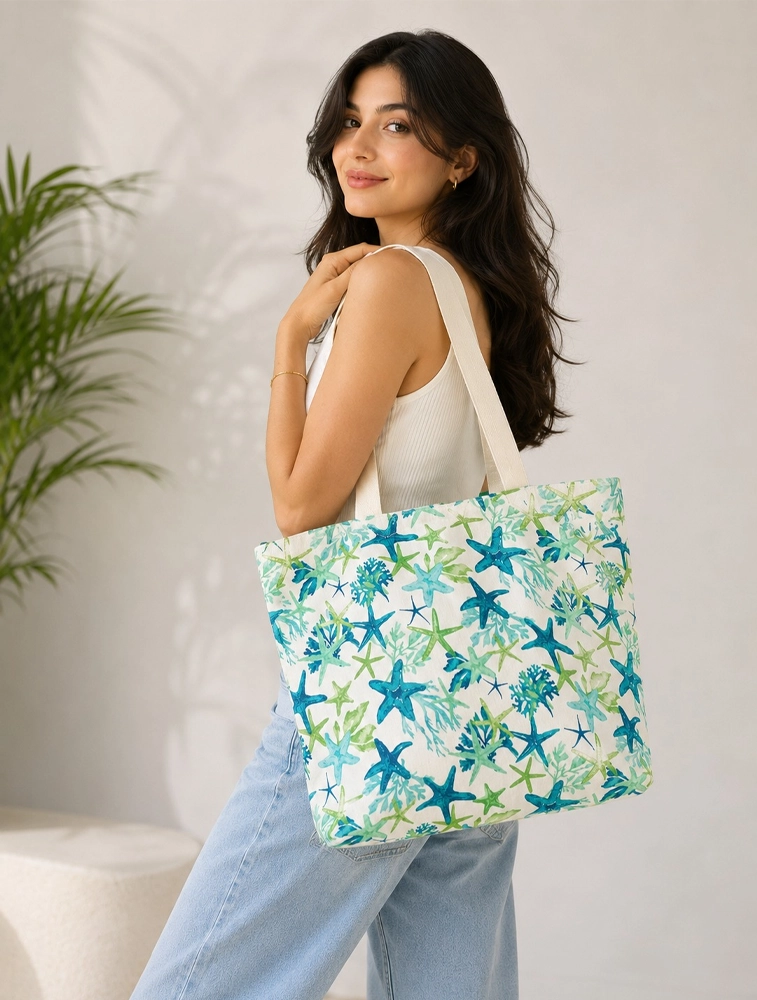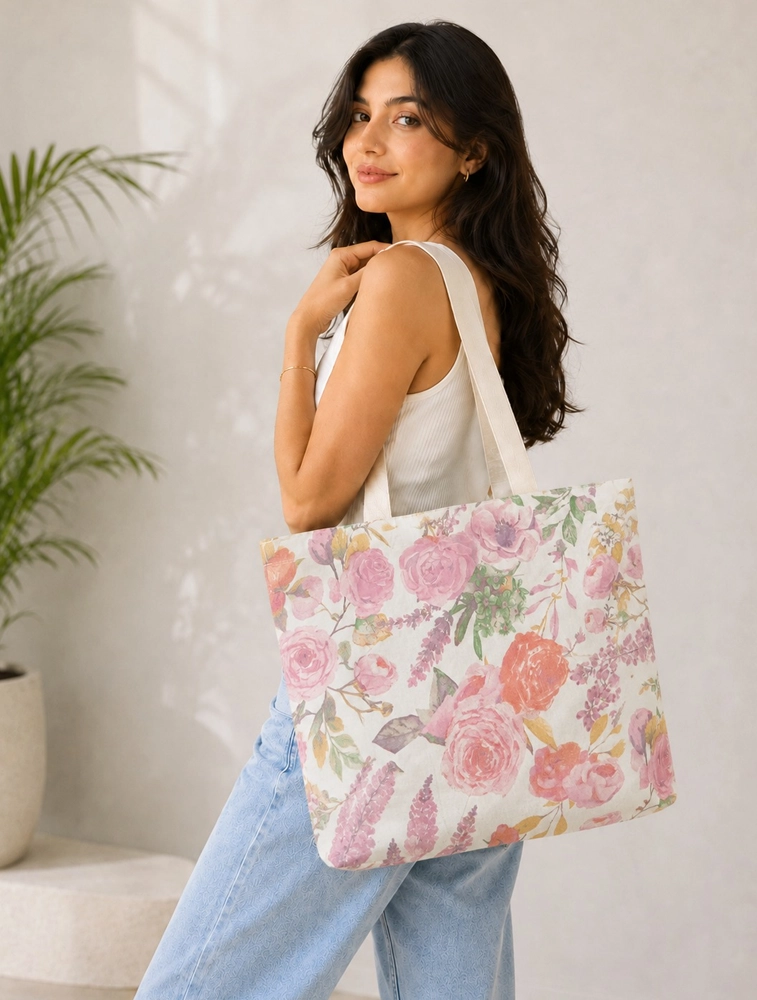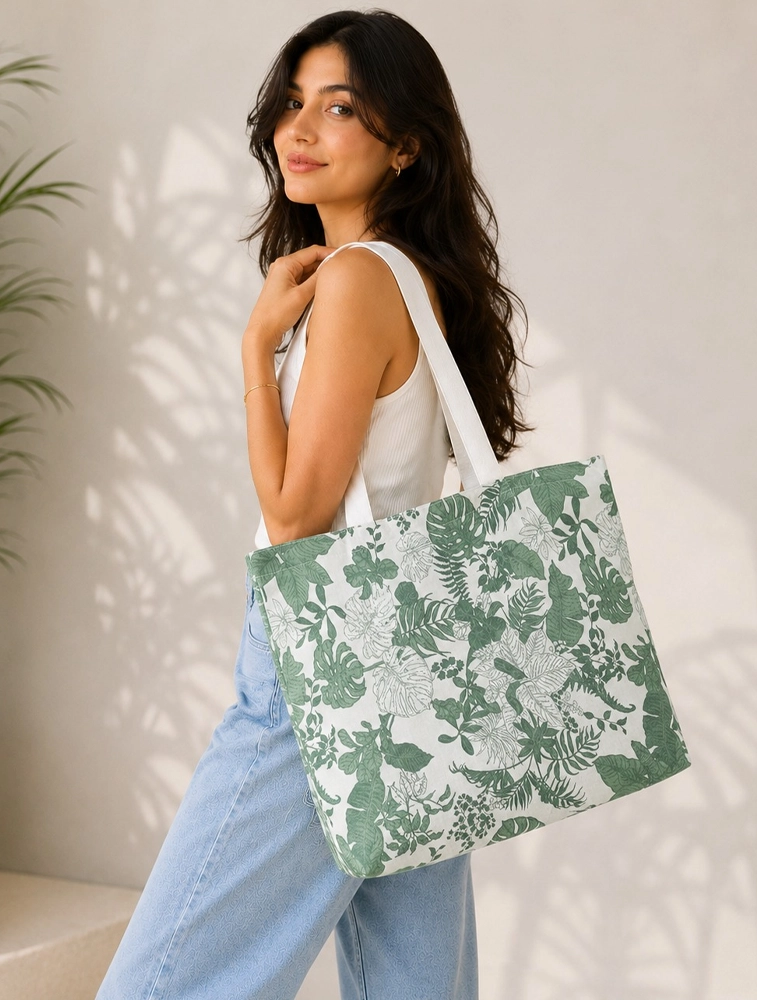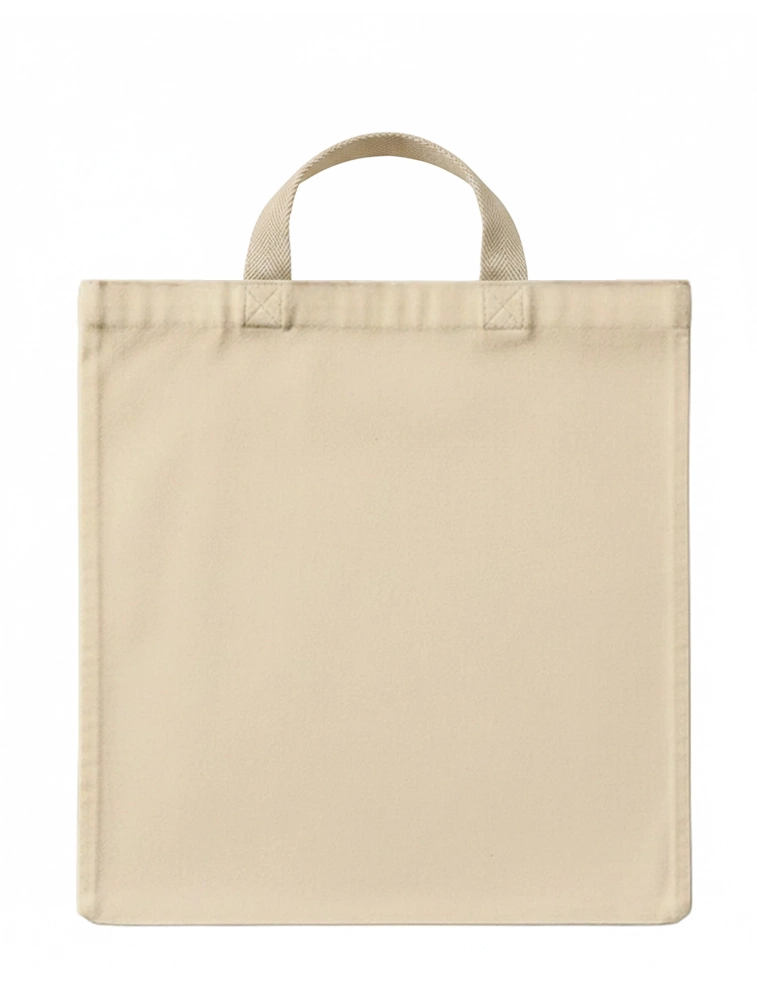
Natural Cotton Plain Tote Bag 10x12 inches 200grams
Made in India
4.311 ratings
₹26.00/ piece
Enter a 6-digit Indian PIN code to see delivery options for that area.
Currently delivering to Bengaluru 560105
factori.com supplies bulk tote bags from ₹26/piece across 665 partner factories — ready stock and custom programmes with GST invoices.
Brand-ready tote bags for corporate, retail, uniforms and large custom programmes — sourced across partner factories with published prices.
Brand-ready tote bags for offsites, launches and conferences.
Get quote →Consistent supply for schools, factories and frontline teams.
Corporate uniforms →Unbranded or private-label stock for retail brands.
Launch your store →Contract manufacturing for high-volume programmes.
Contract manufacturing →What the three materials actually are. Cotton bags here are woven cotton cloth — sheeting or light canvas — cut flat and stitched. Jute is a bast fibre spun into a coarse yarn and woven into hessian; it is stiff, mid-brown and holds a shape, which is why jute bags are almost always built with a gusset and stand up on a table. Juco is a blend, typically around 75 per cent jute and 25 per cent cotton, made to keep jute’s look while softening the hand and closing up the surface.
Where cotton wins. Print fidelity, because a fine even weave carries small type and photographic detail that jute cannot. Washability, because a cotton bag can go through a domestic machine and come out usable. Weight and fold, because a flat cotton tote packs down to almost nothing, which matters when you are shipping twenty thousand of them. And price at small sizes: the smallest cotton bag on this page is a fraction of the cheapest jute one, because a small flat panel uses very little cloth.
Where jute wins. Structure and load. A medium jute shopping bag comfortably carries 10 to 15 kg without tearing, and because it is built with a base gusset it holds its own shape when it is put down. It reads as deliberately natural, which is why it is the default for exhibitions, hampers and gifting. It is also the fastest of the three to biodegrade — jute breaks down in roughly one to two years. The trade-offs are real: the surface is coarse, so fine print and small text do not hold; the brown ground shifts every ink laid on it; raw jute sheds short fibre into whatever it carries and takes up moisture and odour unless it is lined or laminated.
Where juco wins. It is the compromise buyers reach for when a jute sample prints badly and a cotton sample looks too plain. Printability is better than raw jute without an underbase, the hand is softer, and it still reads as a natural-fibre bag. It sits at the top of this page’s price band because the blend costs more to spin than either fibre alone.
What to send us instead of a fibre name. Tell us what the bag has to do — what goes in it, how heavy that is, whether it gets wet, how many times it will be used, whether it is given away or sold, and what the print looks like. The fibre falls out of those answers. Choosing the fibre first and then discovering the print will not hold on it is the most common way a bag order goes wrong.
The first driver is simply how much cloth is in the bag. A carry bag is close to a pure material product: there is very little make in it compared with a garment, so area dominates. A 10x12 inch flat tote and a 19x24 inch one are the same design and the same operations, and the larger one costs roughly double because it consumes roughly double the cloth. This is why bag pricing looks steep by the inch and why cutting a size down by two inches on each side is the cheapest saving available to you.
The six things that move a quote, roughly in order of impact.
Fibre. Jute yarn is the cheapest of the three per kilogram, but a jute bag is heavier, thicker and gusseted, so the finished bag costs more than a flat cotton tote of similar face dimensions. Juco costs more again to spin.
Cloth weight. GSM is a direct multiplier on material. Moving a cotton tote from about 140 GSM to about 280 GSM roughly doubles the cloth in it. Specify the weight the bag needs and no more.
Colour. Natural and unbleached cloth is the cheapest ground there is because nothing has been done to it. Bleached white costs more. A dyed cloth in your brand shade means a dedicated dye lot, which carries its own minimum quantity, and below that quantity the dyeing cost divides across too few bags.
Construction. A gusset, a base board, a lining, a zip, a drawstring channel or webbing handles each add cloth and operations. A flat unlined tote is the floor of the range for a reason.
Branding. Print is priced by the number of screen colours and the printed area, and an underbase on a natural or brown ground counts as another colour. A single-colour logo is cheap; a four-colour print on jute is not.
Quantity. Custom runs start at 100 pieces per style per colour. Screen-making, artwork, strike-offs and machine set-up are fixed costs spread across the run, so the per-piece rate keeps falling well past that minimum.
Why the factory rate is lower than a trading rate. An order placed here goes to the partner factory that already weaves and stitches that construction, with one commercial layer instead of three. There is no importer margin, no distributor margin and no reseller margin stacked on the make cost. That is the entire reason the published number is what it is. The home-page FAQ sets out how a quote is built and what payment terms apply.
Read the ladder before you compare two quotes.
| OUNCES | APPROX. GSM | WHAT IT IS FOR | INDICATIVE LOAD |
|---|---|---|---|
| 4 oz | about 140 | Conference and trade-show giveaway | About 5 kg |
| 5.5 oz | about 200 | Everyday promotional and retail tote | 8 to 10 kg |
| 6 oz | about 220 | The most commonly ordered retail weight | 8 to 10 kg |
| 7 oz | about 250 | Structured tote that holds its shape | 10 kg and above |
| 8 to 12 oz | 270 to 400 | Heavy-duty canvas, embroidery, grocery use | 15 kg and above |
Why the ambiguity is worth clearing up. “200 grams” on a product name reads to a first-time buyer as the weight of the bag, and a 10x12 inch cotton tote does in fact weigh somewhere near that, which makes the misreading easy and expensive. If you assume it is bag weight you have no idea what cloth you are buying. Ask for the number in GSM with the weave named — sheeting, canvas or duck — and the ambiguity disappears from the purchase order.
Where the floor and the ceiling sit. Below roughly 140 GSM a cotton bag is a single-event item: it will carry a brochure and a bottle of water and it will look tired after a fortnight. For reference, the definition of a reusable bag used in the largest export market sets a floor of 80 GSM for a sewn fabric bag, so everything on this page clears that comfortably — but clearing a legal floor and being fit for two years of grocery use are different questions. Real durability starts around 250 GSM and the heavy-duty band is 270 to 400 GSM.
GSM also decides what you can print and stitch. Screen printing works across the range. Embroidery needs the heavier end — on light cloth it puckers and the stitches distort the panel. Large solid prints need weight behind them, because thin cloth stretches under the squeegee and the image goes out of register.
What to write on the purchase order. Fibre, GSM, weave, finish, and colour with its state named — natural, bleached or dyed. Five short fields, and they remove the largest cause of disappointment in a repeat bag order.
Fix the order of the numbers in writing. Width x height x gusset is the common convention in India, but it is a convention rather than a rule, and 13x15 read the wrong way round is a different bag. Two lines on a purchase order settle it: give the dimensions labelled — “width 330 mm, height 380 mm, gusset 150 mm” — and state whether the height is measured to the top hem or includes the handles. Almost every dispute about a delivered bag size traces back to one of those two omissions.
Flat or gusseted is a use decision, not a preference. A flat tote is for flat contents: documents, a laptop sleeve, a magazine, a folded garment. It packs down to nothing and ships cheaply. A gusseted bag is for volume and for anything that has to stand up — bottles, boxed gifts, groceries, a hamper. If a bag has to sit open on a table while someone puts things in it, it needs a gusset and probably a base board.
Handles are not part of the size code. Handle length is specified separately and it changes how the bag is used more than any other dimension. Handles of roughly 60 to 70 cm total length allow the bag to be carried on the shoulder; shorter handles are hand-carry only. Decide which you want before you approve a sample, because a shoulder-carry bag with hand-carry handles is the single most common complaint from wearers of a promotional bag.
Think in litres when you are matching a bag to contents. Multiply width by height by gusset and convert — it is rough, because the bag deforms, but it tells you far more than inches do about whether a week’s shopping or a conference kit will fit. If you have a physical thing the bag must hold, send us that instead of a number.
Size sets your print area, so decide them together. The printable panel is smaller than the face of the bag: you lose the top hem, the seam allowance at the sides and the area behind the handles. As a working guide, a panel of about 38 x 40 cm carries a central print of about 30 x 30 cm, and artwork should keep a safe margin of 5 to 10 mm inside the print area so that normal cutting variation does not crop it. If the logo has to be a certain finished size, that requirement may set the bag size rather than the other way round.
What to send at enquiry. A dimensioned sketch, or better, a bag you already like. We will quote against a measured sample line by line rather than against a description, which is how a repeat order comes back the same.
The three constructions you will be offered. The cheapest catches the handle ends inside the folded top hem and runs one line of stitching across. It is fine for a bag carrying paper and it is where most giveaway bags fail. The middle option insets the handle tail two to three inches down the panel and secures it with a box stitch or cross-stitch, which spreads the pull over an area instead of a line. The strongest continues the webbing all the way down the panel and under the base, so the load path runs through the strap rather than through the seam at all. Ask which of the three you are being quoted; the words “reinforced handles” on their own do not distinguish them.
Self-fabric or webbing. A self-fabric handle is cut from the same cloth as the bag, folded and stitched. It looks integrated, it costs less, and it is only as strong as the bag cloth. Cotton webbing is a separate woven tape, far stronger for its width, and available in a contrast colour. For anything above about 8 kg of intended load, or anything that will be used daily, specify webbing and specify its width.
Specify length by how the bag is carried. Roughly 60 to 70 cm of total handle length puts the bag on the shoulder over a coat; below that it is hand-carry. Width matters too, because a narrow handle under load cuts into the hand — the cheapest comfort improvement available on a heavy bag is a wider handle, not a heavier cloth.
How to make the specification testable. Write a load and a method, not an adjective. Something as simple as “handle to withstand 10 kg lifted and carried repeatedly without stitch failure or fabric tear at the attachment” converts a wish into an inspectable requirement. Then check it on the pre-production sample: load the bag to the number, carry it, and look at the attachment point rather than at the print.
What to look at on a sample in thirty seconds. Pull one handle hard and watch where the cloth moves. Turn the bag inside out and see whether the handle tail is visible running down the panel or stops at the hem. Look for bar-tacks at the stress points. Check that the base seam is not the only thing holding the bottom, and that thread thickness looks proportionate to the cloth. A bag that survives that inspection will survive the year; a bag that does not will come back as a complaint about quality when it was a specification that was never written.
Read load as a system, not a fabric property. Three things carry the weight: the cloth, the seams and the handle join. A heavy canvas bag with a top-hem handle fails at a lower load than a mid-weight bag with webbing running under the base. When a supplier quotes a capacity, ask which of the three was tested and how, because a fabric tensile figure from a mill report says almost nothing about the finished bag.
The one quantified definition in wide use. The reusable-bag standard that most export buyers work to defines a single use as the capacity to hold 22 pounds — about 10 kg — while walking 175 feet, and requires the bag to be designed for at least 125 such uses. That is a useful benchmark even if you are buying purely for India, because it is specific, repeatable and cheap to run: load the sample to 10 kg, walk it the distance, do it repeatedly, and inspect the handle join each time.
What jute gives you here. A medium gusseted jute shopping bag carries 10 to 15 kg comfortably, which is why it is the default for produce, hampers and anything boxed. Heavier jute constructions in the 400 to 480 GSM band are built for travel and laptop use and sit outside this page’s range; if you need that, ask and it is quoted to order.
The base is the second failure point. A flat bag concentrates the whole load on the bottom seam. A gusset spreads it, a double-stitched base spreads it further, and a base board stops a heavy point load from pushing through the cloth. If the contents have corners — boxes, files, bottles — specify the base, not just the bag.
What to put on the purchase order. A stated load with a method, and a stated number of uses if the bag is meant to last. Then have it verified on the pre-production sample before bulk. Testing after delivery is not a control, it is a post-mortem, and a bag that fails in a customer’s hand costs far more than the bag did.
Where we will tell you the answer is no. If you need 20 kg carried daily for two years, nothing in the light cotton band above will do it whatever the handle specification says, and the honest quote is a heavy canvas or a jute construction with webbing under the base. Buying a lighter bag and hoping is the most expensive decision available in this category.
What it is and where it sits. The film is bonded to one face of the woven jute, normally the inside. The bag still looks and feels like jute from the outside; the difference is that the weave is closed, so liquid does not pass through and loose fibre does not migrate into the contents. On the outside face, lamination or a coated finish gives print something flatter to sit on, which is why laminated jute takes fine detail and multiple colours far better than raw hessian.
What it fixes. Moisture and grease, which is the whole argument for food, produce and takeaway use. Staining, which matters for anything retail. Shedding, because raw jute drops short fibre and a customer who finds it on a white shirt remembers the bag. And print, because the practical rule on jute is that unlaminated cloth is good for bold one and two colour work and not much more.
What it costs you, and this part matters. A polypropylene film is a plastic layer. It adds cost, it reduces breathability, it changes the hand, and it weakens exactly the story most buyers are choosing jute to tell. If your marketing says plastic-free, a PP-laminated jute bag will not survive a determined question about it. Biodegradable and compostable films exist and are the honest route if the claim is important — but then the film type has to be named on the quote and evidenced, not assumed, and it prices differently.
When not to laminate. Dry goods, gifting, exhibition kits, books, garments. Anything where the bag is a container for clean dry contents and the natural texture is the point. Most jute gifting programmes are better unlaminated with a bold single-colour print, and the money saved is better spent on a heavier cloth or a better handle.
The middle option people forget. A cotton lining stitched into an unlaminated jute bag closes the inside face, stops the shedding and keeps the bag entirely natural-fibre. It costs more than a film and it does not resist liquid, but for a premium gifting bag it is often the right answer.
How to ask for it. State what the bag will carry and what claim you need to make about it, and let the construction follow. If a compostable or biodegradable claim is going on a label or a website, say so at enquiry — that is a documentation requirement as much as a material one, and it is far cheaper to build in than to retrofit after a buyer’s compliance team asks.
What is actually happening. Screen inks on cloth are not fully opaque. Some of the ground shows through and mixes optically with the ink, which is why the same screen and the same ink give three different results on bleached white, on unbleached natural and on jute. The darker and warmer the ground, the bigger the shift. It is not a printing fault and no amount of re-running the job removes it.
The underbase, and what it costs. Laying a white base under the colour gives the ink a neutral ground and brings it close to the intended shade. It is the standard fix and it works. It also counts as an extra screen and an extra pass, so it adds cost on every bag; it stiffens the printed area, which is noticeable on a light cotton bag; and on coarse jute a white base can look chalky where the weave is uneven. Ask for it deliberately rather than assuming it is included — a quote for “one-colour print” on natural cloth usually is not quoting an underbase.
Dyed cloth as the alternative. If exact colour matters more than the natural look, print on dyed cloth instead of fighting the ground. That brings its own conditions: a dedicated dye lot with a minimum quantity, a shade approval against a physical swatch, and shade continuity to manage if you reorder. There is no dyed cotton in the grid above, so this is a quoted-to-order route rather than a stock pick.
Jute has a second problem beyond colour. The weave is coarse and open, so fine lines, small type and gradients break up. As a working limit, keep type well above the size you would use on a garment, avoid hairlines, and prefer solid shapes to detail. Where a client insists on a photographic image on jute, the answer is a laminated or coated ground, and that changes the material specification.
The only approval that means anything is a strike-off. Not a screen shot, not a Pantone chip on paper, not a rendering. A printed sample on the actual cloth, signed and dated, with one copy held against the delivery. Pantone references are useful as a starting instruction and useless as an acceptance criterion on undyed cloth, because the reference was never defined against that ground.
Where embroidery is the better answer. Embroidery sidesteps the substrate problem entirely because the thread colour is the colour. It is priced by stitch count rather than by area, so a compact logo is economical and a large one is not, and it needs the heavier cloth weights to avoid puckering. For a premium bag with a small mark, it is often both better looking and better value than a printed underbase. The same logic applies across our printed categories — see the bulk t-shirts page for how method choice plays out on garments.
What the rules actually say. Two separate things happened and they are constantly confused. First, a list of identified single-use plastic items was prohibited from manufacture, import, stocking, distribution, sale and use with effect from 1 July 2022 — that list covers items such as plastic cutlery, straws, stirrers, ear buds with plastic sticks, and PVC banners below 100 microns. Second, and separately, plastic carry bags were made subject to a rising minimum thickness: the floor moved to 75 microns in September 2021 and to 120 microns from 31 December 2022. A thin carry bag is therefore illegal on thickness grounds rather than as a banned item.
Why the thickness rule pushed the market to cloth rather than to thicker plastic. The intent of a minimum thickness is to make a bag reusable and to make it worth recovering. The commercial effect is that it takes the cost of a compliant plastic bag up sharply, because thickness is material and material is most of the cost. Once a compliant plastic bag stops being nearly free, the gap between it and a cloth bag narrows to the point where the cloth bag wins on brand, on how long it lasts and on what a customer thinks of the retailer holding it. That is the commercial mechanism behind almost every cloth-bag enquiry that reaches us.
What the penalty exposure looks like. Enforcement runs through the state pollution control boards and municipal bodies, and the underlying statute is the Environment Protection Act, 1986, whose penalty provisions extend to imprisonment of up to five years or a fine of up to one lakh rupees, or both. In practice a retail chain’s realistic exposure is municipal seizure, spot fines per outlet and the reputational cost of being named — which is a store-operations problem rather than a legal one, and it is why the decision usually sits with operations rather than legal.
What this means for a specification. If the reason you are buying cloth bags is compliance, then the bag must not itself reintroduce the problem. Two things to watch. A laminated jute or laminated cotton bag has a plastic film in it, so if the lamination is conventional polypropylene the bag is a composite, not a textile — ask what the film is before you specify lamination in a compliance-driven purchase. And a non-woven polypropylene bag, the ubiquitous “green bag”, is a plastic bag with a fabric-like surface; it is regulated as plastic and it is not something we supply on this page.
Do not take a compliance position from a supplier’s FAQ, including this one. The rules have been amended repeatedly since 2016, several states run their own stricter notifications on top of the central rules, and municipal enforcement varies. What is written above is accurate as at July 2026 to the best of our knowledge and is here so that you know which instrument to look up. Confirm your own position with your compliance advisor, and then tell us what the bag has to satisfy so we can specify to it.
Where that definition comes from. California’s statewide bag law, upheld by Proposition 67, defines a reusable grocery bag rather than merely encouraging one, and it sets numeric criteria. The 125-use design life and the 22-pound-over-175-feet definition of a use are the two figures that get quoted; the 80 GSM floor for sewn fabric bags is the one that matters most when you are placing an order, because it is the only criterion you can check on a specification sheet before production. The law also sets a minimum charge at the till — ten cents — on the reasoning that a bag given away free is not treated as reusable no matter what it is made of.
Why it matters far beyond California. Numeric definitions are expensive to draft, so jurisdictions copy them. Once one large market has defined a reusable bag in testable terms, that language propagates into other state and municipal laws and, more importantly for you, into the private specifications that retail chains impose on their own suppliers worldwide. When an overseas buyer sends a bag specification that reads oddly precisely — a use count, a weight, a distance, a fabric weight floor — it has almost certainly been inherited from this family of rules.
Against the bags on this page. The 80 GSM fabric floor is not a constraint here: the cotton on this page is around 200 to 250 GSM, roughly two and a half to three times the floor, and jute hessian is heavier still. Handles are integral to every style. Cotton is washable. The two criteria that need work are the ones nobody thinks about at enquiry stage. First, tagging — manufacturer identification and recycling information printed or labelled onto the bag is a specification item that must be in the artwork and the purchase order, and it is routinely forgotten until a shipment is already made. Second, the design-life claim, which is a claim about construction rather than about cloth: at these fabric weights the failure point in 125 uses at 22 pounds will be the handle attachment, not the panel, so a bag intended for this market needs the reinforced handle construction described elsewhere on this page rather than a top-hem-only attachment.
What we will and will not do. We will build to a written specification, hold a signed pre-production sample against it and put the tagging into the artwork. We will not issue a compliance certificate for a jurisdiction, because compliance attaches to the bag as placed on the market in that country and depends on the importer and on the tagging and charging practice at the till, not on the factory alone. If a buyer requires third-party test evidence against a use-count or load protocol, tell us at enquiry: that is arrangeable, it costs money and it adds time, and it is far cheaper to plan for than to retrofit.
One honest caveat. Bag legislation changes often and the figures above are as at July 2026. Treat them as the vocabulary you need to have the conversation, not as legal advice, and have your importer confirm the current text.
The two label grades. Label grade one, which may be called ‘organic’, requires 95 per cent or more certified organic fibres with no more than 5 per cent non-organic. Label grade two, ‘made with X per cent organic’, requires 70 per cent or more, with up to 30 per cent non-organic. Getting these two mixed up is the single most common cause of a rejected label, because the wording on the finished bag has to match the grade the certification actually supports.
What the standard covers that people do not expect. GOTS is written across processing, manufacturing, packaging, labelling, trading and distribution — not just the growing of the cotton. Every operator in the chain, from post-harvest handling through spinning, weaving and garment or bag making, and the traders as well, undergoes an annual on-site inspection. That is the reason a GOTS order behaves differently from an ordinary one: the constraint is not finding organic cotton, it is that every link between the field and your bag has to already hold a certificate, and transaction certificates have to be issued to carry the volume through each step.
It is also a chemical and social standard. On the chemical side GOTS prohibits toxic heavy metals, formaldehyde, aromatic solvents, functional nanoparticles, azo dyes that release carcinogenic amines, chlorine bleaching and PVC in accessories. On the social side its criteria are based on ILO conventions. This is why buyers who do not care about organic agriculture at all still ask for GOTS: it is the most convenient single instrument that covers restricted substances and labour conditions together, which would otherwise be two separate audits.
Where the bags on this page stand. The natural cotton on this page is undyed and unbleached, which removes a large part of the chemical exposure that a dyed bag carries, and it is exactly the aesthetic a sustainability-led buyer is usually after. But undyed is not organic and natural is not certified. Nothing published on this page is a certified organic line, and we will not describe it as one. If your buyer needs GOTS, that is a specified, certified, separately quoted programme with a longer lead time and a higher price, and it starts with a conversation rather than with a purchase order.
What to ask us for, in order. Which label grade the buyer requires and the exact wording they want on the bag. Whether they need scope certificates from every operator or only a transaction certificate for the shipment. Whether the requirement is genuinely GOTS or whether a restricted-substances test report on the finished bag would satisfy the underlying concern, which is often the case and is much faster and cheaper. And if dyed organic cloth is involved, say so early: dyeing is where most organic programmes get expensive.
On azo dyes specifically. Buyers frequently ask for an azo-dye-free declaration. Ask for a test report on the actual cloth rather than a blanket assurance, and give us the standard and limit your buyer works to so the testing is done against the right instrument. Undyed natural cotton, which is most of this page, does not raise the question at all.
Do the arithmetic on your own numbers, not ours. The calculation has three inputs: the delivered cost of the bag, the number of times it is actually used, and the cost of the thing it replaces. Only the first is ours to supply. The second is where the whole argument lives, and it is the number a finance team will and should attack, so build it from something observable rather than from a supplier’s brochure. Two honest caveats. A bag handed out at a conference is often used once and then stored, so its cost per use is its price — the justification there is media value, not carriage. And a bag that fails at the handle on its tenth trip has a cost per use ten times worse than a bag that survives a hundred, which is why the construction detail on this page is a financial argument and not a technical aside.
The three lines a finance team will actually respond to. First, avoided cost: what you currently spend on compliant carry bags per year, in total, is the number the cloth programme is compared against — and once a plastic bag has to meet a minimum thickness, that number is much larger than most retailers assume. Second, recovered cost: in most reusable-bag regimes the bag is sold rather than given, which is why a charge at the till is written into the law in several markets; a bag that is charged for shows up in the accounts differently from a bag that is given away, and that difference is usually what makes the case. Third, avoided penalty, which is not a saving so much as an insurance premium.
The line that is real but should not be quantified. A branded bag carried out of your store is advertising. That is genuinely valuable and it is the reason marketing usually funds these programmes rather than operations. But be very careful about the impressions-per-bag figures that circulate in the promotional-products industry: they are not measured, they vary by two orders of magnitude between sources, and putting one into a board paper invites a rebuttal that undermines the rest of a sound case. Say the effect exists, size the spend against your media budget, and leave it there.
What actually kills the business case. Ordering the wrong weight. A bag that is too light for the load it carries fails early, so cost per use collapses and customers stop taking them, which destroys both the carriage argument and the media argument at once. A bag that is heavier than the job needs simply costs more than it had to. Getting the weight right for the actual load is worth more than negotiating the last rupee off the price, and we would rather have that conversation than the rupee one.
What to send us. Your current annual carry-bag spend, the average load a customer walks out with, whether the bag will be sold or given, and how many outlets. We will come back with a weight, a size and a price that the arithmetic above can be run on properly.
Match the weight to what the bag will really carry. A trade-show or conference giveaway carries paper, a lanyard, a notebook, a bottle and perhaps a sample — five kilos at the outside. The lightest cotton weight, about 140 GSM or 4 oz, is built for exactly that, and paying for a heavier cloth to carry a brochure is money that would do more work as a better print. The moment the bag has to carry a laptop, a product sample of any density, or anything a delegate will take home and reuse, that logic reverses and you want the 200 GSM and above weights, which are what the grid on this page actually publishes.
How many to order. Two rules. Order above your registered delegate count, not at it: walk-ins, staff, speakers, sponsor allocations and the ten bags that get misprinted at the venue add up, and 5 to 10 per cent over is the normal allowance. But do not over-order for a dated event, because a bag printed with a date and a year is worthless on 2 January. If the event recurs, the far better move is to print the brand and drop the year, so the surplus becomes next year’s opening stock — a decision made in the artwork, weeks before it saves you anything.
The size mistake that ruins conference bags. Specify the bag around the largest item that must go in it, and check it against A4 with a real sheet of paper, not on screen. A delegate folder that has to be bent to fit is the single most common complaint, and it is created at the size-selection stage. The other half of the same mistake is handle drop: a bag intended to be worn on the shoulder over a jacket needs the long handle — roughly 60 to 70 cm usually allows shoulder carry — while a short hand-carry handle on a bag full of paper gets carried badly and abandoned by mid-afternoon.
Print for the room, not for the screen. Event bags are photographed constantly, so a single bold colour in a large central placement outperforms a detailed multi-colour lockup, which costs more per bag and reads as noise from three metres. On a typical tote face a central placement of about 30 by 30 cm with a 5 to 10 mm safe margin is a sound working area. If sponsor logos have to appear, agree the hierarchy before artwork rather than trying to fit eight equal logos onto one panel, because that always ends with everybody’s mark too small.
Lead time, plainly. Ready-stock unprinted bags dispatch in about 7 to 10 days. A custom printed run is 15 to 30 days depending on the print method and quantity, and that clock starts when artwork and the strike-off are approved, not when the purchase order is raised. Approval delay is what makes event bags late, every time. Work backwards from the event date and leave a week of slack, and if the date is genuinely tight tell us at enquiry so we quote something we can actually deliver rather than something that looks good on paper.
Why the pilot pays for itself. Nobody knows their own bag consumption. Chains estimate from footfall, then discover that basket size, whether the bag is charged for, whether staff offer it or wait to be asked, and the store’s catchment move the number by a factor of two or three between outlets in the same city. A four-to-six-week pilot across a deliberately mixed set of stores — your best, your worst, a mall, a high street, and one in each climate if you span the country — gives you a real per-store per-week rate and it also surfaces the failures early, while the order is small enough to change. Watch for handles going at the attachment, the bottom sagging under the actual basket, and the print rubbing where the bag creases.
Two sizes, not five. Almost every chain that does this well converges on two sizes: a small one that covers the majority of baskets and a large one for the outliers. More sizes than that multiply your stock-keeping units, split your order quantity across styles so each one is quoted worse, and leave store staff choosing a bag at the till, which they will do inconsistently. If you genuinely need a third, make it a premium bag that is sold rather than issued.
How the minimum quantity works across a rollout. The 100-piece minimum for a custom branded run applies per style per colour, not per delivery location. So a 100-store programme with two sizes in one brand colour is two styles, and the quantity is never the constraint — but ten regional variants would be ten styles, each needing its own minimum and its own strike-off. Consolidate the artwork and you consolidate the price. This is also why a mixed programme is best raised as one enquiry rather than store by store.
Shade continuity is the thing that goes wrong at scale. If your bags are dyed to a brand colour, bags produced in different dye lots will differ slightly, and two shades of the same bag side by side at the same till is visible to a customer in a way that either bag alone is not. There are two remedies: buy the full requirement against one dye lot where the volume allows it, or accept a stated tolerance and issue by lot so that a given store gets one lot at a time. Undyed natural cotton, which is what this page publishes, largely sidesteps the problem — another reason natural is the dominant choice in retail carry bags.
Logistics and cash. Decide early whether stock is delivered to a distribution centre and pushed out, or drop-shipped to stores. Central is cheaper to ship and easier to control on quality; direct-to-store saves double handling and suits chains without a working distribution network. Decide too where the stock sits, because bags are bulky and a hundred stores’ annual supply is a real amount of floor space in a back room that does not have any. A standing schedule with periodic releases against a single agreed price is almost always better than one large purchase — it protects the price, keeps the cash phased and keeps a warehouse from filling up. Call +91 874 707 1444 with your store count and pilot list and we will structure it that way.
What counts as a separate style. This is the only part of the rule worth understanding properly, because it decides your cost. A change of size is a separate style, because it is a different cutting pattern. A change of material is a separate style. A change of colour is a separate line even at the same size. A change of print is a separate line, because it is a separate screen set and a separate strike-off. What is not a separate style is a change of quantity, or the same bag going to a different delivery address. So a purchase order for four cotton sizes and two jute sizes in natural, all carrying one logo, is six lines at 100 pieces each — 600 pieces total — and it is entirely normal.
Where mixing costs you money, and it is not where you expect. The minimum is rarely the binding constraint. Set-up is. Each distinct print incurs its own screen preparation and its own approved strike-off, and those costs are per design, so they are absorbed at 5,000 pieces and painful at 100. The efficient shape of a mixed order is therefore many sizes and materials carrying few designs, and the expensive shape is few sizes carrying many designs. If you are tempted to give each product line its own artwork, price both versions before you decide.
Mixed materials do not move together. Cotton, jute and juco are made in different places on different equipment with different input availability, so a mixed order finishes in parts. You then choose: hold everything and ship complete, which is simpler to receive and slower, or take partial dispatches, which starts the fast lines moving and means more freight and more receiving work. Say which you want on the purchase order rather than leaving it to be discovered, because the default assumption differs between buyer and factory and that is a classic source of a bad-faith complaint on both sides. Ready stock at 7 to 10 days and custom at 15 to 30 days will not arrive together on the same purchase order.
How to write the purchase order so nothing is argued about later. One line per style, and on each line: material, fabric weight, finished dimensions with the gusset stated separately, handle length and attachment type, print method, number of colours, print size and placement, any tagging or label requirement, quantity, and unit price. Then one line for the strike-off approval and the tolerances you are accepting on dimension and shade. A purchase order written this way takes twenty minutes longer and removes almost every dispute that a bag order can generate.
The one thing to resolve before you split an order across many small lines. Ask yourself whether you actually need six sizes. Buyers routinely order a size ladder that mirrors their product range and then find that two sizes carry ninety per cent of the volume, leaving four lines of slow stock bought at the worst price on the sheet. Fewer lines at larger quantities is a better price and a simpler warehouse. If you are unsure, order the two you are confident in properly and treat the rest as a trial. See the company FAQs for payment terms, samples and export documentation, which apply the same way to a mixed order as to a single-line one.