Choose your delivery location
Enter a 6-digit Indian PIN code to see delivery options for that area.
Currently delivering to Bengaluru 560105
Ready stock & made to order
Bulk diary
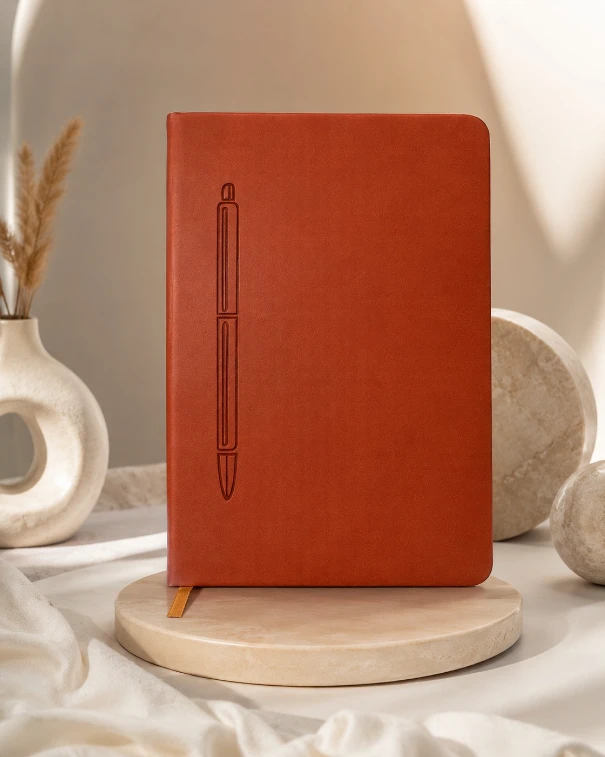
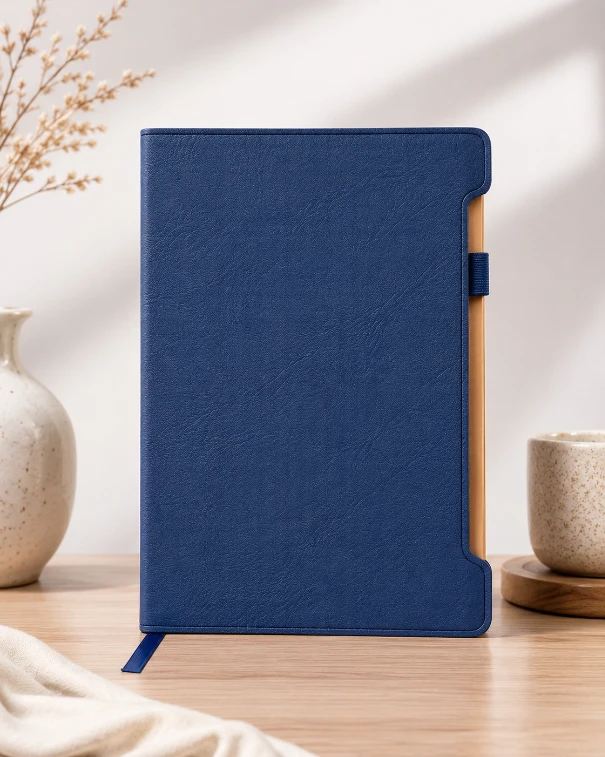
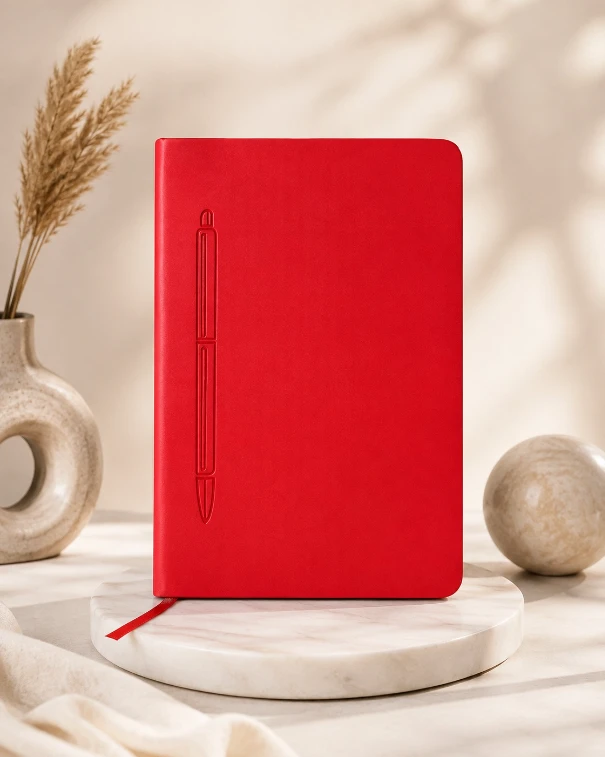
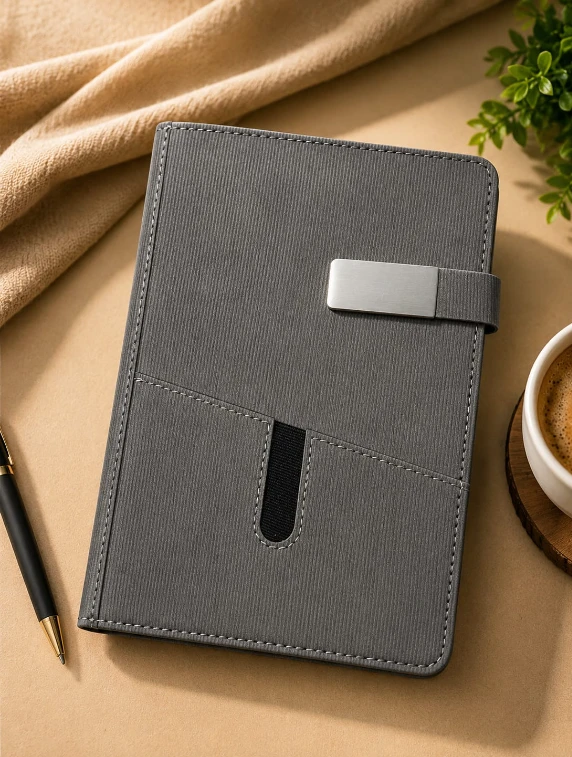
factori.com supplies bulk diary from ₹102/piece across 662 partner factories — ready stock and custom programmes with GST invoices.
Prices verified October 2026 · shown excluding GST
₹102Entry price
Same dayDispatch on working days




Page 1 of 4
Bulk diary for every use case
Brand-ready diary for corporate, retail, uniforms and large custom programmes — sourced across partner factories with published prices.
Corporate & events
Brand-ready diary for offsites, launches and conferences.
Get quote →
Uniforms & programmes
Consistent supply for schools, factories and frontline teams.
Corporate uniforms →
Own brand / resale
Unbranded or private-label stock for retail brands.
Launch your store →
Large custom runs
Contract manufacturing for high-volume programmes.
Contract manufacturing →Bulk diary — frequently asked questions
Why does the Rs 188 diary use thinner paper than the Rs 102 one?
Because the paper is not what the extra money buys. The two listings on this page that publish a grammage run the wrong way round: the Rs 102 A5 softbound diary states 80 GSM and the Rs 188 bamboo diary states 68 GSM. Eleven of the thirteen listings publish no grammage at all. Ask for the number before you pay the premium.
This is the most consequential thing on this page and it is visible only if you open several listings side by side, which almost nobody does. Read the category top to bottom and the paper gets thinner as the price goes up.
What the listings actually say
The three A5 softbound diaries at Rs 102 each carry a specification table with eight rows, and two of those rows are the ones a buyer needs: Paper Quality: 80 GSM writing paper and Total Pages: 160 pages. The bamboo and matte combination diaries at Rs 188 describe their paper as 68 GSM natural shade writing paper inside the product description, and give no page count. The five RNR diaries at Rs 118 and the PU cover diary at Rs 188 state no grammage anywhere. So of the ten distinct products behind these thirteen listings, two grammages are published and both are published in different places, one in a table and one in a paragraph.
What the premium is actually paying for
On the published evidence, the money goes into the cover and the fittings, not into the block. Rs 102 buys a polypropylene cover, soft bound. Rs 118 buys a PU base with a matty vinyl coating, an elastic closure, a bookmark and a pen holder. Rs 188 buys either a section-sewn hardbound block behind a textured PU cover with a magnetic loop flap, or a bamboo front panel bonded to matte PU. Those are real differences and they are worth real money. None of them is a paper difference, and the one paper figure published at the top of the range is lower than the one published at the bottom.
Why a lighter sheet is not automatically wrong
A 68 GSM natural shade sheet is a deliberate choice in some markets: it is lighter, it bulks less, and a cream or natural shade is easier on the eye than bright white. A 192-page diary on 80 GSM is a noticeably thicker and heavier object than the same diary on 68. If the brief is a slim gift that sits flat in a jacket pocket, the lighter sheet is the right answer. The problem is not the number. The problem is that the number is not on the page, so the buyer paying 84 per cent more than the entry price has no way to know it went down.
The two-line fix for your purchase order
Write the grammage and the page count into the proforma invoice as separate numbered lines, in the same place you write the quantity, and require both to be confirmed on the approved pre-production sample. That converts a marketing adjective into a contractual figure. If the supplier will not put a grammage on the invoice, that is itself the answer to the question you were asking.
Nothing here is a criticism of any product. It is a criticism of a catalogue that publishes eight specification rows on its cheapest item and none on its dearest.
Paper & SizesQueries Targeteddiary paper GSM bulk, 80 gsm vs 68 gsm diary, corporate diary paper quality
Will writing show through to the next page, and which number tells you?
Opacity tells you, not grammage. IS/ISO 2471:2008 defines opacity as the ratio of the single-sheet luminance factor to the intrinsic luminance factor of the same sample, and it is expressed as a percentage. No listing on this page publishes one. Grammage is a useful proxy and it is not the measurement.
Show-through is the complaint that arrives three months after a bulk diary order, long after the invoice is settled, and it is almost always avoidable at the specification stage for no extra money.
Why grammage is the wrong number to argue about
ISO 536:2019, Paper and board — Determination of grammage, says in its scope that it "specifies a method for determining the grammage of paper and board", and it defines grammage as mass per unit area expressed in grams per square metre. That is all it is: how much a square metre of the sheet weighs. Two sheets of identical grammage can behave completely differently, because the same mass can be spread into a thick bulky sheet or pressed into a thin dense one, and because mineral fillers change how much light passes through without changing the weight very much at all. A heavier sheet usually shows through less. Usually is not a specification.
What opacity is
IS/ISO 2471:2008, the Indian adoption of the international method, measures "that property of a paper which governs the extent to which one sheet visually obscures printed matter on underlying sheets of similar paper". It is reported as a percentage. Higher is better for a diary. The standard also notes that the opacity value depends on the principle used for its evaluation, which is a polite way of saying you should ask which method produced any figure you are quoted.
What to ask for, in order
- An opacity percentage and the method behind it. One line on the proforma invoice. A mill that supplies writing paper will have this figure.
- The grammage as a second line. Not instead of opacity. Both.
- A written sample. Take the pre-production sample, write on one side with the pen your organisation actually issues, and look at the back. Thirty seconds settles what three emails will not.
- Whether the diary will meet a gel or fountain pen. A sheet that is fine under a ball point can be unusable under a wet ink. If your recipients are senior enough to be given a diary, some of them write with fountain pens.
What this page gives you to work with
Two grammages, both quoted above, and no opacity figure anywhere on thirteen listings. That is normal for the Indian bulk stationery market and it is not a defence. The measurement exists, it is standardised, it is cheap to obtain, and the buyer who asks for it in writing is buying a different quality of conversation from the buyer who asks whether the paper is good.
If you are ordering for a use where the reverse of the page is read as well as written on, say so explicitly at the briefing stage rather than assuming it is understood.
Paper & SizesQueries Targeteddiary paper show through, paper opacity percentage, bleed through notebook bulk
Is this a dated diary or an undated one?
Neither, as far as the page is concerned. Not one of the thirteen listings states whether the diary is dated or undated, and no year appears anywhere on the category. That is the defining attribute of a diary and it decides whether unsold stock is worth full price in January or nothing at all.
Every other question on this page can be settled after delivery with a conversation. This one cannot. A dated book is a perishable good with a fixed expiry, and the expiry is printed inside it.
Why the distinction is worth more than the price difference
A dated diary carries a calendar: a day or a week to a page, with the dates printed. On 2 January it is worth what you paid. On 2 January of the following year it is worth its weight in paper. An undated diary carries ruled or blank pages and perhaps a blank planner grid, and it is worth the same on any day of any year. The whole of the risk in a bulk diary order sits in that difference, and the entire category is silent on it.
Who this catches, and how
- Corporates ordering for a January distribution. If the run is dated and it slips three weeks, you are handing out a book that is already three weeks used. Confirm the dating and the despatch date in the same sentence.
- Government departments and public sector undertakings whose purchase cycles land where they land. A tender awarded in October for a dated book has a manufacturing window measured in days, not weeks.
- Retailers and wholesalers. Dated stock has a sell-through deadline and a write-off date. Undated stock does not. Those are two different working-capital decisions and they should not be made by accident.
- Schools, colleges and institutions running on an academic year rather than a calendar year, for whom a January-to-December book is wrong even when it is current.
The three things to specify
First, dated or undated, in one word. Second, if dated, the year and the layout: a day to a page, two days to a page, a week to a spread. Third, if dated, whether the calendar runs January to December or April to March, because an Indian financial year book and a calendar year book are different products and both are sold as diaries. Get all three onto the proforma invoice and confirmed on the pre-production sample.
What you can reasonably infer, and should not rely on
The listings describe general office and note-taking use, the specification rows name pages rather than dates, and one listing calls itself an executive notebook. Read together that suggests undated blocks. It is an inference from the absence of a word, and no buyer should place a five-thousand-piece order on an inference. Ask, in writing, and get it back in writing.
Records, Claims & TariffQueries Targetedundated diary bulk, dated 2027 diary wholesale, corporate diary year printing
How many pages, and are they ruled?
Two of the thirteen listings publish a page count in a specification table, two more bury one in prose, and none of the thirteen states whether the pages are ruled, plain, dotted or squared. Both are one-word answers the supplier already knows. Put them in the purchase order.
These are the two cheapest fields in the whole of stationery procurement to get right and two of the most expensive to get wrong at scale.
What the page publishes
The A5 softbound listings state Total Pages: 160 pages in their specification table. The RNR listings state 192 in the body text. The PU cover diary's page count appears only in the meta description behind the page, which is to say a buyer reading the page will not see it. The bamboo listings give no page count at all. Four numbers, three places, nine listings with nothing.
Pages or leaves: the ambiguity that doubles your order
A great deal of trade correspondence uses "pages" and "sheets" as though they were the same thing. They are not: 160 pages is 80 leaves. When a buyer asks for a 200-page diary and a supplier quotes a 200-leaf book, the quotation is for twice the paper and the price gap looks like a bargain until the sample arrives. State which you mean. The cleanest formulation on a purchase order is a number of pages followed by the number of leaves in brackets, so there is nothing to interpret.
Ruling, and why nobody asks
Ruling is the pattern printed on the sheet: ruled lines, plain, dotted grid or squared. It is decided by whoever sets the plates and it is invisible in every photograph on this page, because every photograph shows a closed book. A buyer ordering diaries for a design team wants dotted. A buyer ordering for a site register wants ruled with a wide line spacing. A buyer ordering for a conference giveaway probably does not care and should still say so, because the alternative is that somebody else decides. If ruling matters to you, also state the line spacing in millimetres and whether the sheet carries a date or page-number header.
The related fields worth naming in the same breath
- Whether pages are numbered. Non-negotiable for anything used as a register or a log.
- Whether there are perforated corners or tear-off sheets.
- Whether there is a printed preliminary section — contacts, notes, a calendar spread — and how many pages it consumes out of the total you were quoted.
- Whether the page count includes the endpapers. It usually does not, and the difference is four to eight pages.
None of this is exotic. It is a five-line clause that costs nothing and removes the four most common causes of a rejected diary consignment.
Paper & SizesQueries Targeteddiary page count bulk, ruled or plain diary wholesale, 160 page 192 page diary
How much can an "A5" diary actually vary in size?
A5 is a real specification: both ISO 216 and IS 1064 put it at 148 by 210 millimetres. IS 1064 clause 4.1 allows plus or minus 1.5 millimetres up to 150 millimetres and plus or minus 2.0 millimetres above 150, which matters the moment you order a sleeve, a slipcase or a printed box.
Every listing on this page is A5, so the size is the one specification the category is consistent about. It is worth knowing what the letter actually guarantees.
Where the number comes from
ISO 216:2007 is titled Writing paper and certain classes of printed matter — Trimmed sizes — A and B series, and indication of machine direction. Its scope covers paper for administrative, commercial and technical use and it excludes newspapers, published books and posters. Its A-series table gives A4 as 210 by 297 millimetres, A5 as 148 by 210 and A6 as 105 by 148. The series is built on a single geometric idea, which the standard describes as the ratio between the sides being equal to the ratio between the side and the diagonal of a square — roughly one to 1.414 — which is why halving any A size gives you the next one down. ISO 216 was reviewed and confirmed in 2021 and remains current.
The Indian standard says the same thing, and adds a tolerance
IS 1064:1980, Specification for Paper Sizes (Second Revision), prescribes trimmed and untrimmed sizes of painting, writing, wrapping and casing paper, machine made and hand made. Its trimmed table carries the same A-series figures. Its clause 4.1 sets the permissible tolerances: up to 150 millimetres, plus or minus 1.5 millimetres; above 150 and up to 600 millimetres, plus or minus 2.0 millimetres; above 600 millimetres, plus or minus 3.0 millimetres. IS 1848, the Indian standard for writing and printing papers, points at IS 1064 for exactly this purpose — its clause 4.4 states that trimmed sizes shall be in accordance with IS 1064 and that the permissible tolerance on the size shall be in accordance with clause 4 of IS 1064.
Why a buyer should care about two millimetres
- Anything that holds the diary. A slipcase, a gift box, a presentation sleeve or a courier mailer designed to 148 by 210 exactly will bind on a book at the top of tolerance, and a book is thicker than a sheet.
- Anything printed to the edge. A cover design that bleeds needs the bleed allowance set against the tolerance, not against the nominal size.
- Mixed consignments. Two production lots at opposite ends of tolerance sit unevenly in the same carton and look like two different products on a gifting table.
- Trimmed size is the block, not the book. A hardbound cover overhangs the block. If your box has to fit the finished diary, measure the finished diary.
The practical instruction is short: specify the finished size of the assembled diary in millimetres, not just the letter A5, and take the measurement off the approved sample rather than off the drawing.
Paper & SizesQueries TargetedA5 diary size mm, 148 x 210 diary bulk, paper size tolerance IS 1064
You ordered 80 GSM paper. What is the supplier allowed to deliver?
IS 1848:2007 clause 4.2.1 sets the tolerance, and it is not zero. No single test result may vary by more than 5 percent from the nominal substance, the mean of ten results by more than 2.5 percent, and where 2.5 percent falls below 1.5, the tolerance is 1.5 grams per square metre. Write the clause into your purchase order.
Why a tolerance exists at all
Paper is made on a moving wire at speed and dried under heat. Grammage varies across the width of the reel and along its length. Every paper standard in the world therefore states a nominal substance and a permitted band around it, and IS 1848:2007 — the Indian standard titled Writing and printing paper, now in its fourth revision — is no exception. A buyer who writes "80 GSM" into a purchase order and expects every sheet to test at exactly 80 has written a specification that no mill on earth can meet.
The clause, quoted
Clause 4.2.1 of IS 1848:2007 reads: "No single test result shall vary by more than + 5 percent from the nominal substance. Further, the mean of 10 test results shall not vary from the nominal substance by more than +2.5 percent. However, where 2.5 percent is less than 1.5, the tolerance shall be +1.5 g/m2."
Read it as three rules working together. The first is an outlier rule and it governs the single worst sheet. The second is a population rule and it governs the batch. The third is a floor that protects light papers, because on a very light sheet a percentage band collapses to almost nothing and the mill would be asked to hold a tolerance finer than the measurement itself. All three are stated in IS 1848:2007 clause 4.2.1 and none of them is our number.
What this means for the two grammages this page publishes
Two of the thirteen listings on this page publish a grammage. The Rs 102 A5 softbound diary states 80 GSM writing paper in its specification table and the Rs 188 bamboo diary states 68 GSM natural shade writing paper in its. Those are the listings' own published figures, quoted as listing data. Apply the IS 1848 clause to them yourself and you can see the size of the band you would be agreeing to on each. Eleven of the thirteen listings publish no grammage at all, so on those there is no nominal substance for a tolerance to attach to.
What a competent purchase order says
- Name the nominal substance in g/m2, not "good quality paper" and not a brand of paper.
- Name the tolerance clause you are buying against. Citing IS 1848:2007 clause 4.2.1 by number takes one line and removes the argument.
- Name the test method. Grammage is determined under ISO 536, which is titled Paper and board — Determination of grammage and whose scope states that it "specifies a method for determining the grammage of paper and board". If the two sides test differently they will disagree about a paper that is actually in specification.
- Say who tests and when. Pre-shipment at the mill, on arrival, or both, and what happens to a lot that fails.
A note on what we are and are not telling you
We are pointing you at a published Indian standard and quoting its tolerance clause word for word so that you can put a number in your own contract. We are not telling you that IS 1848 governs your particular purchase, we are not certifying any paper against it, and none of this is legal or contractual advice. Your procurement or legal team decides what goes into your terms.
Paper & SizesQueries TargetedGSM tolerance paper standard, IS 1848 substance tolerance, diary paper weight variation bulk order
What does "RNR" mean on five of these diaries, and what should you ask for instead?
Nobody on the site tells you. Five of the thirteen listings on this page carry RNR in the product name and the abbreviation is never expanded anywhere — not in the title, not in the description, not in the specification. Five of thirteen is thirty-eight per cent of the category named in a code no buyer searches for.
What the five listings actually are
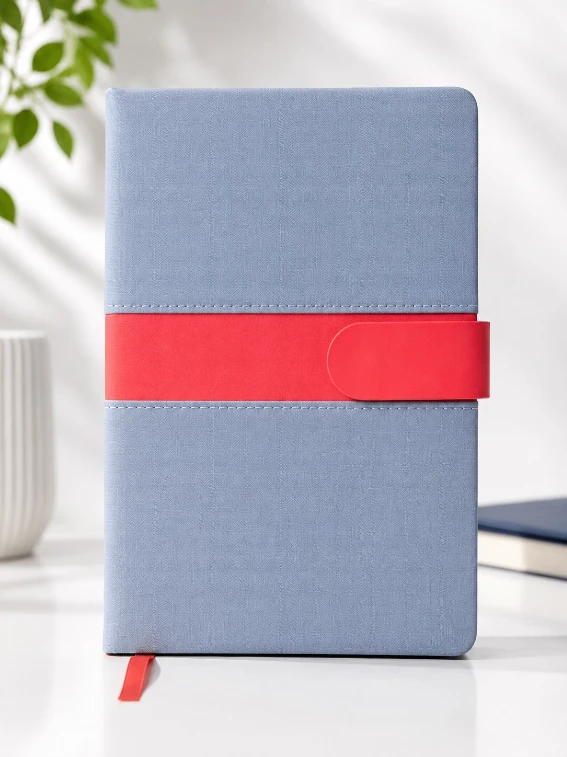
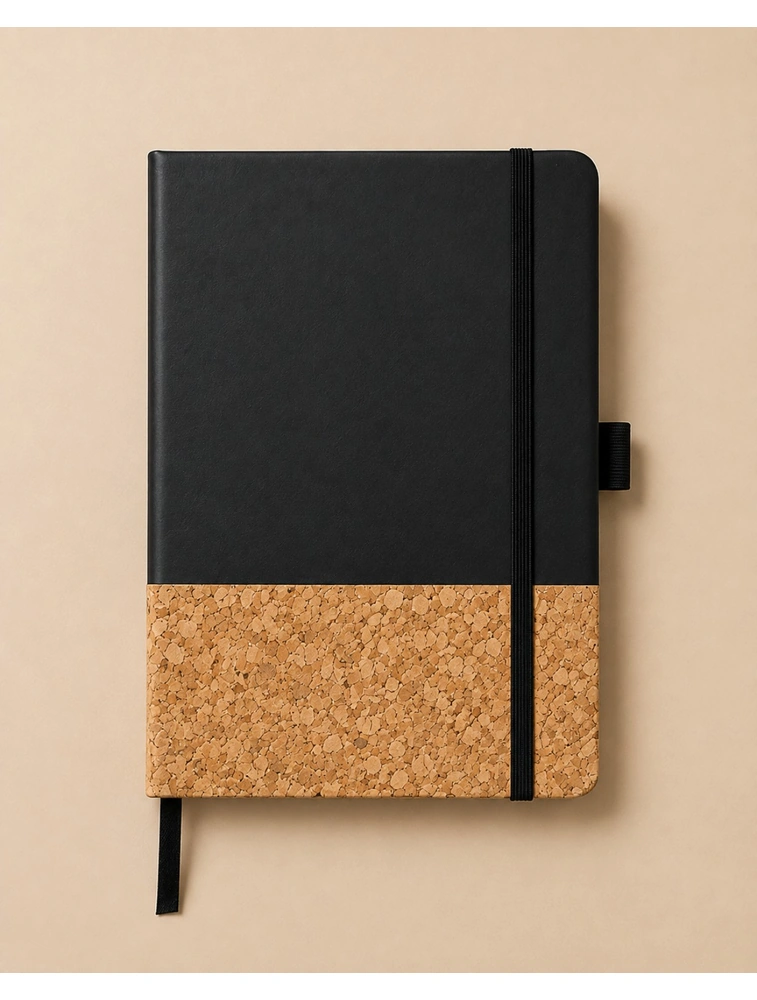
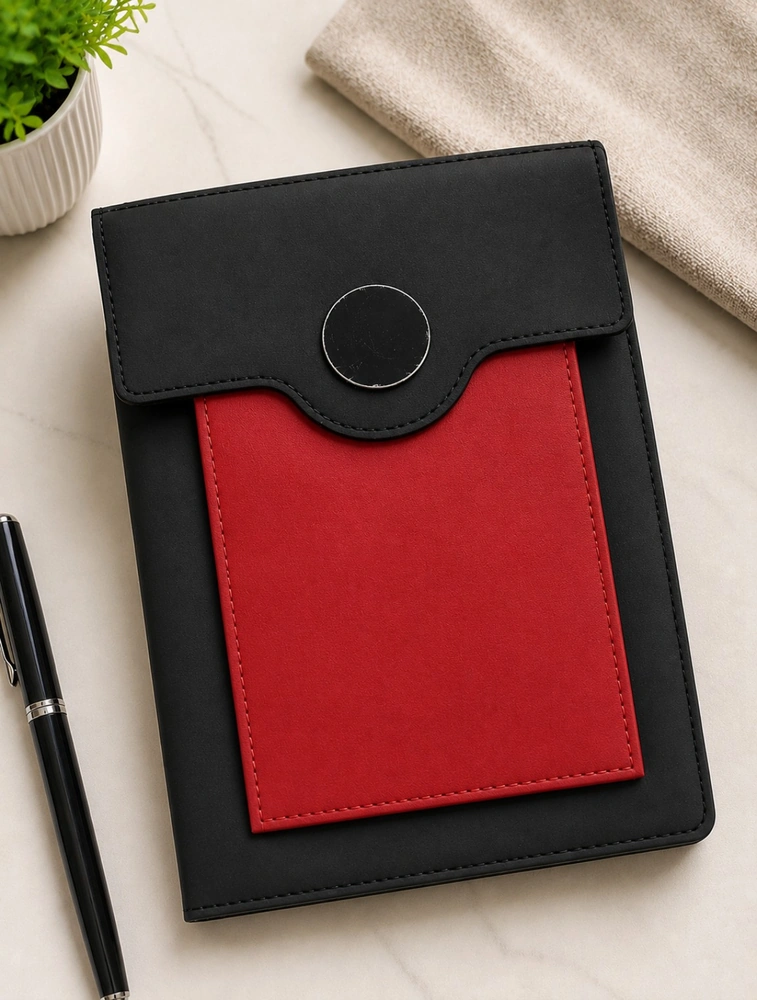
The RNR group is the Rs 118 tier: red, black, blue, white and maroon, all A5, all described with an elastic closure. The black one is the only listing in the group with a description detailed enough to specify against. It gives the material as PU base with Matty Vinyl Coating, the finish as matte, the size as A5 and the page count as 192, and it says a bookmark and a pen holder are available. It publishes no grammage. Those are the listing's own words and figures.
Why an unexplained abbreviation costs you money twice
It costs the seller first. Nobody types "RNR diary" into a search engine because nobody outside the supply chain knows what it stands for. A product name built around it is invisible to the exact demand it is meant to capture, and the five listings that carry it are competing for a phrase with no audience.
It costs the buyer second, and worse. You cannot write a purchase order against a trade abbreviation. If the invoice says "Black RNR Diary" and the delivery is wrong, the argument is about what RNR meant, and there is no published definition either side can point to. A specification that cannot be tested is not a specification.
What to write instead of RNR
- The closure. Elastic band, magnetic flap, button, or none. The Rs 118 group is described with an elastic closure and the Rs 188 PU listing with a magnetic loop flap; those are two genuinely different products and the difference is worth naming.
- The cover construction. The black listing in this group says PU base with Matty Vinyl Coating. That is a coated synthetic and it should be written that way in your order, in those words.
- The fittings. Bookmark ribbon yes or no. Pen loop yes or no. The black listing says both are available; the other four in the group say nothing either way.
- Page count and ruling. 192 pages is stated on the black listing. Ruling is stated nowhere on this page, on any of the thirteen.
- Grammage. Not published on any of the five. Ask.
The recommendation to the seller, stated plainly
Rename the group after what it is. "A5 Soft Cover Diary with Elastic Closure, 192 Pages" is longer than "RNR Diary" and it is the phrase a procurement officer actually types. Keep RNR as an internal code on the pick list where it belongs. Thirty-eight per cent of a category should not be named in a language only the warehouse speaks.
Cover & BindingQueries TargetedRNR diary meaning, RNR notebook elastic closure, diary product name abbreviation wholesale
Soft bound, glued or section-sewn: which binding is still holding together in December?
Only two binding types are named anywhere on this page. The Rs 102 softbound diaries state Soft Bound in the specification table and the Rs 188 PU listing states section-sewn hardbound in its description. The five RNR listings state nothing at all. Binding, not cover, decides whether the diary is intact in December.
What the three constructions are
Section-sewn. The pages are gathered into folded sections and each section is stitched through the fold with thread, then the sewn block is attached to the case. Because the thread runs through the fold rather than gripping a cut edge, an individual page cannot be pulled out on its own, and the book will open flat without stressing the spine. It is the most expensive of the three to make and it is the only one on this page that is named as such, on the Rs 188 PU leather listing.
Perfect or glued binding. The folds are milled off, the exposed edge is roughened, and adhesive holds the individual leaves to the spine. It is fast, it is cheap, and every page is held by adhesive alone. It is the standard construction for a paperback. Forced flat repeatedly at the same opening, it is the construction that eventually releases a page.
Soft bound. This is a description of the cover, not of the block. It tells you the cover is flexible. It does not tell you whether the block inside is sewn, glued or stapled. The Rs 102 listings on this page state Soft Bound as the binding type and Polypropylene (PP) as the cover material, which between them describe the outside of the diary and leave the inside unstated.
Why the distinction is the whole of the durability question
A diary is not a paperback. It is opened and flattened at a different page every working day for roughly two hundred and fifty days, and it is written in, which means pressure is applied to an open spread rather than merely read. That is a duty cycle a glued spine was not designed for. The cover material — PP, PU, vinyl-coated, bamboo panel — is what the buyer looks at and what the catalogue photograph sells. The binding is what determines whether the thing is still usable at the end of the year, and on eleven of the thirteen listings here it is either unstated or described only in terms of the cover.
What to specify, and how to test it before you commit
- Name the block construction, not the cover feel. "Section-sewn" or "sewn and glued" or "perfect bound" — one of those three words, in the purchase order.
- Ask how many pages are in a section. On a sewn book this tells you how many stitching stations the block has.
- Open the sample flat at the middle and look into the gutter. Visible thread crossing the fold means sewn. A solid band of adhesive on a cut edge means glued. This takes four seconds and it is the single most useful thing you can do with a sample.
- Then open it flat at the front quarter and the back quarter. The failure point of a glued block is not the middle; it is where the leverage is longest.
- Write the failure standard into the acceptance terms in your own words — for example, that no page shall detach under normal use within the calendar year — and agree what happens if it does.
Where each construction is the right answer
For a promotional give-away at a two-day exhibition, a glued block is entirely adequate and paying for sewing is waste. For a diary handed to a client or a board member with your logo on the cover, the binding is your reputation for the next twelve months and sewing is cheap insurance. For anything that functions as a record rather than a notebook — a register, a log, a book someone must be able to produce later — sewing is not a preference, it is the point.
Cover & BindingQueries Targetedsection sewn diary binding, soft bound vs hardbound diary, perfect binding diary pages falling out
PP, "PU leather", vinyl-coated and bamboo: what are you actually buying?
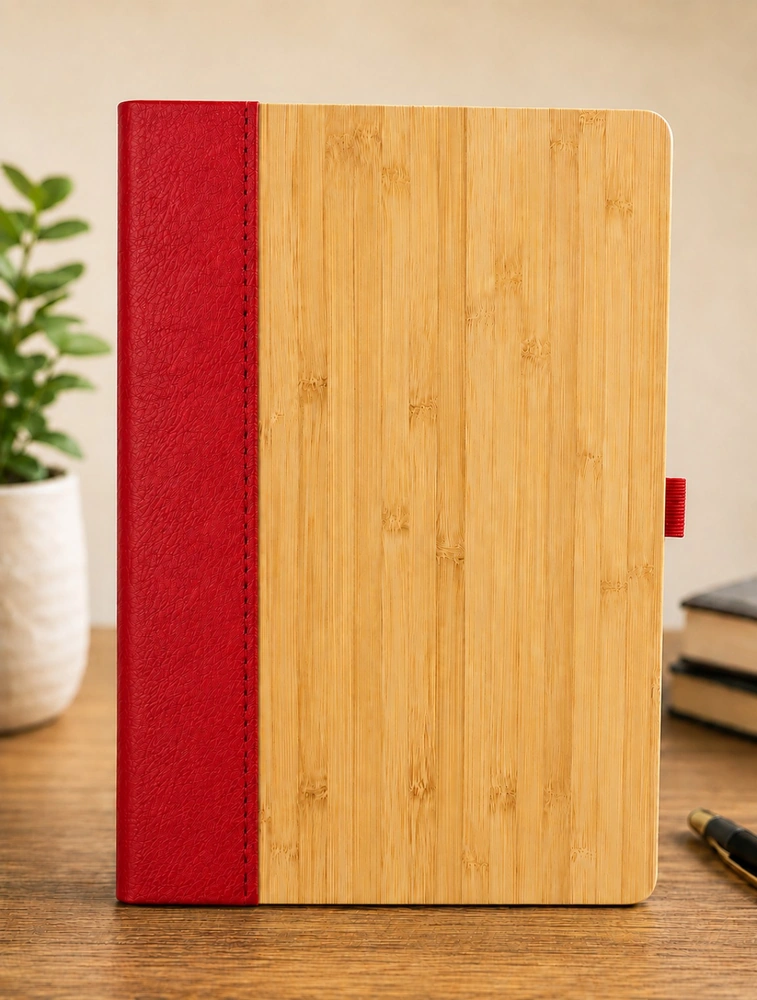
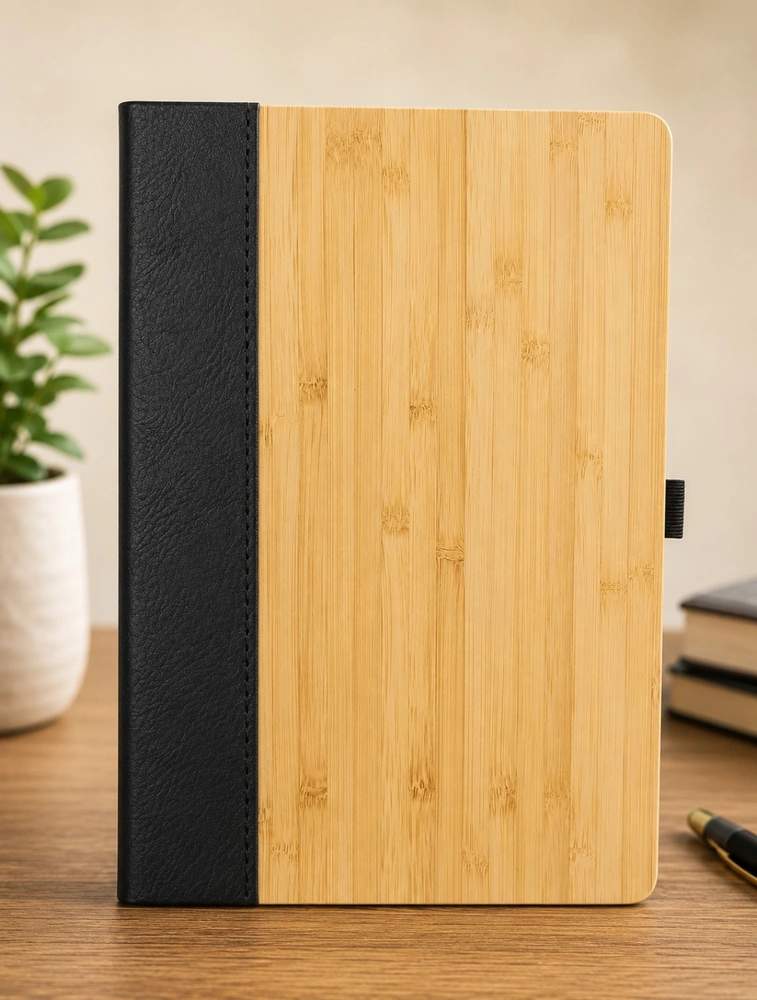
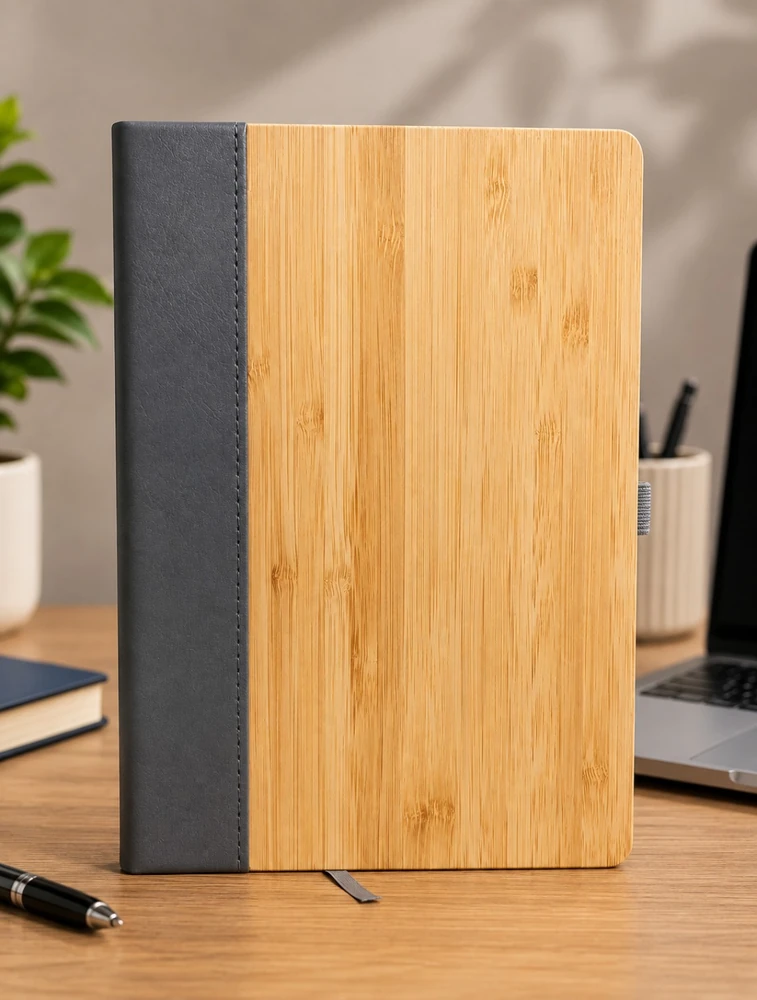
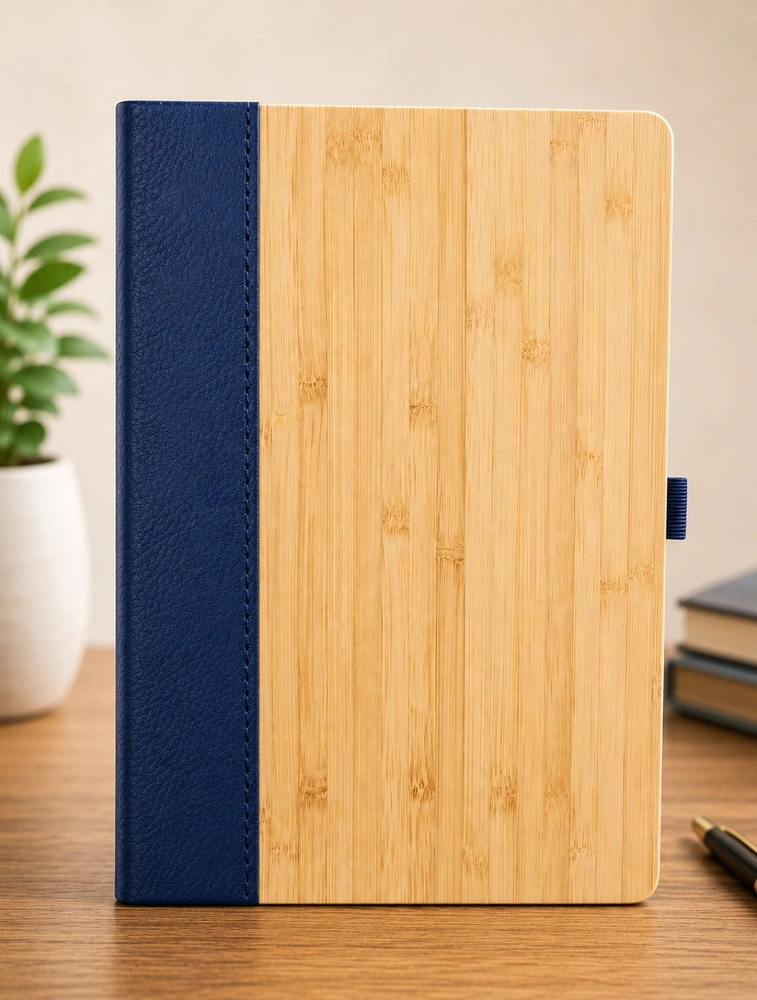
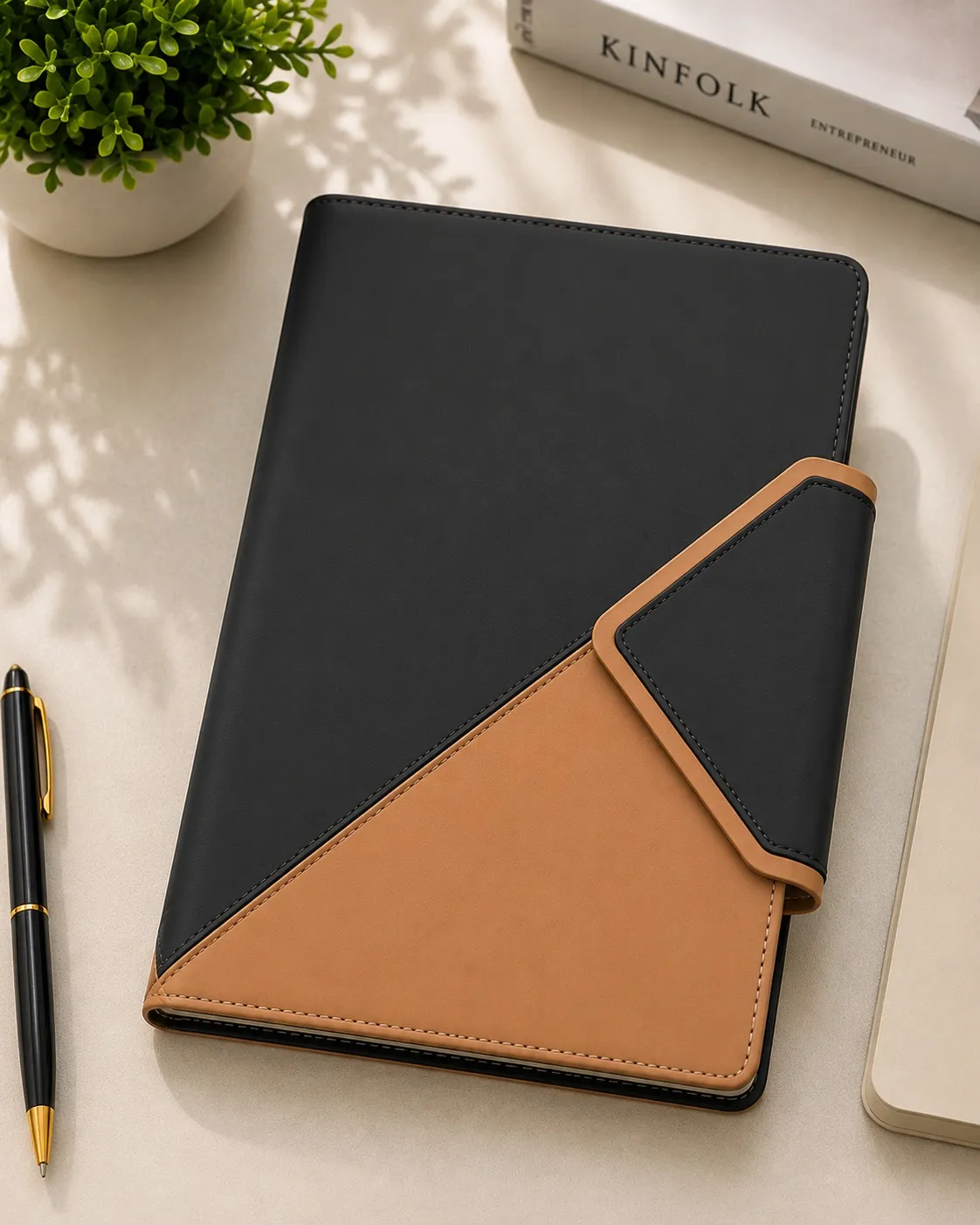
Four cover constructions appear on this page and none of them is leather. The Rs 102 listings state Polypropylene (PP). The Rs 118 group states PU base with Matty Vinyl Coating. The Rs 188 group uses what the page calls "PU leather", and three of those combine it with a bamboo front panel described as 50 per cent natural bamboo.
Taking the four in turn, in the listings' own words
Polypropylene (PP). Stated as the cover material in the specification table of the Rs 102 A5 softbound listings. PP is a thermoplastic sheet. It is wipe-clean, it does not absorb ink or water, it takes a screen print readily and it will not take a deboss, because there is nothing under the surface to compress. It is the correct choice for volume and for anything that will live in a bag.
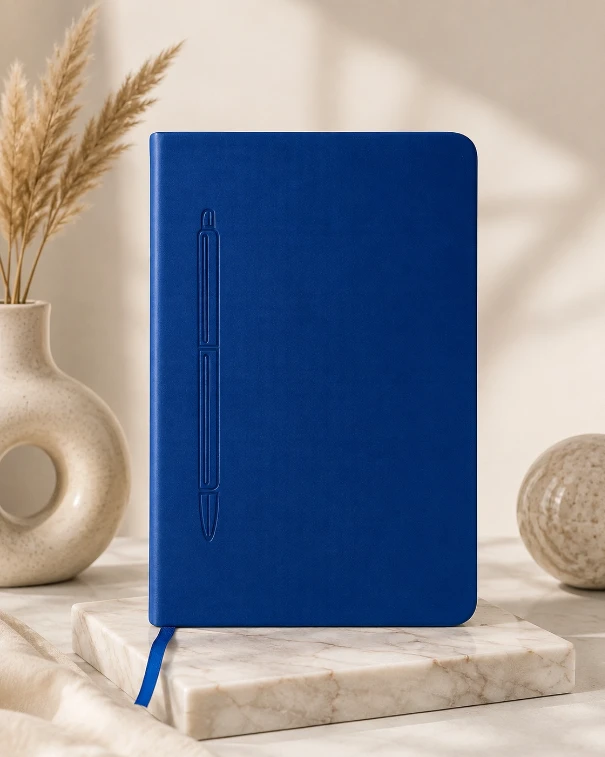
PU base with Matty Vinyl Coating. Stated in the description of the black Rs 118 listing. Read literally, that is a polyurethane substrate with a vinyl top coat and a matte finish. It is a coated synthetic. It is the construction that gives a soft hand and a uniform surface at a moderate price.
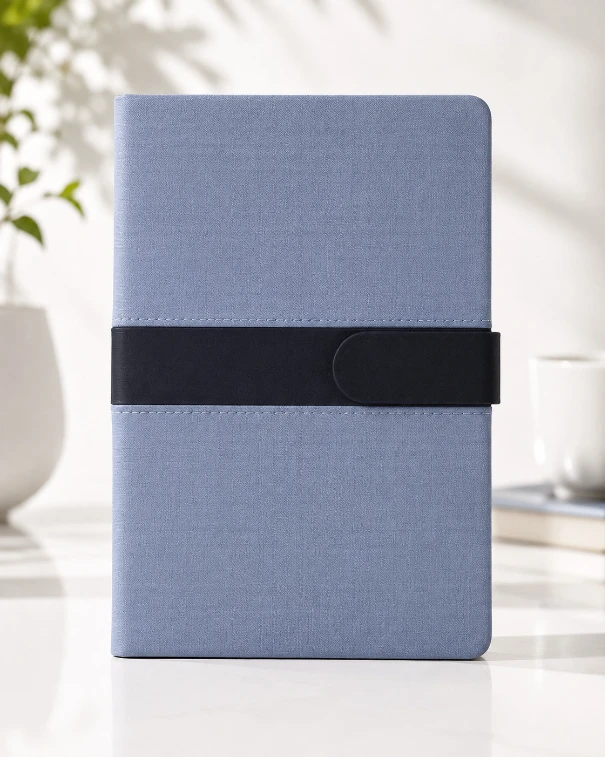
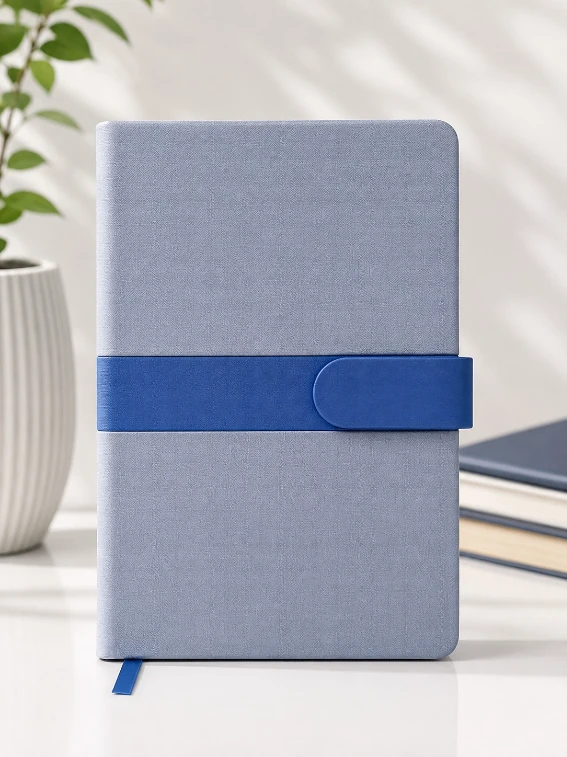
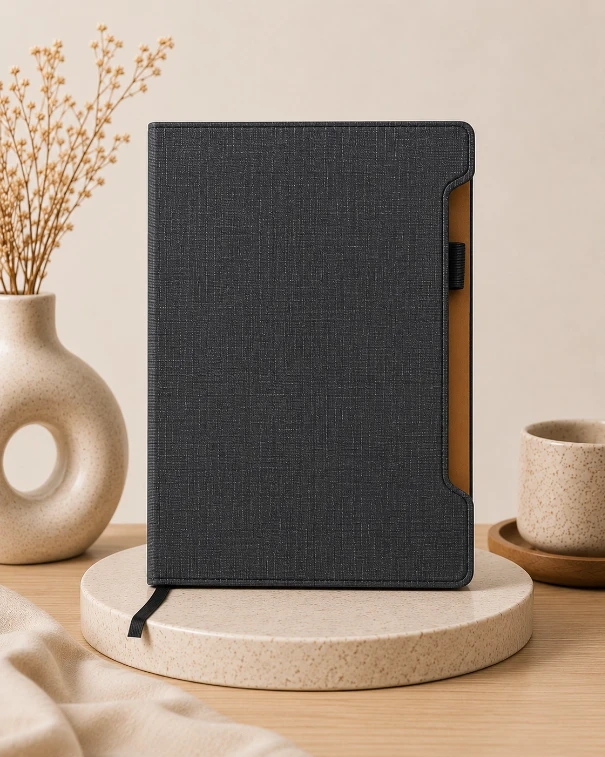
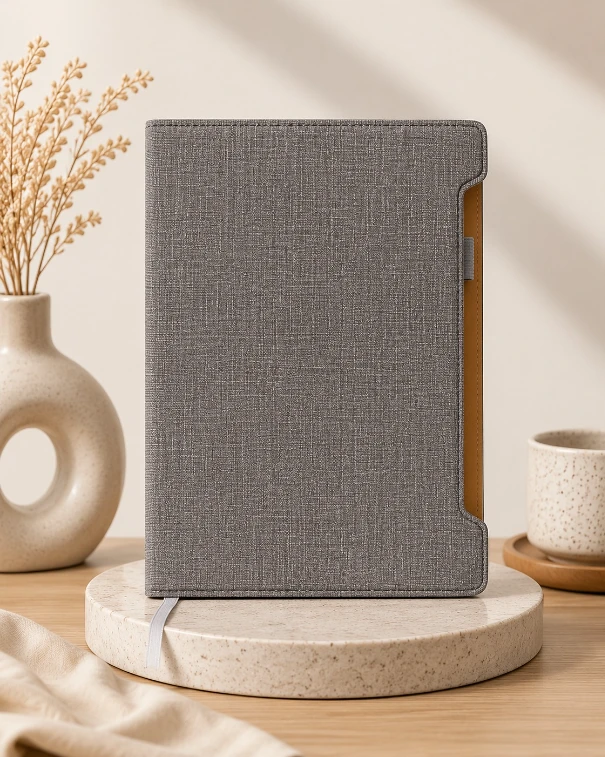
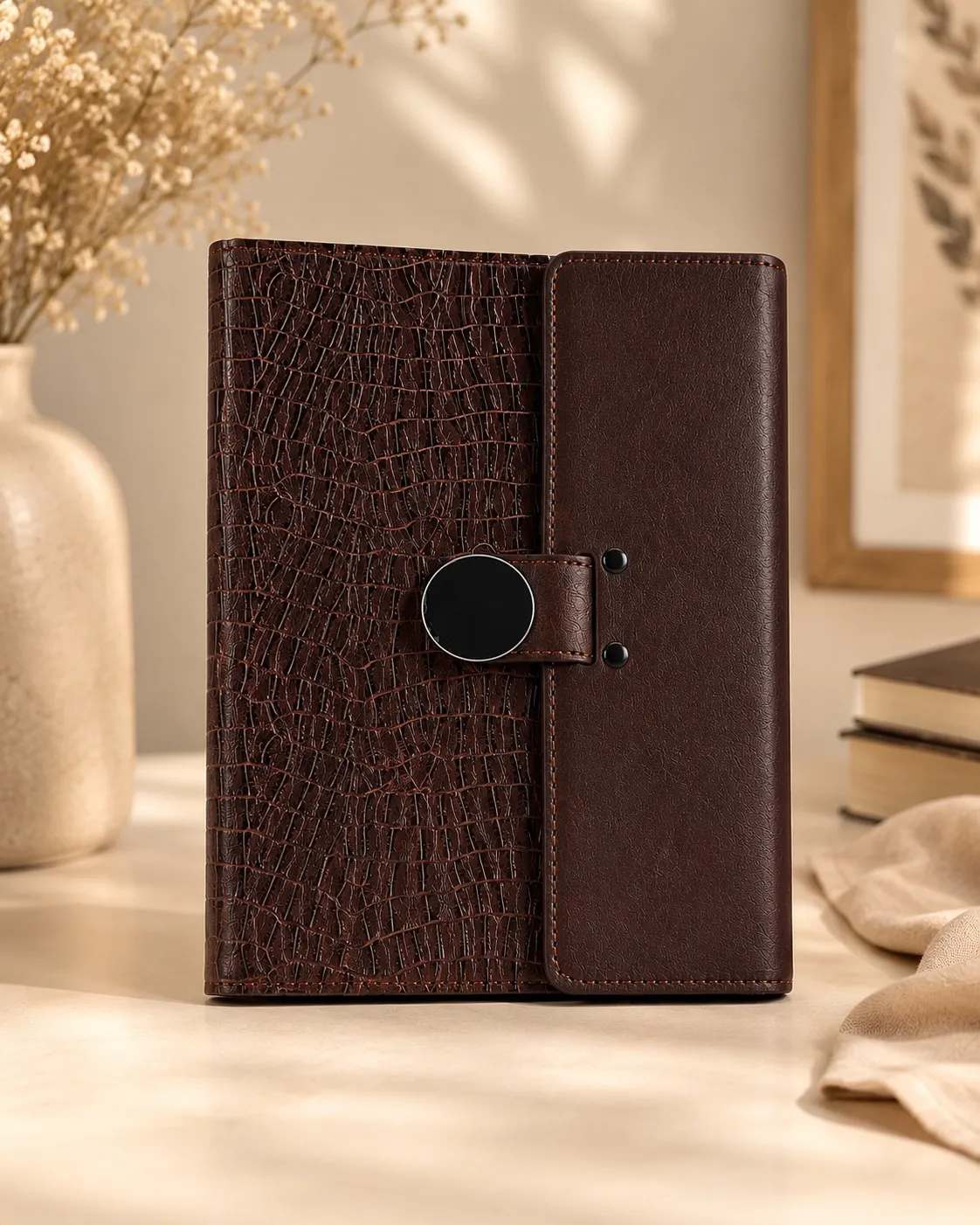
"PU leather". This is the page's phrase and we reproduce it as the page's phrase, not as a material description. PU is polyurethane. It is a synthetic coated fabric. It is not leather, it contains no hide, and it should not be described as leather in your own catalogue, packaging or tender response: not genuine, not real, not full grain, not top grain, not bonded. The Rs 188 black listing further describes its surface as anti- scratch textured with a magnetic loop flap, also in PU.
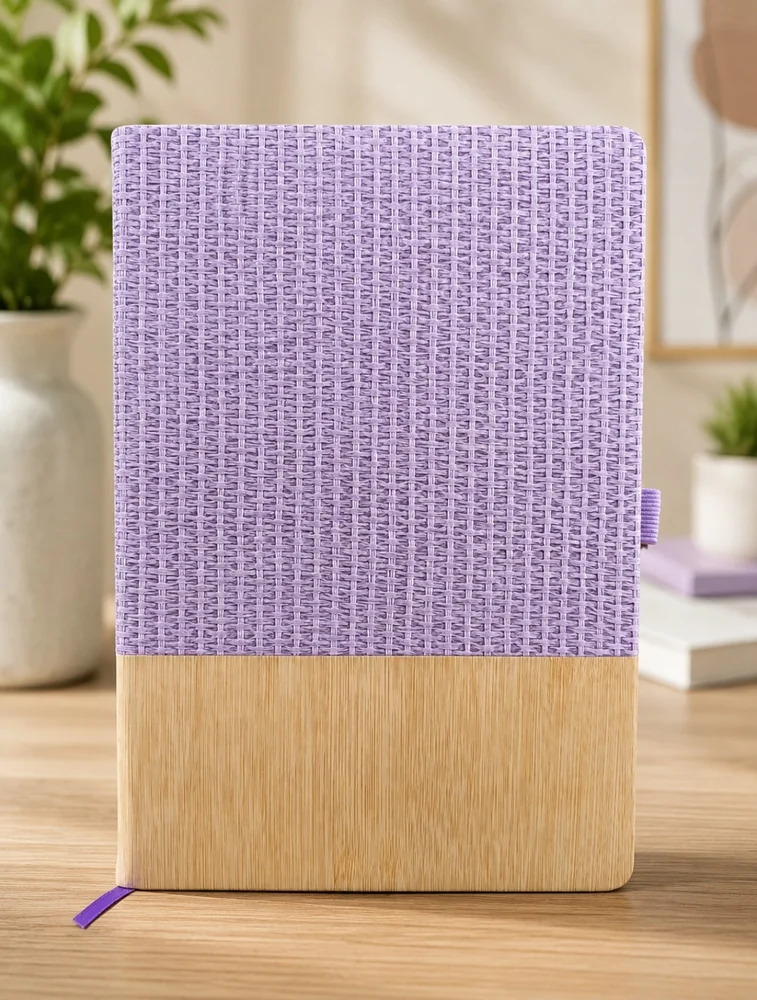
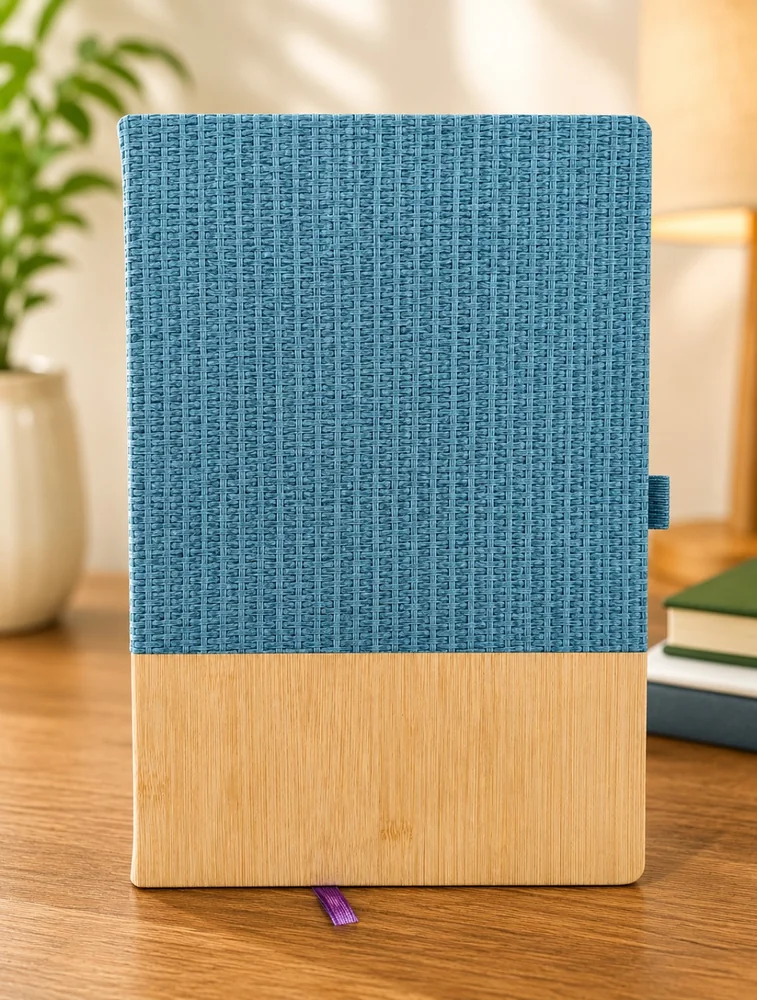
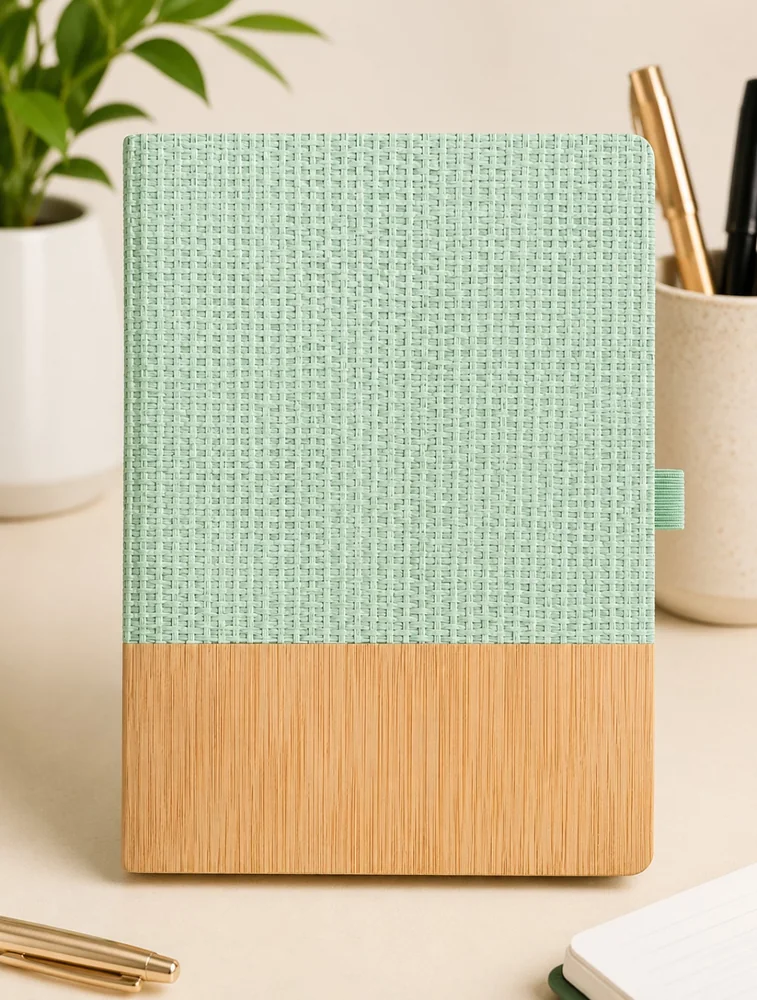
Bamboo. Three Rs 188 listings state a front cover of 50 per cent natural bamboo and 50 per cent matte PU, with the back cover in matte PU. So the bamboo is a front panel on a half-and-half front cover, not the material of the diary. That is exactly what those listings say and it is the whole of what is established.
Why the naming matters more than the feel
A buyer in a government or institutional tender copies the supplier's material description into the tender response. If the supplier's word was "leather" and the item is polyurethane, the buyer has made a material misdescription in a procurement document and the buyer, not the supplier, is the one holding it. The same exposure exists for a brand printing the material onto a swing tag and for a retailer putting it on a product page. Describe a coated synthetic as a coated synthetic and the risk disappears.
What to put in the specification
- The substrate and the coating as separate facts — for example "polyurethane-coated fabric, matte finish", not a single marketing word.
- Where each material sits. Front panel, back cover, spine and flap can all differ, and on the bamboo listings they demonstrably do.
- The finish. Matte, textured, anti-scratch: these are named on the Rs 188 listings and they change how a printed logo reads.
- The fittings and their material. Magnetic flap, elastic closure, pen loop, bookmark ribbon.
- The words the supplier warrants. Ask for the material description in writing on the proforma invoice, because that is the document your own compliance team will be shown.
The limit of what we are saying
We are describing what the listings on this page state and pointing out where a common trade phrase does not match the material underneath it. We are not giving you labelling, customs or consumer- protection advice, and the requirements that apply to material descriptions differ by market. Your own legal or compliance team should approve the wording you publish.
Cover & BindingQueries TargetedPU leather diary cover material, polypropylene diary cover, vinyl coated diary bamboo cover bulk
Can a bamboo-and-PU diary go into your sustainability report?
No. Not on the evidence this page publishes. Three listings describe a front cover as 50 per cent natural bamboo and 50 per cent matte PU, and one describes itself as "a premium eco-inspired notebook". There is no recycled content figure, no chain-of-custody certificate, no carbon number and no third-party mark anywhere on the category.
What is actually established
Exactly two things. First, that on three of the thirteen listings the front cover is stated to be half natural bamboo and half matte polyurethane, with the back cover in matte polyurethane. Second, that one of those listings uses the phrase quoted above in its marketing copy. Nothing else on this category speaks to environmental performance at all, and we are not going to infer any.
Why half a bamboo panel is not a sustainability position
A reporting claim has to survive being audited. The questions an assurance provider asks are: what proportion of the total product mass is the material in question, where did it come from, who verified that, and against which scheme. On these listings the answer to the first is unstated, because a front-panel percentage is not a product-mass percentage; the answer to the second and third is unstated; and there is no answer to the fourth, because no scheme is named. The other half of that same cover, and the whole of the back cover, is a petrochemical-derived coated synthetic.
What a defensible claim would require, and what it would cost you to ask
- A named scheme. Chain-of-custody schemes exist for forest and bamboo fibre and for paper. A claim is only as good as the certificate number behind it, and a certificate number can be looked up.
- Recycled content as a percentage of what. Of the paper block, of the cover, or of the finished unit — three different numbers, and only one of them is the one your report needs.
- Post-consumer versus pre-consumer. These are not interchangeable and an auditor will ask.
- Test evidence for any degradability statement. Words like biodegradable and compostable have defined test methods behind them in the markets that regulate them; without the test they are not claims, they are adjectives.
- The mass breakdown of the finished product. Paper, board, cover material, adhesive, elastic, ribbon, packaging. Without it no percentage means anything.
What we will say, and what we will not
We will tell you the material composition each listing states, in the listing's own words. We will source and specify to a documented requirement if you set one — a stated recycled percentage, a named chain-of- custody scheme, a paper grade — and we will pass through whatever certification the mill actually holds, with its number. What we will not do is describe a factori diary as eco, green, sustainable, recycled, tree- free or carbon anything, because none of that is established for these products and a claim that fails an audit is worse for you than no claim at all.
The disclaimer that belongs on this one
Environmental marketing is regulated differently in every market you might sell or report into, and the rules move. Nothing here is legal or regulatory advice on what you may publish. Take the material facts, take the certificates if there are any, and have your own counsel or sustainability team decide what can go in the report.
Records, Claims & TariffQueries Targetedeco friendly diary bulk claim, bamboo diary sustainability, recycled paper diary corporate gifting
Deboss, foil, screen print or laser: which mark suits which cover?
The cover material decides the mark, not the other way round. Debossing needs a compressible surface, which the PU and vinyl-coated covers give you and the polypropylene ones do not. Foil needs heat and pressure on the same kind of surface. Screen print sits on top of almost anything. Laser suits the bamboo panel.
Matching the four methods to the four covers on this page
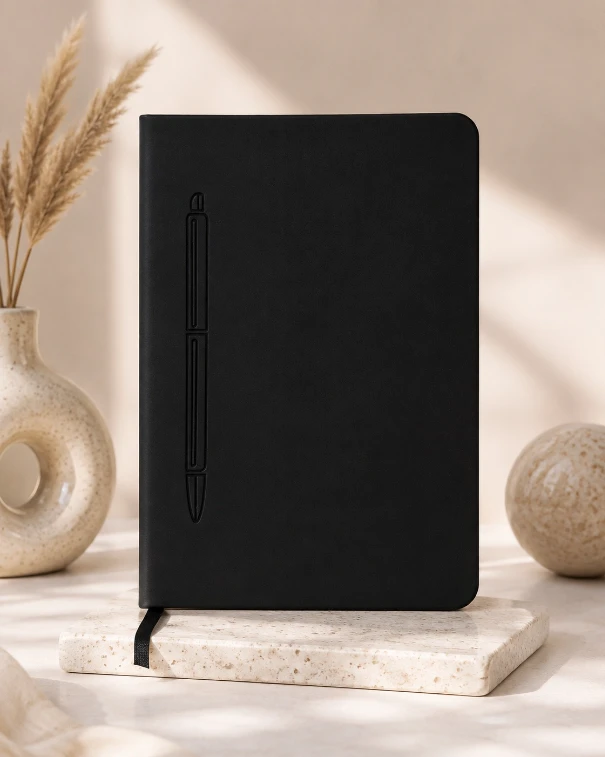
Deboss on PU and vinyl-coated covers. A heated die presses the artwork into the surface and the impression stays. It is the mark most people mean when they say "a proper corporate diary". It reads as texture rather than colour, so it wants a bold, simple logo with generous line weight; fine serifs and thin rules disappear into the impression. The Rs 118 vinyl-coated group and the Rs 188 PU group are the candidates here.
Foil on the same covers. Same die, same heat, with a metallic or pigment foil laid in the impression so the mark carries colour as well as depth. Gold and silver are the defaults; the thing to check is whether the foil reads against a matte finish, because the Rs 118 and several Rs 188 listings state matte, and a matte ground changes how metallic foil sits.
Screen print on polypropylene. PP will not deboss, so on the Rs 102 listings the mark goes on the surface. Screen printing gives strong opaque colour and it is the cheapest method at volume. Specify the ink system and ask for a rub test on the sample, because ink adhesion on a smooth thermoplastic is the whole question.
Laser on the bamboo panel. The three bamboo-front listings give you a natural wood surface, and laser marking burns the artwork into it in a darker tone. It needs no ink, it will not rub off, and it is tonal rather than coloured. It also varies with the grain of each panel, which is a feature to some buyers and a rejection to others — decide which you are before you approve the sample.
The five things to settle before artwork goes to the supplier
- Which panel. Front centre, front lower right, spine, back cover, or the inside first page. Each has a different die and a different cost.
- Size in millimetres and position from two edges. Never "centred" — centred on which axis, of which panel.
- Artwork format. Vector for deboss, foil and laser. A raster logo cannot be cut into a die cleanly at any size.
- One-colour version of the logo. Deboss and laser are tonal. If your brand only exists as a four-colour lockup, decide now what the single-tone version looks like rather than letting a factory decide it for you.
- A physical sample on the actual cover material before the run. A deboss on a matte PU and the same deboss on a textured PU are visibly different marks.
Where each buyer usually lands
Governments and institutions ordering in volume for issue rather than gifting generally take screen print on PP, because the mark is functional and the unit cost governs. Corporates ordering client and board diaries take deboss or foil on PU, because the diary is a twelve-month brand impression. Brands and retailers building their own line usually want the bamboo-panel laser or a blind deboss, because both photograph well and neither dates. Wholesalers should ask for the branding cost as a separate line rather than baked into the unit price, so they can quote blank and branded stock from the same purchase.
Cover & BindingQueries Targeteddiary logo printing bulk, deboss diary cover branding, foil stamping corporate diary customisation
Which of these is fit to be a register you must keep for ten years?
None of them, on the published evidence. ISO 9706 is the standard titled Information and documentation — Paper for documents — Requirements for permanence, and no listing on this page claims conformity with it. If a document must survive a ten-year retention rule, permanence is a paper property you specify separately.
What permanence actually means as a paper property
It is not durability and it is not thickness. A permanent paper is one formulated so that the sheet itself does not destroy the writing on it over time. ISO 9706 addresses that through a set of requirement categories: a minimum tear strength, a minimum alkali reserve, a maximum for oxidisable material expressed as a kappa number, and a pH range for a cold water extract. Those are the categories the standard covers. We are not quoting the limit values, because we have not verified them from the standard's own text and we are not going to put a number in your hands that we cannot source.
Note the standard's own boundary as well: it addresses unprinted paper and excludes boards. So even a conforming paper tells you about the block, not about the cover or the binding.
An edition change you need to know about
ISO 9706:1994 was withdrawn on 29 May 2025 and replaced by ISO 9706:2025, the second edition, published in May 2025. If a tender document in your organisation still cites the 1994 edition, it is citing a withdrawn standard. That is worth catching before the tender goes out rather than after a bid is disqualified.
Why this question is not academic for four of the six buyer types
Governments and public institutions run retention schedules that outlive the official who signed the purchase order. Schools and colleges keep attendance and examination records. Corporates keep statutory registers. Healthcare and facilities operators keep logs that are produced during inspection. In every one of those cases the book is not a notebook, it is evidence, and the failure mode is not that it looks tired — it is that the entries have faded, foxed or gone brittle at the fold by the time someone asks for them.
What to do about it, concretely
- Separate your two purchases. Corporate diaries and statutory registers are different products with different requirements. Buying them off the same line is the mistake.
- Specify permanence by standard for the register, by name and edition, and require the mill's evidence.
- Specify sewn binding for anything retained, for the reasons set out elsewhere in these questions. A glued block that sheds a page has lost the record, whatever the paper was.
- Specify the ink as well as the paper. Permanence of the sheet does nothing for an entry made in a medium that fades.
- Record the specification in the contract, not in an email thread, so that the requirement outlives the people who agreed it.
The disclaimer
Retention periods, record-keeping obligations and what constitutes an acceptable record are matters of law and sector regulation in your own jurisdiction, and they differ by document type. Nothing here is legal or compliance advice. We are telling you which paper property the question turns on and which standard names it, so that your own counsel or records officer can set the requirement and we can quote against it.
Records, Claims & TariffQueries Targetedarchival paper register requirement, ISO 9706 permanent paper, statutory register book bulk purchase
Register, exercise book or "other": where does a diary sit in heading 4820?
Heading 4820 of the Indian customs tariff covers registers, account books, note books, order books, receipt books, letter pads, memorandum pads, diaries and similar articles. Diaries are named in the heading text itself. Which eight-digit line inside it your consignment belongs to is a question for your customs broker, not for a category page.
The heading text, as published
Chapter 48 of the Indian tariff gives heading 4820 as: "REGISTERS, ACCOUNT BOOKS, NOTE BOOKS, ORDER BOOKS, RECEIPT BOOKS, LETTER PADS, MEMORANDUM PADS, DIARIES AND SIMILAR ARTICLES, EXCISE BOOKS, BLOTTING-PADS, BINDERS (LOOSE-LEAF OR OTHER), FOLDERS, FILE COVERS, MANIFOLD BUSINESS FORMS, INTERLEAVED CARBON SETS AND OTHER ARTICLES OF STATIONERY, OF PAPER OR PAPERBOARD; ALBUMS FOR SAMPLES OR FOR COLLECTIONS AND BOOK COVERS, OF PAPER OR PAPERBOARD".
The lines published beneath it
- 48201010 — Registers, account books
- 48201020 — Letter pads
- 48201090 — Other
- 48202000 — Exercise books
- 48203000 — Binders (other than book covers), folders and file covers
- 48204000 — Manifold business forms and interleaved carbon sets
- 48205000 — Albums for samples or for collections
- 48209010 — Blotting papers cut to size
- 48209090 — Other
Why we are showing you the structure and not choosing a line
Notice what the structure does and does not do. "Diaries" appears in the heading text, which settles the heading. It does not appear as its own eight-digit line, which means the diary has to find a home inside the sub-headings, and reasonable people can read that differently depending on how the article is constructed and what it is functionally for. A wire-stitched exercise book, a bound register and a PU-covered executive diary are three different articles even though all three are paper stationery.
Classification is decided by the article as presented, by the General Rules for the Interpretation of the tariff and by the chapter and section notes, and it is determined by the authority in the importing country. A supplier's opinion is worth nothing in a dispute; the broker's declaration and the ruling behind it are what count.
What to do instead of guessing
- Send your broker the actual specification — construction, cover material, binding, page count, whether it is dated, whether it is printed with a year — because those are the facts classification turns on.
- Ask about an advance ruling if the volume justifies it. A ruling obtained before the first shipment costs less than a reclassification after the tenth.
- Get the classification agreed before the proforma invoice is issued, not after the container is on the water.
- Keep the description on the commercial documents consistent with the specification you actually bought, including the material naming discussed elsewhere in these questions.
What we will not tell you
We will not tell you which line your consignment should be declared under, and we will not quote you a duty, GST or IGST rate. Rates change, they differ by origin and destination, and a figure from a supplier's web page is not a basis for a customs declaration. Nothing in this answer is customs, tax or legal advice. We supply the specification and the documents; your broker and your tax adviser make the call.
Records, Claims & TariffQueries TargetedHS code 4820 diary, customs heading diaries registers notebooks, diary import export classification India
Why does every diary here cost more than the price shown in the title?
Because the price in the title is the largest-quantity price. Every diary here has a three- step ladder and the entry tier is what a first order pays. The A5 softbound publishes Rs 107, Rs 105 and Rs 102. The RNR group publishes Rs 124, Rs 122 and Rs 118. The headline is the bottom rung.
The three ladders, as the product pages publish them
On the Rs 102 A5 softbound diaries the published tiers run Rs 107, then Rs 105, then Rs 102. On the Rs 118 RNR group they run Rs 124, then Rs 122, then Rs 118. On the Rs 188 group — the PU magnetic-flap and the bamboo combinations — they run Rs 198, then Rs 194, then Rs 188. In each case the number in the product title and in the category headline is the third rung, and the number a hundred-piece buyer actually pays is the first.
How much the first rung actually costs you
Expressed as a premium over the headline, the entry tier is a little under five per cent more on the softbound, a little over five per cent more on the RNR group, and a little over five per cent more on the premium group. That is the honest way to state it, and it is a small enough number that most buyers would shrug at it if they had been told. The problem is not the size of the premium. The problem is discovering it on the product page after budgeting from the category page.
The two numbers to write down before you build a budget
- The headline range: Rs 102 to Rs 188. That is what this category costs at its deepest published tier.
- The entry range: Rs 107 to Rs 198. That is what this category costs at the first published tier, and it is the number a hundred-piece order should be modelled on.
Budget on the second and you are never wrong. Budget on the first and you are short on every order below the top tier.
The minimum-order contradiction you should raise before you order
The FAQ block on this category says ready-stock items can typically be ordered from a single piece and that custom or branded runs usually start from 100 pieces per style per colour. Every one of the five product pages we sampled states a minimum order quantity of 100 Units. Those two statements do not agree, and the one that governs your order is the one on the product page for the item you are actually buying. Get the MOQ confirmed in writing on the quotation, per style and per colour, before you plan a spread across the thirteen listings.
What else moves the number
Branding is a separate cost and it should appear as a separate line, because its economics are different: a die is a one-off and the per-unit cost of a deboss falls much faster with quantity than the diary does. Packing differs by listing — the softbound diaries are described as bundle packed, the RNR group as individually polybagged into a master carton, and the premium group as individually bagged, wrapped and packed five to ten to a carton. Freight is quoted on cartons and cubic volume, not on pieces, so a carton figure given as a range rather than a fixed count is worth pinning down before you price delivery.
ProcurementQueries Targeteddiary wholesale price tiers, bulk diary quantity discount, diary price per piece 100 pieces
Six buyers, one catalogue: which of the three diaries is actually yours?
Thirteen listings, three products, three price points: Rs 102, Rs 118 and Rs 188. The softbound PP is the volume issue diary. The vinyl-coated RNR is the staff and delegate diary. The PU and bamboo group is the client and board diary. Which one is yours depends on who opens it.
Governments and public bodies
You are almost always buying the Rs 102 softbound, because issue volume governs and the specification has to be written in terms a tender can be evaluated against. That listing is the one on this page with a full eight-row specification table — product type, size, cover material, binding type, paper quality, total pages, finish and usage — which means it is the only one you can transcribe into a tender document without asking a single question first. Add the two fields the page never states: whether the diary is dated or undated, and the ruling. Anything you intend to retain as a record is a separate purchase, specified for permanence and sewn binding.
Schools, colleges and other institutions
Same product, different failure mode. Your diary is carried in a bag every day for an academic year by someone who is not being careful with it, which makes binding and cover abrasion the questions rather than finish. Specify the block construction rather than accepting "soft bound" as an answer, and specify the academic year rather than the calendar year if the diary is dated at all. Order per style per colour and confirm the minimum on each, because a spread across four house colours is four minimums, not one.
Corporates
You are usually buying two things and calling them one. Staff diaries are the Rs 118 group: presentable, elastic-closed, 192 pages on the listing that states a count, and cheap enough to issue widely. Client and board diaries are the Rs 188 group, where the section-sewn hardbound construction and the debossed or foiled cover are doing brand work for twelve months. Splitting the order into two lines almost always costs less than compromising on one, because you stop paying premium prices for volume issue and you stop handing a glued block to a board member.
Brands building their own line
The bamboo-front listings are your differentiator, with the caution set out in the sustainability question on this page: state the composition the listing states — a front cover of 50 per cent natural bamboo and 50 per cent matte PU, back cover matte PU — and claim nothing beyond it. Laser marking on the bamboo panel photographs well and does not date. Specify grammage, page count, ruling and dated-or-undated yourself, because these are the fields your own product page will need and this category does not publish most of them.
Retailers
Your customer buys with their hands, so the Rs 118 and Rs 188 groups outsell the Rs 102 on a shelf even though the Rs 102 is the better value on paper. The two things that will generate returns are a glued block that sheds pages and a diary that turns out to be dated for a year that has started. Get both answered before you take stock. And do not put the word leather on a shelf ticket for a polyurethane cover.
Wholesalers and distributors
You are buying the ladder, not the product. Model on the entry range of Rs 107 to Rs 198 rather than the headline range, ask for branding as a separate line so you can quote blank and branded from one purchase, and pin down cartons per unit rather than accepting a range, because your landed cost is a freight calculation before it is a piece price. Then ask the two questions the page does not answer — dated or undated, and ruled or plain — because those decide whether your unsold stock in January is worth full price or nothing at all.
What every one of the six should put in the purchase order
- Grammage in g/m2, with the tolerance clause named.
- Page count, stated as pages or as leaves, unambiguously.
- Ruling: ruled, plain, dotted or squared.
- Dated or undated, and if dated, which year and which calendar.
- Block construction, not cover feel.
- Cover material named as what it is.
- Finished size in millimetres, taken off the approved sample.
- Branding method, panel, position and size, as a separate cost line.
- Packing: units per carton as a fixed number, and carton dimensions.
- Minimum order quantity, confirmed per style and per colour.
ProcurementQueries Targetedcorporate diary bulk buying guide, government diary tender supply, wholesale diary distributor India
From ₹102excl. GST
View cart & checkout ›