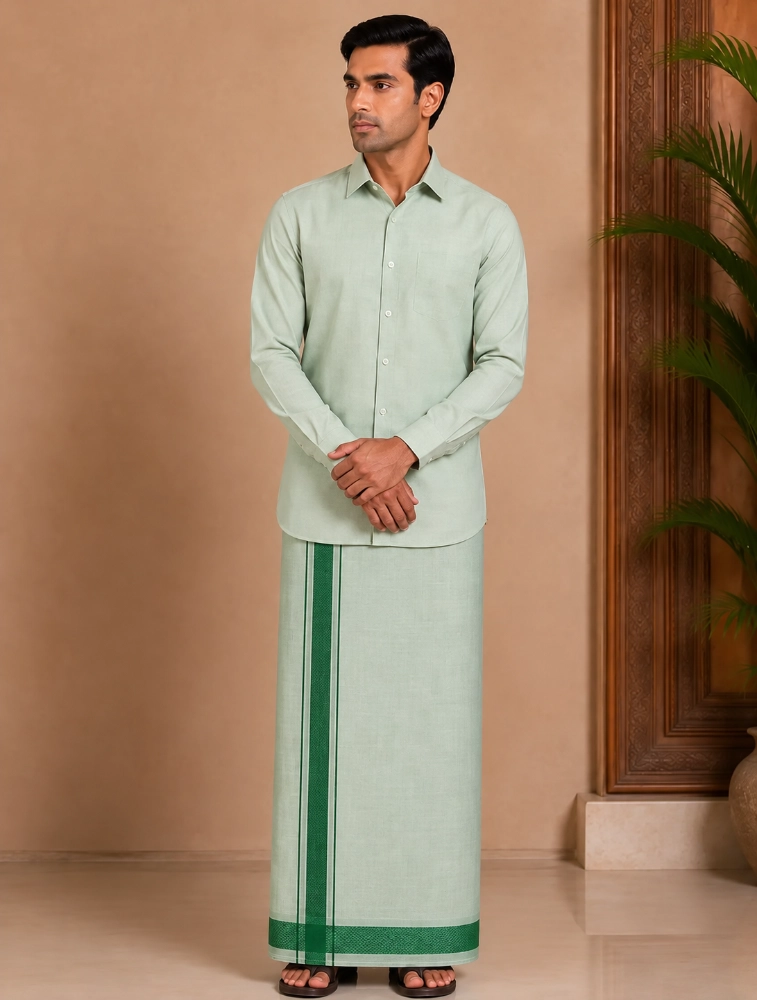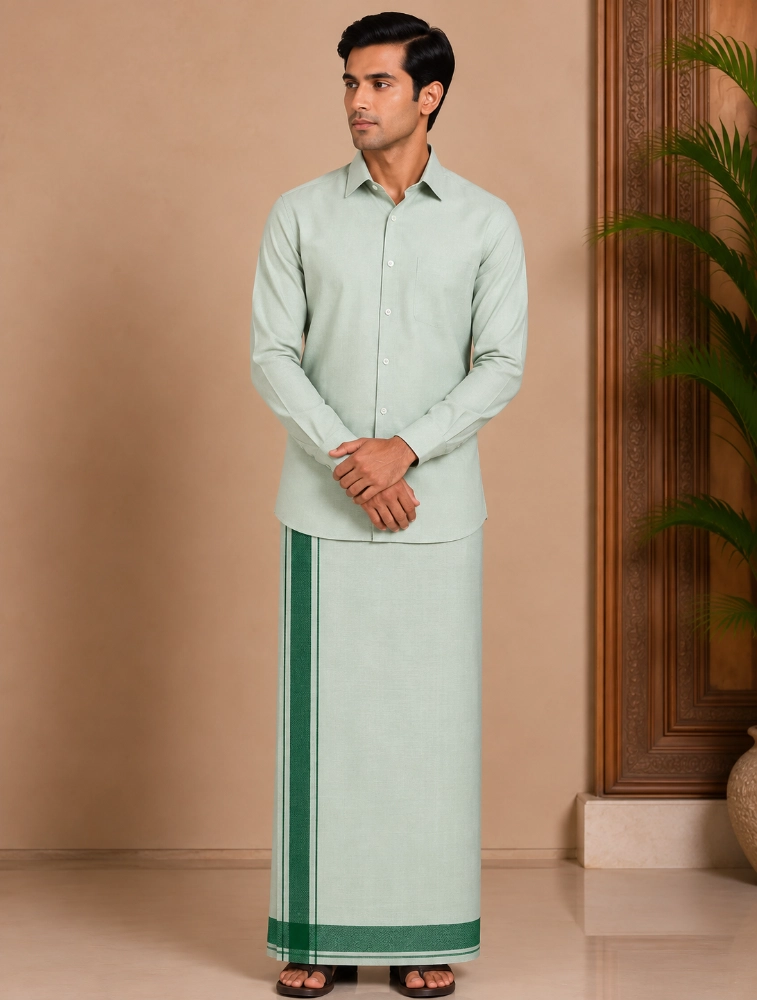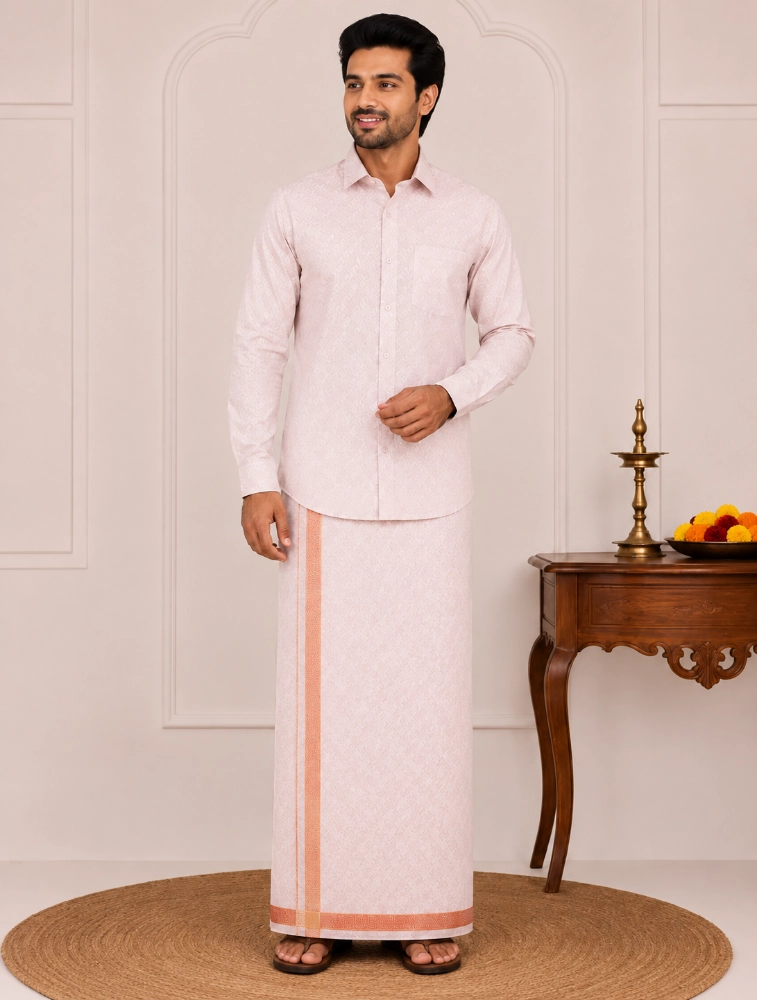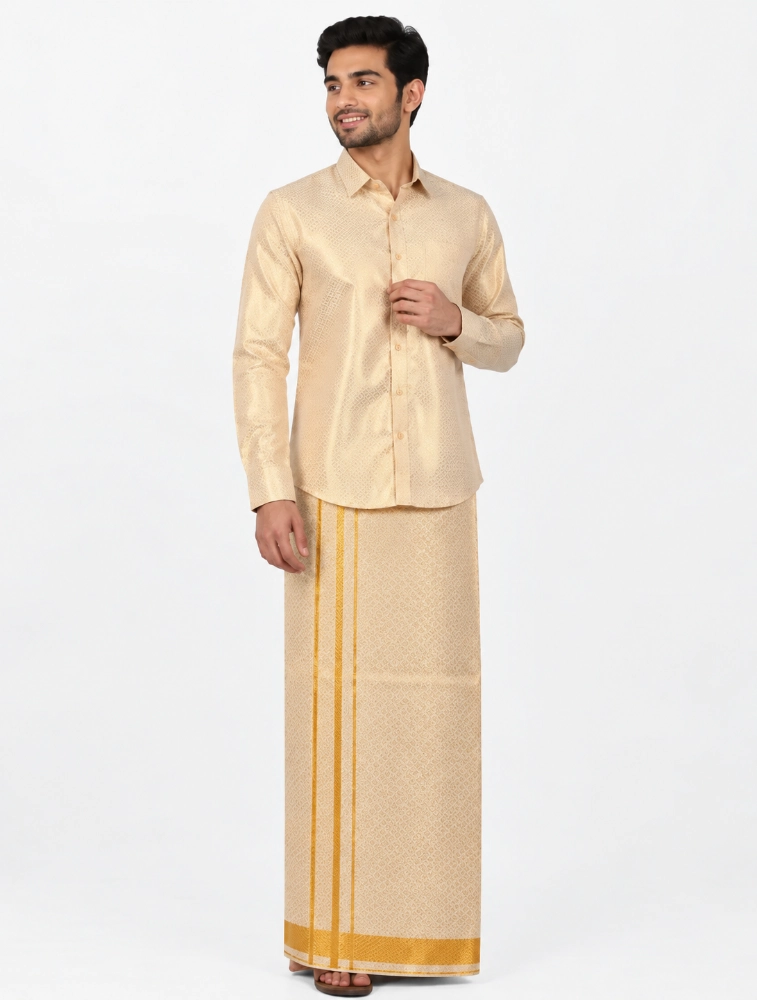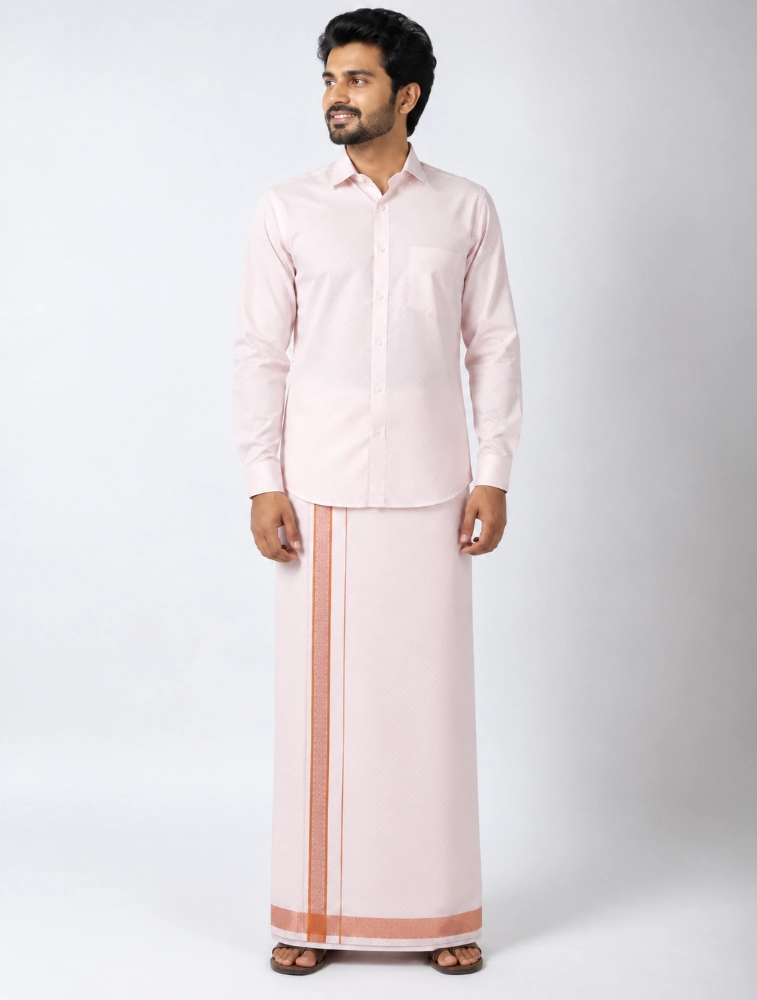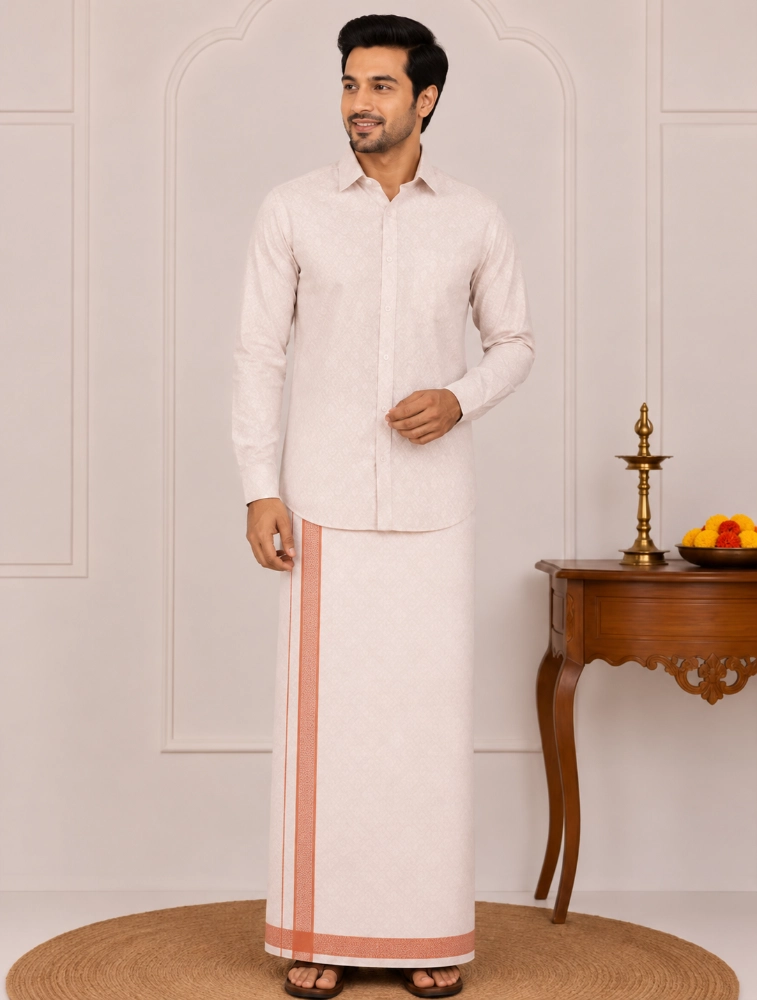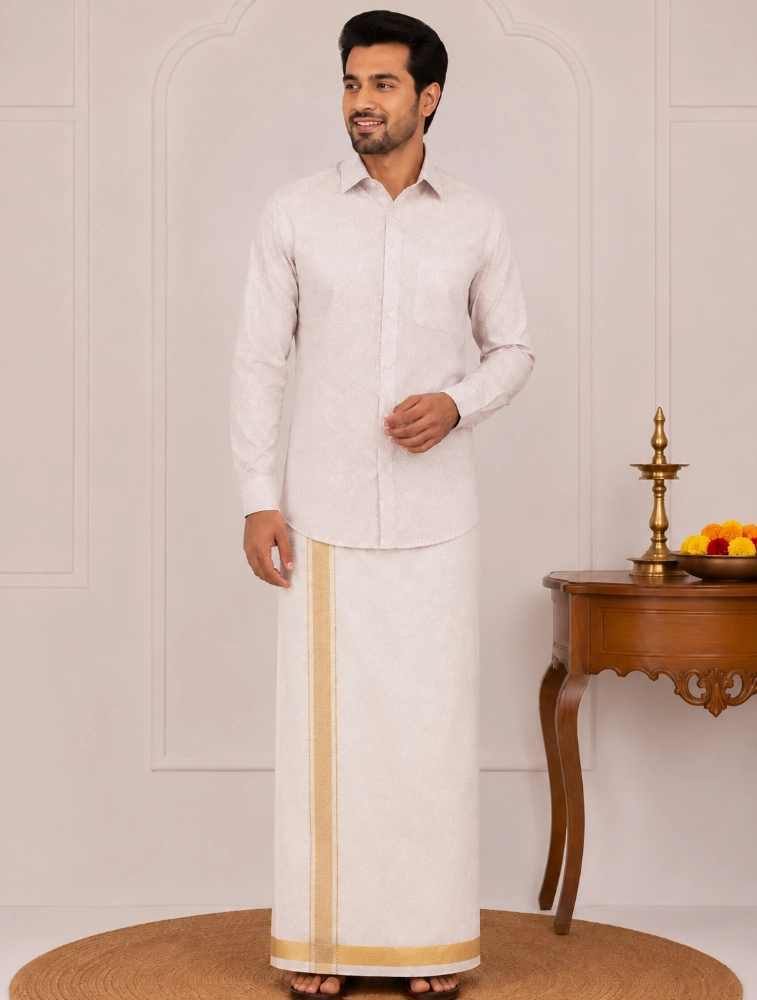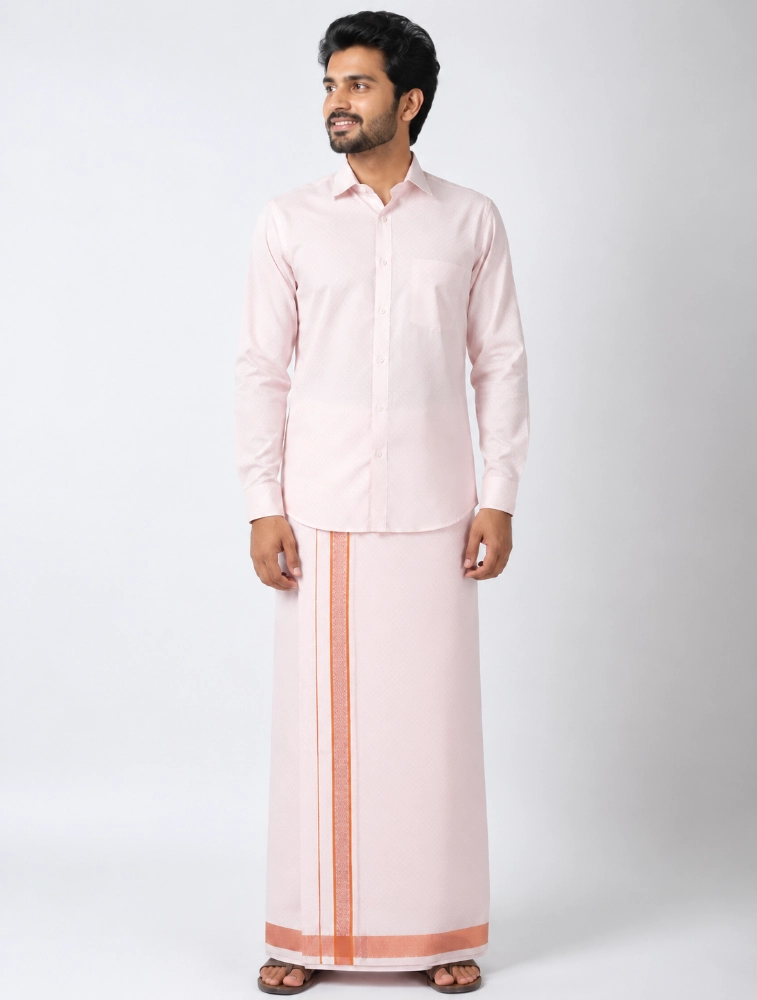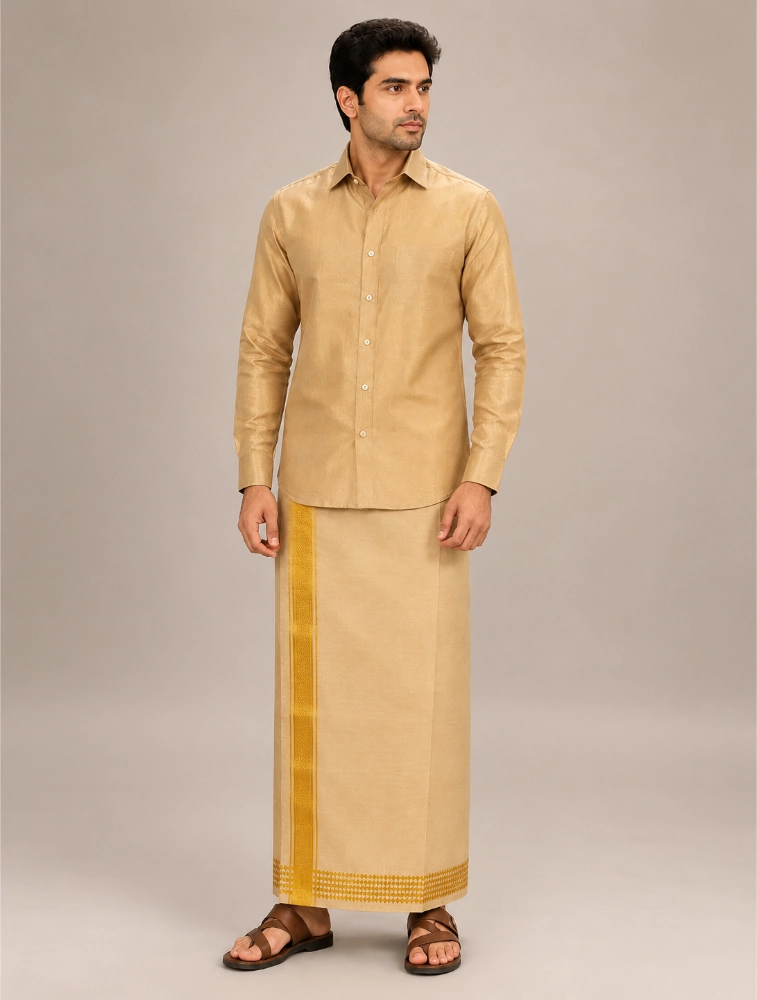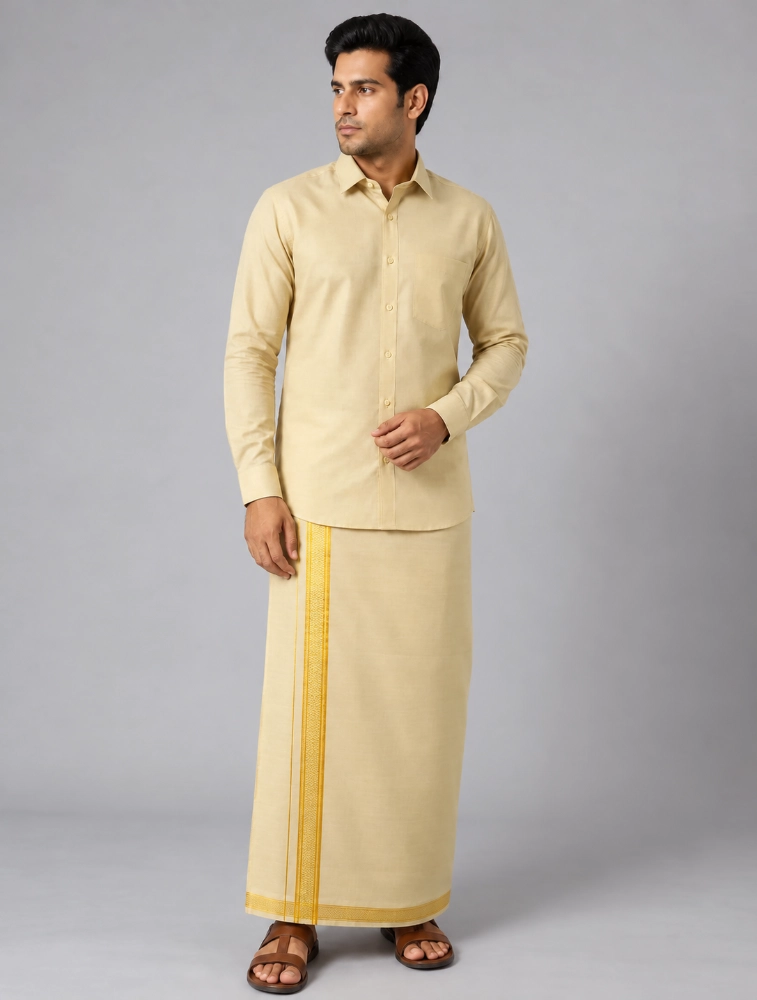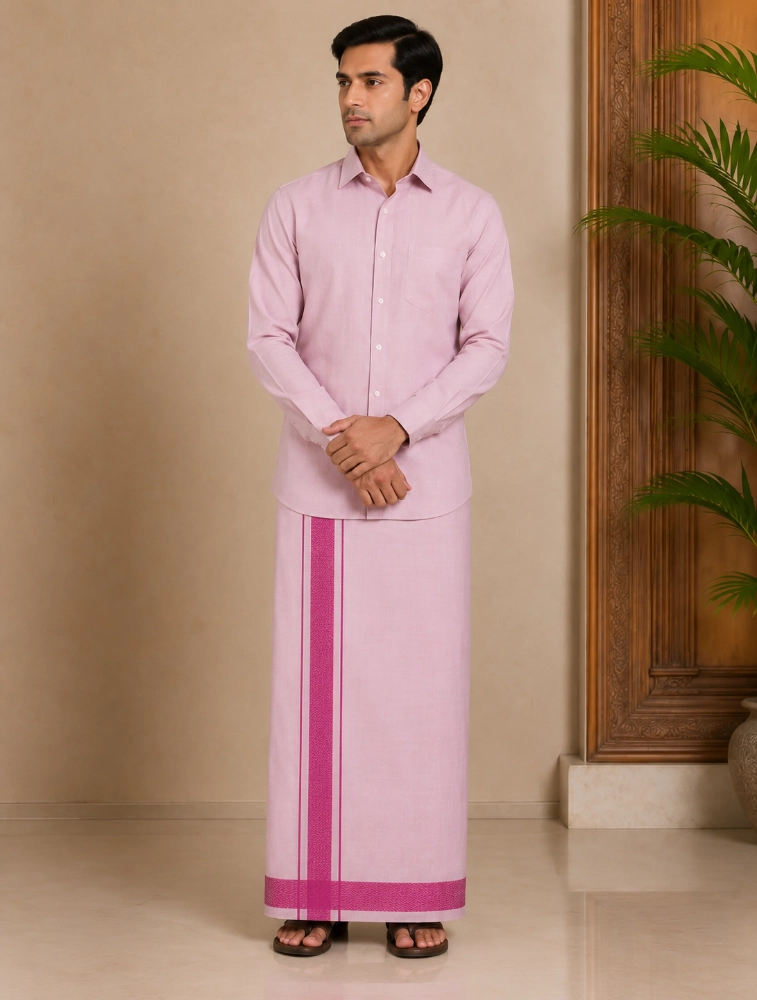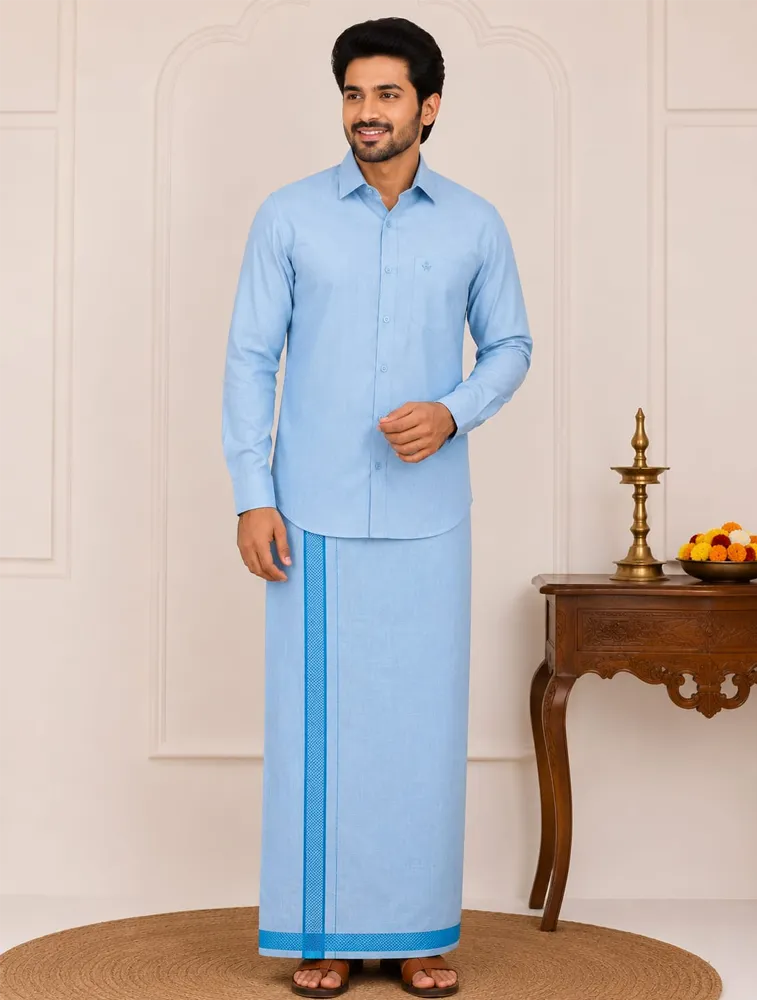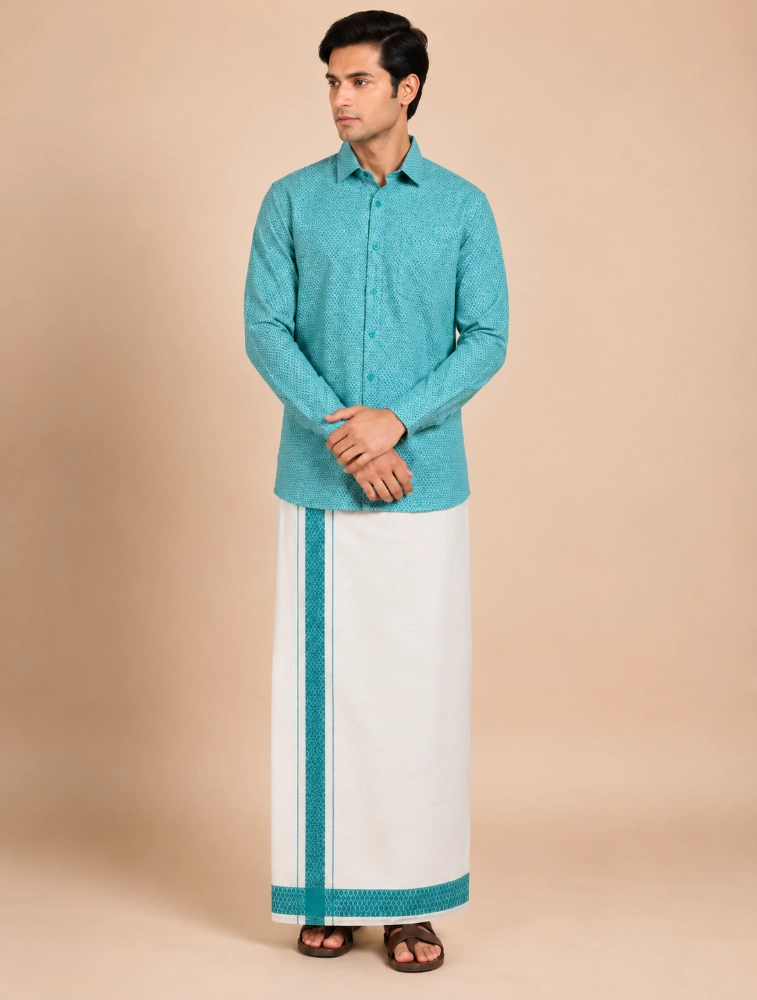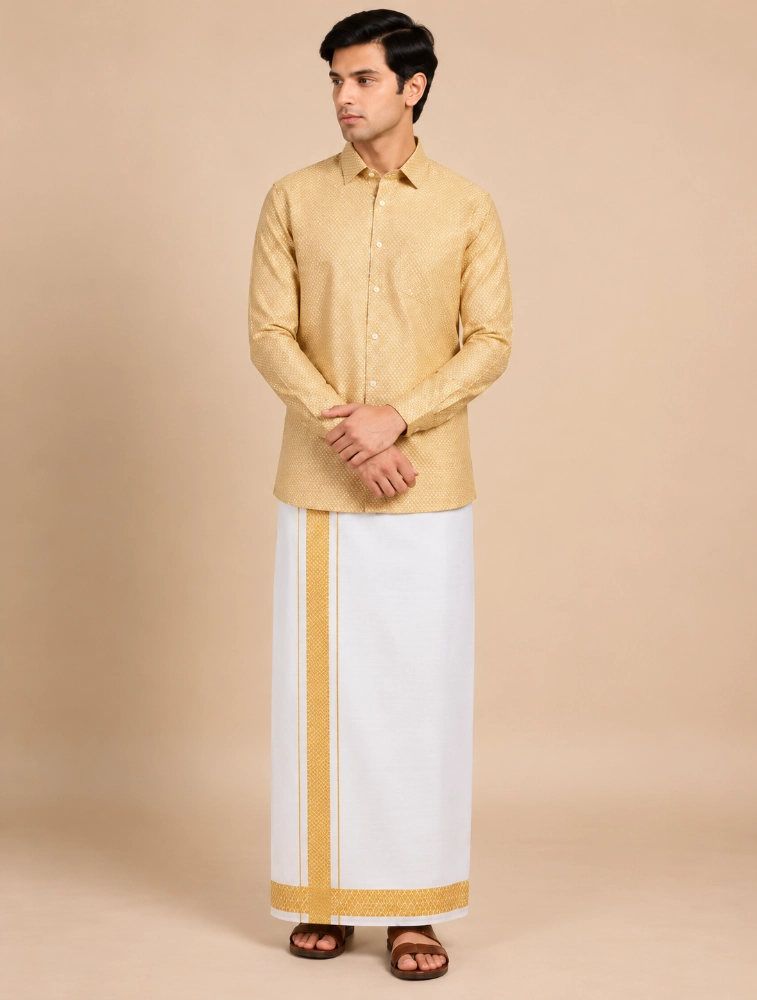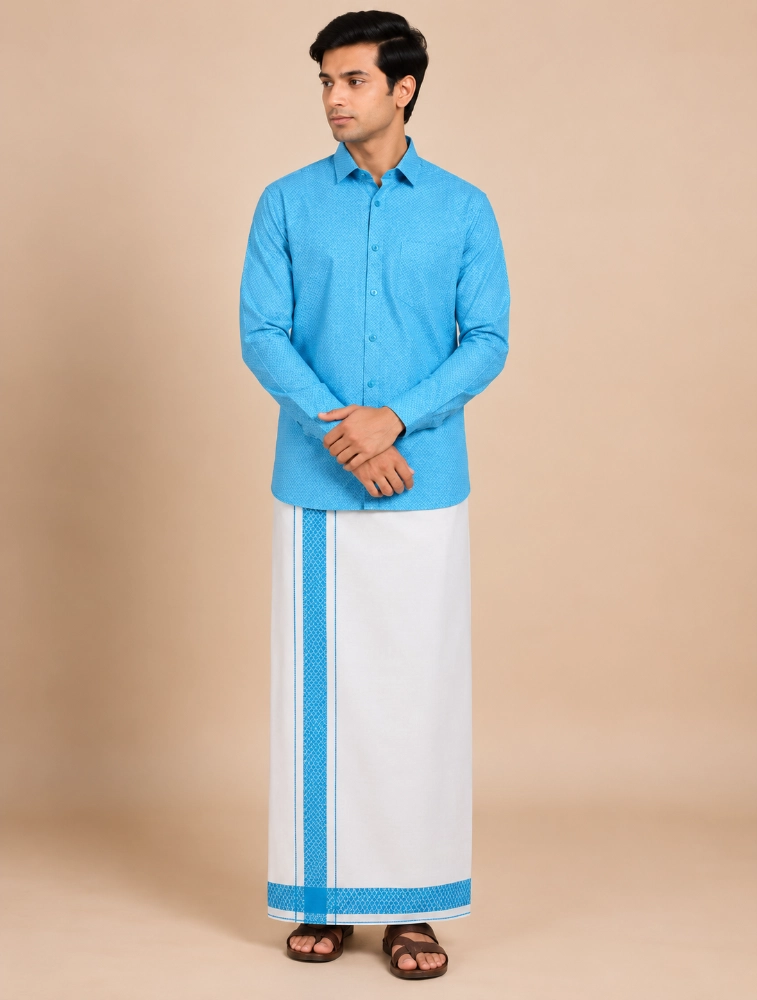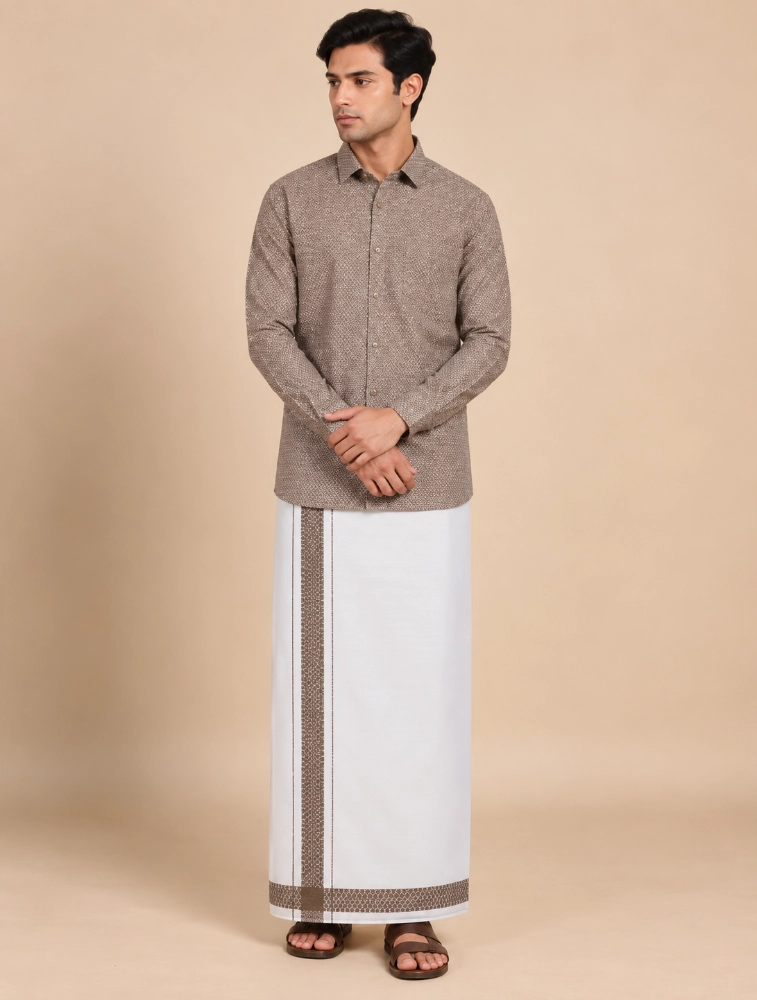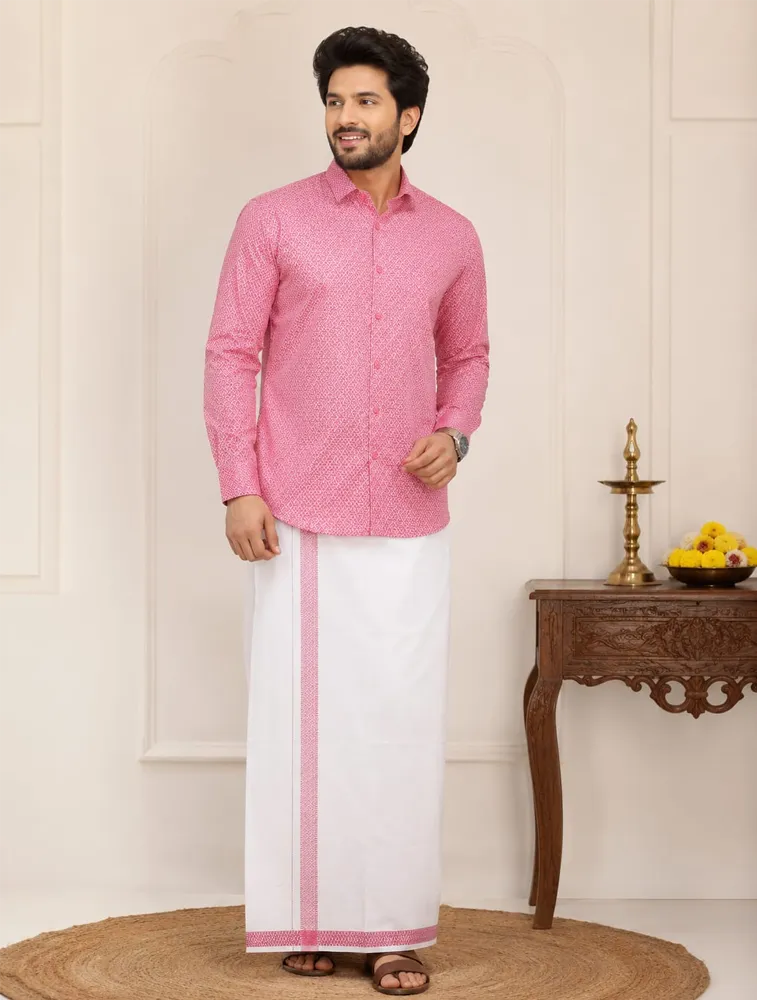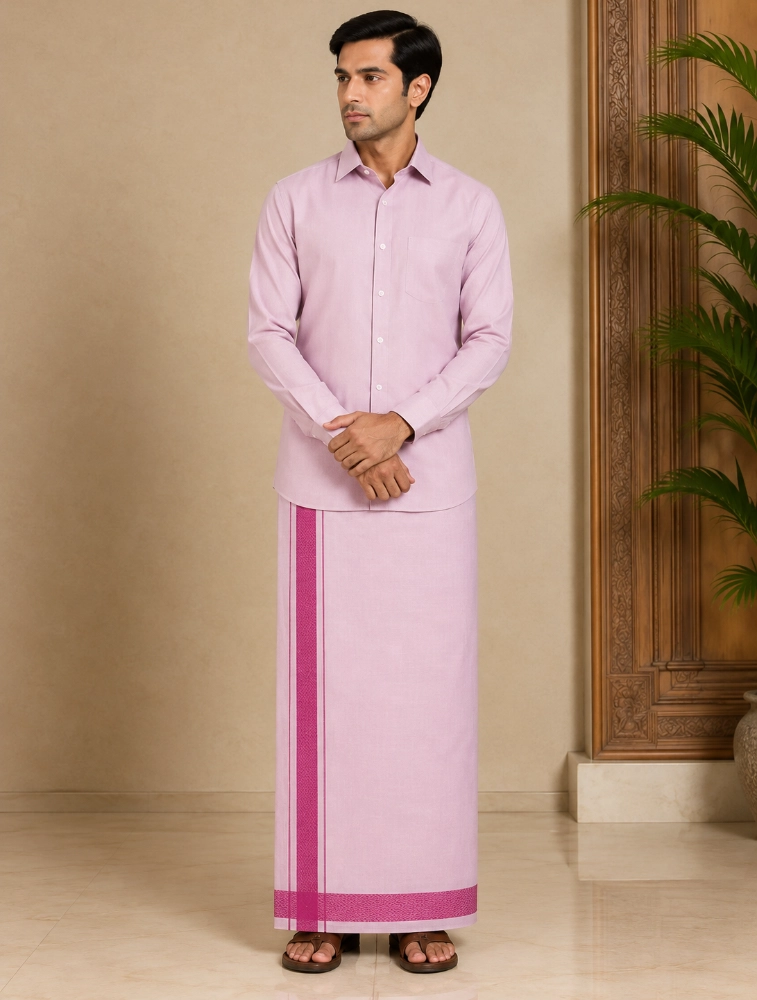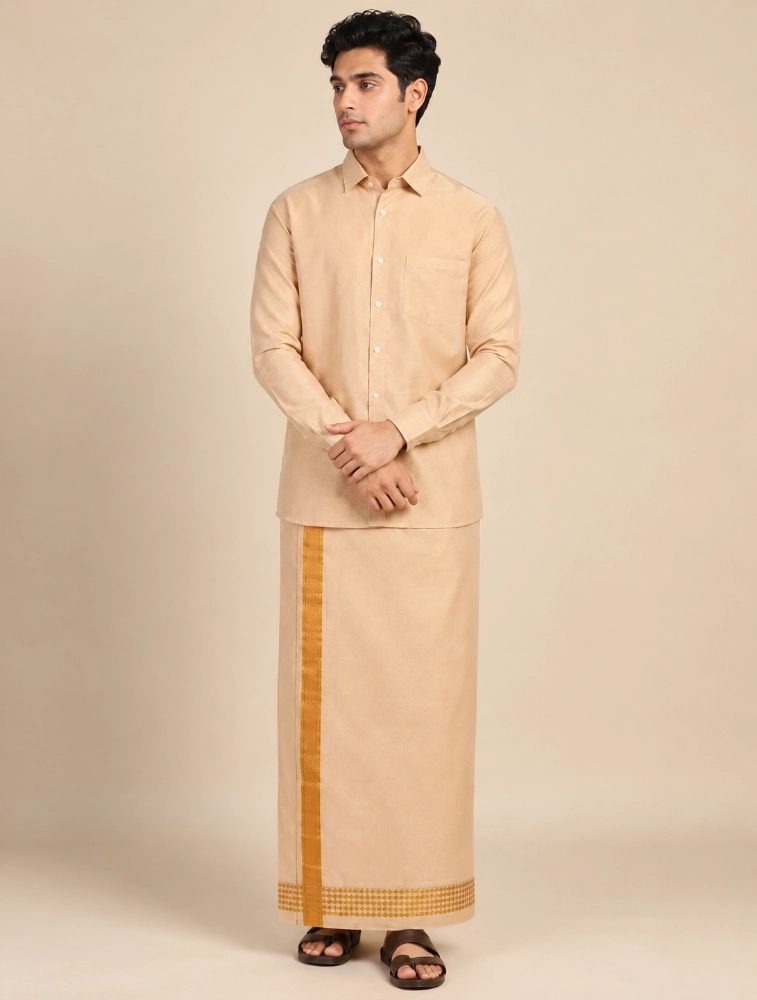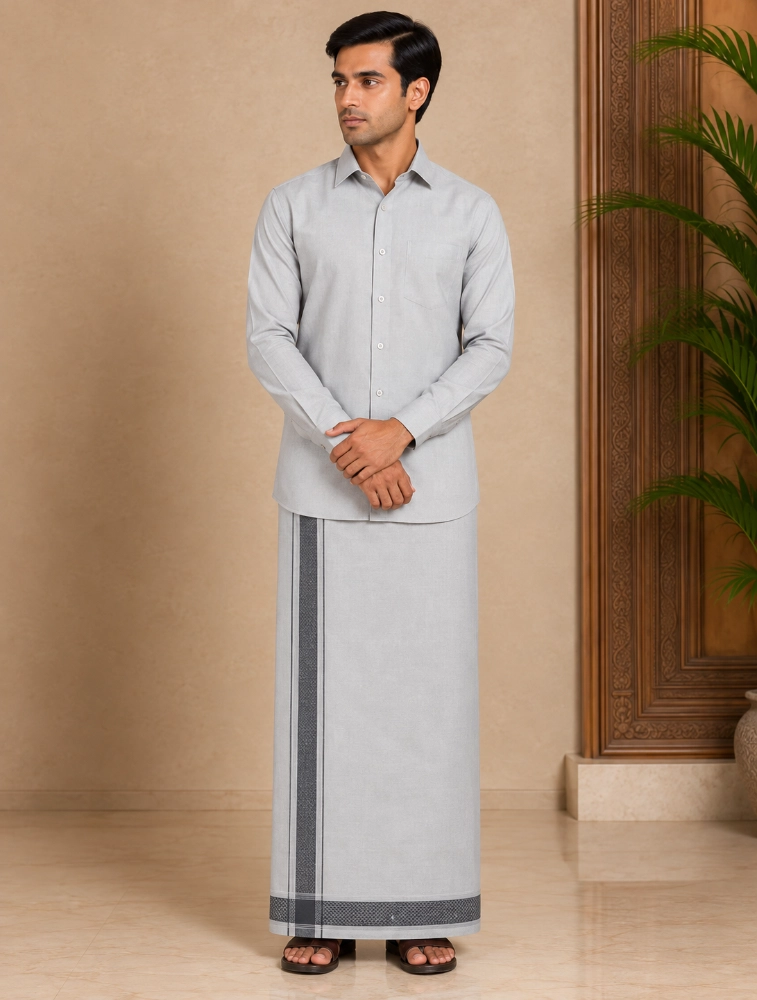
Grey Sliver Mens Premium Plain Tissue Silk Shirt and Dhoti Set
4.4135 ratings
₹909.00/ piece
Enter a 6-digit Indian PIN code to see delivery options for that area.
Currently delivering to Bengaluru 560105
factori.com supplies bulk men's shirts & dhoti set from ₹909/piece across 662 partner factories — ready stock and custom programmes with GST invoices.
Brand-ready men's shirts & dhoti set for corporate, retail, uniforms and large custom programmes — sourced across partner factories with published prices.
Brand-ready men's shirts & dhoti set for offsites, launches and conferences.
Get quote →Consistent supply for schools, factories and frontline teams.
Corporate uniforms →Unbranded or private-label stock for retail brands.
Launch your store →Contract manufacturing for high-volume programmes.
Contract manufacturing →The three values actually published
Read the specification tables across the four price bands and the Fabric row does not say the same thing twice. On the nine-hundred-rupee plain sets it reads Premium Tissue Silk. On the embossed sets at the next band up it reads Tissue Fabric. On the cross-textured sets above those it reads Premium Tissue Fabric. On at least one article in the top band the Fabric row is not present at all. Four bands, three wordings and one absence, on a catalogue where every article is described as the same kind of garment.
Why the word silk is not a small difference
In the trade, tissue is a construction rather than a fibre. It describes a very light, open, lustrous cloth, and it is woven in silk, in viscose, in polyester and in blends of those with a metallic yarn for the sheen. All of them look similar in a photograph and behave completely differently in wear, in cleaning and in cost. So the word tissue tells you the cloth is light and shiny. It does not tell you what it is made of, and only one of the four bands even uses the word silk.
What it does to the classification
Men’s shirts sit in heading 6205 of the Customs Tariff, and that heading splits by fibre: 6205 20 00 for cotton, 6205 30 00 for man-made fibres, and under other textile materials there is a specific eight-digit item, 6205 90 10, for shirts of silk, with 6205 90 90 for the rest. A declaration cannot be completed from an adjective. Someone has to decide which of those lines the goods belong to, and if that decision is made by a clearing agent guessing from a product name, you carry the reclassification risk, not the seller. This is general information rather than customs advice, and your own broker should confirm the line for your consignment.
What a percentage actually buys you
A composition stated as percentages is a contractual specification. It can be tested by any competent laboratory, it can be written into an acceptance clause, and it gives you a defensible reason to reject a delivery. An adjective cannot be tested and cannot be breached. Softness cannot be exceeded. There is no threshold at which Premium becomes untrue.
What to put in the order
Ask for the composition of the shirt cloth and the dhoti cloth separately, as percentages, because on a two-piece set they are not always the same cloth. Ask specifically whether any metallic or zari yarn is present and what that yarn is, since it drives both the cleaning method and the duty line. Require the split to be confirmed on the pre-production sample and again on the first bulk lot, with the test method named. Then state plainly that a composition outside the stated tolerance is a rejection, and agree who pays for the reclassification if the declared line turns out to be wrong.
What the note actually requires
Note 3(b) to Chapter 62 of the Customs Tariff defines an ensemble as a set of garments put up for retail sale in identical fabric, made up of one garment covering the upper body and one or two different garments covering the lower body. The note then names the lower garments it will accept: trousers, bib and brace overalls, breeches, shorts other than swimwear, a skirt, or a divided skirt. The components must share fabric construction, style, colour and composition, and be of compatible size.
Where a dhoti falls out of the definition
A dhoti is none of the six things on that list. It is not trousers, it is not breeches and it is certainly not a skirt in the tariff sense. That leaves two possibilities and the page settles neither of them. Either the dhoti is a made-up garment of another kind, in which case the set is a shirt plus a separate article and each is declared on its own line, or the dhoti is a length of finished cloth, in which case it is not a garment at all and lands in the fabric chapters. Those two answers carry different rates and different documents.
Why the ensemble line would not help even if it applied
Men’s ensembles sit under heading 6203, and the ensemble subheadings there run to only three fibre buckets: 6203 22 00 of cotton, 6203 23 00 of synthetic fibres, and 6203 29 00 of other textile materials. There is no silk item among them. So a set carrying a genuine silk claim would lose the specific silk line that exists at 6205 90 10 for shirts and land in a residual bucket instead. That is worth knowing before anyone decides which treatment is more convenient.
What the identical-fabric condition does here
The note is strict about the pieces being the same cloth. On a shirt and dhoti set that is a question of fact, not of styling, and the page never answers it. If the shirt is woven in one quality and the dhoti in another, which is common where the dhoti carries a border and the shirt does not, the identical-fabric condition is not met and the ensemble argument closes on that ground alone.
What to do about it
Ask the seller in writing how these sets have actually been declared on past export consignments and on what basis. Ask whether the shirt cloth and the dhoti cloth are the same quality. If you are importing, put the question to your own customs broker before you commit to a price, because the difference between one line and two changes the landed cost and the paperwork. None of this is legal or customs advice, and a binding classification ruling from the authority in your destination market is the only answer that removes the risk.
Where the word appears
Search Chapter 62, which covers men’s woven garments, and the word dhoti is not there. Search Chapter 52, which covers woven fabrics of cotton, and it appears repeatedly as an eight-digit item description: 5208 11 10, 5208 12 10, 5208 21 10 and 5208 22 10 all read Dhoti, and so do 5209 11 11 and 5209 21 60. There are further entries covering dhoti and saree with a zari border. The tariff, in other words, has always treated a dhoti as a piece of cloth of a particular kind rather than as a stitched article.
Why that is awkward for this catalogue
Heading 5208 covers woven cotton fabrics containing eighty-five per cent or more cotton by weight and weighing not more than two hundred grams per square metre. Heading 5209 covers the same cotton fabrics above that weight. Both conditions are numeric and both are about cloth this catalogue does not claim to sell. Nothing here says cotton, one band says silk, the rest say tissue, and no page publishes a weight at all, so neither the fibre test nor the weight test can be applied to these goods from the information on the site.
The practical consequence for a buyer
You are buying a package that contains one article the tariff recognises immediately, a men’s shirt, and one article whose treatment depends on facts nobody has published. That asymmetry is the whole classification problem in this category, and it is why the composition and the weight are not academic requests. They are the two inputs every possible line turns on.
What this changes about the purchase order
Do not accept a single line item reading shirt and dhoti set on a commercial invoice unless your broker has confirmed that treatment works in your market. Ask the seller to state the shirt and the dhoti separately on the packing list with their own compositions and their own weights, even if they are invoiced together. That costs the seller nothing, it does not change your price, and it means the declaration can be built from stated facts rather than from a photograph.
Where to get the answer that binds
Classification is decided by the authority in the country of import, on the goods as presented, and two informed people can read the same note differently. Nothing here is customs or legal advice. Take the composition, the weight and a physical sample to your own broker, and where the volume justifies it, apply for an advance ruling so the treatment is settled before a container moves rather than argued about after it lands.
What is actually consistent
Give the catalogue its due first, because several rows hold on every article and they are the useful ones. Set Includes reads 1 Shirt and 1 Dhoti throughout, which is a real disclosure and the reason a buyer knows what is in the polybag. Sleeve Type reads Full Sleeve. Fit reads Regular Fit. Product Type identifies the goods as a traditional ethnic wear set. And a Care Instructions row is present with an actual instruction in it, which most categories on this site do not manage.
What drifts
The Fabric row is present on the plain, embossed and cross-textured articles and carries three different values between them, and on a printed article in the top band there is no Fabric row at all. The audience field is called Ideal For on some articles and Gender on others, with the same value in both. A Design row appears on the embossed sets and nowhere else. A Dhoti Style row appears on the cross-textured sets and nowhere else. Pattern is populated everywhere but with values drawn from no controlled list.
Why inconsistency costs more than absence
A missing field is a gap a buyer can see and ask about. A field that exists on some articles and not others produces a filter that silently hides stock. Select a fabric in the left-hand panel and every article whose Fabric row was never filled disappears from the results, including the ones you would have bought. The seller never learns the enquiry was lost. The same logic applies to a machine reading the page: two names for one attribute means two attributes, and neither is complete.
What a controlled list would fix
The repair is not a redesign. It is a fixed schema for the category, the same row set on all forty articles, every row populated, and one name per attribute. Where a value is genuinely not applicable, the row still exists and says so, rather than vanishing. Where a value is a fibre or a weight it comes from a measurement, not from a copywriter.
What to ask for as a buyer
Request the specification table for every article you are shortlisting as a single spreadsheet with one column per field, and read down the columns rather than across the rows. The blanks are the questions. Then ask for the empty cells to be filled before you price, because a value supplied under commercial pressure after an order is placed is worth considerably less than one published before it.
Credit where it is due
A Care Instructions row exists on every article inspected and it contains an actual instruction. Several neighbouring categories on this site publish a care heading with no care under it at all, so this is a real improvement and it should not be lost when the tables are tidied up.
Why the word or is the problem
Hand washing and dry cleaning are not interchangeable. They are the two answers for two different cloths. A viscose or polyester tissue will usually take a cold gentle hand wash and lose its dressing if it is solvent cleaned repeatedly. A silk tissue, and anything carrying a metallic or zari yarn, will often tolerate dry cleaning and be ruined by water. Offering both, with no guidance on which applies to which article, means the instruction cannot be wrong and therefore cannot be relied on. Somebody in your warehouse or your customer’s home will pick the wrong one.
What a usable care instruction contains
Five things, in order. A washing method with a maximum temperature, or a clear statement that washing is not permitted. A bleaching rule. A drying rule, including whether the garment may be tumbled and at what heat. An ironing rule with a maximum plate temperature and whether the iron goes on the face or the reverse, which matters enormously on a lustrous cloth. And a professional-cleaning rule naming the permitted process. On a set, each of those has to be answerable for both pieces.
What the Care Guidelines section is doing instead
On every article inspected, the block under the Care Guidelines heading describes the product. It talks about lightweight construction, a subtle lustrous finish and suitability for weddings and ceremonies. That is sales copy sitting under a functional heading, and a reader who scrolls to it looking for a wash rule finds a second product description. Move that paragraph up into the description and put the label content in its place.
What to ask for
Request a photograph of the actual sewn-in care label from the pre-production sample for each article you are buying, and ask for the symbols to be transcribed into your specification sheet as text. Ask specifically whether the shirt and the dhoti carry the same instruction, because on a set they frequently do not. Then state in the order that a change to the label content after approval is a deviation requiring your written agreement. Publishing the label text is the cheapest single improvement available to this category, because the label already exists and only needs transcribing.
What the four bands are
This catalogue is genuinely tiered, which is worth saying plainly because several neighbouring categories on the same site publish a price range whose two ends are the same number. Forty articles sit at four headline figures. The plain sets headline at Rs 909, the embossed sets at Rs 1113, the cross-pattern and special sets at Rs 1160, and the printed and prism sets at Rs 1379. That is a real spread of roughly half again from bottom to top, and the browse-by-price control on the category has something to actually sort.
The ladder behind each headline
Each of those four figures is the bottom rung of a three-step quantity ladder, and each ladder is printed in full on the product page. The plain band runs Rs 957 for one hundred to nine hundred and ninety-nine pieces, Rs 938 from one thousand to nine thousand nine hundred and ninety-nine, and Rs 909 above ten thousand. The embossed band runs Rs 1172, Rs 1149 and Rs 1113. The cross band runs Rs 1221, Rs 1197 and Rs 1160. The printed band runs Rs 1452, Rs 1424 and Rs 1379.
Where the headline and the minimum disagree
The number in the category title, in the H1 and in the range sentence is the ten-thousand-piece tier. The number on the specification block of the same article is a hundred-unit minimum order quantity. Both are published, both are true, and they describe orders two orders of magnitude apart. The gap between the headline and the price a first-time hundred-piece buyer pays is a little over five per cent on every one of the four bands, which is small enough to be survivable and large enough to matter on a tender line.
Why this matters more on a set than on a shirt
The unit here is a set of two garments, one shirt and one dhoti. A hundred-unit order is therefore two hundred pieces of cut cloth, and a buyer comparing this against a shirt-only quotation elsewhere is not comparing like with like. When you build a comparison sheet, normalise to the set, note that the dhoti carries no size and no measurement anywhere in this catalogue, and price the missing specification work into your own column rather than assuming it is included.
What to put in the purchase order
Name the tier you are buying at and the quantity band it belongs to, not just the rupee figure. State whether the price is per set or per piece, in words, so there is no ambiguity about the two-garment unit. Add the incoterm, the currency, the validity period of the quotation, and whether the figure includes the polybag and the carton. Ask in writing what happens to the price if the order lands between two rungs, and get the answer before you place it.
Credit first, because a chart is present
Every sampled article carries a size chart, which is more than several other categories on this site manage. The run is 36, 38, 40, 42, 44 and 46. Those are chest values in inches and they map to a men’s shirt in the ordinary way. Six steps across that span is a sensible run for institutional buying, and the run is identical across all four price bands, which makes a mixed-band order easier to size than it would otherwise be.
What the chart does not reach
The specification block on every article says the set includes one shirt and one dhoti. The chart addresses one of those two garments. A dhoti is not sized by chest. Depending on how it is made and sold it is defined by finished length, finished width, whether it is stitched or unstitched, and where the border sits. None of those values appear anywhere on the pages sampled, and there is no statement that the dhoti is one size or free size either, which would at least be an answer.
Why a chart image is a weak instrument
The chart is delivered as an image. An image is invisible to an answer engine, invisible to a screen reader unless the alternative text carries the values, and invisible to a filter. It is also unhelpful in a dispute, because a buyer who wants to prove that a delivered garment is out of tolerance needs a number in text and a tolerance beside it. A chart with no tolerance column is a target, not a specification.
What a usable size table contains
Four things. A body measurement, so the wearer can be matched. A finished garment measurement, so the delivered item can be checked. A stated tolerance against each measurement, because no cutting room hits a number exactly. And the measuring method, so both sides measure the same way. For the dhoti add finished length and finished width, and state clearly whether the piece is stitched into a wrap or supplied flat.
What to do as a buyer
Ask for the size chart as a text table with tolerances, for both garments, before you commit. Ask for the size ratio you will be shipped if you order a hundred sets without specifying a breakdown, and if you do not like the answer, specify the breakdown yourself in the order. Ask for one sealed sample per size at your cost and measure it against the table on arrival. Write the tolerance into the purchase order as the acceptance criterion, because without it a rejection has nothing to stand on.
Length and width
A dhoti is a rectangle of cloth and its two dimensions are the whole of its fit. Length decides how it drapes and whether it clears the ankle when tied. Width decides how many pleats the wearer can take and how full the finished drape looks. Both need to be finished measurements after washing, with a stated tolerance, because cloth relaxes and a length taken off the loom is not the length that reaches the wearer.
Stitched or flat
Two quite different products are sold under the same word. A flat dhoti is a length of cloth the wearer ties. A stitched or ready-to-wear dhoti is made up with a waistband, sometimes with pleats already formed and sometimes with fastenings. They are not interchangeable, they cost differently to make, and an institutional buyer ordering for staff who may not know how to tie one usually wants the stitched version. Nothing on these listings says which is supplied.
The border
Most of the value in a traditional set sits in the border, and the catalogue is silent on it. A border can be woven into the ground on the loom, applied as a separate tape, or printed. A woven border cannot be pulled off and cannot wash away. An applied tape can lift at the join. A printed border can fade at a different rate from the ground. Specify which one you are buying, the depth of it in centimetres, and whether the same border runs on the shirt.
Metallic yarn and end finishing
Several articles in this catalogue are described in terms that imply a metallic or decorative yarn in the border. Metallic yarn behaves differently from the ground cloth in washing, in ironing and against the skin, and it needs its own care line. Separately, the two cut ends of a dhoti have to be finished somehow, by hem, by fringe or by a knotted finish, and the choice is visible on the wearer. Say which you want.
Turning this into an order clause
Write a dhoti clause that names finished length and width with tolerances, states stitched or flat, names the border construction and depth, names the yarn used in the border, names the end finish, and states the fabric weight the whole thing is cut from. Ask for one approved sealed sample against that clause before bulk cutting starts, and make bulk approval conditional on it. This is normal practice in traditional wear and any competent supplier will expect to be asked.
What the word is doing here
Tissue, applied to cloth, describes a very light, sheer, often lustrous fabric. It is a weight word before it is anything else. A buyer reading it on a listing is being told the cloth is light, and is being told nothing about how light. Between a cloth that drapes beautifully and one that is transparent under an event light there is a difference of a few dozen grams per square metre, and that difference is not published.
Why weight is the load-bearing number
On a two-piece traditional set the cloth weight decides four things at once. It decides drape, which is the entire aesthetic argument for the garment. It decides opacity, which on a light ground is a wearability question, not a preference. It decides how the dhoti holds a pleat. And it decides durability across repeated washing, because a very light cloth has less to give. None of the four can be assessed from a photograph.
The classification consequence
The customs tariff draws a line through woven cotton fabrics at two hundred grams per square metre. Heading 5208 covers those weighing not more than that figure and heading 5209 covers those weighing more, and, notably for this catalogue, tariff items under both of those headings use the word dhoti explicitly. So the one number that would let anyone place this cloth on the correct side of a published line is the one number the catalogue omits. It is not published as a claim, so nothing here is wrong. It is simply absent.
What a real weight declaration looks like
A figure in grams per square metre, a stated tolerance in per cent, the test method it was measured by, and the state of the cloth when it was measured, meaning after finishing rather than off the loom. Without the method and the tolerance a weight figure is decorative. With them it is enforceable, because a buyer can send a swatch to a laboratory and compare like with like.
How to close the gap
Ask for the weight with its tolerance and test method for the shirt cloth and the dhoti cloth separately, because they may not be the same. Ask for a swatch card before bulk. Hold the swatch up to the light yourself, which is a crude test but a fast one on a sheer cloth. If opacity matters for your use, put a minimum weight in the purchase order rather than a description, and make the sealed sample the reference for acceptance.
What is at stake on these particular colours
A metallic ground and a pale pastel ground fail in opposite directions and both failures are visible. A metallic or lustrous finish can dull, and once the sheen goes the garment reads as cheap even though the cloth is intact. A pastel can pick up colour from a darker piece in the same wash, and the loss is not recoverable. Both risks are ordinary and both are testable, which is exactly why the absence of a grade is worth noticing.
The four grades that matter
Colourfastness is not one number. Fastness to washing tells you whether the shade survives laundering and whether it stains anything washed with it. Fastness to rubbing, tested wet and dry, tells you whether colour transfers onto a chair or a paler garment by contact. Fastness to perspiration matters on a garment worn at an event in a warm room. Fastness to light matters on stock that will sit under retail lighting. Each is reported on a scale, and a supplier who has tested will have the report.
Shrinkage is the separate one
Shrinkage is measured, not graded, and it is reported as a percentage change in length and in width after a stated number of wash cycles. It is the number that decides whether a dhoti still clears the ankle after three washes, which on this product is a fit question rather than a cosmetic one. Since the dhoti has no published length to begin with, an unpublished shrinkage figure compounds an already open specification.
The care line that is published, and its limit
To the catalogue’s credit there is a care instruction row on the sampled articles, and it does hold a real instruction rather than a description. What it does not do is carry any of the above. A care instruction tells the wearer what to do. A fastness grade tells the buyer what will happen if they do it. They are different documents and a purchase order needs both.
What to ask for
Request test reports for wash fastness, rubbing fastness wet and dry, perspiration fastness, and dimensional change after washing, each naming the standard used and the laboratory that ran it, and each tied to the specific shade you are buying rather than to a generic swatch. Metallic and gold grounds should be tested in their own right. Then write the grades into the purchase order as acceptance criteria and keep a sealed sample of every shade.
What Rule 6 actually lists
Rule 6(1) sets out the declarations a pre-packed commodity carries. In order they are the name and address of the manufacturer, or of the manufacturer and the packer where those differ, or of the importer; the common or generic name of the commodity; the net quantity in the standard unit, or where the item is sold by number, the number; the month and year of manufacture, pre-packing or import; the retail sale price; the dimensions where the sizes of the article are relevant; and any other matter specified. Rule 6(2) adds a consumer-complaint contact with a name, an address, a telephone number and an email.
The clause that bites on a set
Inside Rule 6(1)(b) there is a provision aimed squarely at packages like this one. Where the package contains more than one product, the declaration has to give the name and the number or quantity of each product. A polybag holding one shirt and one dhoti is exactly that case. A single line reading one set does not discharge it, because the rule asks for the composition to be visible on the outside of the bag rather than inferred from the listing that sold it.
Layout is a separate rule
Rule 9 governs how the declarations appear rather than what they say. They must be legible and prominent, the numerals for retail sale price and net quantity must be in a conspicuously contrasting colour, the language must be Hindi in Devanagari or English, and there is a minimum letter height, which is one millimetre generally and two millimetres where the declaration is blown, formed, moulded, embossed or perforated. Rule 10 then requires the name and complete address of the manufacturer, packer or importer to be displayed conspicuously, complete address meaning one at which a consumer can actually identify and reach the party.
What the listings publish today
The packaging paragraph on these articles describes a protective polybag for each set and corrugated cartons for bulk quantities, and offers custom packaging and private labelling on bulk requirements. It is a clear description of the physical packing. It is not a declaration statement, and nothing on any sampled page names a country of origin, a manufacturer, a packer, a net quantity, a month of packing or a warranty.
Who carries the obligation
That depends on who is putting the goods into the stream of trade under whose name, which is precisely why a private-label buyer should settle it in writing before the first carton is sealed. Name in the purchase order who prints the declarations, what wording goes on the label, who signs off the artwork, and who bears the cost of a re-label if a consignment is stopped. Then have your own compliance counsel review the artwork. Nothing here is legal advice and the rules should be read in their current published form.
What the page commits to
The wording is consistent across the sampled articles. Each set is folded and individually packed in a protective polybag, bulk quantities go into durable corrugated cartons, and custom packaging and private labelling options can be provided based on bulk order requirements. That is an offer of a service at the packing stage, and it is stated plainly enough to build on. It stops short of naming a method, a placement, a minimum quantity for branding or a lead time.
The surfaces this product actually offers
On the shirt there is a woven neck label, a care label in the side seam, a hangtag, and in principle a small embroidered mark on the chest or the cuff. On the dhoti there is far less. A dhoti is a flat cloth that is tied, so a mark placed anywhere visible risks ending up inside a pleat or upside down, and the only reliably visible zone is near a border end. In practice most branding on a traditional set lives on the labels, the hangtag and the packaging rather than on the garment face.
Why print is the wrong instinct here
A lustrous, very light cloth is not a good substrate for a heavy print or a thick transfer. The hand of the fabric is the product, and anything that stiffens a panel is visible in the drape. Embroidery is generally the safer decoration on this kind of cloth if a garment mark is wanted at all, kept small, kept away from the border, and stitched with a backing appropriate to a light ground. Ask for it on a sealed sample before you approve it across a run.
Label content is not just branding
Whatever mark you add, the labels also have to carry the functional information: fibre content, care symbols and instructions, size, and the declarations discussed elsewhere in this pack. A private-label buyer is usually the party whose name appears, which means the accuracy of those labels becomes the buyer’s problem rather than the maker’s. Do not treat artwork approval as a design step.
What to settle before you commit
Agree the branding method and its exact placement on both garments, the minimum quantity at which branding is offered, whether there is a separate charge for it and whether that charge sits inside the published tier price, the artwork format and colour references, the approval loop and how many rounds are included, the added lead time, and who owns the tooling or the embroidery file at the end. Put all of it in the purchase order, because none of it is on the page.
How the forty break down
The eight cheapest are plain sets in colours including copper gold, grey, baby pink, blue, gold, moss green, pista green and lavender. Twelve sit in an embossed group. Twelve more sit in a cross-pattern and special group. The remaining eight are printed or prism-printed. Every article names one shirt and one dhoti in the set. Every article that publishes a shirt style publishes the same one, and every article that publishes a sleeve type publishes a full sleeve.
Why the shape of the range matters to a buyer
A retailer or a wholesaler planning a season needs to know whether depth exists in colour, in size, in price or in silhouette. Here it exists in colour and in surface treatment, and it exists in price across four steps. It does not exist in silhouette, sleeve length or fit. If your assortment needs a half-sleeve option, a different collar, a slim cut or a boys’ size, none of that is visible on this category, and you would be commissioning rather than selecting.
What the grid does not tell you
The category publishes no product count, so the depth has to be counted by hand across two pages. There is no indication of which articles are ready stock and which are made to order, no stock quantity against any colour, and no lead-time difference flagged between the plain band and the printed band even though a printed run and a plain run are different production problems. For assortment planning those three absences matter more than anything on the specification block.
The filters, and a note on them
The category offers a filter panel that does not finish loading, which means the forty articles have to be read as a flat list. A sort control and a browse-by-price section are present and, unusually for this site, they have real variation to work with because the four bands are genuinely different numbers. Fixing the filter would make this one of the more shoppable categories on the domain rather than one of the harder ones.
How to use the range
Treat the four bands as four quality tiers and sample one article from each before you build a range plan, because the differences between them are surface treatments you cannot judge from a photograph. Ask which articles are held as stock and which are cut to order, ask the lead time for each band separately, and ask whether the same base cloth runs under all four surfaces or whether the bands differ in the ground as well as the finish.
The cloth clause
Name the fibre and the percentage split for the shirt cloth and the dhoti cloth separately, because a set does not have to be cut from one fabric and this catalogue never says whether it is. Name the weight in grams per square metre with a tolerance and a test method. State whether the cloth is woven or knitted. If a metallic or decorative yarn appears in the border or the ground, name it and state its share.
The measurement clause
For the shirt, a body measurement and a finished garment measurement against each of the six chest sizes, each with a stated tolerance and a measuring method. For the dhoti, finished length and finished width with tolerances, whether it is stitched or supplied flat, the border depth and construction, and how the ends are finished. Attach a sealed sample per size and make it the reference for acceptance.
The performance clause
Colourfastness to washing, to rubbing wet and dry, to perspiration and to light, each reported against a named standard and tested on the specific shade you are buying. Dimensional change after a stated number of wash cycles, reported for length and width. Seam strength if the set is going into institutional use. Require the reports before bulk approval rather than with the shipment, because a report that arrives with the goods cannot change the goods.
The label, pack and compliance clause
Specify the label content for both garments, including fibre content, care symbols, size and the packaging declarations, and specify who approves the artwork. Specify the polybag, the carton, the pack quantity, the carton marking and the pallet configuration. Ask for the classification the goods will be declared under and the country of origin, and settle who is responsible for the declarations if you are private labelling. Have your own counsel review anything with a statutory face. Nothing here is legal advice.
The commercial clause
Tier and quantity band, price per set stated in words as well as figures, currency, incoterm, quotation validity, payment terms, lead time by band, tolerance on shipped quantity, inspection point and inspection standard, the acceptable quality level for the inspection, remedy on rejection, and who pays return freight. Add a sampling milestone with a date, because on a product with this much open specification the sealed sample is the contract.
What is actually wrong
The article sits in the third price band with the other special and cross-pattern sets. Its siblings carry the word intact. On this one the leading letter is missing from the visible product name, and the same truncation appears in the address that name generated. That tells you the slug is machine-derived from the title, which is good engineering, and that nothing validates the title before it becomes an address, which is the gap.
Why a slug error costs more than a title error
A title can be corrected in place at no cost. An address cannot. Once a URL is indexed, changing it means creating a new address, redirecting the old one permanently, and waiting for the change to propagate, and any link equity earned in the meantime has to be passed across rather than kept. So the cheap moment to catch a broken word is before publication, and the mechanism for catching it is a dictionary check on the title at the point the slug is generated.
The related inconsistency worth fixing in the same pass
There is a second, quieter drift in this catalogue between how the possessive is written in the page title and how it is written in the heading on the same page. One carries an apostrophe and the other does not. Neither form is wrong in isolation, but a search engine matching a query to a page reads both, and a person scanning results sees the mismatch. Pick one house form and apply it across titles, headings and breadcrumbs together.
What is right here and should be protected
The slugs on this category are otherwise clean, lower-cased, human-readable and carry a real product token, with no duplicated-record artefacts of the kind that appear elsewhere on the domain. That is a good foundation and it is why this fix is a rename plus a redirect on one article rather than a rebuild of the category. The specification blocks are also more populated than most, with a real set composition and a real care instruction on every sampled page.
What to do
Correct the title, generate the corrected slug, redirect the broken address permanently to it, and resubmit the page. Then add a publication check that rejects a title containing a word not in a dictionary and not in an approved brand list, so the class of error cannot recur across forty articles. Finally, standardise the possessive across title tag, heading and breadcrumb in the same release.