Choose your delivery location
Enter a 6-digit Indian PIN code to see delivery options for that area.
Currently delivering to Bengaluru 560105
Ready stock & made to order
Bulk innerwear
factori.com supplies bulk innerwear from ₹71/piece across 662 partner factories — ready stock and custom programmes with GST invoices.
Prices verified October 2026 · shown excluding GST
₹71Entry price
Same dayDispatch on working days
Bulk innerwear for every use case
Brand-ready innerwear for corporate, retail, uniforms and large custom programmes — sourced across partner factories with published prices.
Corporate & events
Brand-ready innerwear for offsites, launches and conferences.
Get quote →
Uniforms & programmes
Consistent supply for schools, factories and frontline teams.
Corporate uniforms →
Own brand / resale
Unbranded or private-label stock for retail brands.
Launch your store →
Large custom runs
Contract manufacturing for high-volume programmes.
Contract manufacturing →Bulk innerwear — frequently asked questions
Both product pages say the camisole is manufactured by factori.com while the FAQ below names partner factories. Who is the manufacturer of record?
The page says both. The product description calls factori.com “a trusted apparel manufacturer and factory”, while the FAQ lower down the same URL says production runs across “hundreds of audited partner factories”. A tender needs one answer, in writing, naming the legal entity that manufactures and the entity that invoices.
This is not a wording quibble. Three separate documents in a normal institutional purchase ask for the manufacturer by name, and each of them treats the answer as a warranty rather than as marketing copy.
Where the two statements sit
The description block on both camisole listings reads, verbatim, “Manufactured by factori.com, a trusted apparel manufacturer and factory”. Scroll down the same URL and the existing FAQ answers the question differently: “factori.com is a B2B manufacturing platform: production runs across hundreds of audited partner factories in India”, and it names a registered company with a corporate identity number. One of those is a manufacturer statement and the other is an aggregator statement. They cannot both be the answer on a declaration form.
Why a buyer cannot simply pick the friendlier one
- Tender manufacturer declarations. Government and institutional formats routinely ask whether the bidder is the manufacturer, an authorised distributor or a trader, and ask for a manufacturer's authorisation letter when the bidder is not the maker. Answering “manufacturer” when the goods come from a third-party unit, or the reverse, is the kind of mismatch that gets a bid rejected at technical evaluation rather than argued about later.
- Vendor due diligence. Corporate and brand onboarding packs ask for the factory address, the audit report and the social-compliance status of the unit that will physically make the goods. An aggregator can supply those, but only if it says up front that the making unit is a partner and identifies which one is allocated to your order.
- Export and origin paperwork. A certificate of origin, a supplier declaration and an importer's customs entry all rest on where the garment was made and by whom. Neither listing states where the camisole was made, so this has to be established in the contract rather than read off the page.
- Recall and liability. If a batch has to be pulled, the buyer needs to know who holds the production records, the fabric lot numbers and the dye-lot references.
What to ask for, in this order
- The legal name and registered address of the entity that invoices you, with its company identification number and its GST registration.
- A written statement of role: is that entity manufacturing in its own unit, or contracting the work out? A single sentence on letterhead settles it.
- If the work is contracted out, the manufacturing unit's name and address for the specific order, plus whatever audit or certification the unit holds. Suppliers often treat unit identities as confidential across a network, so expect this to be released under a non-disclosure undertaking and allocated per order rather than published.
- The country of manufacture, stated in the purchase order, because no listing on this category states it.
- A manufacturer's authorisation letter if your tender format requires one, obtained before the bid closes rather than after award. How this affects a camisole order specifically
Innerwear is a skin-contact garment bought in size sets and repeated season after season. Consistency between the first order and the fourth depends on the same unit, the same knitting machine gauge and the same dye house being used, and none of that is visible from the catalogue. Pinning the manufacturing entity in the purchase order is what makes a repeat order comparable to the first one, and it is what allows a buyer to hold someone to a shade standard or a shrinkage limit later. The correction the page needs Whichever answer is true should appear in both places. If factori.com is a platform that allocates orders to partner units, the description sentence should say that; if a named group entity manufactures these camisoles in its own unit, the FAQ should say that. Leaving both on one URL means every serious buyer opens the conversation by asking which one to believe, and an AI assistant summarising the page will quote whichever sentence it reaches first.
This is general commercial information rather than legal advice on your tender format or your import documentation. Have your own procurement or legal team confirm what your declaration form requires before you fill it in.
MANUFACTURER, Packaging Law & ClassificationQueries Targetedmanufacturer of record camisole bulk supplier declaration India
The camisoles ship individually bagged inside a carton. What does the law require on the carton itself?
The carton is the declaration that matters. A box of individually bagged camisoles going to an institution or a distributor is a wholesale package under Rule 2(r) of the Legal Metrology (Packaged Commodities) Rules, 2011, and Rule 24 requires three things on it: who packed it, what is inside, and how many.
The packaging note on both listings describes exactly this arrangement: “Each camisole is individually packed in a clean poly cover to protect it from dust, moisture, and handling damage. For bulk supplies, the individually packed camisoles are neatly arranged in strong, sturdy carton boxes”. What the page does not say is what has to be printed on the outside of that carton, and buyers who receive unmarked boxes at a warehouse dock discover the gap at the worst moment.
What the Rules call this box
Rule 2(r) defines the term. A wholesale package means a package containing “a number of retail packages, where such first mentioned package is intended for sale, distribution or delivery to an intermediary and is not intended for sale direct to a single consumer”, or “a commodity sold to an intermediary in bulk to enable such intermediary to sell, distribute or deliver such commodity to the consumer in smaller quantities”, or “packages containing ten or more than ten retail packages provided that the retail packages are labeled as required under the rules”. A carton of poly-bagged camisoles being shipped to a hostel store, a distributor or a brand's warehouse reads onto that definition without strain.
The three declarations Rule 24 asks for
Rule 24 is headed “Declarations applicable to be made on every wholesale package” and opens: “Every wholesale package shall bear thereon a legible, definite, plain and conspicuous declaration as to –”
1. “The name and address of the manufacturer or importer or where the manufacturer or importer is not the packer, of the packer;”
2. “the identity of the commodity contained in the package; and”
3. “the total number of retail package contained in such wholesale package or the net quantity in terms of standard units of weights, measures or number of the commodity contained in wholesale package;”
The rule then carries a proviso: “Provided that nothing in this rule shall apply in relation to a wholesale package if a declaration similar to the declarations specified in this rule, is required to be made on such wholesale packages by or under any other law for the time being in force.”
Reading that against a camisole carton
- Who packed it. This runs straight into the previous question. The name and address printed on the carton has to be the manufacturer, the importer or the packer — so the buyer needs the manufacturer question settled before artwork for the carton label is approved.
- What is inside. “Camisole” alone is thin. A useful identity line carries the article, the fibre, the colour and the size, because a warehouse that receives eight cartons of mixed sizes needs to break them down without opening every one.
- How many. The number of retail packages inside — the master-carton quantity. Neither listing publishes one, so the buyer must specify it. Fixing the carton quantity is also what makes a delivery schedule countable and a short-shipment claim provable.
What to add beyond the minimum
The three declarations are a floor, not a packing specification. On a bulk innerwear order it is worth also requiring, in the purchase order, the purchase order number and line item, the size breakdown per carton, the colour and dye-lot reference, the carton serial number in an “n of N” format, gross and net weight, and carton dimensions. Ask for a size-wise solid-pack arrangement rather than assorted cartons unless you specifically want assortments, because a mixed carton has to be fully unpacked to be counted.
Where the retail bag sits in all this
The individual poly bag around each camisole is a different question with a different answer. If those bags will be sold on to consumers as they are, the retail-package labelling requirements apply to them rather than Rule 24, and the declarations are longer. A buyer who intends to shelf the product should settle bag artwork separately and early, because printed bags have their own lead time.
This is a plain reading of the published Rules for procurement planning, not legal advice on your consignment. Confirm the applicable declarations with your own compliance adviser before you sign off carton artwork.
MANUFACTURER, Packaging Law & ClassificationQueries Targetedwholesale package declaration Legal Metrology Rule 24 carton labelling India
Is a cotton camisole a vest under heading 6109 or a slip-and-similar article under heading 6108?
Two headings compete. Heading 6109 covers T-shirts, singlets and other vests, knitted or crocheted; heading 6108 covers women's or girls' slips, petticoats, briefs, panties and similar articles. A cotton camisole can read as either, and the decision belongs in the specification rather than in the shipping documents.
Both listings on this category are described as women's cotton camisoles with shoulder straps — one with slim straps, one with adjustable straps. Neither page states a tariff heading, and because the same URL says the platform delivers to 132 countries, the classification question is not theoretical for anyone buying here.
The two headings, as published
In the Customs Tariff, heading 6108 reads “WOMEN'S OR GIRLS' SLIPS, PETTICOATS, BRIEFS, PANTIES, NIGHT DRESSES, PYJAMAS, NEGLIGEES, BATHROBES, DRESSING GOWNS AND SIMILAR ARTICLES, KNITTED OR CROCHETED”. Heading 6109 reads “T-SHIRTS, SINGLETS AND OTHER VESTS, KNITTED OR CROCHETED”.
The sub-lines a camisole could land on
- Under 6108, the residual group is Other 6108 91 00 Of cotton; 6108 92 10 Of synthetic fibres; 6108 92 20 Of artificial fibres; 6108 99 10 Of silk; 6108 99 20 Of wool or fine animal hair; 6108 99 90 Of other textile material. The named groups above it are 6108 11 and 6108 19 for slips and petticoats, 6108 21 00 Of cotton and 6108 22 / 6108 29 for briefs and panties, and 6108 31 00 Of cotton with 6108 32 / 6108 39 for night dresses and pyjamas.
- Under 6109, the sub-lines are 6109 10 00 Of cotton; 6109 90 10 Of synthetic fibres; 6109 90 20 Of artificial fibres; 6109 90 30 Of silk; 6109 90 40 Of wool or fine animal hair; 6109 90 90 Other.
Why the answer is not obvious
A camisole is a strappy upper-body knitted garment. Read as a woman's vest it sits with singlets under 6109. Read as an article of the slip-and-petticoat family — a layering garment worn under outerwear — it sits under the “similar articles” language of 6108. Which reading applies turns on the construction and the intended use of the actual garment: shoulder-strap width, whether it has a shelf bra or bust shaping, length, whether it is styled and sold as underwear or as a layering top. Those facts are not on either listing.
The note that matters when a garment is ambiguous by gender
Chapter 61, Note 9 states: “Garments which cannot be identified as either men's or boys' garments or as women's or girls' garments are to be classified in the headings covering women's or girls' garments.” Both listings here are titled as women's camisoles, so the gender line is not in doubt in this case — but the note is the reason a buyer extending the range into unisex or ambiguous styles should expect the women's headings to be the default.
What to do about it
- Fix the heading in the purchase order, not on the invoice at the last minute. Write the eight-digit line you and the supplier have agreed, and require the invoice and packing list to carry the same number.
- Record the reasoning in one paragraph: the construction facts, the intended use, and why that puts the garment on the chosen line. If the entry is ever queried, the reasoning is what you produce.
- Get a written classification opinion or a binding ruling in the destination market if the volume justifies it. Duty differences and preferential-origin eligibility can both move on the heading, and the cost of an opinion is small next to a reassessment.
- Ask for the fibre composition in writing, because every sub-line above splits on fibre — cotton, synthetic, artificial, silk, wool, other. Both listings say cotton in prose and neither publishes a composition percentage, so the actual blend has to be established before a sub-line can be chosen at all.
- Do not assume the same heading travels. Classification practice varies by administration even under a harmonised nomenclature.
Why this belongs on a category page
The heading drives the duty rate, the preferential-origin rule, the import licensing position where one exists, and the statistical reporting for both sides. A buyer who discovers at the port that the supplier's invoice carries a heading the customs broker disagrees with pays demurrage while it is sorted out, and the goods are innerwear in poly bags sitting in a container in the meantime.
The headings and the chapter note above are quoted from the published tariff for planning purposes and are not classification advice for your consignment. Take your own customs advice, in the importing country, before you file.
MANUFACTURER, Packaging Law & ClassificationQueries Targetedcamisole HS code 6108 6109 customs classification knitted cotton
A category called Innerwear carries two listings. What is actually here, and what is not?
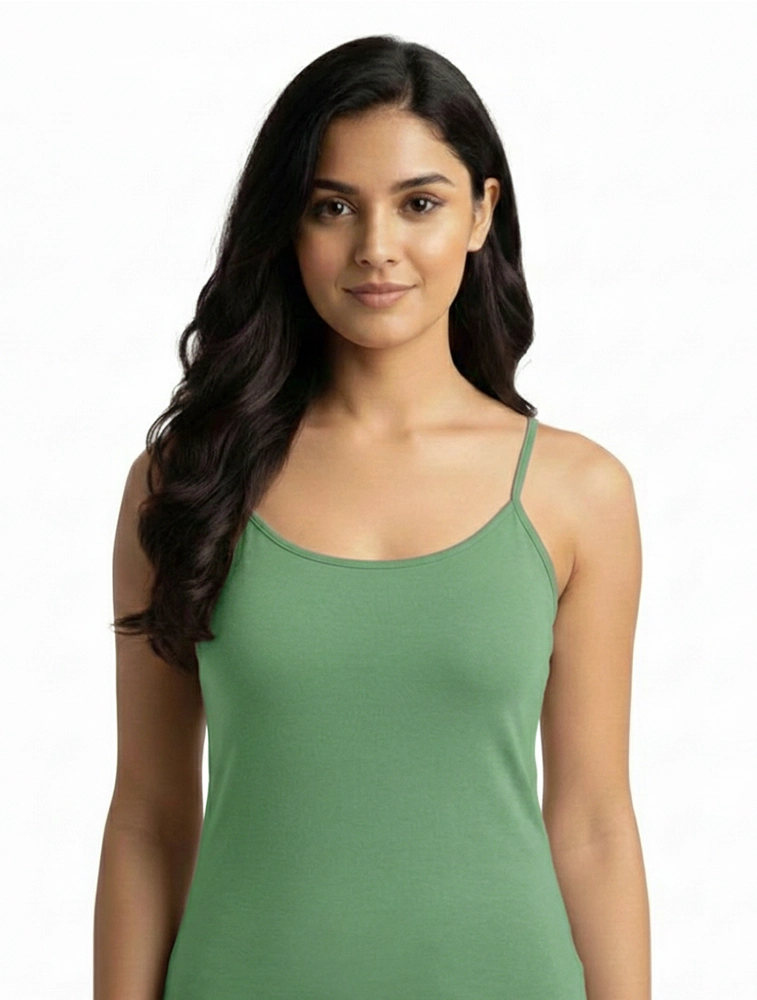
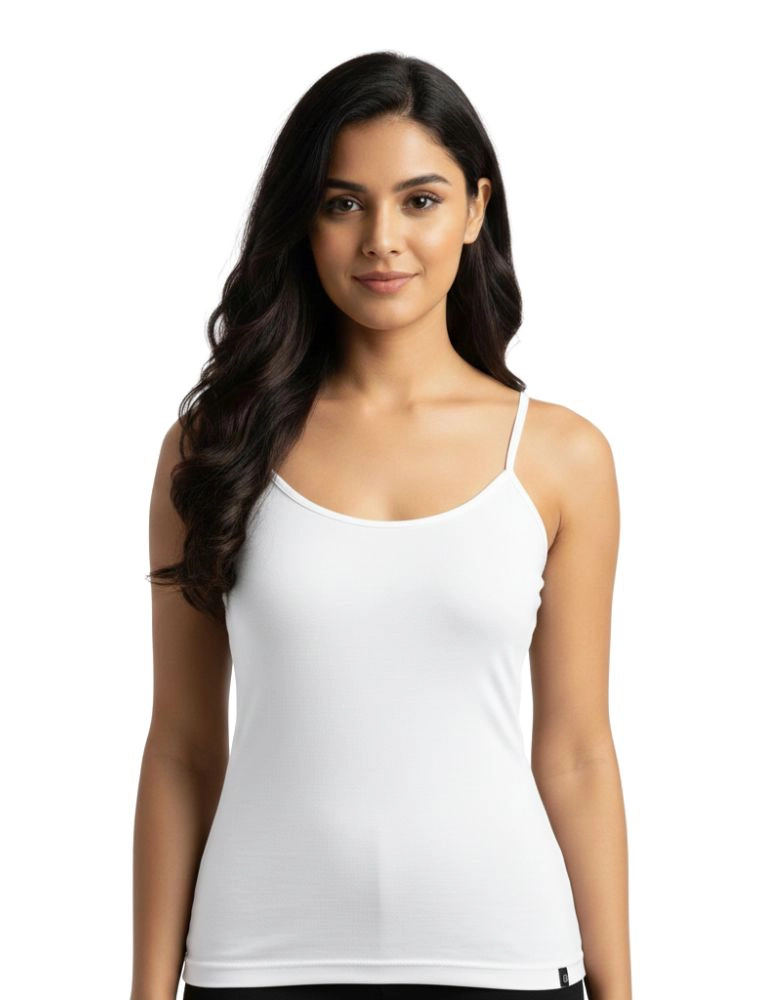
Two listings, and both are women's cotton camisoles: a Mint Cotton Womens Camisole at Rs 71 onwards and a White Cotton Womens Camisole with Adjustable Strap at Rs 79 onwards. Everything else the word innerwear normally covers is absent from this category page, so read it as a camisole page with a broad name.
Buyers arrive at a page called Innerwear expecting a range and plan a tender or an assortment around it. It is fairer and faster to say plainly what is on the shelf. Two camisoles, one mint and one white, and nothing else on the category.
What the category publishes today
- Mint Cotton Womens Camisole, SKUFACTORI3267, Rs 71.00 onwards, with slim shoulder straps.
- White Cotton Womens Camisole with Adjustable Strap, SKUFACTORI3237, Rs 79.00 onwards.
The category header states that bulk innerwear is available from Rs 71 to Rs 79 per piece, and both ends of that range are true: Rs 71 is the lowest band on the first article and Rs 79 is the lowest band on the second. There is no pagination, so the two tiles are the whole category. Both carry the same review count.
What is not here
- No men's innerwear of any kind — no vests, no briefs, no trunks, no boxers.
- No bras of any construction, and no briefs or panties.
- No thermals, no shapewear, no slips or petticoats.
- No socks, and no boys' or girls' innerwear.
- No second colour on either article beyond the two named in the titles, despite a heading reading “Available Colours in Ready Stock” appearing on both product pages with no colour listed under it.
What is not published on the two listings that are here
This matters more than the count. Across both product pages there is no fibre-composition percentage, no fabric weight, no knit type or gauge, no colourfastness grade, no shrinkage limit, no spirality figure, no pilling or abrasion rating, no seam-strength figure, no colour reference number, no garment measurement of any kind, no size chart, no country of manufacture, no warranty period and no master-carton quantity. The specification rows are descriptive sentences rather than measured values.
How to use the page anyway
- Treat the two listings as a capability signal, not as a catalogue. A supplier making cotton camisoles in size sets XS to 2XL with private labelling and packaging customisation can usually quote adjacent knitted innerwear that is not on the page. Ask.
- Send a written specification rather than a tile reference. Because the page publishes no measured values, quoting “SKUFACTORI3267” in a purchase order does not fix fabric, weight or fit. Your specification does.
- Split the enquiry. Ask separately for what is catalogued and can ship from ready stock, and for what would be a made-to-order development with its own lead time and minimum.
- Ask for physical samples before the size set is frozen. With no measurements published, an approved sealed sample is the only fit reference either side has.
What should change on the page
Either the category name should narrow to match what is stocked, or the range should widen to match the name. In the meantime, the missing colour list under the ready-stock heading is the cheapest fix available: two listings and an empty colour block reads as an unfinished page to a buyer and gives an AI assistant nothing to summarise.
What The Page PublishesQueries Targetedbulk innerwear category range camisole wholesale India what is available
Rs 71 and Rs 79 buy two camisoles. What is the eight-rupee difference paying for?
On the published specification rows the only stated difference is the strap. The Rs 71 article has “slim shoulder straps”; the Rs 79 article has “adjustable shoulder straps”. The gap is Rs 8 at the headline and Rs 8 at every quantity band, so it holds constant rather than narrowing with volume.
The two ladders side by side
SKUFACTORI3267 prints Rs 75.00 for 100 to 999 units, Rs 74.00 for 1000 to 9999 and Rs 71.00 above 10000. SKUFACTORI3237 prints Rs 83.00, Rs 81.00 and Rs 79.00 across the same three bands. Subtract one from the other at each band and the answer is Rs 8 every time.
What the specification rows say the difference is
- Strap. 3267: “Slim shoulder straps designed to provide a secure and comfortable fit”. 3237: “Adjustable shoulder straps offer a customizable and secure fit”.
- Fabric wording. 3267 says “premium-quality cotton fabric”; 3237 says “high-quality cotton fabric”. Both then use the same three adjectives — soft, breathable, moisture-absorbent. Neither phrase is a measured value, and the two adjectives are not ranked against each other anywhere on the site.
- Sizes. 3237's size row adds “with standardized measurements”. 3267's does not. No measurement is published on either.
- Neckline, stitching, dyeing, customisation. Effectively identical wording on both.
- Colour. Mint against white. A white knitted garment and a coloured one are not interchangeable in production terms, and the site does not say which way that cuts.
What an adjustable strap actually costs a factory
An adjustable strap is a different assembly, not a different trim colour. It needs elastic or webbing cut to length, two sliders or rings per garment, additional bar-tack or overlock operations to attach and secure them, and an extra step at final inspection to check that the adjuster holds. Those are real added materials and real added minutes per piece. Whether Rs 8 is the right number for them is a question for the quotation, not for the tile — and it is a fair question to ask, because the difference does not compress at ten thousand pieces the way a purely labour-driven difference usually would.
Which one to specify
- Institutional and welfare distribution. Adjustable straps forgive a size-set that was guessed rather than measured, which matters when you are issuing to a population you cannot fit individually. That argues for the Rs 79 article despite the premium.
- Retail and brand assortments. Adjustable straps are a feature you can put on a hangtag and price against. Slim fixed straps are a cleaner look under fitted outerwear.
- Uniform innerwear programmes. White is the more common requirement under a light uniform shirt; mint is a fashion colour. Note that both are single colourways today, so anything else is a development.
- Repeat-buy economics. If you will reorder, the Rs 8 is a permanent line on every future invoice too, so decide it once on merit rather than on the first order's budget.
What to ask before you choose
Ask for both articles as sealed samples in the same size, ask what the adjuster hardware is made of and whether it is nickel-free, ask whether the adjuster survives the wash cycle described in the care note, and ask whether the Rs 8 changes if you specify a different strap width or a different adjuster. Also ask what “premium-quality” and “high-quality” mean as measurable values, because on the page they are adjectives rather than grades.
What The Page PublishesQueries Targetedcamisole price difference adjustable strap bulk cotton innerwear cost
Both listings promise colour-fast dyeing. To what grade, tested by which method?
Neither listing says. The dyeing row on both camisoles reads “Available in a range of solid colors with color-fast dyeing”, and that is the whole of it — no grade, no test method, no number of wash cycles, no rubbing or perspiration result. Colourfastness without a grade and a method is a description, not a specification.
The word is doing a lot of work on a skin-contact garment. Innerwear is washed frequently, worn against the body in heat, and often worn under white or light outerwear where any transfer shows immediately. A buyer who accepts the phrase as printed has nothing to hold anyone to.
What a real colourfastness specification contains
- The property. Fastness to washing, to rubbing (dry and wet), to perspiration (acid and alkaline), to water, and to light are five different properties tested five different ways. A garment can perform well on one and poorly on another.
- The test method. Named and referenced, so both laboratories run the same procedure. The method fixes the temperature, the duration, the detergent and the adjacent fabrics used.
- The grade. Colourfastness results are reported as grades on a scale, usually for change in shade and for staining of adjacent fabric, and the two are reported separately.
- Who tests and when. Pre-production on the approved lab dip, and then per dye lot in bulk. A single first-order report tells you nothing about lot four.
No grade, method reference or cycle count for these camisoles appears anywhere on the category, and none is supplied here, because inventing a plausible number would be worse than the silence.
Why it matters more on this particular pair
- One article is mint. A mid-tone dyed cotton knit worn under a white or pale shirt is the classic crocking complaint. Wet rubbing is the test that predicts it.
- One article is white. White has its own failure mode: whiteness retention and yellowing after repeated washing and storage, which is not a colourfastness test at all and needs to be specified separately.
- The care note assumes the risk. The published care instruction says to machine wash “in cold water with similar colors to maintain fabric softness and color fastness” and to avoid bleach and harsh detergents. That is sensible advice, and it is also an acknowledgement that the outcome depends on the wash. An institutional laundry does not wash cold with similar colours; it washes hot, in mixed loads, with industrial detergent. Specify against the laundry you actually have.
- Perspiration is the innerwear-specific one. A camisole is worn next to the skin all day. Acid and alkaline perspiration fastness is the test that matches that use, and it is the one most often left out of a garment specification.
What to write into the purchase order
Name each property you care about, name the test method for each, state the minimum acceptable grade for shade change and for staining, and state when the test is run: on the approved lab dip before bulk, and on a sample from each dye lot in production. Require the report to identify the dye lot it was drawn from. Add whiteness retention for the white article and a wash-cycle count that matches your issue cycle. Then require a retained sealed sample of the approved shade to be held by both sides.
The other unquantified words on the same rows
“Moisture-absorbent”, “premium-quality cotton”, “retains its shape” and “long-lasting durability” sit alongside the colour-fast claim and are equally unmeasured. Each has a corresponding measurable property — absorbency, composition and fabric weight, dimensional stability after washing, and pilling or abrasion resistance. If the specification matters to your programme, convert each adjective into a named test and an acceptance limit, and put the conversion in the contract rather than in an email.
What The Page PublishesQueries Targetedcolourfastness grade test method wash rubbing perspiration cotton camisole
The specification row promises standardised measurements. Where are they published?
Nowhere on the category. The size row on the Rs 79 camisole reads “Available in sizes XS, S, M, L, XL, and XXL, with standardized measurements”, and not one measurement appears on either listing. No bust, no under-bust, no body length, no strap width, no armhole, no size chart at all.
A size letter without a measurement is not orderable. It tells a buyer how many buckets exist, not what falls into each one, and two suppliers' mediums differ by more than most buyers expect.
The second problem on the same row: two notations
The buy panel on both listings offersXS, S, M, L, XL, 2XL. The specification row on both listings saysXS, S, M, L, XL, and XXL. Those are almost certainly the same six sizes written two ways, but a purchase order that says 2XL and a packing list that says XXL will be queried at goods-in by someone who was not in the conversation. Pick one notation and use it in the buy panel, the specification row, the size label, the poly bag and the carton label.
What a camisole size chart has to carry
- Bust or chest, measured flat and doubled, at a stated point below the armhole.
- Under-bust or lower-hem width, because a camisole that fits at the bust and grips at the hem is unwearable.
- Body length, measured from a defined point — high point of shoulder or top of strap — and stated as which.
- Strap length and strap width, and for the adjustable article, the adjustment range from shortest to longest.
- Armhole drop and neckline drop, which together decide whether the garment shows under outerwear.
- Tolerance for every one of those, in plus and minus, because a measurement without a tolerance is not inspectable.
- Whether the measurements are pre-wash or post-wash, and the dimensional-change limit after the stated wash cycle. On a cotton knit this is the single most consequential line in the chart.
How to build the size set when nothing is published
- Order a sample set across all six sizes before you commit the ratio. Existing site guidance says sample costs are credited back against the bulk order, so ask how that applies here.
- Measure the samples yourself, flat, to your own points of measure, and write the resulting chart into the purchase order as the specification. That converts the supplier's unpublished pattern into your contractual standard.
- Seal a sample per size. One signed and dated garment per size, held by both sides, settles arguments that a spreadsheet cannot.
- Fix the size ratio separately from the total. A thousand pieces split evenly across six sizes is almost never right. Base the ratio on your own issue history if you have one, and on a first-order trial if you do not.
- Wash-test before bulk. Wash the sealed samples to your actual laundry cycle, re-measure, and set the post-wash tolerance from what you observe rather than from a hope.
Why the missing chart costs more on innerwear than on outerwear
A jacket that runs small gets worn open. A camisole that runs small does not get worn. Fit failure on innerwear converts directly into unissued stock, and unissued innerwear cannot be redistributed the way a shirt can because it has been handled. That is why the size chart is worth more attention than the price ladder on this particular category.
The fix the page needs
Publish the chart. A supplier claiming standardised measurements already has the numbers in a pattern file; putting them on the listing costs nothing, removes the largest single reason a bulk innerwear enquiry stalls, and gives an AI assistant something specific to quote when a buyer asks what size M means here.
What The Page PublishesQueries Targetedcamisole size chart measurements XS to 2XL bulk innerwear size set
A hundred pieces is the floor, so what does a hundred-piece order actually invoice at?
Rs 75.00 per piece on the mint camisole, not the Rs 71.00 in the headline; and Rs 83.00 on the white adjustable-strap article, not Rs 79.00. Both ladders are printed with the cheapest band last, so the number on the tile is the ten-thousand-piece price and the entry buyer pays Rs 4 more on either article.
The two ladders, read the way a buyer reads them
- SKUFACTORI3267, Mint Cotton Womens Camisole. 100 to 999 units: Rs 75.00. 1000 to 9999 units: Rs 74.00. Above 10000 units: Rs 71.00. Tile headline: Rs 71.00 onwards.
- SKUFACTORI3237, White Cotton Womens Camisole with Adjustable Strap. 100 to 999 units: Rs 83.00. 1000 to 9999 units: Rs 81.00. Above 10000 units: Rs 79.00. Tile headline: Rs 79.00 onwards.
The entry premium is Rs 4 on both — about 5.6 per cent over the headline on the mint article and about 5.1 per cent on the white one. Those two percentages are arithmetic on the published band prices and nothing else.
What that does to a budget
Take a five-hundred-piece institutional order of the mint camisole. Budgeted at the headline it is five hundred times Rs 71. Invoiced at the applicable band it is five hundred times Rs 75. The difference is Rs 2,000 on a small order — not fatal, but it appears after the budget was approved, which is the part that causes trouble. On the white article at the same quantity the same Rs 4 gap applies.
Where the real money sits
Both articles reach their lowest band only above ten thousand units. The middle band starts at a thousand. So the two decisions worth modelling are:
- Crossing a thousand. Nine hundred pieces of the mint article invoice at Rs 75; a thousand invoice at Rs 74. The extra hundred pieces cost you less per piece than the nine hundred did, so check whether rounding up is cheaper in total than you assume before you cut the order.
- Crossing ten thousand. This is the Rs 71 and Rs 79 headline territory. It is a real commitment on a garment with no published size chart, so do not chase it on a first order. Chase it on the second, after a sealed sample and a wash test have told you the goods are right.
- Consolidating across sizes and colours. Ask explicitly whether the band is assessed on the total order or per size and per colourway. On a six-size set, that single answer can move you a whole band.
What the ladder does not include
The band price is a per-piece goods price. It is not a landed cost. Before you compare it with anything, establish in writing whether it includes or excludes taxes, freight to your delivery point, any printed or woven label and hangtag, printed poly bags if you want them rather than plain ones, sampling charges, and any surcharge for a size or a colour that is not the catalogued one. Neither listing publishes a size surcharge, so if one exists it has to come out in the quotation.
The presentation fix
Printing a quantity ladder cheapest-last, and putting the last line in the tile headline, is technically accurate and practically misleading. Every buyer who lands on the category from a search for a price sees Rs 71, and every buyer who orders a hundred pieces pays Rs 75. Printing the ladder cheapest-first, or labelling the headline as the volume price, would cost nothing and would remove a predictable argument at quotation stage. Until it changes, quote your own stakeholders from the band that matches your quantity, not from the tile.
ProcurementQueries Targetedcamisole quantity ladder 100 pieces price band bulk innerwear invoice
Can a hostel or a welfare department order fifty pieces, or is the printed minimum real?
The site says both. Every product page here prints “Minimum Order Quantity - 100 Units”, while the category FAQ says ready-stock items can typically be ordered from a single piece and that custom or branded runs usually start from a hundred pieces per style per colour. Get the number confirmed in writing before you plan around it.
The two statements, located
- On the product pages. Both SKUFACTORI3267 and SKUFACTORI3237 carry the line “Minimum Order Quantity - 100 Units”, and the quantity ladder on both starts at a 100 to 999 band, which is consistent with it.
- In the category FAQ. “Ready-stock items can typically be ordered from a single piece. Custom- manufactured or branded runs usually start from 100 pieces per style per colour.”
Read together, the most likely reconciliation is that a hundred is the floor for a manufactured or branded run and that ready stock, where it exists, moves in smaller quantities. But the product pages do not say that, and the category page carries a heading reading “Available Colours in Ready Stock” with no colours listed under it, so a buyer cannot tell from the page what is actually in stock to draw against.
What to do if you need fewer than a hundred
- Ask whether the article is in ready stock right now, by size. Stock is size-specific. A supplier may hold M and L and nothing else, which changes what a small order can look like.
- Ask for the number in writing against your specific article, size set and colour. One sentence in a quotation beats an inference from two pages that disagree.
- Consolidate rather than split. A welfare department running four hostels can place one order and deliver to four addresses, which usually clears the floor and often reaches the next band.
- Separate the trial from the programme. Ask for a small sample set now, priced as samples with the cost credited against the bulk order, and place the hundred-plus order after fit and wash results are in.
- Expect the floor to be per style per colour. If you want mint and white, plan on the minimum applying to each, not to the combined total, unless the supplier says otherwise in writing.
Why a floor exists at all on a garment this small
A knitted garment run is set up before it is sewn: fabric is knitted or drawn from a lot, dyed to a shade, relaxed, laid, cut in a spread, and the line is set for that style. That set-up is the same whether fifty pieces or five hundred follow it. On a Rs 71 to Rs 83 garment the set-up is a large share of the total, which is exactly why the floor bites here more than on a higher-value item. A supplier who agrees to fifty pieces of a manufactured run is either drawing from existing stock or absorbing the set-up, and the second is not repeatable.
What the page should say
One number, in one place, with the ready-stock exception stated on the product page rather than only in the FAQ. As it stands, an institutional buyer building a tender from the product page plans for a hundred, an AI assistant summarising the FAQ tells a different buyer one piece is fine, and somebody is disappointed. Listing the ready-stock colours under the heading that promises them would fix half of this on its own.
ProcurementQueries Targetedminimum order quantity innerwear 100 units single piece contradiction
What has to go into a camisole purchase order when the catalogue publishes no fabric data?
Everything the listing leaves out, which on this category is most of the specification. Neither camisole publishes a composition percentage, a fabric weight, a knit type, a measurement, a colourfastness grade or a shrinkage limit, so the purchase order is where those become binding rather than aspirational.
The rule for a page like this one is simple: if a number is not published, it is not agreed. Below is the list a bulk innerwear order should carry, in the order it usually gets argued about.
Fabric
- Fibre composition as a percentage, stated exactly. Both listings say cotton in prose; that is not a composition.
- Fabric weight, with a tolerance and the conditioning state it is measured in.
- Knit type and gauge — single jersey, rib, interlock and their variants behave differently in wash and wear.
- Yarn count and whether the yarn is combed, carded or compact.
- Any stretch fibre content, by generic fibre name and percentage.
Performance, each as a named test and an acceptance limit
- Dimensional change after washing, to your actual laundry cycle, stated separately for length and width.
- Colourfastness to washing, rubbing wet and dry, and perspiration acid and alkaline, with grades for shade change and for staining.
- Spirality or seam displacement after washing, which on a tubular knitted garment is what makes side seams twist.
- Pilling or abrasion resistance.
- Seam strength and stitch density at the strap attachment, which is the first thing to fail on a camisole.
- Whiteness retention for the white article, and shade tolerance against a sealed swatch for the mint one.
Fit and sizing
A full measurement chart for all six sizes with tolerances, the points of measure defined in writing, whether the chart is pre-wash or post-wash, the size notation fixed as either 2XL or XXL throughout, the size ratio per colour, and a sealed sample per size signed by both sides.
Trims, labelling and packing
Strap width and, on the adjustable article, the adjuster material and its adjustment range; whether hardware must be nickel-free; care-label wording and language; size-label format; brand or institution label type and position; individual poly-bag specification, printed or plain; the master-carton quantity and the size breakdown per carton; and the carton declarations required — who packed it, what is inside and how many.
Commercial and delivery
The applicable quantity band and whether it is assessed on the total order or per size and colour; whether the price includes taxes and freight; the country of manufacture; the delivery schedule with part-shipment rules; the inspection standard and the sampling plan for goods-in; the remedy for a failed lot; and the retention or payment milestone tied to acceptance rather than to dispatch.
The two contradictions to close in the same document
State the minimum order quantity you have been quoted in writing, because the product page and the category FAQ disagree. And name the manufacturing entity, because the product description and the FAQ answer that question differently too. Both belong in the order, not in an email thread.
This is a procurement checklist, not legal advice on your contract. Have your own legal or compliance team settle the terms, remedies and declarations that apply to your organisation before you issue the order.
ProcurementQueries Targetedinnerwear purchase order specification checklist bulk camisole contract terms
Innerwear cannot be tried on or returned once handled. How should goods-in inspection work?
Inspect before the cartons are broken down and before anything is issued, on a written sampling plan agreed in advance. Innerwear is a hygiene category: once a poly bag is opened and a garment is handled, it cannot go back into stock or back to the supplier, so the inspection has to be designed around not touching most of the consignment.
The packing arrangement described on both listings helps here. Each camisole is individually poly-bagged and the bagged pieces are arranged in cartons. That means a sampling inspection can be done by drawing whole bags, opening only those, and leaving the rest of the consignment sealed.
Agree the plan before dispatch, not on the dock
- The sampling basis. How many cartons are opened, how many pieces are drawn from each, and how they are selected. Write it down and let the supplier see it.
- The defect classification. What counts as critical, major and minor on this garment, listed by defect rather than described in general terms.
- The acceptance rule. How many defects at each class fail the lot, and what happens then — sort at supplier cost, replace, or reject.
- Who inspects and where. At the supplier before dispatch, at your warehouse on arrival, or both. Pre- dispatch inspection is cheaper for everyone because the goods have not yet travelled.
- What happens to the opened samples. They are consumed by the inspection. Price that in and agree whether they are supplied free.
What to check, in order
- Carton level, without opening. Carton count against the packing list, carton markings — packer name and address, identity of the contents, and the number of pieces inside — size breakdown per carton, and any water staining or crushing.
- Bag level. Bags intact and clean, one garment per bag, size label visible through the bag where possible, no moisture inside.
- Measurement, on drawn pieces. Against the chart you wrote into the purchase order, to the points of measure you defined, with the agreed tolerances. This is the check that catches a size set that has drifted.
- Shade, on drawn pieces. Against the sealed swatch, under a consistent light source, and across cartons rather than within one, because dye-lot variation shows up between lots.
- Construction. Strap attachment security, stitch density, seam finish, thread ends, and on the adjustable article whether the adjuster moves and holds.
- Labels. Size, care and brand or institution label present, correct, legible and correctly positioned. A wrong care label is a recall on a private-label programme.
- Destructive and laboratory checks. Wash-and-measure on a small number of pieces, and any laboratory test you specified, run on samples drawn from the actual consignment rather than on pre- production samples.
The hygiene rules that make this category different
Set out in the contract that opened and handled pieces are not returnable, that inspection samples are drawn against an agreed allowance, and that any sorting required after a failed lot happens at the supplier's cost and, where practical, at the supplier's premises. Store the accepted consignment bagged; do not decant innerwear into open bins. If you are issuing to individuals, issue in the sealed bag — it is the only credible assurance the recipient has that the garment is new.
Build the first order to teach you something
On a category with no published measurements and no published test data, treat the first delivery as the source of your specification. Measure it, wash it, re-measure it, photograph the shade against the swatch, and write the results into the next purchase order as limits. Two orders in, you have a specification the catalogue never gave you, and every later delivery can be judged against it rather than against an adjective.
ProcurementQueries Targetedgoods in inspection innerwear bulk camisole quality check sampling plan
The specification row offers private labelling. What does that involve on a garment this small?
The customisation row on both listings reads “Supports private labeling, custom color development, size labeling, and packaging customization”. On a camisole that means labels and packaging rather than print or embroidery, because there is almost no surface on the garment where a mark can sit without being felt against the skin or seen through outerwear.
The four things the row is actually offering
- Private labelling. Your brand or institution name on the garment label instead of the supplier's. This is the main branding route on innerwear.
- Custom colour development. A shade dyed to your reference rather than the two catalogued colourways. This is a development with its own minimum, its own lead time and its own approval step.
- Size labelling. Your size notation and format — which matters here, because the site itself uses two notations for the top size.
- Packaging customisation. Printed poly bags, hangtags, inserts, and carton markings to your format.
Where a mark can go on a camisole
- Centre back neck, inside. The default position. On innerwear the usual choice is a printed or heat- transferred label rather than a woven one, because a woven label at the back neck of a next-to-skin garment is the most common comfort complaint in the category.
- Side seam, inside, lower third. A folded label at the side seam carries care and size information away from the neck. Specify how far up from the hem, in writing.
- Hem, external, small. A small woven tab at the hem is possible on a fashion or retail programme, but it will show under fitted outerwear.
- Hangtag and poly bag. This is where a retail or gifting programme should put most of its brand budget on this garment, because it is seen at the point of sale and discarded before wear.
What to specify so the labels do not become the defect
- Label type. Printed, heat transfer, satin woven or damask woven — each has a different hand feel and a different wash life.
- Content. Brand or institution name, size, fibre composition, care symbols and wording, country of manufacture, and the packer or manufacturer identification. Several of those are regulatory rather than decorative, so settle them with your compliance adviser rather than with the design team.
- Position and tolerance. Measured from a defined point, with a tolerance, and shown on a sealed sample.
- Wash durability. Require the label to remain legible after the same wash cycle you specified for the garment. A heat transfer that cracks after ten washes fails a uniform programme even though the garment is fine.
- Approval. Artwork sign-off before bulk, then a sealed labelled sample, then production. Three steps, each dated.
Custom colour, treated honestly
The category shows two colourways — mint and white — and the ready-stock colour heading on both product pages is empty. So any third colour is a development, not a selection. Expect a minimum per colour, expect a lab dip and a sealed swatch before bulk, and expect the quantity band to be assessed per colour unless you have been told otherwise in writing. Approve the shade under a stated light source and hold a retained swatch on both sides, because on a repeat order the swatch is the only evidence of what was agreed.
Lead time and minimums
Labels and printed bags have their own production time, usually running in parallel with the garment but occasionally ahead of it, and they usually carry their own minimum quantities that do not match the garment minimum. Order them early, order a sensible excess against the next run, and make label approval a milestone in the delivery schedule rather than an assumption.
What branding does not fix
A private label on a garment with no published measurements and no test data is a brand promise resting on nothing. Settle the specification first — composition, weight, measurements, shrinkage, colourfastness — and put your name on it second. The label is what a customer complains to; the specification is what decides whether they will.
BRANDING, Shade & Catalogue QualityQueries Targetedprivate label camisole branding woven label bulk innerwear customisation
Two colour words, two listings, and no ready-stock colour list. How is shade agreed?
Not from the page. The two listings name mint and white in their titles, the dyeing row promises “a range of solid colors”, and a heading reading “Available Colours in Ready Stock” appears on both product pages with nothing listed under it. Shade has to be agreed through a physical approval process instead.
Why a colour name is never a specification
Mint is a family, not a shade. Two dye houses given the word will produce visibly different garments, and the same dye house will produce visibly different lots across a year unless a physical standard is held. White is worse in a different way: unbleached, optically brightened and bleached whites are all called white, and they do not sit next to each other on a shelf or in a uniform issue.
The approval sequence to insist on
- Supply a physical standard. A swatch, a garment you already stock, or a colour reference from a recognised system. Send a physical object where you can; a screen image is not a standard.
- Lab dips. Ask for three submissions per shade on the actual fabric quality, not on a generic swatch. Fibre and knit change how a dye reads.
- Approve under a stated light source, and check for metamerism by looking at the approved dip under a second light. A mint that matches under warehouse light and shifts under daylight will be rejected by whoever receives the goods.
- Seal the approved dip. Two copies, signed and dated, one held each side. This is the reference for every future lot.
- Set a tolerance. State how much variation is acceptable, and state it as a measurable tolerance against the sealed standard rather than as “close enough”.
- Require a bulk submission per dye lot, approved against the seal before the lot is cut, and require the lot reference to appear on the carton label so a shade problem can be traced to a lot.
The specific risks on a knitted cotton camisoleLot-to-lot variation within one order.
If your order is split across two dye lots and the cartons are mixed at issue, two people in the same hostel or the same uniform programme get visibly different garments. Ask for solid-lot cartons and lot identification on the label.
- Shade against a partner garment. If the camisole is worn under a specified shirt or issued alongside another item, approve the shade next to that item, not on its own.
- Whiteness on the white article. Specify the white you mean, and specify whiteness retention after washing, because optical brighteners wash out at a different rate from the base.
- Wash-down. Approve the shade after the wash cycle as well as before it. A mint that is correct on delivery and pale after six institutional washes has failed even though the lab dip was right.
- Repeat orders months later. Without a sealed standard, the second order is matched to somebody's memory of the first. With one, it is matched to an object.
The fix the page needs
Populate the ready-stock colour heading, or remove it. A heading that promises a colour list and delivers none is worse than no heading, because it tells a buyer the information exists and then withholds it. Listing the shades actually held, by size, with a swatch image, would let a buyer place a small ready-stock order without a development cycle — which is exactly the order most first time buyers of this category want to place.
BRANDING, Shade & Catalogue QualityQueries Targetedshade approval lab dip dye lot colour matching bulk innerwear cotton
Where does this page disagree with itself, and what should be settled before a quote goes out?
Six places. The manufacturer statement, the minimum order quantity, the standardised- measurement claim, the empty ready-stock colour heading, the two size notations, and the factory count. Each is resolvable in a sentence, and each currently costs the supplier and the buyer a round of email.
One: who manufactures
The product description says the camisole is “Manufactured by factori.com, a trusted apparel manufacturer and factory”. The FAQ on the same URL says production runs across “hundreds of audited partner factories in India”. A tender declaration, a vendor onboarding pack and an origin document all need one answer. Pick the true one and make both places say it.
Two: the minimum order quantity
Both product pages print “Minimum Order Quantity - 100 Units”. The category FAQ says ready-stock items can typically be ordered from a single piece. The likely reconciliation — a hundred for a manufactured or branded run, less for ready stock — is not stated where the buyer reads the minimum.
Three: standardised measurements that are not published
The size row on the Rs 79 article claims “with standardized measurements”. No bust, no length, no strap width and no size chart appear on either listing. A claim of standardisation with no published standard is the single largest gap on this category.
Four: the empty colour block
A heading reading “Available Colours in Ready Stock” appears on both product pages with no colour named under it, while the dyeing row promises “a range of solid colors”. Either list the shades or remove the heading.
Five: 2XL against XXL
The buy panel offers XS, S, M, L, XL and 2XL. The specification row lists XS, S, M, L, XL and XXL. Same ladder, two notations, one URL. It will be queried at goods-in by somebody who was not part of the discussion.
Six: the factory count
The statistics band on this category says 608 partner factories. The FAQ a short scroll below says “hundreds”. A sibling category audited the same day printed 608 as well while another printed 606. Precision and vagueness on one page invite a buyer to test both.
Smaller items worth ten minutes each
- Both product titles read “Womens” without an apostrophe.
- The category range sentence and the first on-page FAQ both read “bulk innerwear are available”.
- Both listings show the same review count, which reads as a template value rather than as feedback.
- The specification rows use American spellings — colors, customization, labeling, color-fast — against British spelling elsewhere on the site.
- The neck row offers “Scoop / straight neckline”, which is two different necklines presented as one specification. A buyer cannot order a slash.
- No country of manufacture, no warranty period and no master-carton quantity appears anywhere.
What a buyer should do with this list
Put the first three in the request for quotation as direct questions, and require the answers in the quotation rather than in a covering email. They are the three that change a price, a delivery schedule or a tender submission. The rest are catalogue hygiene: they do not change the commercial terms, but a page that contradicts itself six times is a page a procurement committee will ask questions about, and an AI assistant summarising it will pick whichever sentence it reaches first.
BRANDING, Shade & Catalogue QualityQueries Targetedinnerwear category page contradictions audit bulk buyer checklist
Who actually buys innerwear in bulk, and what does each of the six need that the others do not?
Six buyer types come to a page like this one, and they want different things from the same two camisoles. Governments want declarations and inspection rights. Institutions want size sets that fit a population. Corporates want labels. Brands want shade control. Retailers want packaging. Wholesalers want stock depth.
Government departments and welfare programmes
Buying for distribution rather than for wear by their own staff. What they need first: a settled answer on the manufacturing entity, because the tender declaration asks for it; the country of manufacture; a written minimum order quantity; and an inspection and acceptance clause with a sampling plan. Size ratio matters more than fit refinement, because the goods are issued to a population that will not be measured. Adjustable straps earn their premium here. Budget from the band that matches the quantity, not from the tile headline.
Institutions — hostels, residential schools, care homes
Smaller quantities, repeated every intake. What they need first: whether a sub-hundred ready-stock order is possible; a size chart, because they issue by size and cannot re-issue a handled garment; a wash-cycle- matched shrinkage limit, because institutional laundries are harsher than the published care note assumes; and consistency across intakes, which means a sealed sample and a sealed shade standard held for the next order.
Corporates
Usually buying innerwear as part of a larger uniform or welfare package rather than on its own. What they need first: private labelling with the organisation's name, correct care and composition labelling, delivery consolidated to a small number of sites, and a specification that survives being handed to a different procurement officer next year. Ask for the whole package to be quoted together so the camisole does not become an orphan line with its own minimum.
Brands
Putting their own name on the garment and carrying the consequences. What they need first: fibre composition as a percentage, fabric weight, a full measurement chart with tolerances, colourfastness grades against named tests, and shade control through lab dips and per-lot approval. A brand cannot rely on adjectives, because a customer complaint lands on the brand and not on the catalogue. Development of a third colourway is a project with a minimum and a lead time, not a selection.
Retailers
Selling the bagged garment to a consumer. What they need first: retail-ready packaging with the declarations a consumer package requires, hangtags, a size notation fixed as one thing, and an assortment ratio that matches how the size curve actually sells rather than an even split. Printed bags carry their own lead time and their own minimum, so order them alongside the garment approval.
Wholesalers and distributors
Reselling to smaller buyers. What they need first: depth in the sizes that move, carton declarations that let a warehouse receive and re-ship without opening boxes — who packed it, what is inside and how many — solid-size cartons rather than assorted, a stated master-carton quantity, and a reliable repeat with the same shade. Lot identification on the carton is what lets them ship a consistent order to a customer three months later.
What all six should do identically
Write the specification the catalogue does not publish into the purchase order, take a sealed sample per size, agree a shade standard as a physical object, fix the quantity band and what it includes, and settle the manufacturer and minimum-order contradictions in writing before the first order rather than after the second.
BRANDING, Shade & Catalogue QualityQueries Targetedbulk innerwear buyers government institution corporate brand retailer wholesaler
From ₹71excl. GST
View cart & checkout ›