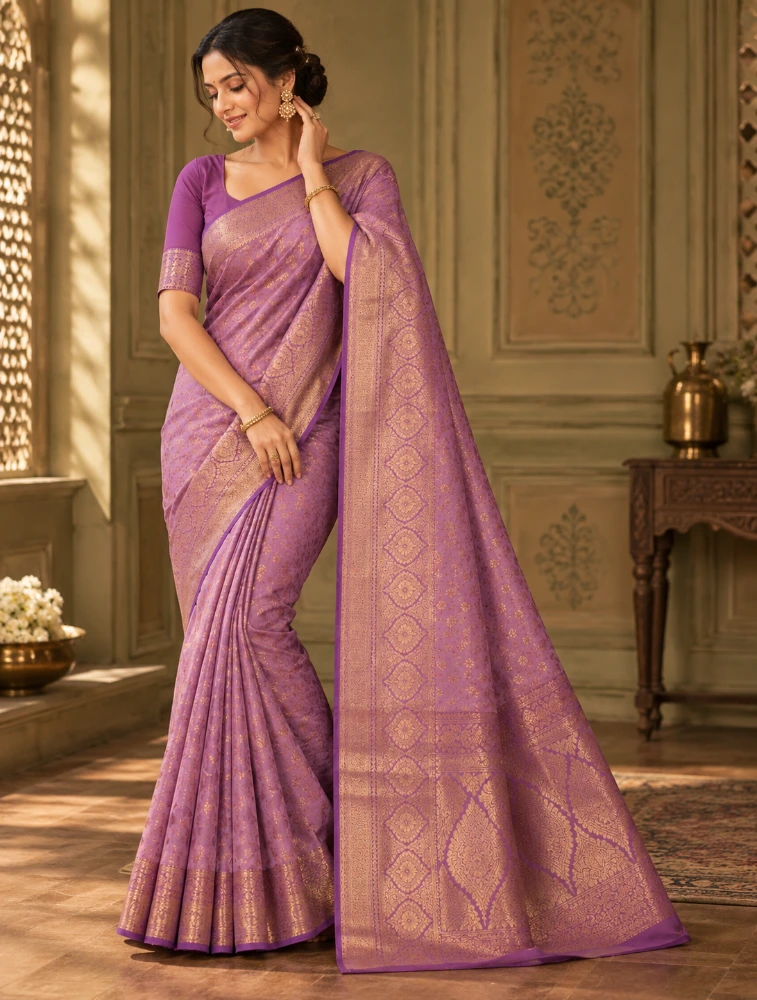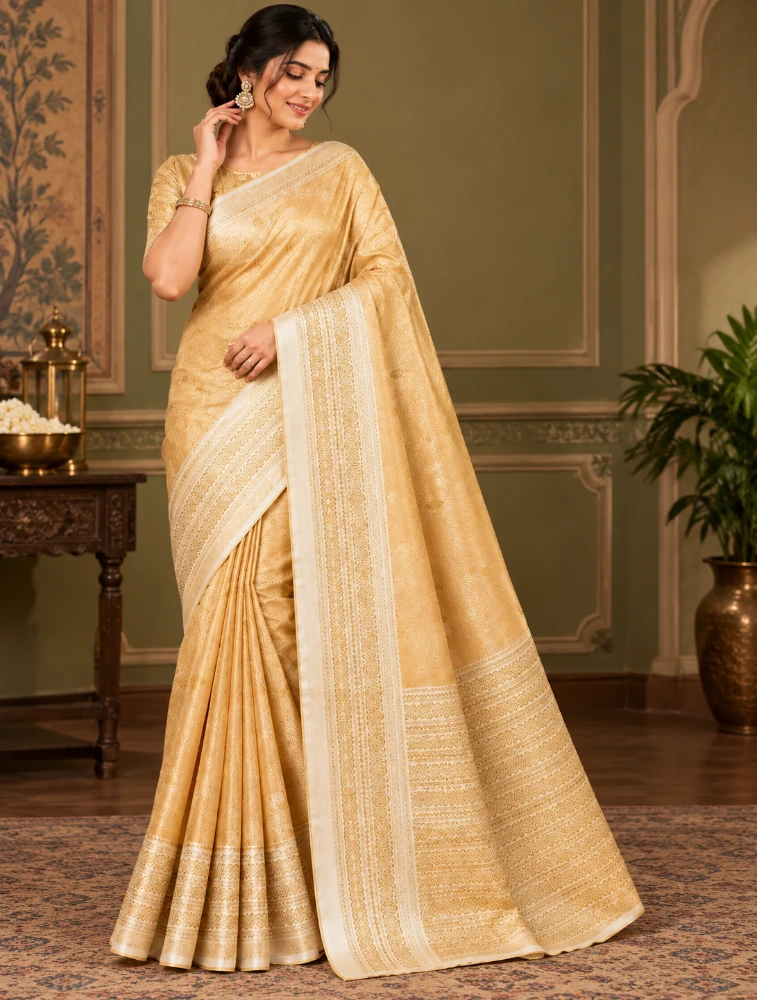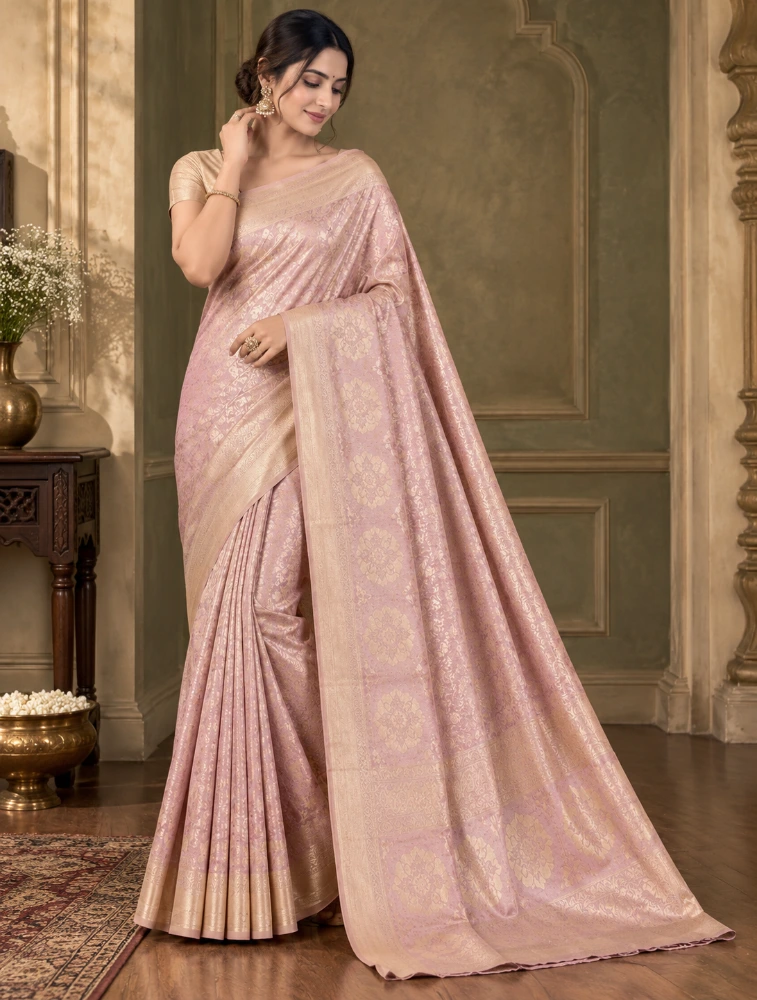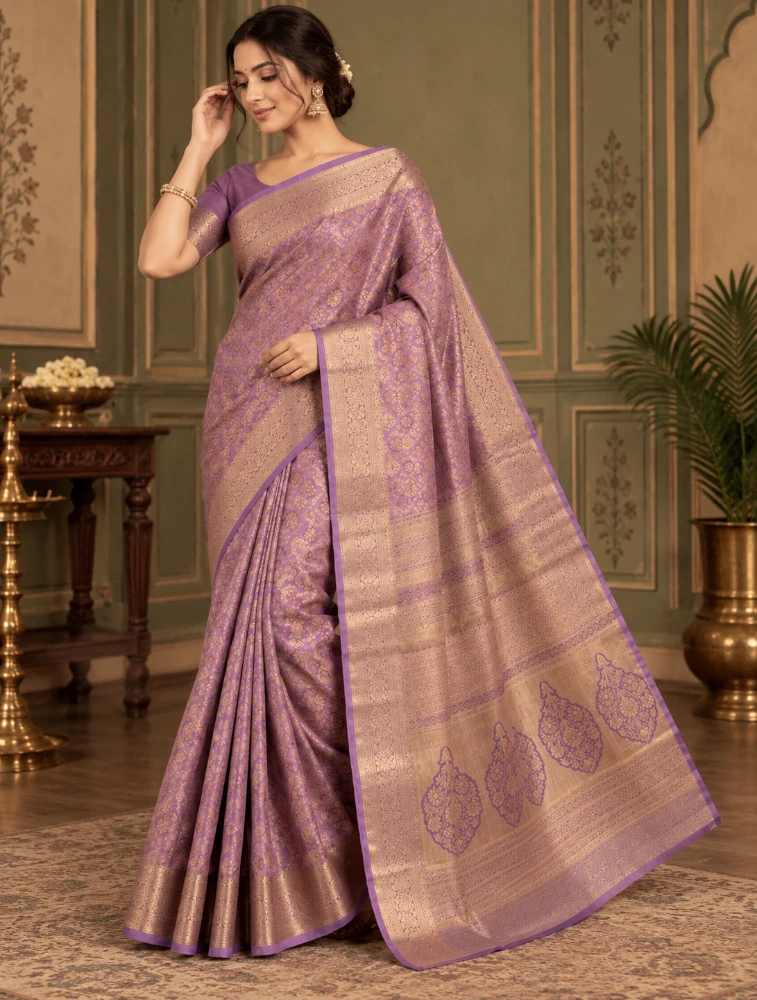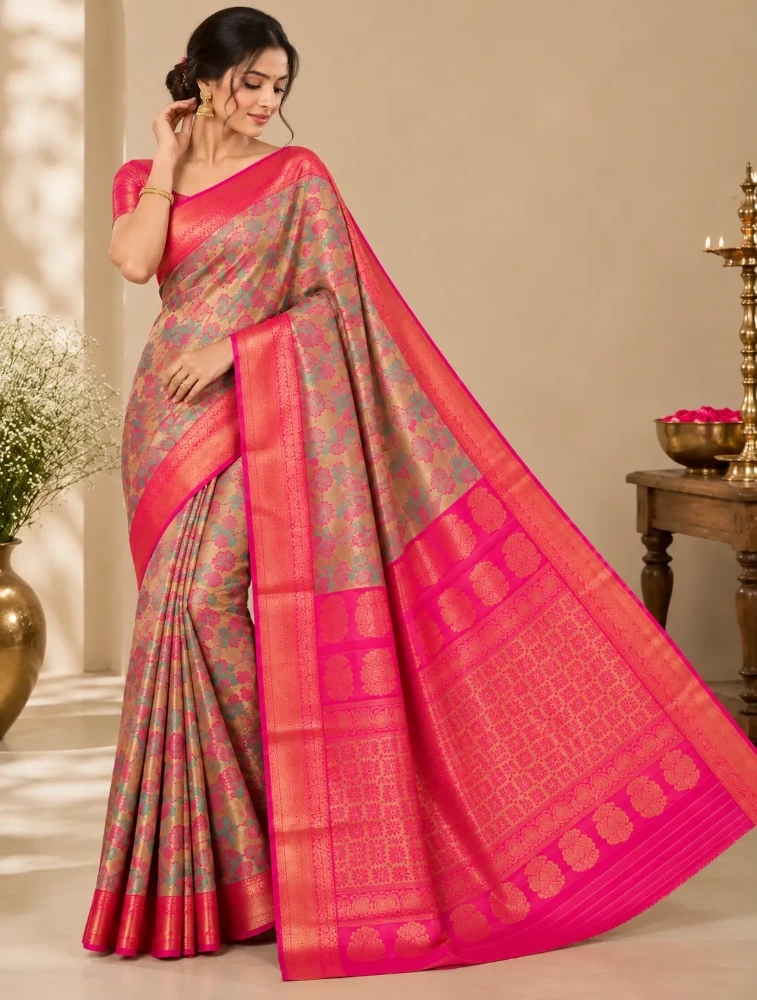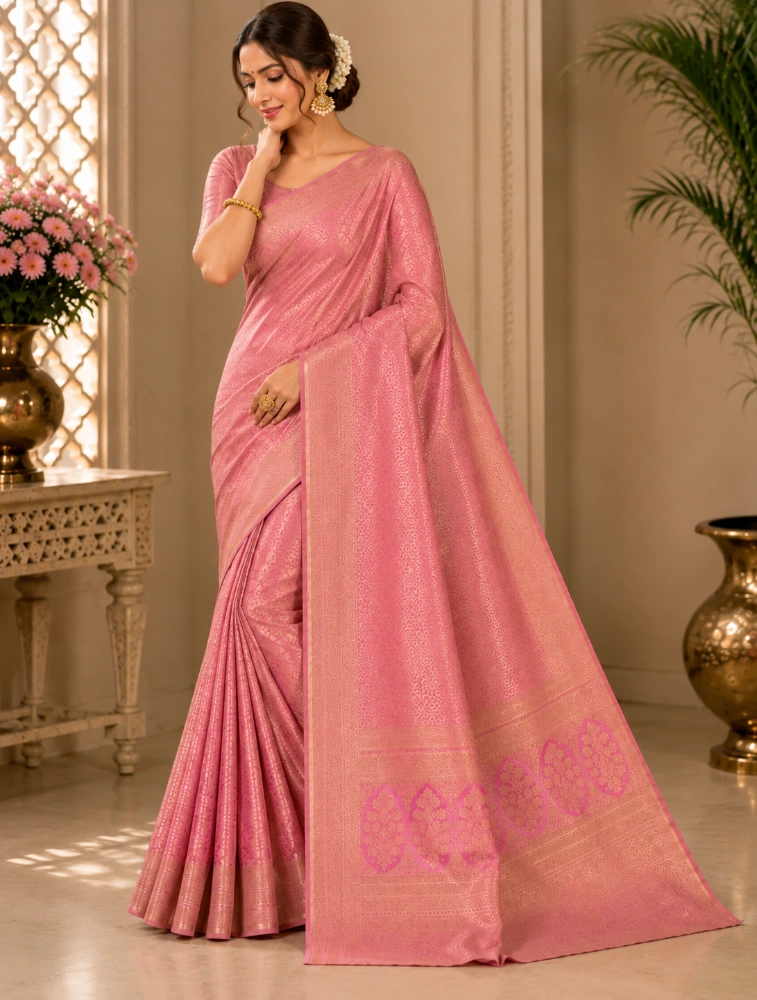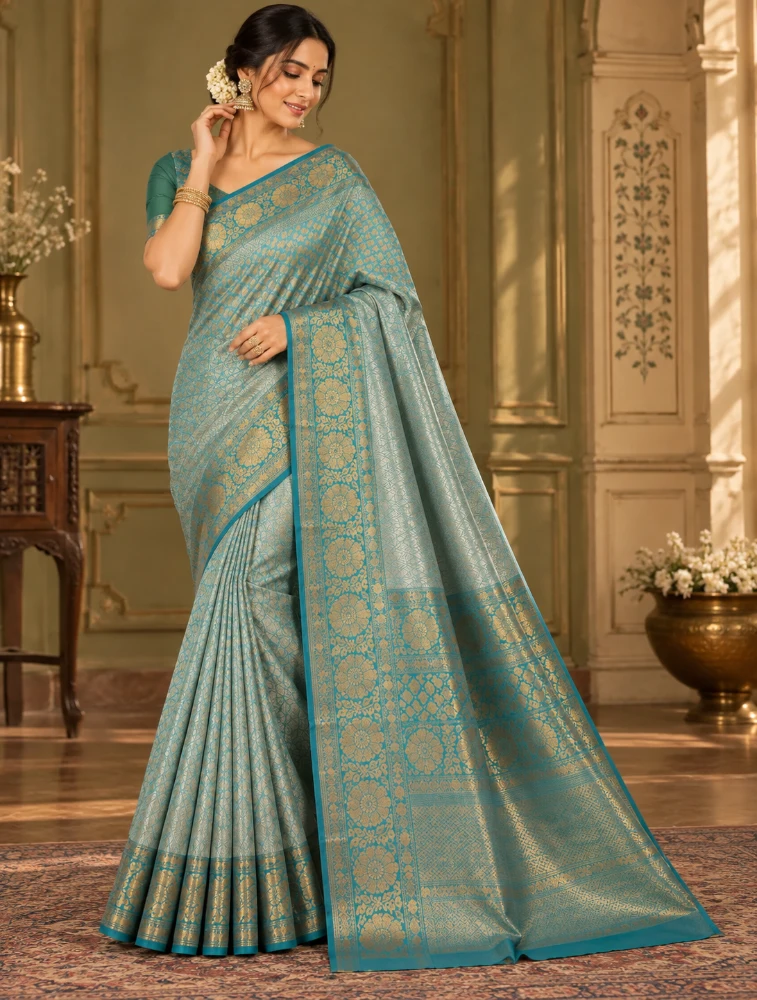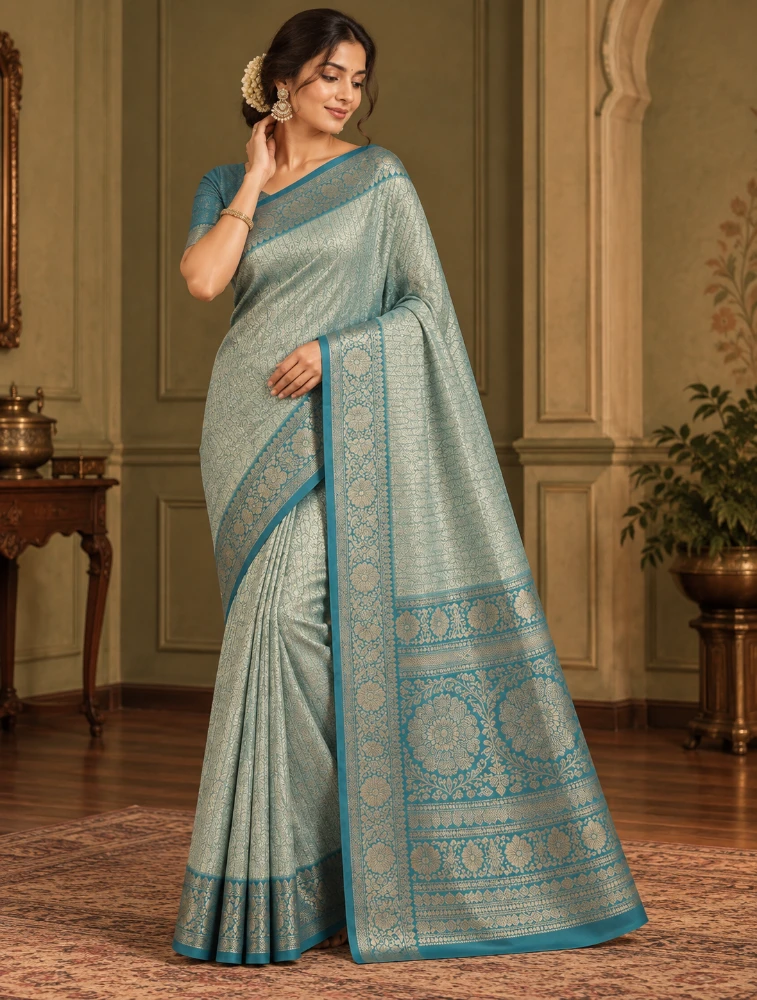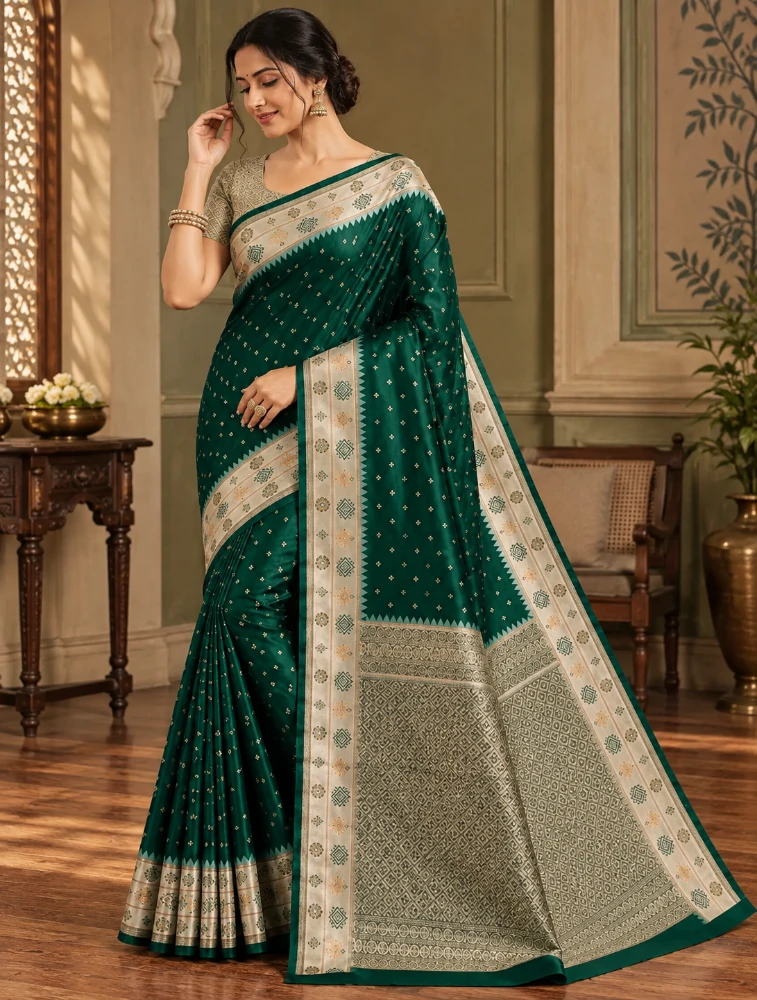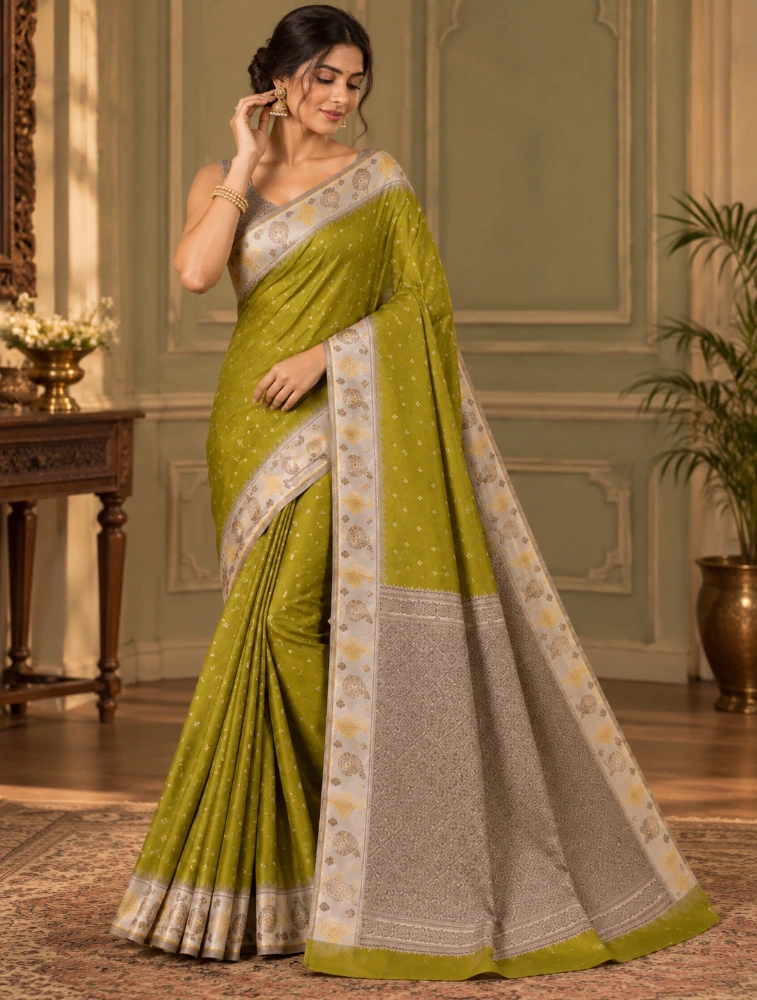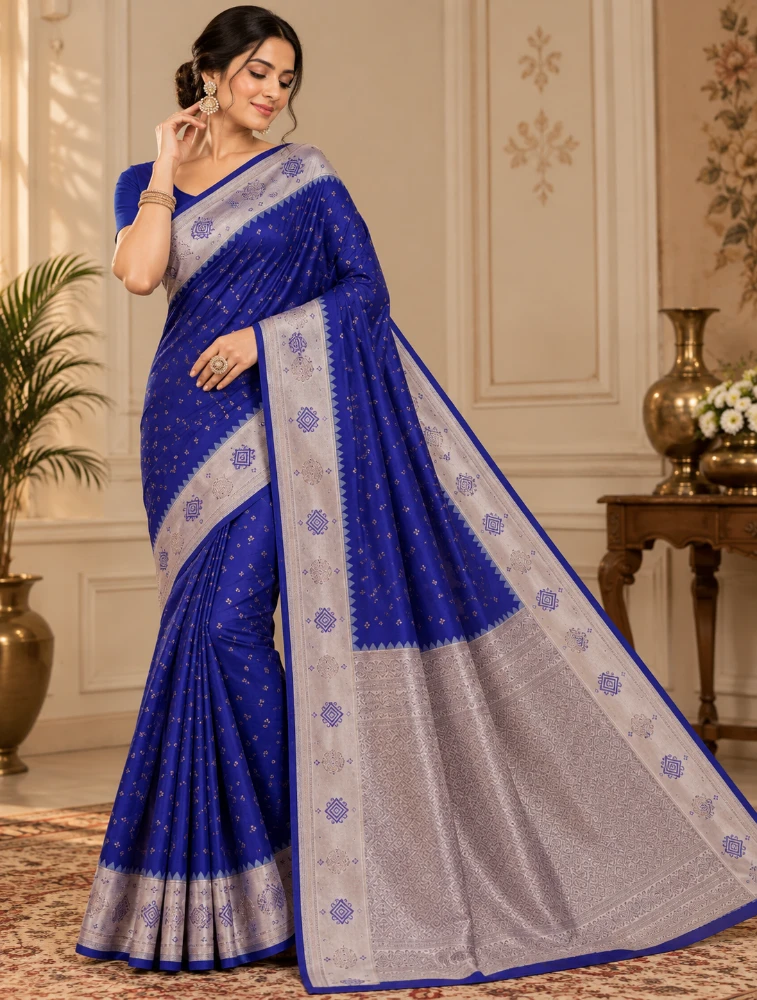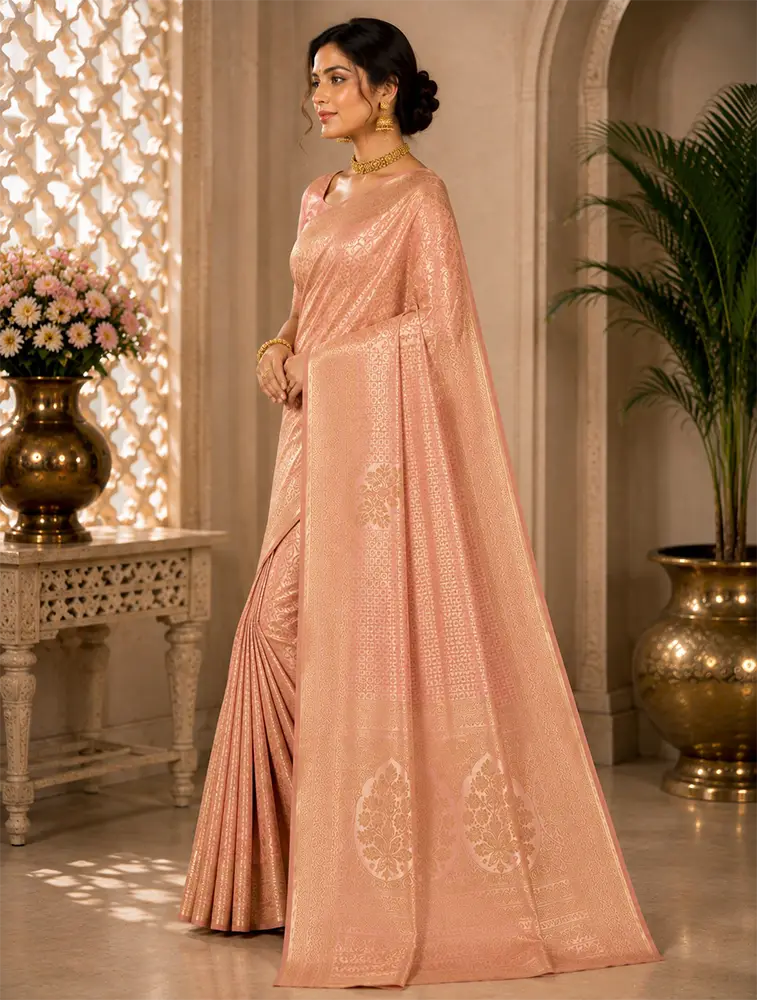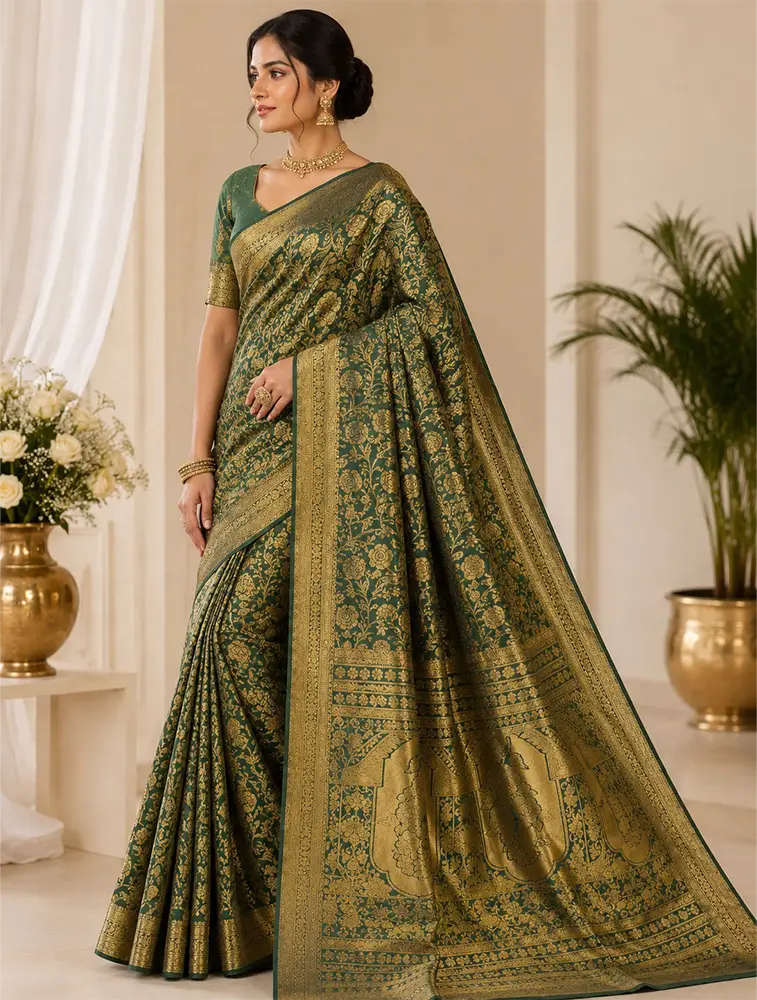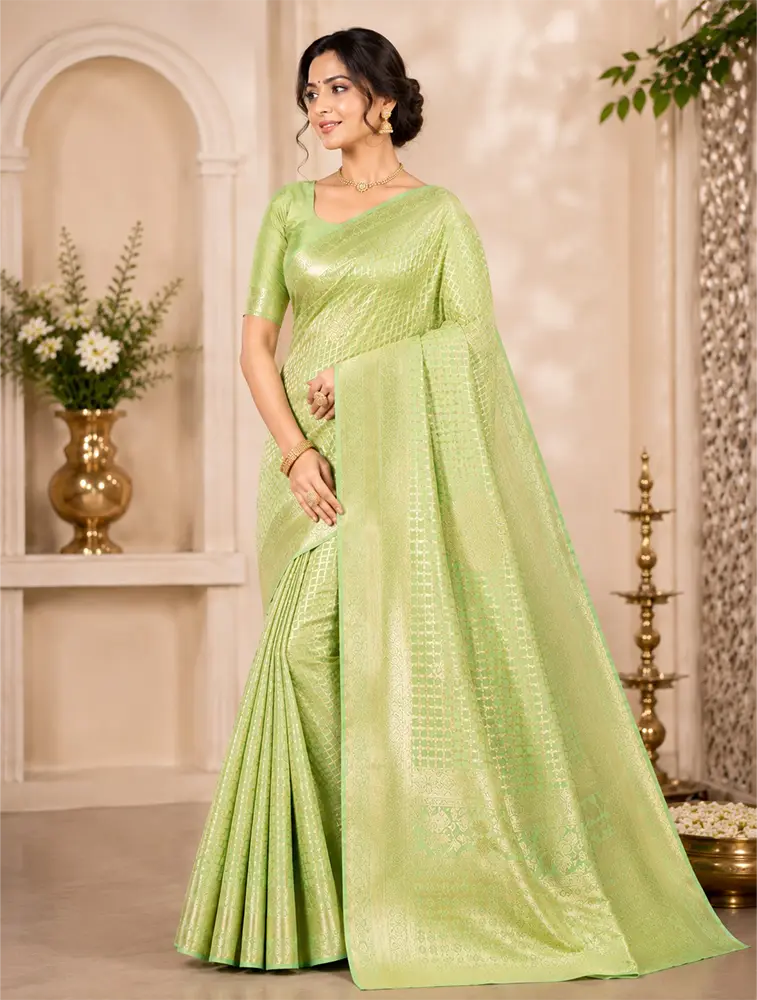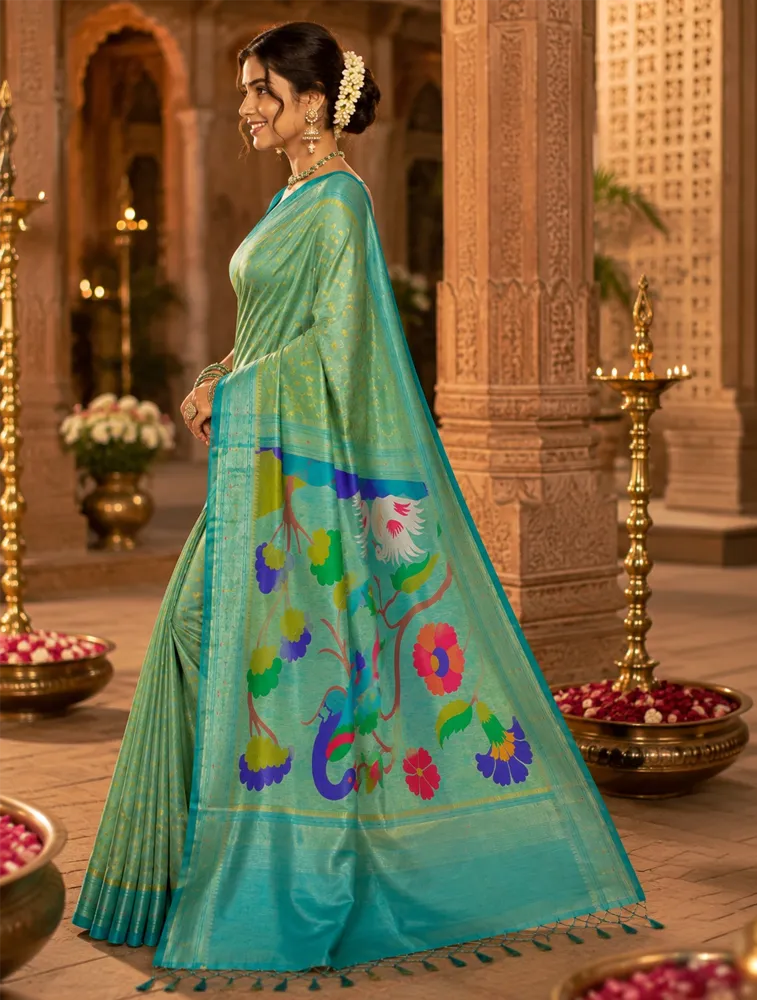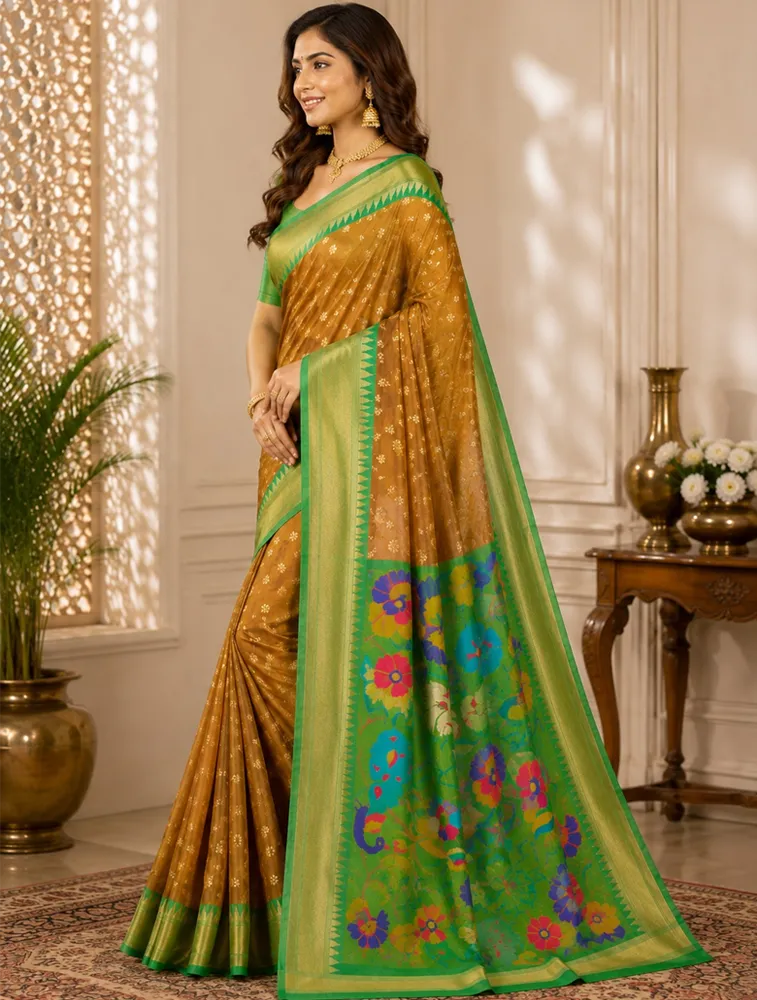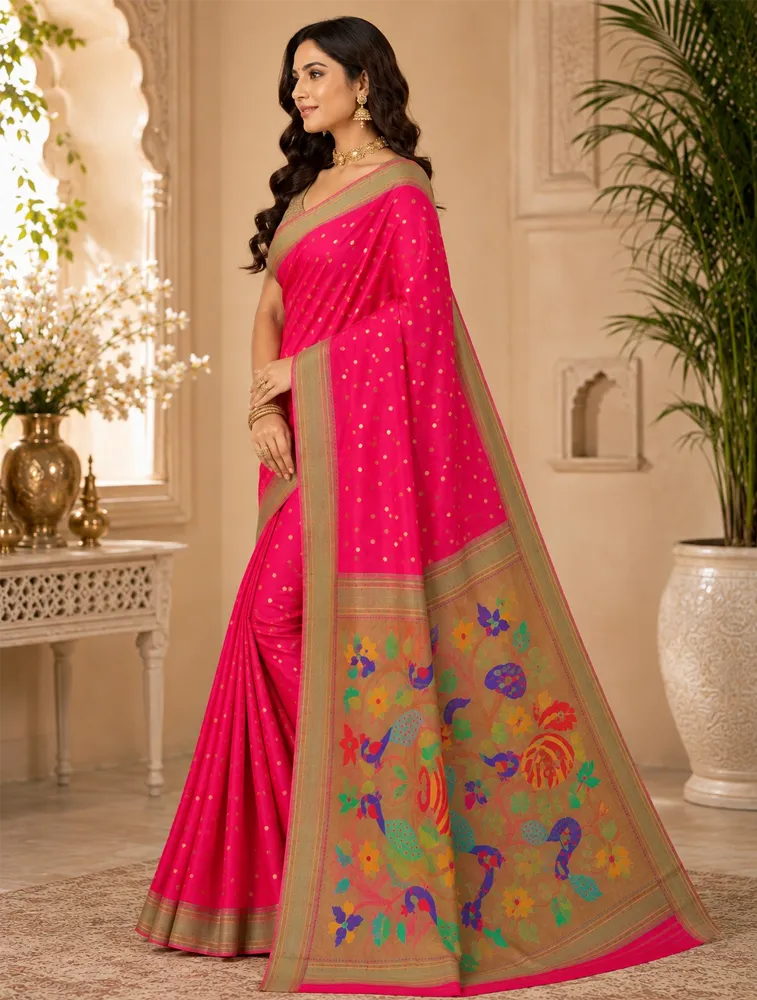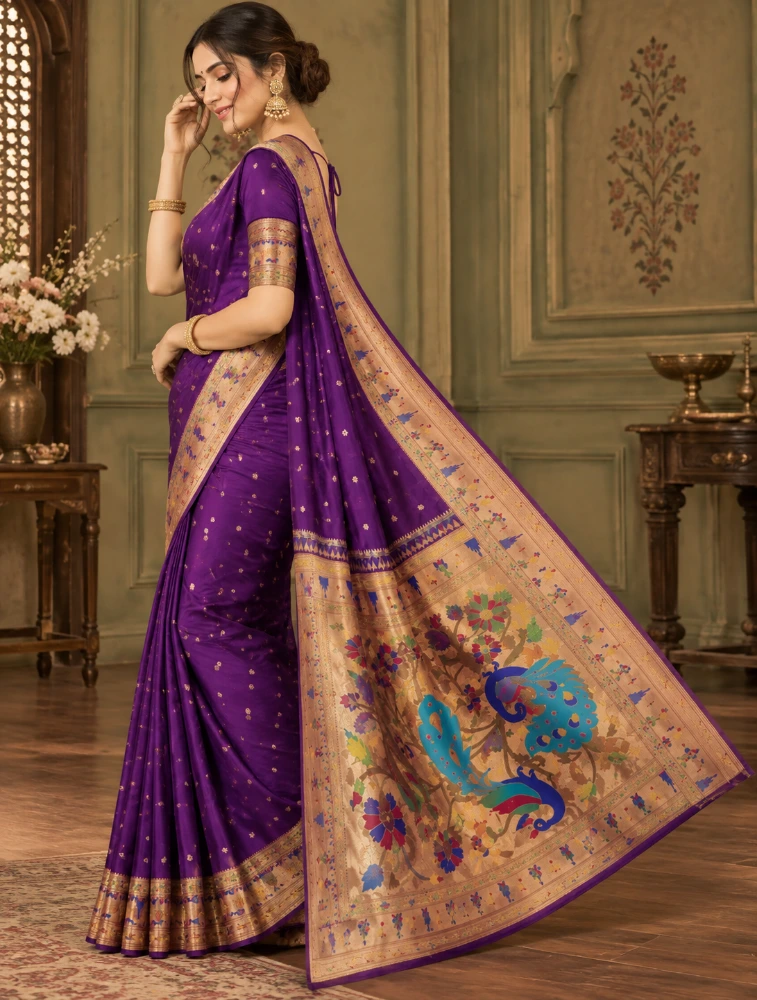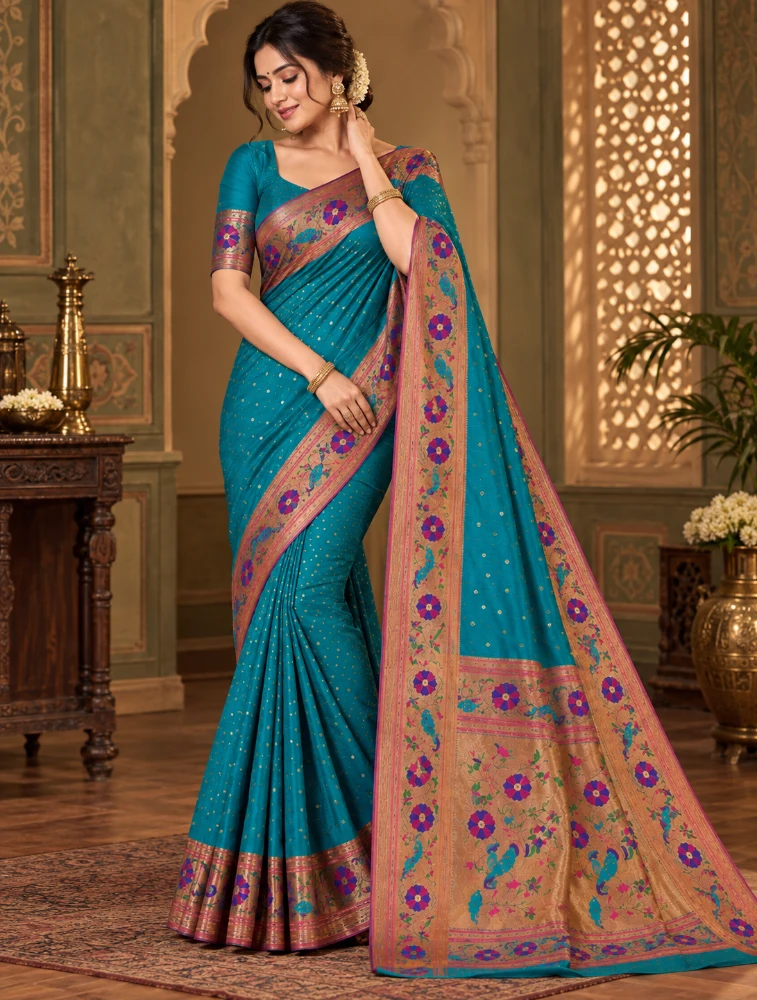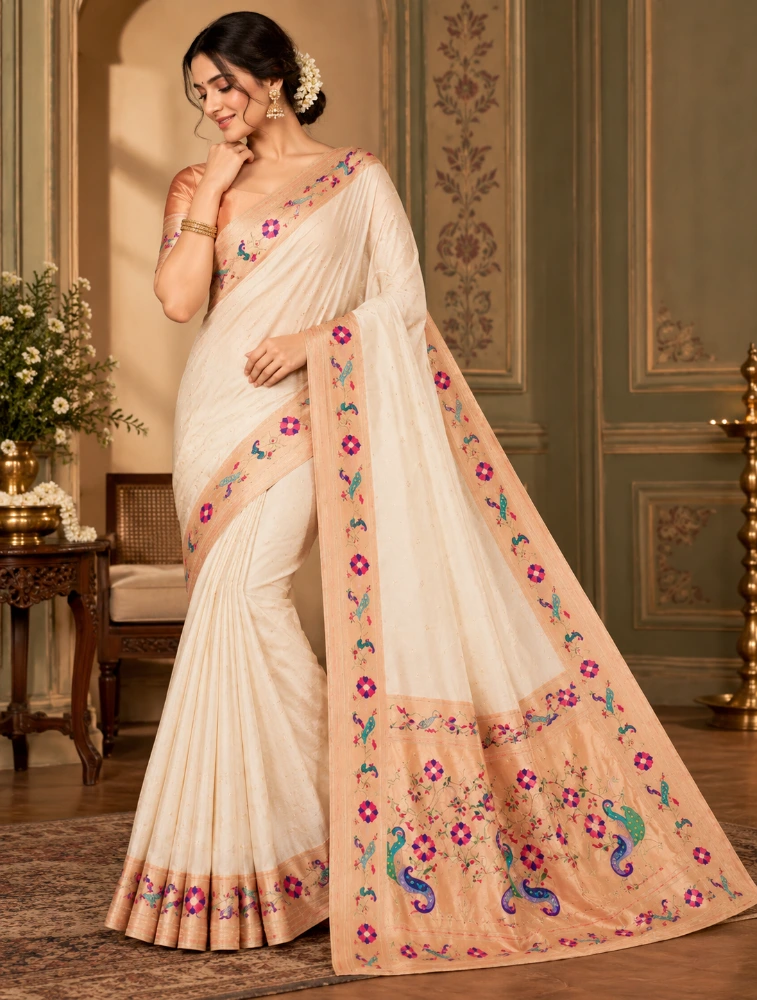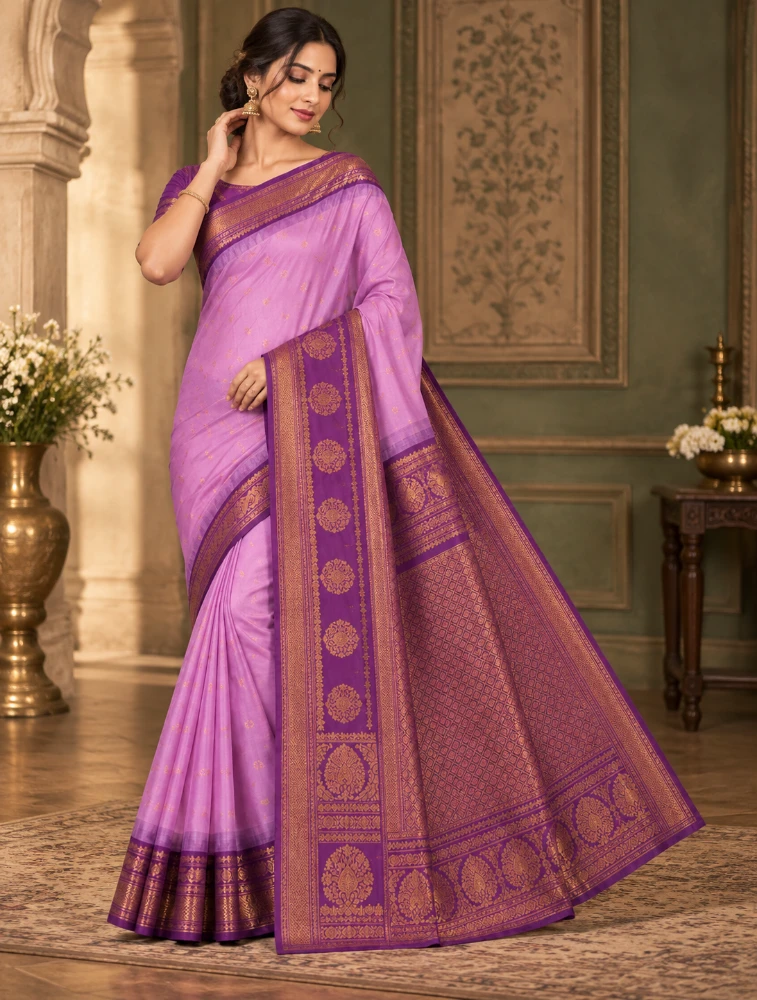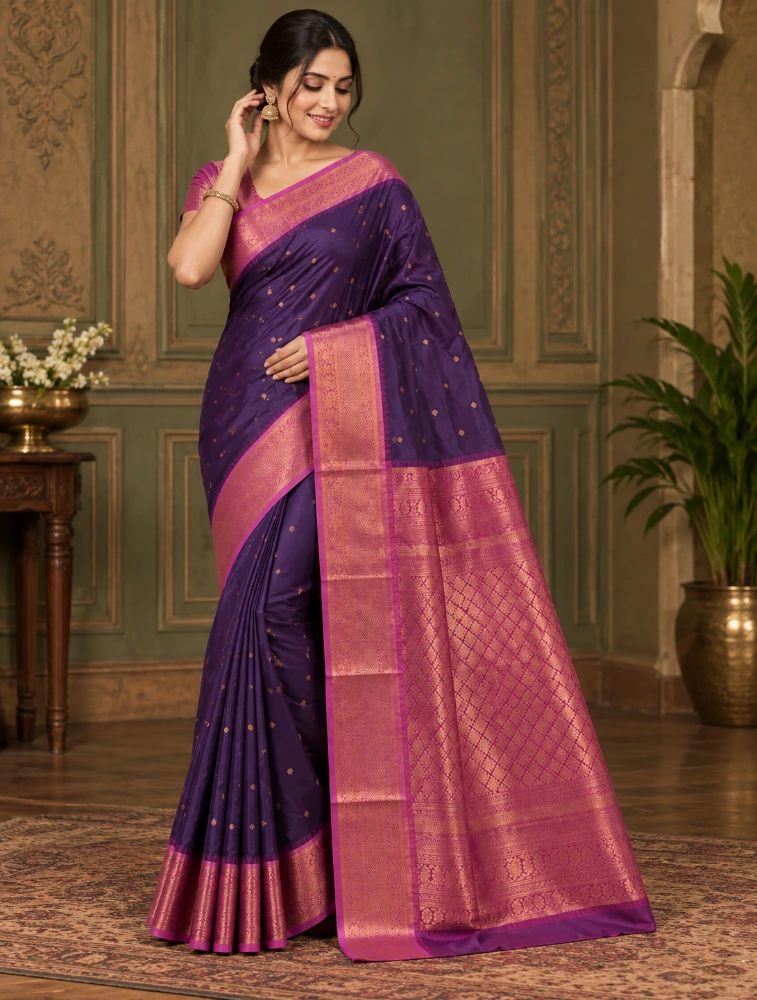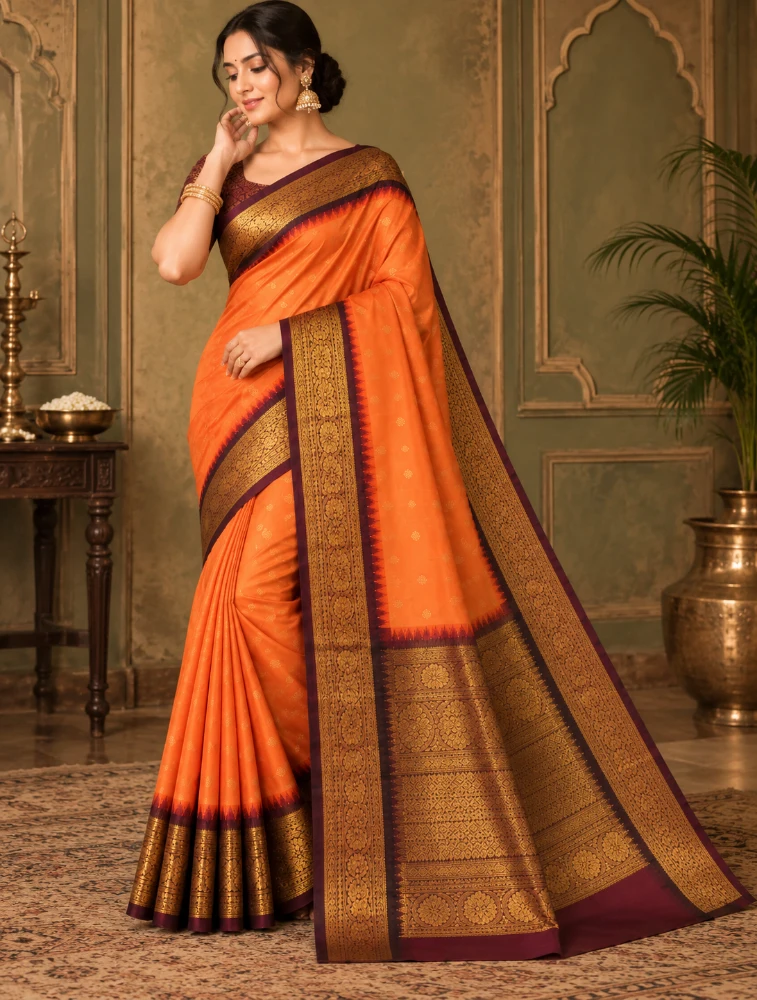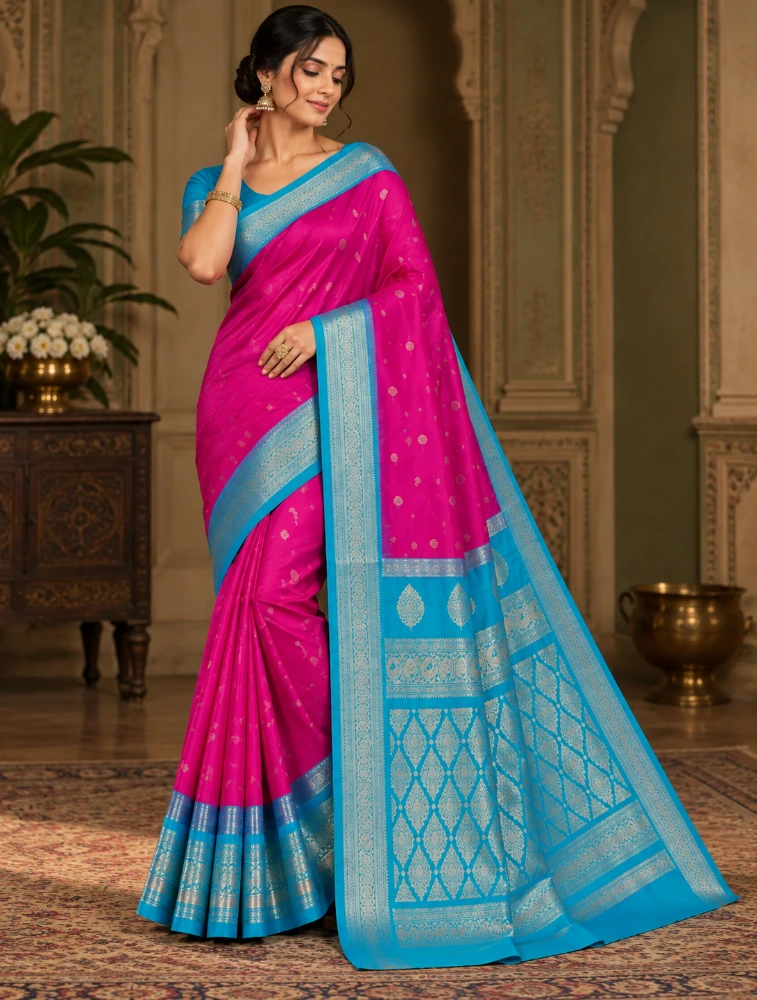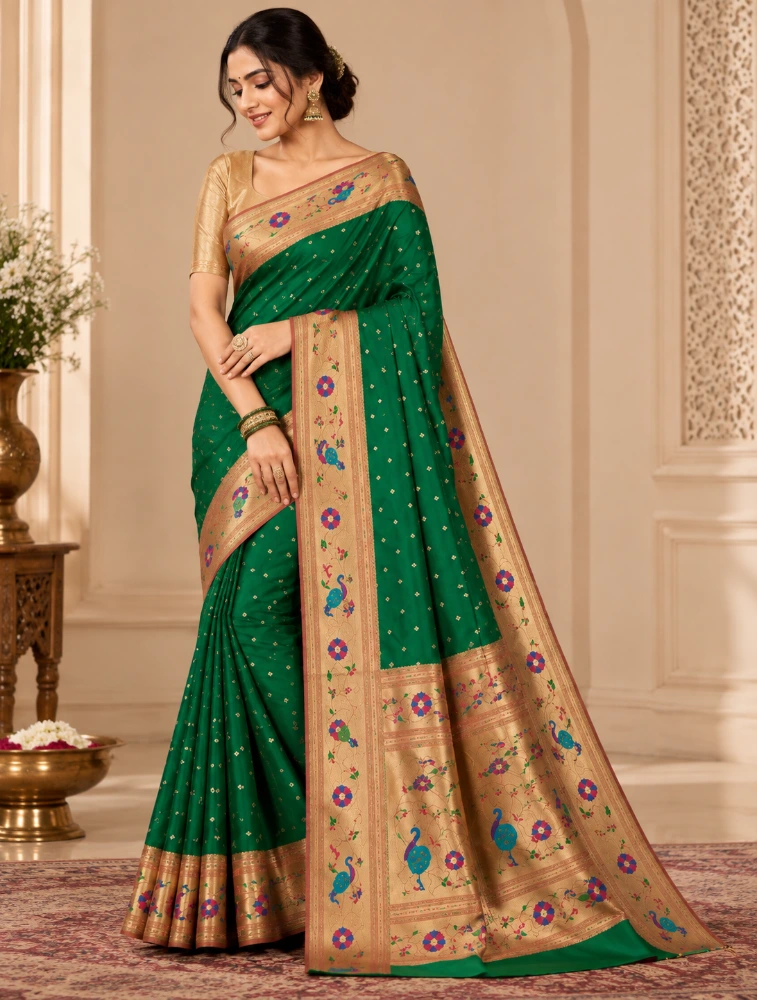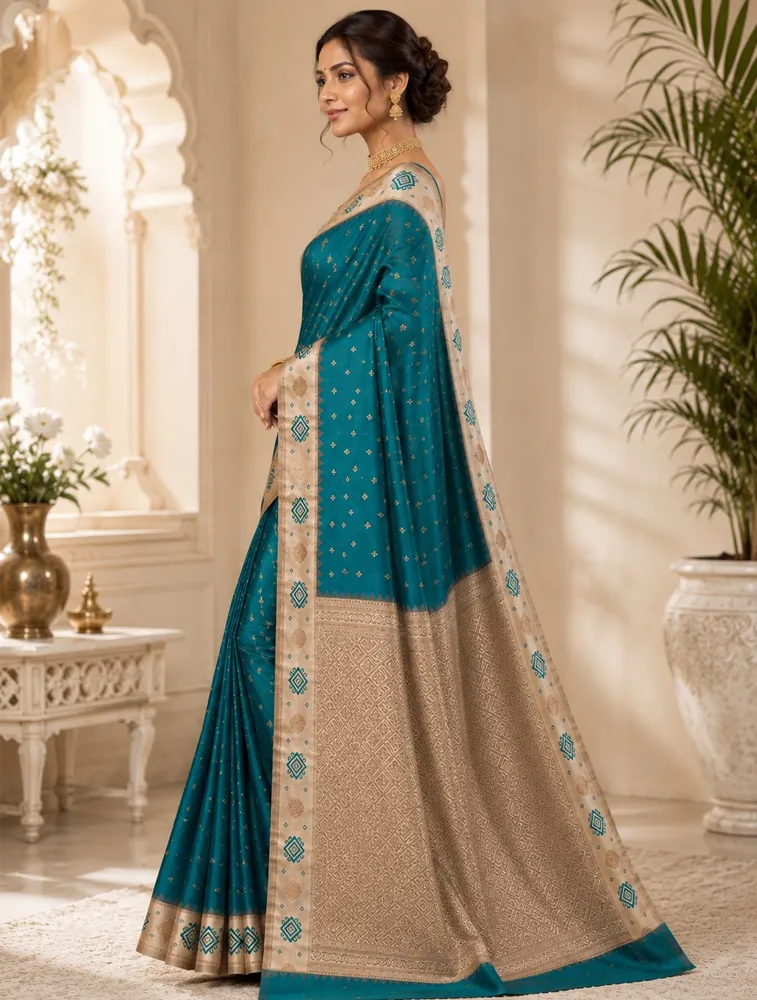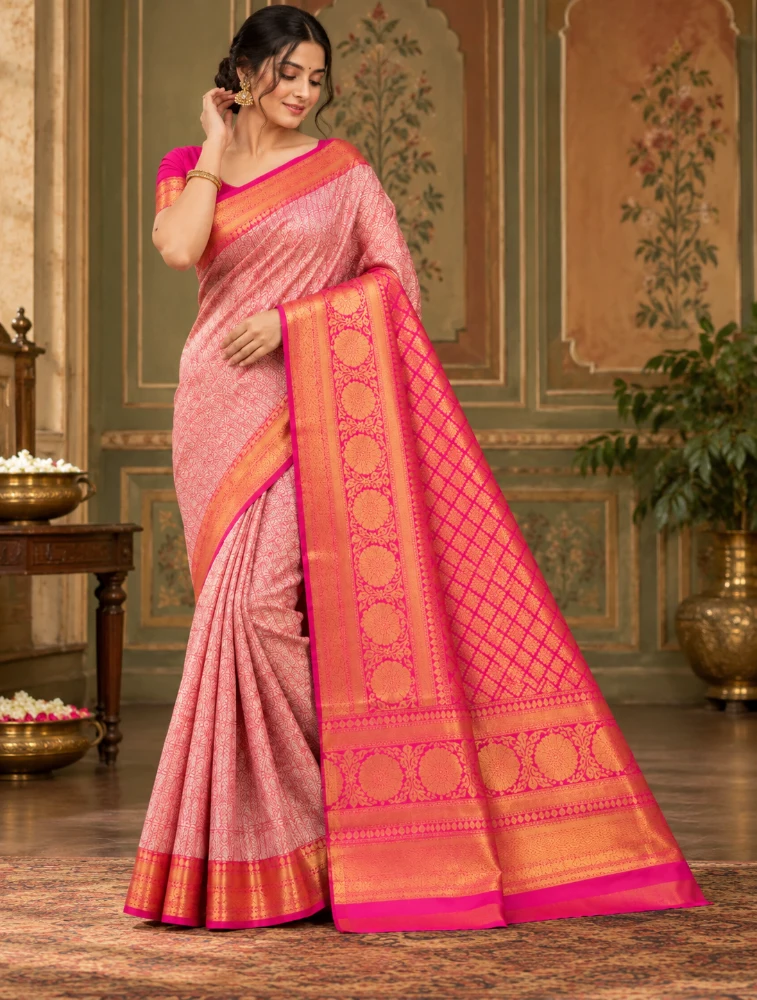
Pink Womens Elegant Tissue Brocade Saree with Rich Zari Border
4.4159 ratings
₹3,135.00/ piece
Enter a 6-digit Indian PIN code to see delivery options for that area.
Currently delivering to Bengaluru 560105
factori.com supplies bulk sarees from ₹151/piece across 661 partner factories — ready stock and custom programmes with GST invoices.
Brand-ready sarees for corporate, retail, uniforms and large custom programmes — sourced across partner factories with published prices.
Brand-ready sarees for offsites, launches and conferences.
Get quote →Consistent supply for schools, factories and frontline teams.
Corporate uniforms →Unbranded or private-label stock for retail brands.
Launch your store →Contract manufacturing for high-volume programmes.
Contract manufacturing →What this category actually calls silk
Nine articles on the first page of this category are sold as Designer Art Silk. Further in there are articles called Printed Soft Silk, Crepe Silk and Banarasi Silk, and one whose fabric word looks like a misspelling of a regional wild silk. Not one of those product pages publishes a fibre composition percentage. The word silk appears in the article name, and then the specification section moves on to colour, occasion and wash care without ever saying what the cloth is made of.
That matters because art silk is not an abbreviation of artistic silk. It is the market's shorthand for artificial silk, which is a filament yarn made by chemical process. Viscose rayon, cupro and modal are the regenerated cellulose family; polyester and nylon are the fully synthetic family. All of them can be woven into a lustrous cloth that drapes and shines the way silk does. None of them is silk.
Where the tariff puts each of them
The Customs Tariff separates them by fibre, not by appearance. Chapter 50 is silk, and heading 5007 is stated as woven fabrics of silk or of silk waste. Chapter 54 is titled man-made filaments; strip and the like of man-made textile materials, and heading 5407 is stated as woven fabrics of synthetic filament yarn, including woven fabrics obtained from materials of heading 5404. Chapter 54 Note 1 defines man made fibres as staple fibres and filaments of organic polymers produced by manufacturing processes.
So a crepe or a chiffon or an art silk drape is a Chapter 54 article. A genuine mulberry silk drape is a Chapter 50 article. If the saree is treated as a made up garment rather than as a length of cloth the classification moves again, into Chapter 62, but the fibre still decides the subheading. Whichever branch applies, the deciding fact is the one this catalogue does not print.
Why a buyer should care before the invoice, not after
Three things hang off the fibre. The first is the rate you pay at the border, if you are importing, because chapters carry different duty treatment. The second is what you are allowed to write on the label in your own market, because fibre content declarations are enforced in most retail jurisdictions and a garment labelled silk that tests as viscose is a mislabelling exposure, not a marketing exaggeration. The third is care. Silk and viscose behave differently in water, differently under an iron and very differently under a stain remover, so a care label copied across a mixed range will be wrong for part of the range.
What to write into the order
Ask for the fibre composition as a percentage by weight for every article code, in writing, before you commit. Ask which laboratory method was used, because a burn test in a showroom is not evidence. Ask for the article to be described in the proforma invoice by fibre and by heading, not by its selling name, so that the classification you are paying against is visible from the start. If the seller cannot state the fibre, treat the word silk in the title as decoration and price the article as a man made filament fabric.
None of this is legal or tariff advice. Classification is decided on the facts of the specific consignment by the authority that assesses it, and you should take your own professional advice on both the heading and the labelling rules that apply where you sell.
What the Act actually says
Section 2(1)(e) of the Act defines a geographical indication, in relation to goods, as an indication which identifies such goods as agricultural goods, natural goods or manufactured goods as originating, or manufactured in the territory of a country, or a region or locality in that territory, where a given quality, reputation or other characteristic of such goods is essentially attributable to its geographical origin.
Section 22(1)(a) sets out what infringement looks like. A registered geographical indication is infringed by a person who uses that indication by any means in the designations or presentation of goods that indicates or suggests that such goods originate in a geographical area other than the true place of origin of such goods, in a manner which misleads the persons as to the geographical origin of such goods.
Why this page raises the question
Two articles here carry the name in their titles, one as Banarasi Silk Saree with Satin Butta and one as Classic Banaras Soft Silk Sarees. Neither product page states a place of manufacture. Neither states a fibre composition. The category has no country of origin field at all on any of the four grid pages. So the buyer is offered a place name as a product attribute with nothing behind it that a buyer could check.
The same reasoning applies to every other place word and craft word that turns up in a saree catalogue. One article on the fourth grid page uses a spelling that is one letter away from a nationally protected handspun cloth name. Whether that is a typing error or a genuine claim changes the answer completely, and the catalogue as published does not let anyone tell which.
What a serious buyer asks for
Ask three questions and put the answers in the contract. First, is the article being sold to you as originating from that place, or is the word being used loosely to describe a look. Get the answer in writing, because the two positions carry very different consequences downstream. Second, if it is an origin claim, ask for the authorised user evidence or the certification that supports it, and ask who holds it. Third, ask what will appear on the garment label and on the outer carton, because that is the wording that travels to your customer and to any authority that inspects the shipment.
If the honest answer is that the word describes a style rather than a source, the safe course is to rename the article for your own market before you list it. A style can be described without borrowing a place name. Zari border, satin butta, brocade pallu and contrast border are all descriptive terms that carry no origin claim at all, and they tell the customer more about the cloth than the place name does.
Why we will not simply repeat the seller's wording
We quote the catalogue's own words here only so that a buyer can see exactly what is published, and we do not restate a place name as though it were a fabric type. A place name in a product title is either evidence or exposure. Handled properly it is a genuine premium; handled carelessly it is the sort of thing that surfaces during a customs examination or a listing review by a platform you sell on.
This is not legal advice. Whether any particular use of any particular name is permissible depends on the register, on the goods and on the facts, and you should take your own professional advice before you publish an origin claim in any market.
What the packing description on these pages actually promises
The sampled product pages describe packing in prose rather than in fields. One says items are neatly folded and packed in individual poly covers with bulk export-quality cartons for safe transit. Another says items are carefully folded, packed in a premium transparent poly bag, and securely placed inside a protective corrugated box. A third says products are carefully folded and packed in protective packaging with bulk orders in durable corrugated cartons.
Those are useful sentences about protection during transit. They are not a declaration. There is no field on any page for the name of the packer, the name of the manufacturer, the address, the month and year of packing, the net quantity, the retail sale price or a consumer care contact. Rule 10 is about one of those, and rule 6 covers the rest of the declarations that a retail package has to carry.
Why this is a live problem specifically for sarees
A saree is very often sold onward as a single retail unit in exactly the pack it arrived in. The poly bag that protected it in transit becomes the pack the shopper picks up. The moment that happens the bag stops being transit packaging and becomes a retail package, and the declarations attach to it. A carton of a hundred pieces going into a warehouse is a different situation from a hundred individually bagged pieces going onto a shelf, and the same shipment can be both.
So the practical question is not whether the seller has packed the goods well. It is who is named on the smallest unit that a consumer will be able to buy, and whether that name and address are complete, legible and on the outside.
What to fix in the purchase order
State in the order which party is the manufacturer for declaration purposes and which is the packer or importer, because they are not always the same and the wording differs. State that the individual poly bag is a retail pack and must carry the full set of declarations, or state clearly that it is transit packaging only and that you will re-pack. Specify the label size, the position on the pack and the language. Ask for a printed proof of the pack face before bulk production, not a photograph of the finished carton after it ships.
Add a fibre content line and a care line to that proof while you are looking at it. On this category neither is a published field, and both belong on the garment label rather than only in a paragraph on a web page. If the goods cross a border, add the country of origin, because no listing here publishes one.
The cost of getting it wrong
Relabelling a delivered consignment is slow and it is done by hand. A shipment of sarees that has to be unbagged, labelled and rebagged loses its transit protection and its presentation at the same time, and the labour is charged to whoever is holding the stock. Getting the pack face agreed before the first cutting costs one email. Getting it agreed after delivery costs a warehouse week.
This is a summary of a published rule and it is not legal advice. The declarations that apply to your goods depend on how they are packed, who sells them and where, and you should take your own professional advice on the full set before you print anything.
What is actually on the page
The category runs to four grid pages and one hundred and fourteen articles. One hundred and thirteen of those addresses follow the same pattern: all lower case, words separated by hyphens, the article code on the end. One does not. It is written in mixed case, it carries a bracketed word in the middle of the path, and the brackets are not encoded. The tile itself looks entirely normal; the defect is only visible in the address.
A bracketed duplication note is what a content management system adds when somebody duplicates an existing record to make a variant and saves it before renaming it. The working title then becomes the public address. It is an ordinary mistake. What makes it worth raising is that it reached a live, indexable page and stayed there.
Why an address defect is not a cosmetic defect
Three separate things go wrong. The first is that unencoded brackets in a path are handled inconsistently by different clients, so the link can break when it is pasted into a message, an email or a purchase order. The second is that a search engine reads the address as part of the page's identity, and an address that does not match the pattern of its siblings is a weak signal in a category where every other address is clean. The third is the one that matters commercially: it tells you that a record was cloned and published without a review step.
That third point is the reason to ask. If one clone reached the public catalogue with its working title intact, the sensible follow-up question is what else was cloned, and whether the cloned records inherited the parent's attributes. On this category there is direct evidence that they did.
The related evidence in the same catalogue
Seven live tiles across the first two grid pages share only three titles between them. Three carry a byte- identical title at the same price with three different article codes. Two more carry a different byte-identical title at the same price with two different codes. Two more share a third title at another single price. In each case the buyer is offered articles that are presented as different products and described in exactly the same words at exactly the same price.
Article codes are also not reserved in family blocks. One family of thirteen occupies a run of codes with two numbers missing from the middle, and both of the numbers you would expect to be the missing siblings turn out to belong to completely different articles elsewhere in the same category. So a gap in the sequence tells you nothing about whether an article was withdrawn.
What to do about it as a buyer
Order against the article code, never against the title and never against the address. Put the code in the purchase order, on the proforma, on the packing list and on the carton label, and require that all four match. Ask for a photograph of the specific coded article rather than of the family. Where two codes share a title, ask in writing what the difference is, and if the honest answer is that there is none, consolidate them into one line so that your goods-in team is not trying to separate identical goods.
And ask the seller to fix the address. Renaming it and redirecting the old one is a ten minute job, and it removes the only line in a hundred and fourteen that says the catalogue is not reviewed before it is published.
Why length is the specification, not a nicety
A saree is a single uncut length of cloth. There is no small, medium or large, so the length is the only dimensional variable there is, and it decides how the garment can be worn. A drape that works at six and a quarter metres will not produce the same fall at five and a half, and a wearer who expects a particular style will find that the shorter piece simply will not reach. Common market lengths sit between roughly five and a half and six and a half metres, and the difference between the two ends of that band is a different product.
The blouse piece is the second variable. It is either attached, supplied separately, or not supplied at all, and its length decides what can be stitched from it. A short piece restricts the sleeve. A page that says the blouse piece is included without stating its length has told you almost nothing.
What the three sampled pages actually publish
One page, in the pure linen family, carries a proper attribute table. It gives product type, fabric as one hundred per cent pure linen, pattern, weave type, saree length as 5.5 metres, blouse piece as included at 0.80 metres approximately, occasion, fit, season and wash care. That is a specification a buyer can quote in a contract.
The second sampled page, from the family of thirteen at a single price, gives fabric as premium crepe, colour, design, comfort, finish, durability, versatility and an ideal-for line. Every one of those is an adjective. There is no length, no width, no weight, no blouse piece and no fibre percentage. The third, a premium article near the top of the range, gives fabric, design, colour and occasion, and nothing else. No length. No blouse piece.
The fields no listing in this category fills
Across all four grid pages there is no published width, no published fabric weight in grams per square metre, no published thread count, no published shrinkage allowance, no published colour fastness rating, no published country of manufacture and no warranty term. Fibre content appears only as an adjective inside the article title for most of the range. Care appears as a sentence rather than as a symbol set. That is a lot of blanks for a garment that is bought by the hundred. It is also why this pack refuses to publish any of those numbers on the seller's behalf. Quoting a figure that no listing supports would be inventing a specification, and a buyer who repeated it in a purchase order would be quoting us rather than the manufacturer.
The eight lines to put in your specification sheet
Saree length in metres with a stated tolerance. Blouse piece length in metres, and whether attached or loose. Usable width in centimetres. Fabric weight in grams per square metre. Fibre composition as a percentage by weight. Dimensional stability after washing, as a percentage, with the test method named. Colour fastness to washing, to rubbing and to light, each with a rating and a named method. Country of manufacture.
Send that list to the seller and ask for it to be returned filled in and signed, per article code, before you place the order. Where a figure comes back blank, either drop the article or accept it knowingly and price the risk. Where a figure comes back filled, ask for the test report that supports it. A specification that nobody has to stand behind is a preference, not a specification.
On the second grid page, three consecutive tiles carry the same colour word, the same fabric words and the same product noun, at the same price, under three different article codes. Two tiles at the end of the first grid page do the same with a different colour, again at one price, again with different codes. And two tiles in the pure linen family, one on the second grid page and one several positions later, share a third identical title at a third single price.
In every case the images differ slightly and the words do not differ at all. A buyer looking at the grid has a price, a title and a photograph, and two of those three are identical. The photograph is the only thing carrying the difference, and a photograph is not a specification.
The three explanations, and why the difference matters
The first possibility is that these are genuinely different articles, distinguished by something the catalogue does not publish. A different weave density, a different border, a different blouse piece, a different production batch. If so the fix is to publish the distinguishing attribute, because it is the reason both articles exist.
The second possibility is that they are the same article loaded more than once, which happens when a record is cloned to create a variant and the variant is saved before it is edited. There is direct evidence of that pattern in this catalogue: one live product address still carries the duplication note that a content system adds when a record is copied.
The third possibility is that they are separate stock lots of one article, held apart internally for traceability and then exposed to the public as though they were separate products. That is a reasonable internal practice and a poor external one.
What each explanation costs you
If they are different and you cannot see how, you will order the wrong one and find out at delivery. If they are the same and you order across both codes, you will split a single line into two purchase orders, two inspections and two carton labels for no reason, and your goods-in team will be asked to separate goods that cannot be separated. If they are lots, your reorder will not reproduce your first order, because the lot you bought may be finished while the code that looked identical remains listed.
All three outcomes are avoidable with one email, and none of them is avoidable by looking harder at the page.
How to buy around it
Before you order, send the codes back to the seller in one line and ask, in writing, what the difference between them is. Ask for the answer as an attribute and a value, not as a sentence. If the answer is that there is no difference, ask which single code you should order against and ask for the others to be merged, so your reorder next season still resolves.
Then order against the code only. Put it on the purchase order, the proforma, the packing list and the carton label, and make matching codes a condition of acceptance at goods-in. Ask for a photograph of the coded article against a ruler and a colour reference, and keep it with the order file. When two listings share a title, the code and the approved sample are the only two things that will still be true in six months.
The catalogue offers, in its titles alone, chiffon, crepe, art silk, printed pure linen, pure linen premium weaves, elegant linen cotton, premium linen cotton, heritage slub cotton, textured acrylic dobby, georgette, satin, soft silk and crepe silk. Those words describe at least four genuinely different fibre families: a bast fibre, a cellulosic staple, a regenerated or synthetic filament and an acrylic staple. They behave differently in every way a buyer cares about.
Two of those names sit uneasily next to each other. One family is sold as pure linen and another as linen cotton. Pure means one fibre. Linen cotton means a blend, and a blend without a ratio is not a specification, because a cloth that is eighty per cent cotton and a cloth that is eighty per cent linen would both be described by the same two words and would not be the same product.
Why the ratio changes the commercial answer
Linen is stronger wet than dry, absorbs and releases moisture quickly, creases readily and has a dry hand. Cotton is softer, creases less sharply and is cheaper. Acrylic is warm, light, holds a texture well and pills. Viscose filament drapes beautifully and loses strength when wet. A blend inherits the awkward parts of both parents in proportion to the ratio, which is why the ratio is the specification and the two words are the marketing.
The consequences show up in three places. In the wash, where the wrong assumption produces shrinkage and complaints. On the label, where a fibre content declaration is enforced in most retail markets and has to be accurate. And in the price, because linen and cotton do not cost the same, and a buyer with no ratio has no way of knowing which one they are mostly paying for.
What one good page proves is possible
The pure linen premium weaves page carries a real attribute table: product type, fabric, pattern, weave type, saree length, blouse piece, occasion, fit, season and wash care. That page shows the template exists and that somebody has filled it in properly at least once. The gap on the rest of the range is not a systems limitation, it is a data entry backlog.
That is worth saying plainly, because it changes what a buyer should ask for. You are not asking the seller to build something. You are asking them to complete a form that already exists on the same website.
What to ask for, and what to accept
Ask for fibre composition as a percentage by weight, per article code, in writing. Ask which method produced it, and ask for a report from an independent laboratory for any article you intend to label as pure anything, because the word pure is the one that gets checked. Ask for the same figure to be carried onto the garment label and the carton, so that the number in your contract and the number on your customer's product are the same number.
Accept a blend cheerfully if the ratio is stated and the price reflects it. Do not accept the word pure without a report. And where an article is sold as one fibre in the title and no fibre in the table, treat the table as the truth and the title as an advertisement.
None of this is legal advice. Fibre content labelling obligations differ by market and you should take your own professional advice on what your labels must declare where you sell.
We sampled three articles at three very different price points and the structure was identical every time. The crepe office drape tile shows Rs 784; its ladder reads Rs 825 for 100 to 999, Rs 809 for 1,000 to 9,999 and Rs 784 at 10,000 and above. The pure linen premium weaves tile shows Rs 1521; its ladder reads Rs 1601, then Rs 1570, then Rs 1521. The premium silk tile shows Rs 2038; its ladder reads Rs 2145, then Rs 2103, then Rs 2038.
So the headline number is not a starting price in the ordinary sense. It is the floor of the ladder, shown as though it were the entrance. The gap is around five per cent at the bottom of the range and around five per cent at the top, which is consistent enough to be a rule rather than a coincidence.
What this does to the category headline
The page title and the main heading both promise sarees from Rs 151 a piece, and the statistics band repeats it. The range sentence says articles run from Rs 151 to Rs 3057. Both of those numbers are real prices that exist on real ladders. Neither of them is a price a buyer ordering the published minimum of one hundred pieces will pay. A buyer who builds a landed cost model from the grid will be under by roughly a twentieth before freight, and a twentieth of a large saree order is not a rounding error.
The honest version of the same headline would quote the hundred-piece tier and let the volume tiers do their own work further down the page. Deeper prices are a genuine strength here. Leading with the deepest one makes the strength look like a bait.
How to read any tiered quote properly
Ask for the ladder in writing before you model anything, and ask for the quantity that each tier attaches to. Then ask two questions the ladder does not answer. First, whether the tier is measured per article code, per colour or across the whole order, because a thousand pieces spread across ten colours may or may not reach a thousand-piece tier depending on how the seller counts. Second, what happens at the boundary, because a ladder that jumps at exactly 1,000 makes 999 pieces more expensive in total than 1,010 and it is worth knowing where those inversions sit.
Then add what the ladder never includes. Branding set-up, sampling, artwork approval, special packing, labelling, freight, insurance and the tax treatment that applies to your delivery address. A per-piece price is one line of a landed cost, and on a low-value high-volume article the other lines routinely matter more than the tier you argued about.
What to put in the purchase order
Write the tier and the unit price into the order rather than referring to the website, because the page carries a prices-last-updated stamp and a website is not a contract. Write the currency and the tax basis. Write what happens if the delivered quantity falls short of the tier you were priced at, because a short delivery can silently move you up a rung. And ask for the quote to be valid for a stated number of days, so that the number you approved is the number you are invoiced.
The statistics band near the top of this category says ready stock from 1 piece. The question block lower down says ready-stock items can typically be ordered from a single piece, and that custom or branded runs usually start from 100 pieces per style per colour. Every product page we opened, across the bottom, middle and top of the price band, states a minimum order quantity of 100 units with no distinction between ready stock and custom.
Those three statements cannot all be operative. They are not even contradicting each other in an interesting way: the first two describe a stock business and the third describes a manufacturing business, and the page is selling both without saying which article belongs to which.
Why the distinction is the whole commercial question
Ready stock and made to order are two different transactions with different risk, different lead time and different price. Ready stock means the goods exist, you can inspect a real piece, the lead time is a courier and the minimum can genuinely be small. Made to order means a production slot, a sampling cycle, an approval, a fabric commitment and a minimum that exists because a loom or a print table has a setup cost that has to be spread.
A saree catalogue naturally contains both. A crepe drape held in a warehouse in thirteen colours is stock. A branded run in a corporate colour with a woven border is manufacture. A page that publishes one minimum for the whole category is describing one of those two businesses and quietly applying it to the other.
The four questions that resolve it
Ask, per article code, whether the article is held in stock or made to order. Ask what quantity is physically available today for the stock articles, because available and listed are not the same thing. Ask whether the hundred-piece minimum is per code, per colour or per order, since a hundred pieces across thirteen colours works out at eight of each and that is a sampling quantity, not a production run. And ask what the price is at the quantity you actually want, rather than assuming you must scale up to reach a tier.
The fourth question is the one buyers skip. A seller with genuine stock will often quote below a published minimum to clear a colour, and a seller without stock will tell you honestly that the setup will not carry it. Either answer is useful. Neither is on the page.
What to do if you want a trial before a commitment
Buy the trial as a trial and say so. Ask for a costed sample of the specific coded article, ask what the sample charge is and whether it is credited against a subsequent bulk order, and ask how long the sample takes. Where the article is made to order, ask for a pre-production sample against your approved specification and treat approval of that sample as the point at which the specification is frozen. Nothing produced before that approval should be counted against your order.
Then write the minimum you were actually granted into the purchase order in figures. A minimum quoted in an email and a minimum published on a website are two different things, and it is the one in your contract that will be enforced when a delivery falls short.
Nothing in a textile order is decided by words as reliably as it is decided by a physical piece. Have a sample of the exact coded article approved in writing, sealed, dated and signed by both sides, and keep one half yourself. Every later argument about shade, hand, drape, border finish and blouse piece is settled against that piece. Where a shade matters, add a colour reference and a stated tolerance, because a shade approved under warehouse lighting will not look the same under a shop light.
Two: a specification sheet per article code, with tolerances
Saree length in metres. Blouse piece length in metres, attached or loose. Usable width. Fabric weight in grams per square metre. Fibre composition as a percentage by weight. Shrinkage after a named wash test. Colour fastness to washing, rubbing and light with the method named. Country of manufacture. Give each of those a tolerance, because a specification without a tolerance is unenforceable in both directions. This category publishes almost none of these fields today, which is exactly why they belong in your paperwork rather than in a hyperlink.
Three: the ladder, written down and counted
Write the tier, the quantity band and the unit price into the order rather than referring to a web page that carries a prices-last-updated stamp. State whether the tier counts per code, per colour or across the order. State the currency, the tax basis and the validity period of the quote. State what happens to the price if the delivered quantity falls short of the band you were priced at, because a short delivery can move you up a rung after the fact.
Four: the label and the pack face
Agree the wording, the size, the position and the language of the garment label and the outer carton before production, and approve a printed proof rather than a description. Include fibre content, care, the article code, the quantity in the carton and whatever origin and declaration wording your market requires. This is the clause that most often gets left until after delivery, and it is the one whose failure costs a warehouse week of hand relabelling.
Five: the inspection standard and the way out
Name the sampling plan and the acceptance level you will inspect against, name who inspects and where, and state what happens on failure. Rework at whose cost, replacement in what timeframe, or rejection with what remedy. An order that describes quality without describing a rejection route has no quality clause at all, it has an aspiration.
Six: the schedule, with a consequence
State the dispatch date, the delivery address, the incoterm if the goods cross a border, and what follows a late delivery. Sarees sell into dated occasions more than most garments do, and a consignment that lands after the season it was bought for is worth a fraction of its invoice value. Tie the schedule to something, even if it is only a right to cancel.
Add the article code to every document in the chain and require them all to match. This is a summary of commercial practice, not legal advice, and you should have your own adviser settle the contract wording before you sign it.
Count the cartons and read the labels. Check the article code on the carton against the purchase order line, not against the title, because titles repeat in this category and codes do not. Weigh a carton or two and compare against the declared packed weight if you have one. Photograph any carton that is damaged, wet or re-taped, and do it before it is moved, because a claim made after the goods have been distributed inside a warehouse is a much weaker claim.
Measure the thing that has no size
Sarees have no size label, so length is your only dimensional control. Pull the sampled pieces, measure the length in metres against your specification and record each figure rather than recording a pass. A run that averages correctly can still contain pieces at both ends of an unacceptable spread, and only the individual figures will show you that. Measure the blouse piece separately and confirm whether it is attached or loose, because a missing blouse piece is one of the commonest silent shortfalls in a saree delivery and it is invisible until a piece is unfolded.
Shade, under one light source
Compare against the sealed approved sample, always under the same light source, and always with the two pieces touching rather than side by side with a gap. Check shade continuity within the delivery as well as against the sample, because a consignment produced across two dye lots can be individually acceptable and visibly inconsistent on a shelf. Where more than one colour was ordered, check that the codes and the colours correspond, and be alert on any article family where several codes share one title.
Labels, pack and paperwork
Check the garment label and the outer carton against the approved printed proof: fibre content, care, article code, quantity and any origin or declaration wording your market requires. This category publishes no country of origin on any listing, so if your order specified one, this is where you find out whether it was applied. Check that the individual poly bag matches what you agreed, because a transit bag and a retail pack carry different obligations and the same bag can end up doing both.
Defects, counted against a plan you agreed in advance
Inspect to the sampling plan and acceptance level named in your purchase order. For sarees the defect list is specific: weaving faults and missing picks, printing misregistration and colour bleed, border and pallu alignment, zari pulls and snags, loose ends at the selvedge, stains, holes and creasing that will not fall out. Count them, classify them as critical, major or minor, and record the count. An inspection that produces an opinion rather than a number cannot support a rejection.
Then decide, and write it down the same day
Accept, accept with a concession, rework or reject, and communicate it in writing within the window your contract gives you. Sign the delivery note subject to inspection rather than clean, if your carrier terms allow it. Keep the sampled pieces, the photographs and the measurement sheet together with the order file, because the value of a goods-in inspection is not the inspection, it is the evidence it leaves behind when a dispute arrives three weeks later.
The crepe office drape family occupies most of the first grid page. Thirteen live articles, one price, thirteen colour words, and a specification section that is the same on each: fabric, colour, design, comfort, finish, durability, versatility and an ideal-for line. Seven of those eight are adjectives. The only one that varies between articles is the colour.
For a hotel front office, a school administration team, a bank branch network or an airline ground team, that depth is exactly right. One drape, one price, one specification and thirteen colours is how a saree becomes a uniform. What is missing is the half page of numbers that would let a procurement officer defend the choice: the length, the width, the weight, the fibre percentage, the shrinkage and the fastness ratings. None of the thirteen publishes any of them.
What the article codes do and do not tell you
The thirteen occupy a run of codes with two numbers absent from the middle. It is tempting to read those gaps as withdrawn colours. They are not readable that way, because both of the numbers immediately outside the run turn out to belong to entirely different articles elsewhere in the same category, at completely different prices. Codes here are issued sequentially across the whole catalogue rather than reserved in blocks per family, so a gap carries no information at all.
That is worth knowing before you build a reorder file around code ranges. The only safe unit is the individual code, checked against a current listing at the time you order.
The spelling, and why it is a procurement signal rather than a pedantry Live public titles in this category contain a colour word spelled two different ways in two different articles, a finish word spelled one way in two articles and another way in a third, a decorative-thread word spelled one way across seven articles and the conventional way across a dozen others, a checked-pattern word abbreviated, a run of titles in lower case where the rest of the category is in title case, and a possessive rendered without an apostrophe throughout. One family carries a set of untranslated trade terms in all lower case. One article uses a spelling one letter away from a nationally protected cloth name.
None of that changes the cloth. All of it changes the buying experience, because a buyer who cannot search for a term reliably cannot find the article, and a listing that is spelled two ways is two listings as far as any search is concerned. It also tells you what the review step looks like, which is the part that matters when you are about to commit a hundred thousand rupees to a specification you have not seen.
How to buy well from a catalogue like this
Treat the grid as an index and not as a specification. Shortlist by code, ask for the filled specification sheet per code, ask for physical samples of the two or three you are serious about, and settle everything else in the purchase order. Ask the seller to fix the duplicated titles and the misspellings while you are at it. Both are half-day jobs that would make the same catalogue markedly easier to buy from, and a seller who fixes them when asked is telling you something useful too.
Roughly two thirds of a saree's length disappears into pleats and wraps. What a guest or a customer actually sees is the pallu falling over the shoulder, the border running along the lower edge, and the blouse. That is your available real estate, and it is fixed by the way the garment is worn rather than by anything the manufacturer decides. Any branding brief that starts with a logo size and works backwards will produce a mark that is invisible in wear.
The second constraint is that a saree is reversible in use. The pallu can be draped over either shoulder depending on regional style and the wearer's preference, and a one-sided mark that reads correctly in one drape can end up facing inward in the other. Decide the drape style with the client before the artwork, and if you cannot fix it, put the mark on the blouse piece where the orientation is certain.
The four methods, and what each one costs you
A woven border is the most durable and the most convincing. The mark becomes part of the cloth, survives washing indefinitely and reads as a design rather than as a badge. It also carries the highest setup, needs the longest lead time and only makes sense above a real volume, because a loom setup is a fixed cost.
Embroidery on the pallu or the blouse piece is the usual middle answer. It handles a logo with fine detail, it is durable, and it can be applied to a stock article rather than requiring a fabric run. It adds weight and stiffness in a small area, which is fine on a pallu corner and poor across a wide mark. On a lightweight crepe or chiffon it needs a backing, and the backing shows.
Printing is the cheapest and the fastest, and on a filament fabric it is also the most fragile. A printed mark on a crepe or an art silk drape will be handled every time the garment is folded. Ask what ink system is proposed, ask for a wash test on the actual base cloth rather than on a cotton swatch, and be sceptical of any print quoted without a cure specification.
A woven or printed care and identity label sewn into the fall is the fourth option and the one people forget. It carries no visual weight at all, it is cheap, and for a uniform programme it does the internal job that a logo is often being asked to do.
What this catalogue supports today, and what it does not say
The category advertises custom printing with your logo and contract manufacturing at any scale, and the existing question block offers a free mock-up for approval before production and says branding options depend on the product. What no page states is which method applies to which article, what the setup charge is, what the branding minimum is as distinct from the article minimum, or how long the branded lead time runs. Those four numbers are the whole of a branding budget, and none of them is published.
How to brief it properly
Send vector artwork, not a picture of a logo. State the finished mark size in millimetres and the exact placement measured from a named edge. State the colours as a named reference and ask for a strike-off on the actual base cloth, in the actual colourway, before bulk. Ask for the branding setup charge, the branding minimum and the branded lead time in writing, separately from the article price. Approve the strike-off physically, seal it, and treat that seal as the specification for the whole run.
They sit in the title, which is the one part of a listing that nobody has to stand behind. The specification sections underneath them use a different vocabulary, and on most of these pages it is not much better: comfort described as lightweight and breathable, finish described as a smooth texture with a refined fall, durability described as retains colour and shape. Those are three more adjectives wearing a specification's coat.
Compare that with the one page in the category that does it properly. It states saree length as 5.5 metres, blouse piece as 0.80 metres approximately, fabric as one hundred per cent pure linen, and a named weave type. Every one of those can be measured, argued about and enforced. That is the difference between a product attribute and a compliment.
The one adjective that is not just an adjective
Handcrafted is different in kind from the others, because it is a claim about a process rather than about quality. If an article is described as handcrafted or handwoven and it is in fact power-loomed, that is a factual misdescription rather than an exuberant one, and in several markets it attracts a different level of scrutiny. The same is true of any word in a title that names a place, a protected craft or a certified cloth. One article in this category uses a spelling within a letter of a nationally protected handspun cloth name, and whether that is a typing error or a claim is not something a buyer can determine from the page.
So separate the adjectives into two bins. Words like premium and elegant are harmless noise you should ignore. Words like handcrafted, handwoven, pure, and any place or craft name are claims, and claims need evidence.
How to translate a marketing title into a buying decision
Take the title, delete every word that is not a colour, a fibre, a construction or a garment noun, and see what is left. On the family of thirteen at one price, premium crepe office drape saree reduces to crepe saree, and everything else was atmosphere. On the pure linen family it reduces to linen saree, and the word pure moves into the claims bin where it needs a test report. Once you have done that for a shortlist you will usually find you are comparing three or four genuinely different cloths rather than fifteen differently branded ones.
Then ask for the numbers. Length, width, weight in grams per square metre, fibre percentage, shrinkage, fastness. A seller who can return those per code is selling you a product. A seller who returns more adjectives is selling you a title.
What to write instead, if you are the one listing these
Lead the title with colour, fibre and construction, put the garment noun at the end, and let the specification table carry the persuasion. Buyers search for linen saree and crepe saree and georgette saree. They do not search for elegant. A title built from searchable nouns will be found more often and will convert better than one built from praise, and it has the additional advantage of being true.
None of this is legal advice. Whether a particular descriptive claim is permissible in a particular market is a question for your own adviser, and the safe general rule is that anything you cannot evidence should not be in the title.
Governments and institutions
You are buying a uniform, which means repeatability matters more than novelty. Choose from the single- price colour family, fix one code and one colour per role, and treat the specification sheet as the deliverable rather than the saree. Ask for shrinkage and colour fastness figures with named test methods, because an institutional saree is washed institutionally. Ask what happens to the article in eighteen months, because a uniform you cannot reorder is a uniform you will have to replace across the whole cohort. Get the reorder commitment in writing at the same time as the first order.
Corporates and hotels
You are buying an appearance standard and usually a branded one. Work from the drape outward: decide where the mark goes, choose the method, and only then choose the cloth, because a heavy embroidery on a lightweight crepe is a different conversation from the same mark on a linen cotton. Order the blouse pieces deliberately, since a uniform programme that supplies the drape and forgets the blouse has supplied half a garment. Budget the branding setup, the branding minimum and the branded lead time separately from the piece price; none of the three is published here.
Brands
You are buying a labelled product, so the specification and the label are the order. Fibre content as a percentage with a laboratory report behind it, care instructions that match the actual cloth rather than a generic dry clean line, and a pack face approved as a printed proof before production. Where a title contains a place name, a craft name or the word pure, resolve it before you list, because those are the words that get examined. Where two codes share a title, pick one and consolidate.
Retailers
You are buying a range, so breadth and reorderability matter more than the last five per cent of unit price. The middle of this catalogue gives you several families with four to six colourways each at one price, which is a clean shelf story. Watch the duplicated titles: three codes sharing one title at one price is not three facings, it is one facing and a receiving problem. Ask what is genuinely held in stock today, because ready stock and made to order are priced the same here and only one of them will replenish quickly.
Wholesalers
You are buying depth at the sharpest tier, so the ladder is your negotiation. Confirm whether the tier counts per code, per colour or across the order, since that single answer can move a large order a whole rung. Confirm the packing configuration and the pieces per carton, because your onward customers buy by the carton. And confirm the origin and declaration wording, because you are the party who will be asked for it by everyone downstream and no listing here publishes it.
What all five have in common
Order against the article code. Get the specification sheet filled in per code before you commit. Approve a physical sample and seal it. Write the tier and the unit price into the purchase order rather than referring to a page that carries a prices-last-updated stamp. Agree the label and the pack face before production, not after delivery. Those five steps cost an afternoon and they are the difference between a catalogue that is deep and a catalogue that is safe to buy from.